what size touchscreen is suitable for an ESP32 smart control panel
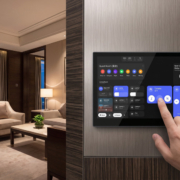
For a smart home controller that manages lighting, curtains, HVAC, and predefined automation scenes, a minimal display may be sufficient. A more sophisticated interface featuring multiple device inventories, comprehensive status metrics, and visual control elements would benefit from an expanded screen.
For numerous ESP32-based smart control panel implementations, 3.5 to 4.3 inches represents a practical baseline, whereas 5-inch or 7-inch displays may be suitable when the application and hardware infrastructure can accommodate the supplementary demands.
Why Screen Size Matters in an ESP32 Smart Control Panel
Unlike a smartphone or conventional Android touchscreen interface, an ESP32 smart control panel is typically engineered for a particular embedded purpose. Its user interface may concentrate on a restricted range of capabilities rather than executing numerous general-purpose programs.
This establishes screen size as a critical component of comprehensive product design.
A reduced touchscreen can facilitate the creation of a streamlined wall-integrated controller that accommodates constrained installation environments. It can additionally furnish adequate space for fundamental operations including illumination activation and deactivation, temperature modification, curtain operation, or automation preset selection.
An expanded display furnishes greater capacity for navigation menus, device condition information, temporal programming, and visual components. Nevertheless, enlarging the screen dimensions does not inherently enhance user satisfaction. Should the interface incorporate only rudimentary controls, a larger screen may introduce superfluous expenditure and operational complexity.
The optimal selection hinges upon user interaction patterns with the panel, the volume of simultaneous information requirements, and the technical execution of the interface.
Selecting an Appropriate Touchscreen Dimension
2.4–3.5 Inches: Streamlined Control Interfaces
Touchscreens measuring 2.4 inches or 3.5 inches prove effective for specialized control applications featuring straightforward user interfaces.
Common applications encompass illumination management systems, climate control panels, household appliance interfaces, and connected IoT systems. These implementations typically employ a limited quantity of prominent interactive elements, minimalist iconography, and easily recognizable status displays.
A diminutive screen proves particularly advantageous when the device requires integration into confined spaces or locations previously occupied by traditional wall-mounted switches.
The primary constraint involves the volume of data presentable without visual clutter. Should users require navigation across multiple zones, examination of comprehensive device catalogs, or modification of numerous parameters simultaneously, the display may experience overcrowding.
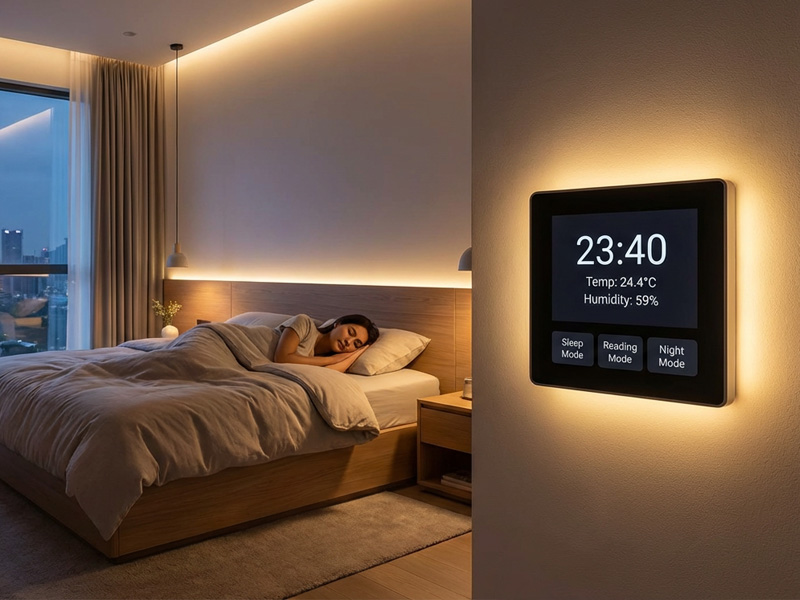
smart control panel factory-1
Four Inches: An Optimal Balance for Intelligent Home Control Interfaces
For numerous wall-mounted ESP32 intelligent control panels, four inches represents an effective equilibrium between space-efficient proportions and user interface functionality.
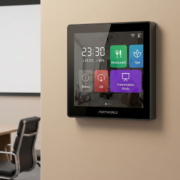
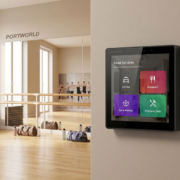
A four-inch capacitive touchscreen can display a residential management interface incorporating illumination regulation, thermal readings, window covering adjustments, and preset automation sequences while maintaining a minimal installation area. Furthermore, it can facilitate a more refined visual presentation when integrated with an appropriate graphics rendering system.
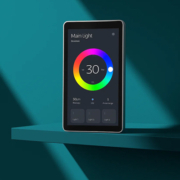
Square-format displays merit consideration as an alternative solution. A 480 × 480 pixel resolution, for instance, delivers a square configuration that demonstrates effectiveness for rotational interface elements, environmental status representations, symbol arrangements, and preset selection displays.
Portworld’s YC-SM43P ESP32-S3 intelligent control interface exemplifies this methodology. It incorporates a four-inch resistive touchscreen with 480 × 480 pixel resolution and facilitates the LVGL graphics framework. Its ESP32-S3 architecture and communication capabilities position it as a viable foundation for space-constrained embedded management systems.
For original equipment manufacturer initiatives, this category of solution can be assessed when an application requires a specialized touchscreen interface independent of comprehensive Android infrastructure requirements.
4.3–5 Inches: Enhanced Capacity for Intricate User Interfaces
A 4.3-inch or 5-inch touchscreen proves advantageous when the interface requires presentation of extensive information or accommodation of numerous control options.
For instance, a building management controller may require simultaneous display of multiple environmental metrics in conjunction with illumination status, whereas a hospitality management panel may integrate room climate control, lighting configurations, and guest service capabilities.
A 4.3-inch widescreen interface featuring 800 × 480 resolution delivers distinct layout possibilities compared to a square 480 × 480 configuration. The rectangular orientation facilitates horizontal navigation structures, graphical representations, and operational status displays, whereas the square layout accommodates more balanced control arrangements.
Nonetheless, display compatibility with the designated ESP32 microcontroller platform remains essential. Screen dimensions alone do not guarantee functional compatibility. The display communication protocol, processing controller, pixel density, refresh frequency specifications, storage capacity, and system software compatibility must all be evaluated.
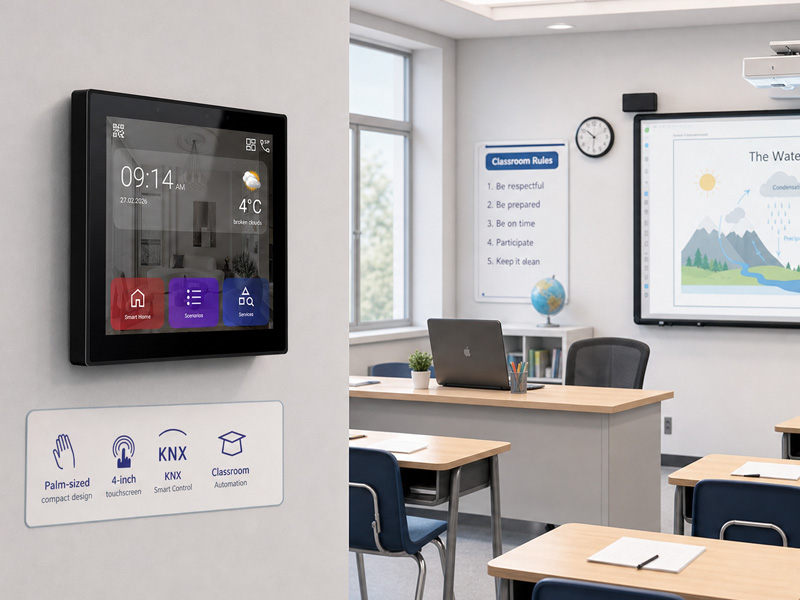
smart control panels-1
7 Inches: For More Complex Embedded Interfaces
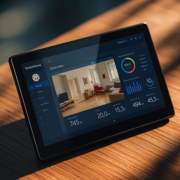
A 7-inch touchscreen can make sense when a project requires a more extensive visual interface, such as a central building control screen, a detailed equipment dashboard, or an HMI with multiple pages of information.
At this size, the hardware design deserves closer evaluation. Higher resolutions and more complex graphics can increase memory usage and display bandwidth requirements. The chosen ESP32 variant, external PSRAM, LCD interface, and graphics implementation all affect performance.
An ESP32-S3 with suitable external memory and a compatible display interface can support some larger-screen applications. Nevertheless, developers should validate the complete configuration rather than assuming that any ESP32 board can drive any 7-inch touchscreen.
If the product requires advanced multimedia, resource-intensive applications, or a more general-purpose operating environment, a different embedded processor platform may be worth considering.
Display Dimensions Represent Only a Fraction of the Hardware Selection Process
A touchscreen’s physical size does not provide a complete picture. Multiple technical specifications can influence the functionality and user experience of an ESP32 smart control panel.
Display Resolution and Interface Technology: A 4-inch display with 480 × 480 resolution differs significantly from a 4.3-inch display with 800 × 480 resolution. The LCD interface and associated controller must be compatible with the chosen hardware platform and firmware version.
Memory Capacity and Extended RAM: Graphical user interfaces require memory allocation for framebuffers, typefaces, visual assets, interface components, and system data. Higher pixel densities and sophisticated graphical enhancements may demand greater memory resources. Development teams should calculate framebuffer requirements and validate the interface performance on the intended hardware platform.
Display Rendering Framework: LVGL represents a prevalent solution for developing embedded graphical interfaces. It facilitates the use of modular interface elements and enables developers to construct intuitive touch-based interfaces for ESP32-powered applications. Performance outcomes, however, remain contingent upon the underlying processor capabilities, display driver implementation, and software architecture.
Touch Input Technology: Capacitive touch technology generally proves appropriate for contemporary smart home control systems. The touch sensing controller and associated firmware must align with the selected microcontroller board, and interface buttons must maintain responsive operation when the panel is positioned for wall mounting.
Energy Management and Communication Protocols: Wi-Fi, Bluetooth, Ethernet, RS485, and Power over Ethernet may constitute essential features for networked control panels; however, these must be evaluated in conjunction with power draw, circuit board design considerations, and accessible connectivity options. Implementation requirements depend on the specific use case and system architecture.
Espressif’s ESP32-S3 display reference platforms showcase the diversity of compatible display configurations, encompassing approximately 3.95-inch 480 × 480 and 4.3-inch 800 × 480 display modules. These reference implementations underscore the importance of evaluating the processor, display interface, and memory specifications as an integrated system rather than making display selections based primarily on physical dimensions.
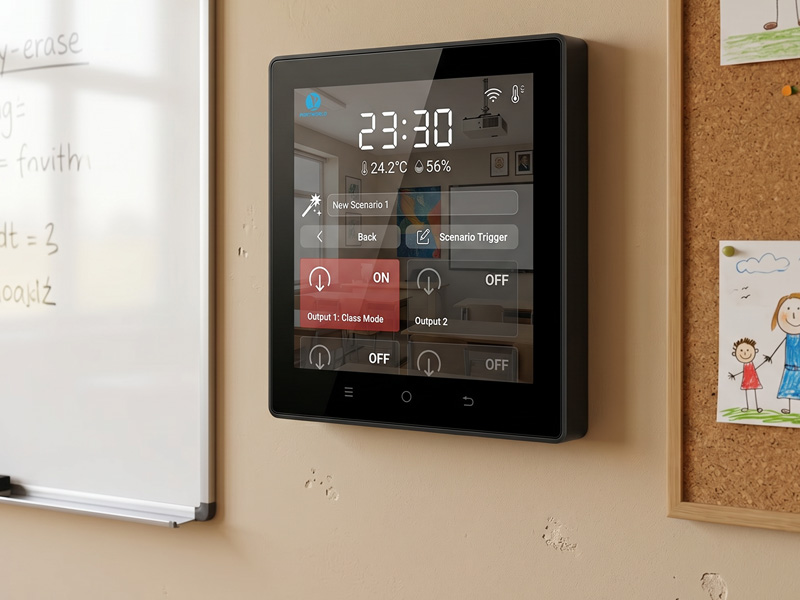
smart home control panel-1
Selecting the Appropriate Display Dimensions for Specific Use Cases
For a dedicated lighting or curtain controller, a compact 3.5-inch or 4-inch display proves adequate, as users primarily require intuitive controls and expedited access to frequently utilized functions.
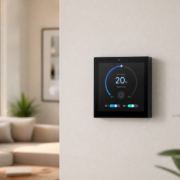
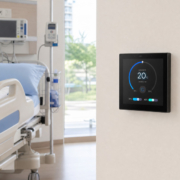
For a thermostat or room-control panel, a 4-inch screen delivers sufficient real estate for temperature readings, adjustment mechanisms, and several automation shortcuts.
For a smart home controller integrating multiple subsystems, a 4.3-inch or 5-inch display facilitates improved navigation. The optimal selection should be determined by the quantity of connected devices, the interface architecture, and the content presented on each screen.
For a central building interface featuring comprehensive dashboards, extensive menu structures, or numerous status representations, a larger display may be warranted. In such scenarios, developers must thoroughly evaluate whether an ESP32-based architecture satisfies the requisite graphics performance and computational capabilities.
The objective is not to maximize screen dimensions. Rather, it is to identify a display that accommodates the designated functions while minimizing superfluous hardware requirements.
When customizing an ESP32 touchscreen panel for OEM applications, several critical factors warrant consideration in conjunction with the product’s mechanical design, firmware, and connectivity infrastructure.
Initiate the process by establishing the control functions and creating a preliminary interface schematic. This preliminary work determines the quantity of functional screen real estate required. Subsequently, coordinate with the hardware supplier to finalize the target resolution, display interface, touch controller, memory specifications, and graphics framework.
Installation considerations merit early evaluation. A panel configured for standard wall-mounted enclosures may require distinct dimensions and mounting mechanisms compared to panels intended for industrial machine housings or specialized appliances.
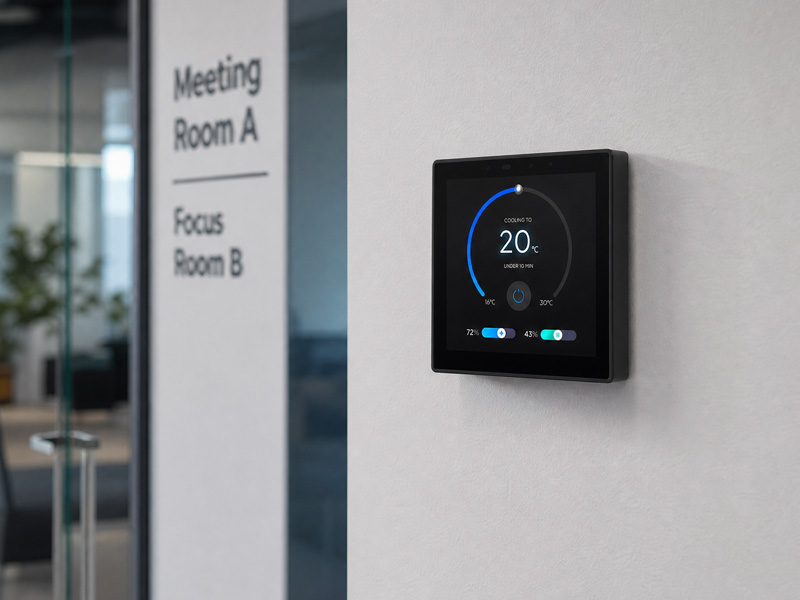
smart home control panel
Should the panel incorporate Ethernet, RS485, or Power over Ethernet (PoE) capabilities, these interfaces must be specified within the initial hardware requirements. Protocol implementations, including Modbus over RS485, require comprehensive firmware development and rigorous testing; the mere presence of a physical interface does not ensure protocol functionality.
Conclusion of the development cycle should include comprehensive prototype validation. Assess touch sensitivity, visual clarity, interface responsiveness, initialization sequence, communication reliability, and thermal behavior under the designated operating environment.
Portworld facilitates smart control panel and embedded hardware initiatives requiring product customization, interface integration, brand implementation, and OEM/ODM services. The YC-SM43P exemplifies a reference solution for projects evaluating a compact 4-inch ESP32-S3 touchscreen incorporating LVGL technology with wired or wireless communication options. The scope of additional customization feasibility depends upon the functional specifications and hardware architecture requirements.