What Components Are Used in an ESP32 Smart Control Panel PCBA?
Intelligent control panels have emerged as a critical interface component for contemporary Internet of Things infrastructure, facilitating user interaction with smart residential environments, industrial machinery, automated building management systems, and connected devices.
Embedded within each touchscreen control panel exists a meticulously engineered Printed Circuit Board Assembly that consolidates processing capabilities, communication protocols, power distribution, display management, and modular peripheral connectivity.
An ESP32-based intelligent control panel Printed Circuit Board Assembly merges the networking and computational capabilities inherent to the ESP32 platform with display technology, sensing components, and industrial-grade communication modules to establish a versatile embedded Human-Machine Interface solution.
Accordingly, which components are typically integrated into an ESP32 intelligent control panel Printed Circuit Board Assembly?
1. ESP32 / ESP32-S3 Primary Processing Unit
The principal component within an ESP32 intelligent control panel constitutes the primary microprocessor.
For sophisticated Human-Machine Interface implementations, the ESP32-S3 has achieved widespread adoption due to its provision of:
- Dual-core Xtensa LX7 microprocessor architecture
- Processing frequency reaching 240MHz maximum
- Wireless networking and Bluetooth communication capabilities
- Machine learning acceleration functionality
- Comprehensive peripheral interface options
The ESP32-S3 administers:
- Touchscreen input processing
- Graphical user interface presentation
- Sensor information analysis
- Interdependent device connectivity
- Automated system control protocols
It functions as the principal computational element of the control panel.
2. Flash Memory and PSRAM
A smart control panel necessitates supplementary memory capacity to accommodate graphical user interfaces and application information.
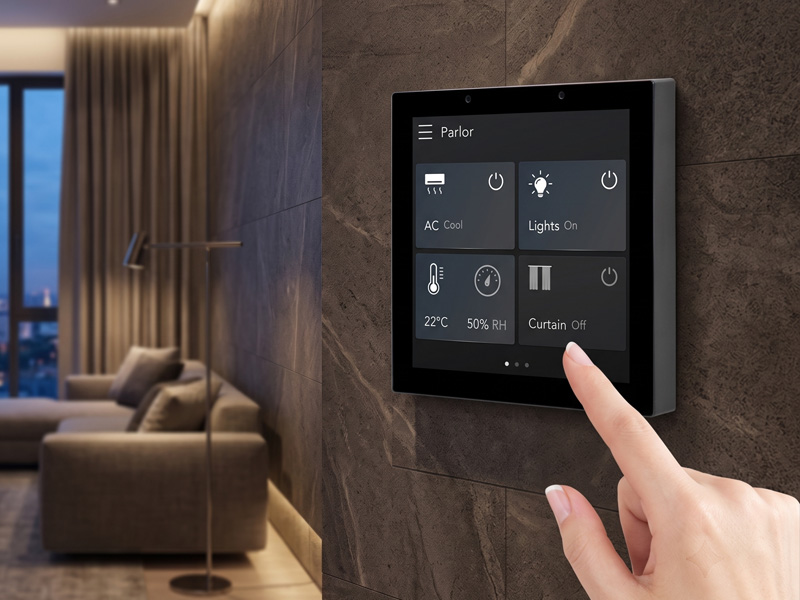
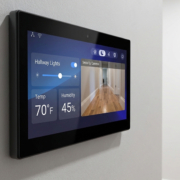
Smart Home Touch Control Panel
Flash Memory
Flash memory preserves:
- Firmware
- Configuration files
- UI resources
- System data
- PSRAM
External PSRAM enhances operational efficiency for:
- LVGL graphical rendering
- Image processing
- Animation effects
- Large UI applications
For instance, ESP32-S3 intelligent panels typically incorporate:
- 8MB PSRAM
- 16MB Flash
to facilitate seamless touchscreen functionality.
3. Power Management Components
A dependable power supply constitutes an essential requirement for smart control panels.
The power distribution section of the PCBA ordinarily comprises:
Voltage Regulators
Transform input electrical power into requisite voltage specifications:
- 5V input
- 3.3V system power
- Power Management ICs
Manage:
- Voltage regulation
- Power efficiency
- Sleep modes
Protection Components
Encompassing:
- ESD protection
- Over-voltage protection
- Short-circuit protection
These components augment system dependability and product longevity.
4. Touchscreen and Display Interface Components
A smart control panel necessitates a display system to facilitate user interaction.
The PCBA typically incorporates:
Display Interfaces
Capabilities include:
- SPI display
- RGB interface
- 8080 parallel interface
- MIPI or alternative interfaces contingent upon design specifications
- Touch Controller
The touch controller establishes communication with the ESP32 via:
- I2C interface
- SPI interface
It facilitates:
- Multi-touch functionality
- Gesture recognition capabilities
- User input management
In conjunction with LVGL, developers are able to construct sophisticated HMI interfaces.
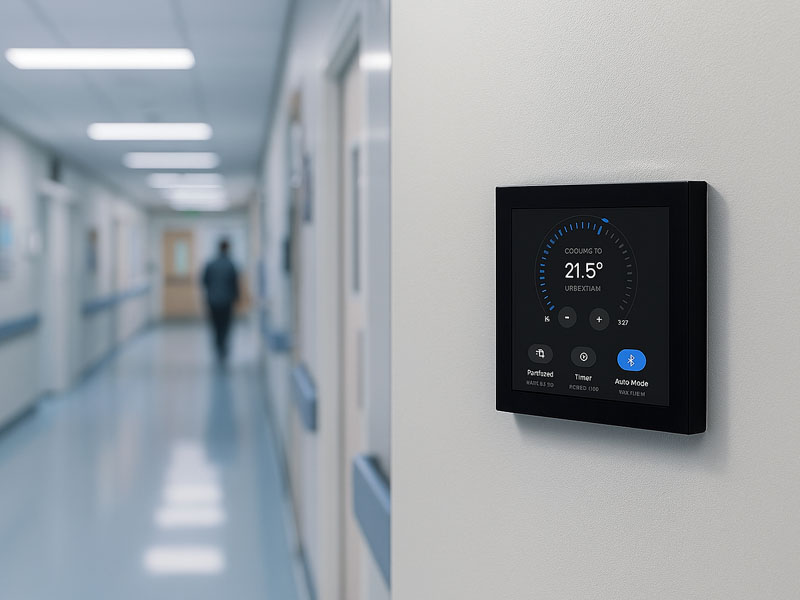
YC-SM10P
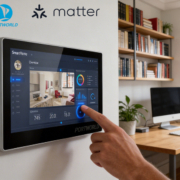
10.1 inch Smart Home Control Panel
5. Wireless Communication Components
Connectivity represents a fundamental strength of ESP32 platforms.
The PCBA incorporates:
Wi-Fi Module
Applications include:
- Cloud-based connectivity
- Remote operation
- Smart home integration
- Bluetooth / BLE
Applications include:
- Mobile device pairing
- Local system configuration
- Inter-device communication
These wireless capabilities enable smart panels to integrate seamlessly with IoT ecosystems.
6. Ethernet and Power over Ethernet Components (Optional)
Wired communication infrastructure is frequently necessary for industrial and commercial environments.
An ESP32 intelligent control panel may incorporate:
Ethernet Physical Layer Interface Chip
Delivers:
- 100 Megabits per second Ethernet connectivity
- Power over Ethernet Circuit
Facilitates:
- Electrical power transmission via Ethernet cabling
- Reduced installation complexity
Typical implementations encompass:
- Intelligent building systems
- Industrial human-machine interfaces
- Hospitality automation platforms
7. RS485 Serial Communication Components
Numerous industrial apparatus continue to depend upon RS485 serial communication protocols.
An ESP32 control panel printed circuit board assembly may incorporate:
RS485 Signal Transceiver Module
Common examples:
- MAX485
- SP3485
- Specialized industrial RS485 integrated circuits
Utilized for interfacing with:
- Modbus RTU protocol devices
- Electric metering systems
- Heating, ventilation, and air conditioning regulators
- Industrial measurement sensors
RS485 technology facilitates dependable extended-range communication capabilities throughout industrial operational settings.
8. Sensor Interfaces and Expansion Components
Intelligent control panels frequently necessitate environmental sensing capabilities.
Primary sensor components encompass:
Temperature and Humidity Sensors
Applications include:
- Environmental climate assessment
- Automated HVAC system management
- Illumination Sensors
Applications include:
- Dynamic illumination level adjustment
- Intelligent lighting system operation
- Motion Detection Sensors
Applications include:
- Security and surveillance systems
- Automated energy conservation mechanisms
The ESP32 microcontroller processes sensor data and implements sophisticated control operations.
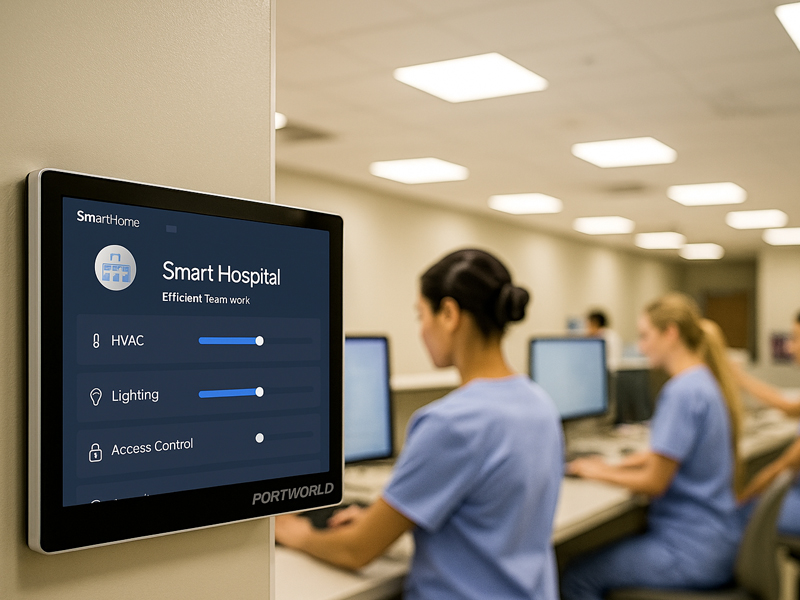
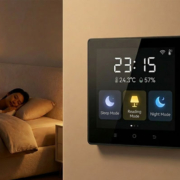
smart touch control panel8
9. Audio Components (Optional)
Voice-activated smart panels may incorporate supplementary audio hardware components.
Key components include:
- Microphone unit
- Audio processing codec
- Amplification circuit for speakers
- Speaker output connector
Primary applications:
- Voice recognition assistants
- Intelligent intercom functionality
- Artificial intelligence communication interfaces
10. Relay and Control Circuit Components
Numerous smart panels require the capability to manage external equipment and systems.
The printed circuit board assembly may incorporate:
- Relay switching modules
- MOSFET driver circuits
- Motor control mechanisms
- GPIO port expansion capabilities
Key applications:
- Intelligent switching systems
- Automated window and curtain control
- Comprehensive lighting management
- Connected appliance automation
11. Universal Serial Bus Interface Components
Universal Serial Bus interfaces serve multiple essential functions in modern electronics:
- Firmware deployment and updates
- System debugging and diagnostics
- Device programming and configuration
- Electrical power delivery
Control panels utilizing the ESP32-S3 microcontroller typically incorporate:
- USB Type-C connection port
- USB On-The-Go functionality support
These features enhance the efficiency of both development processes and ongoing system maintenance.
12. Printed Circuit Board Architecture and Interconnection Components
A production-grade ESP32-based intelligent control panel printed circuit board assembly necessitates comprehensive PCB optimization.
Critical design considerations encompass:
- Antenna positioning and routing
- Electromagnetic compatibility engineering
- Thermal dissipation strategies
- Flexible printed circuit connectors
- Modular expansion interfaces
Standard interconnection components include:
- Flexible printed circuit display interface
- Capacitive touch panel connection
- Environmental and measurement sensor interfaces
- RS485 serial communication terminals
- General-purpose input-output connection headers
Typical ESP32 Smart Control Panel PCBA Architecture
A typical system structure:
Touch Display
|
Touch Controller
|
ESP32-S3 MCU
|
——————————–
| | | |
Wi-Fi BLE RS485 Sensors
|
Cloud / Smart Devices
This architecture allows the smart panel to become the central control hub of an IoT system.
Applications of ESP32 Smart Control Panel PCBA
ESP32 smart control panels find extensive application across multiple sectors:
Smart Home
- Wall-integrated control panels
- Intelligent switching solutions
- Residential automation frameworks
Industrial HMI
- Automated machine control interfaces
- Equipment status monitoring stations
- Real-time information visualization platforms
Smart Buildings
- Climate and ventilation regulation
- Illumination system administration
- Power consumption tracking
Hospitality
- Guest room management systems
- Automated room interface terminals
Robotics
- Operator interaction interfaces
- Mechanical system command stations
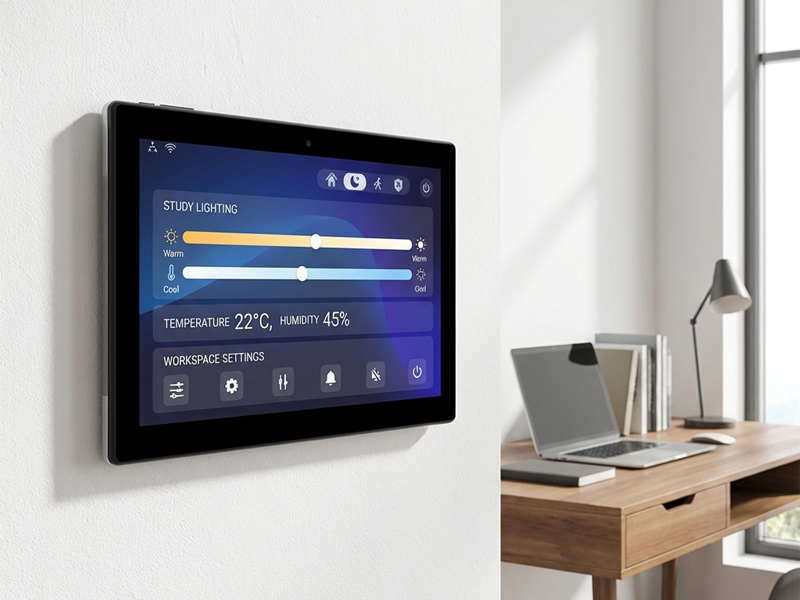
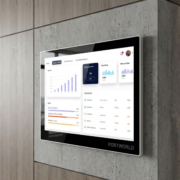
sm55p-smart home control panel
Portworld ESP32 Smart Control Panel PCBA Solutions
The development of a commercial-grade ESP32 control panel necessitates comprehensive knowledge spanning hardware architecture, embedded systems programming, and industrial manufacturing processes.
Portworld delivers comprehensive ESP32 intelligent control panel solutions encompassing:
Hardware Customization
- ESP32 / ESP32-S3 primary circuit board engineering
- Display module and tactile interface integration
- RS485 and Ethernet connectivity solutions
- Sensor integration capabilities
Software Development
- ESP-IDF firmware implementation
- FreeRTOS operating system integration
- LVGL graphical user interface development
- Customized communication protocol engineering
Manufacturing Services
- Prototype fabrication and testing
- Printed circuit board assembly production
- Product performance enhancement
- Original equipment manufacturer and original design manufacturer customization
Serving applications ranging from intelligent residential control systems and industrial human-machine interfaces to Internet of Things automation terminals, Portworld assists organizations in establishing dependable embedded technology solutions.
An ESP32 smart control panel PCBA is a complete embedded system combining processing, communication, display, power management, and device control components.
By integrating ESP32-S3, touchscreen interfaces, wireless connectivity, RS485, sensors, and expansion interfaces, manufacturers can develop flexible IoT control solutions for modern applications.