What Is the PCBA Manufacturing Process for Smart Control Panels?
A smart control panel extends far beyond a simple touchscreen interface. Within each smart panel resides a sophisticated PCBA (Printed Circuit Board Assembly) that consolidates the processor, memory, communication modules, power management circuits, touch controller, and device interfaces.
The PCBA manufacturing process is instrumental in determining the performance, stability, and reliability of smart control panels deployed across applications including smart homes, hotels, offices, healthcare facilities, and commercial buildings.
A standard smart control panel PCBA manufacturing process encompasses:
PCB Design → Component Assembly → SMT Production → Testing → Firmware Programming → Final Integration
Contemporary PCBA production typically integrates SMT assembly, inspection, electrical testing, and functional validation to guarantee dependable operation.
1. PCB Design and Engineering Review
Prior to commencing production, engineers develop the hardware design in accordance with smart control panel specifications.
The design encompasses:
- Processor selection
- Memory and storage configuration
- Power management circuit
- Display interface
- Touchscreen connection
- Communication interfaces
For instance, an ESP32 smart control panel may incorporate:
- ESP32-S3 processor
- WiFi/Bluetooth module
- RS485 interface
- Ethernet circuit
An Android smart control panel may necessitate:
- Rockchip processor
- DDR RAM
- eMMC storage
- Ethernet PHY
- Audio and camera interfaces
Throughout this phase, manufacturers conduct DFM (Design for Manufacturing) reviews to verify that the PCB can be manufactured with optimal efficiency.
2. Printed Circuit Board Manufacturing
Following the completion of PCB design, the bare printed circuit board undergoes manufacturing.
The PCB manufacturing process encompasses:
- Copper layer fabrication
- Circuit pattern application
- Hole creation
- Surface treatment
- Electrical verification
Intelligent control panels frequently necessitate multi-layer printed circuit boards due to their incorporation of:
- High-speed processing units
- Display connection interfaces
- Wireless transmission circuits
- Electrical power circuits
Advanced-performance Android-based panels typically demand more sophisticated PCB architectures in comparison to basic Internet of Things control devices.
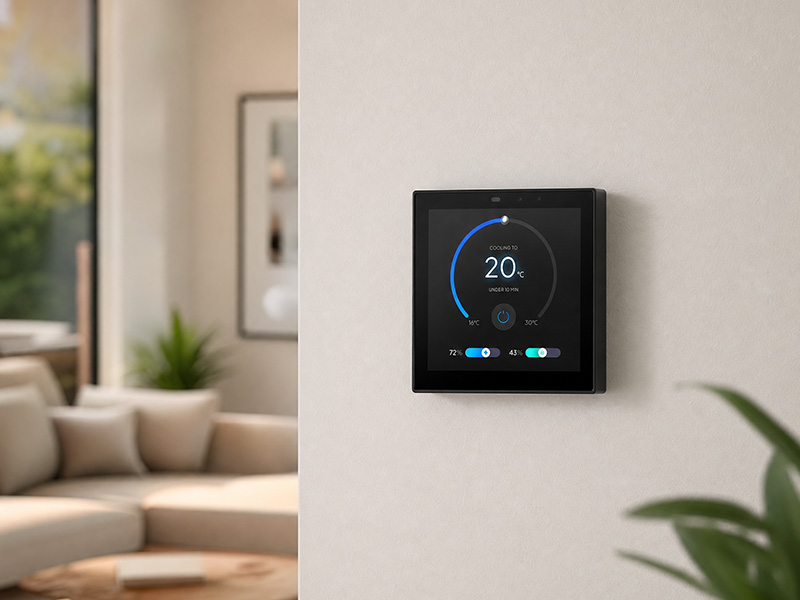
smart home control panel
3. Component Procurement and Quality Assessment
Prior to surface mount technology assembly, all electronic components are sourced and subjected to quality evaluation.
Components encompass:
Central processing unit / Microcontroller unit
- Random access memory
- Non-volatile storage memory
- Power management integrated circuits
- Capacitive and resistive elements
- Interface connectors
- Wireless transmission integrated circuits
Quality assurance verification procedures include:
- Component designation
- Quantity verification
- Packaging condition
- Electrical performance parameters
This procedure mitigates manufacturing complications arising from component inaccuracy or malfunction.
4. Solder Paste Printing
The initial phase of SMT assembly involves depositing solder paste onto the PCB surface.
A precision metal stencil is positioned over the PCB, and solder paste is applied to designated component pad locations.
The solder paste establishes the electrical and mechanical connection between:
- PCB pads
- Electronic components
Defective solder paste printing may result in:
- Compromised solder joint integrity
- Electrical short circuits
- Component malfunction
Numerous manufacturing facilities employ SPI (Solder Paste Inspection) technology to validate paste quality prior to component assembly.
5. SMT Component Placement
Following solder paste application, components are positioned onto the PCB utilizing automated pick-and-place equipment.
The equipment positions:
- Resistors
- Capacitors
- Integrated circuit chips
- Memory modules
- Communication interface modules
For intelligent control panel applications, accurate component positioning is particularly critical for:
- Central processor units
- DDR memory modules
- Touch sensing controllers
- WiFi and Bluetooth communication modules
SMT technology facilitates the high-density electronic configurations necessary for contemporary smart panel systems.
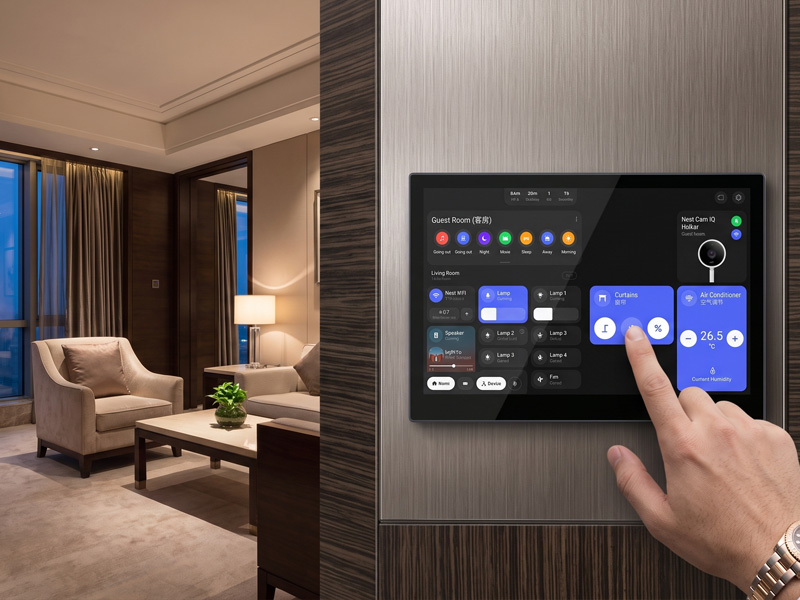
smart home control panel
6. Reflow Soldering
Following component placement, the PCB undergoes processing in a reflow oven.
During the reflow process:
- The board experiences gradual heating
- Solder paste undergoes melting
- Components achieve permanent bonding
- The board undergoes cooling
A precisely controlled temperature profile guarantees:
- Robust solder connections
- Component preservation
- Extended operational reliability
7. PCBA Inspection
Upon completion of soldering, manufacturers conduct thorough inspection of the assembled board.
Standard inspection techniques encompass:
AOI (Automated Optical Inspection)
Identifies:
- Absent components
- Incorrect component positioning
- Solder bridges
- Reversed polarity
- X-Ray Inspection
Applied for concealed solder connections, particularly for:
- BGA processors
- QFN packages
- High-density integrated circuits
These inspection techniques facilitate the detection of manufacturing irregularities prior to functional testing.
8. Firmware Programming
A smart control panel necessitates software functionality before operational deployment.
During the manufacturing phase, firmware is installed onto the PCBA.
Illustrative examples:
Firmware encompasses:
- Touch interface logic
- WiFi setup parameters
- Bluetooth connectivity
- MQTT protocol functions
- LVGL graphical interface
- Android Smart Panel
Software comprises:
- Android operating system image
- Device driver components
- Proprietary applications
- Customized user interface
6. Reflow Soldering
Following component placement, the PCB undergoes processing in a reflow oven.
During the reflow process:
- The board experiences gradual heating
- Solder paste undergoes melting
- Components achieve permanent bonding
- The board undergoes cooling
A precisely controlled temperature profile guarantees:
- Robust solder connections
- Component preservation
- Extended operational reliability
7. PCBA Inspection
Upon completion of soldering, manufacturers conduct thorough inspection of the assembled board.
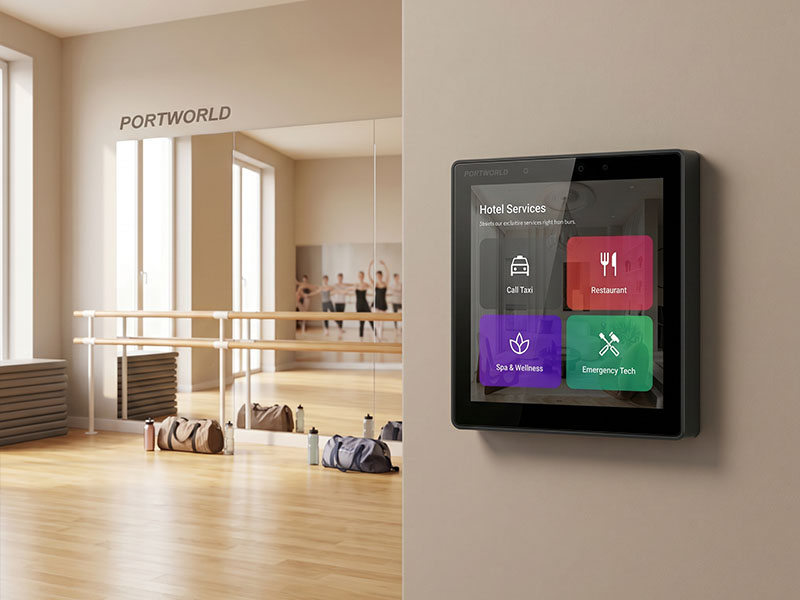
4″ KNX Smart Touch Control Panel
Standard inspection techniques encompass:
AOI (Automated Optical Inspection)
Identifies:
- Absent components
- Incorrect component positioning
- Solder bridges
- Reversed polarity
- X-Ray Inspection
Applied for concealed solder connections, particularly for:
- BGA processors
- QFN packages
- High-density integrated circuits
These inspection techniques facilitate the detection of manufacturing irregularities prior to functional testing.
8. Firmware Programming
A smart control panel necessitates software functionality before operational deployment.
During the manufacturing phase, firmware is installed onto the PCBA.
Illustrative examples:
Firmware encompasses:
- Touch interface logic
- WiFi setup parameters
- Bluetooth connectivity
- MQTT protocol functions
- LVGL graphical interface
- Android Smart Panel
Software comprises:
- Android operating system image
- Device driver components
- Proprietary applications
- Customized user interface
9. Functional Testing
Following assembly and programming, each PCBA is subjected to comprehensive functional testing.
The testing protocol encompasses:
Power Test
Assessments:
- Voltage output
- Current consumption
- Power stability
- Communication Test
Assessments:
- WiFi
- Bluetooth
- Ethernet
- RS485
- Display Test
Assessments:
- Touch response
- Display brightness
- Color accuracy
- Interface Test
Assessments:
- USB
- Audio
- Sensors
- Expansion ports
Functional testing serves to validate that the PCBA operates in accordance with established product specifications and requirements.
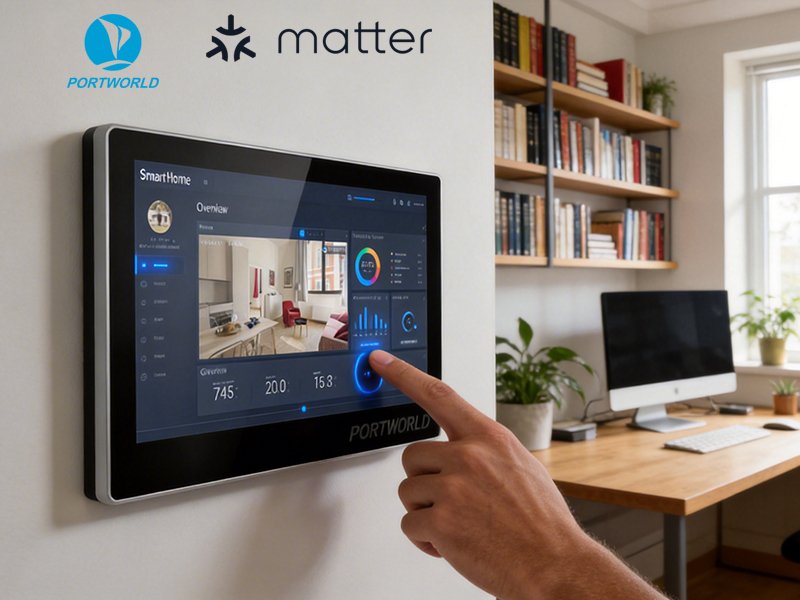
smart home control panel
10. Final Assembly and Quality Control
Following the completion of PCBA testing, the circuit board is incorporated into the comprehensive smart control panel system.
Final assembly encompasses the following procedures:
- Display module installation
- Enclosure installation
- Cable connections
- Touchscreen calibration procedures
- Comprehensive product testing
The completed product undergoes evaluation across the following parameters:
- Physical appearance and finish
- Touchscreen responsiveness and functionality
- Network connectivity performance
- Operational system stability
- Example: Smart Control Panel PCBA Manufacturing
- ESP32 Smart Control Panel
Characteristic PCBA configuration:
- ESP32-S3 microcontroller unit
- Flash memory storage
- Touch control interface
- WiFi and Bluetooth communication circuitry
- RS485 serial interface
- Electrical power management system
Primary applications:
- Residential smart home automation
- Heating, ventilation, and air conditioning control systems
- Internet of Things terminal devices
- Rockchip Android Smart Control Panel
Characteristic PCBA configuration:
- RK3566 or RK3568 processing unit
- Dynamic random-access memory
- Embedded multimedia card storage
- Ethernet connectivity
- WiFi and Bluetooth communication
- Audio processing circuitry
Primary applications:
Hotel management automation systems
Intelligent building infrastructure
Conference room control systems
Portworld Smart Control Panel OEM/ODM Manufacturing
Portworld delivers comprehensive customized smart control panel manufacturing solutions, encompassing:
- Hardware Development
- Proprietary PCBA architecture
- Processor configuration
- Interface adaptation
- Communication module incorporation
- Software Development
- Android/Linux platform customization
- ESP32 firmware engineering
- User interface design
- Protocol implementation
- Manufacturing Services
- Surface mount technology assembly
- PCBA quality assurance
- Firmware installation
- Complete product assembly
Smart control panels are available with customization options including:
- Variable display dimensions
- WiFi/Bluetooth connectivity
- Ethernet/PoE integration
- RS485/Modbus compatibility
- Bespoke enclosure designs
The production of printed circuit board assemblies (PCBAs) for intelligent control panels encompasses several sequential phases, including circuit board design, surface mount technology assembly, software configuration, and comprehensive quality assurance procedures.
An effective manufacturing process enables intelligent control panels to provide:
- Consistent operational performance
- Dependable data transmission
- Extended service lifespan
- Adaptable feature configuration
For enterprises manufacturing smart home systems, hospitality automation solutions, Internet of Things applications, and facility management platforms, partnering with a qualified PCBA manufacturer and original equipment manufacturer is critical for developing superior intelligent control panel solutions.