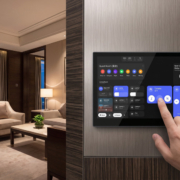
Can ESP32 Support RS485 and Modbus in a Smart Control Panel?
Intelligent control panels are becoming more prevalent in connecting illumination systems, climate control equipment, monitoring devices, environmental measurement instruments, and various building management technologies. Although Wi-Fi and Bluetooth offer convenient wireless connectivity options, numerous commercial and industrial management applications continue to depend on hardwired communication protocols to ensure dependable interaction with peripheral devices.
This presents a critical consideration for intelligent control panel manufacturers: is it feasible for an ESP32-based panel to facilitate RS485 and Modbus functionality?
Affirmatively. The ESP32 microcontroller can facilitate RS485-based Modbus protocol communication when the system architecture incorporates an appropriate RS485 transceiver module and the software implementation includes the necessary Modbus protocol specifications. This integration positions the ESP32 as a viable solution for space-efficient intelligent control panels requiring connectivity with building management systems, automated industrial equipment, or remote management interfaces.
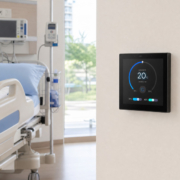
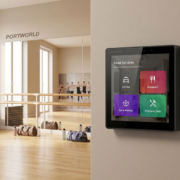
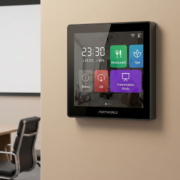
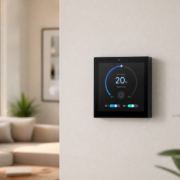
For original equipment manufacturers, the critical consideration involves identifying a control panel that integrates the requisite hardware communication interfaces alongside adaptable software designed for the specific application requirements. Portworld’s YC-SM43P ESP32-S3 intelligent touchscreen panel exemplifies a platform worthy of evaluation for such implementations.
The operational mechanics of an ESP32 smart control panel communicating with peripheral equipment become clearer when one differentiates among the microprocessor, the electrical interface standard, and the data exchange protocol.
The ESP32 functions as the computational platform. It executes the application logic, oversees the touchscreen interface management, and coordinates communication operations. Its UART peripheral facilitates the transmission and reception of serial data, establishing the foundation for numerous Modbus RTU deployments.
RS485 represents an electrical communication standard employing differential signaling methodology to facilitate dependable wired communication over extended distances. Given that the ESP32’s UART signals do not directly correspond to RS485 electrical signals, an appropriate RS485 transceiver is typically necessary to interface the microprocessor with the differential bus architecture.
Modbus constitutes the communication protocol that establishes the framework for inter-device data exchange. Modbus RTU, frequently implemented over RS485 infrastructure, enables a controller to retrieve register values, acquire sensor data, or transmit authorized control directives.
Within a conventional smart control panel configuration, the ESP32 interfaces with the RS485 transceiver via UART connectivity. The transceiver establishes connection to the RS485 bus, whereas the embedded firmware orchestrates Modbus request and response management.
These three constituent elements function in concert: the ESP32 manages application processing, RS485 supplies the physical communication infrastructure, and Modbus specifies the data exchange framework.
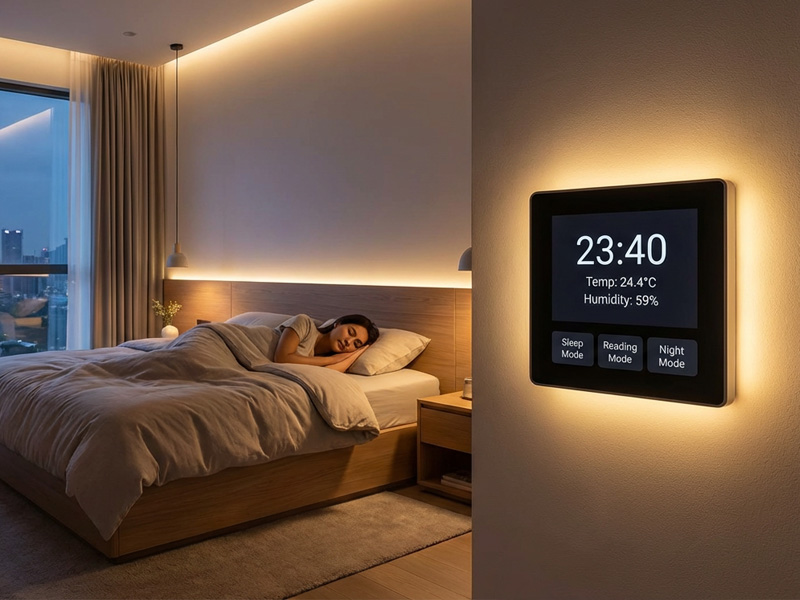
smart control panel factory-1
What Hardware Components Are Necessary for RS485 and Modbus Implementation?
An ESP32-based smart control panel requires multiple hardware components to establish dependable RS485 communication.
The primary component is the ESP32 microcontroller, which executes the application logic, interprets touch input, and oversees communication protocols. The secondary component is an RS485 transceiver, which transforms UART logic-level signals into differential bus signals and reconverts incoming signals back into logic-level information.
The assembly additionally requires an appropriate connector and associated circuitry. Contingent upon the implementation approach, this may encompass A/B signal terminals, electrostatic discharge protection, and appropriate termination or biasing elements.
Power distribution and circuit board design are similarly critical. Electromagnetic interference, signal path routing, ground plane design, and protective circuitry architecture all influence communication dependability.
Original equipment manufacturer purchasers should confirm that the selected panel incorporates a genuine RS485 hardware interface. The presence of an ESP32 processor by itself does not ensure that a commercial product incorporates an RS485 port or implements Modbus functionality within its standard firmware configuration.
Modbus RTU facilitates the exchange of structured data between compatible controllers and devices via serial communication.
Consider a building automation initiative employing a touchscreen interface to observe room temperature and regulate HVAC systems. An ESP32-based control panel can transmit a Modbus request to a compatible controller, obtain the pertinent register information, and present the temperature reading on the display.
Should the external device facilitate the necessary write operations, the panel may additionally transmit commands to modify a temperature setpoint or adjust the operational mode.
To ensure dependable communication, the panel and associated equipment must employ matching baud rates, parity configurations, data bit specifications, stop bit parameters, and device identifiers. The firmware must likewise implement the appropriate register mapping and supported function codes.
Developers should validate the implementation against the specific target device. Two products may both accommodate Modbus RTU yet still necessitate particular configuration adjustments before establishing successful communication.
For applications incorporating multiple devices, the firmware must orchestrate requests and responses, address timeout conditions, and mitigate communication failures. The physical infrastructure must additionally adhere to proper RS485 wiring standards and termination methodologies.
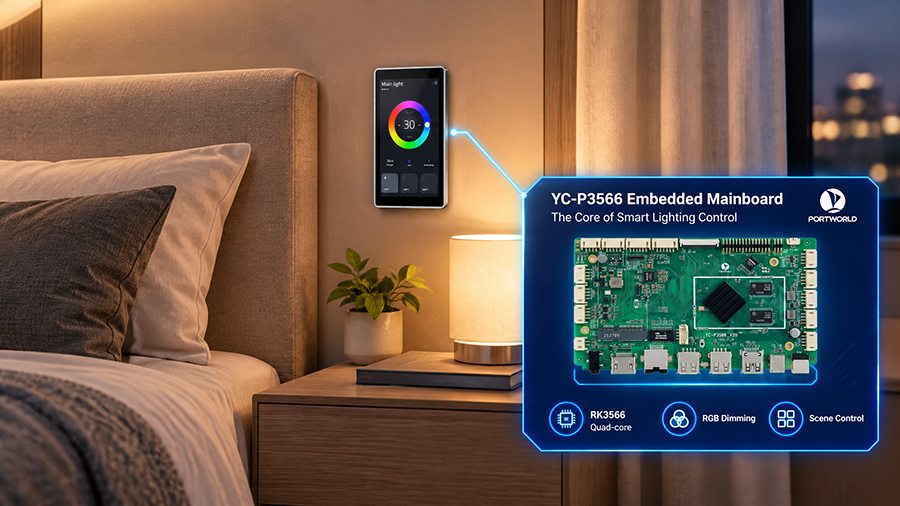
YC-P3566-smart home control panel
Introducing Portworld YC-SM43P: An ESP32-S3 Smart Touch Panel
The Portworld YC-SM43P represents a compact intelligent touch interface panel featuring a 4-inch display, engineered on the ESP32-S3 microcontroller architecture. This device is specifically engineered for embedded interface applications requiring touchscreen functionality, wireless communication capabilities, and wired connectivity options, all integrated within a wall-mounted configuration.
Primary technical specifications include:
- Microcontroller: ESP32-S3
- Display Technology: 4-inch capacitive touchscreen interface
- Display Resolution: 480 × 480 pixels
- Graphics Software Framework: LVGL
- Wireless Communication: Wi-Fi and Bluetooth 5 protocols
- Wired Communication Interfaces: RJ45 Ethernet and RS485 standards
- Power Supply Options: DC 12V and Power over Ethernet (PoE), contingent upon configuration selection
- Optional Capability: Integrated temperature and humidity sensing module, available based on configuration requirements
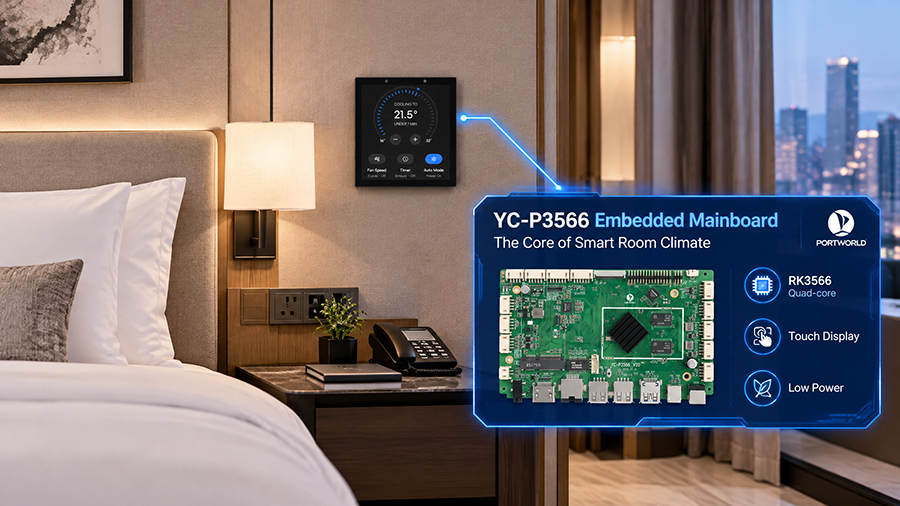
YC-P3566 Smart Mainboard
The LVGL graphics framework facilitates the development of specialized embedded user interfaces through the utilization of graphical components, interactive buttons, visual icons, navigational menus, and operational status indicators. This capability proves particularly advantageous for applications demanding a specialized control interface architecture rather than reliance upon conventional general-purpose tablet-based operating systems.