Can ESP32 Smart Control Panels Be Manufactured for OEM Projects?
As the smart home, Internet of Things, and automation sectors expand, numerous organizations are pursuing bespoke smart control panels that align with their proprietary branding, software infrastructure, and operational specifications. An ESP32 smart control panel represents an optimal foundation for original equipment manufacturer initiatives, delivering adaptable hardware architecture, minimal energy requirements, and comprehensive connectivity capabilities.
ESP32 smart control panels are indeed capable of being produced for original equipment manufacturer projects, encompassing modifications to hardware components, physical housing, embedded software, graphical interface, and corporate identity.
What Elements of an ESP32 Smart Control Panel Are Subject to Customization?
1. Hardware Customization
Original equipment manufacturer clients possess the capability to tailor hardware specifications in accordance with their particular operational demands.
Potential areas for modification encompass:
- ESP32 / ESP32-S3 microprocessor selection
- Display dimensions and pixel density
- Touch-sensitive screen technology
- Storage capacity specifications
- Data transmission protocols
- Measurement device incorporation
- Specialized connection ports
For illustration, an original equipment manufacturer residential automation enterprise might necessitate:
- 4-inch touch-sensitive display
- RS485 protocol for heating, ventilation, and air conditioning systems
- Ethernet connectivity
- Proprietary input/output interface configurations
conversely, a commercial sector organization may require:
- Expanded visual display
- Supplementary measurement instruments
- Alternative communication technology solutions
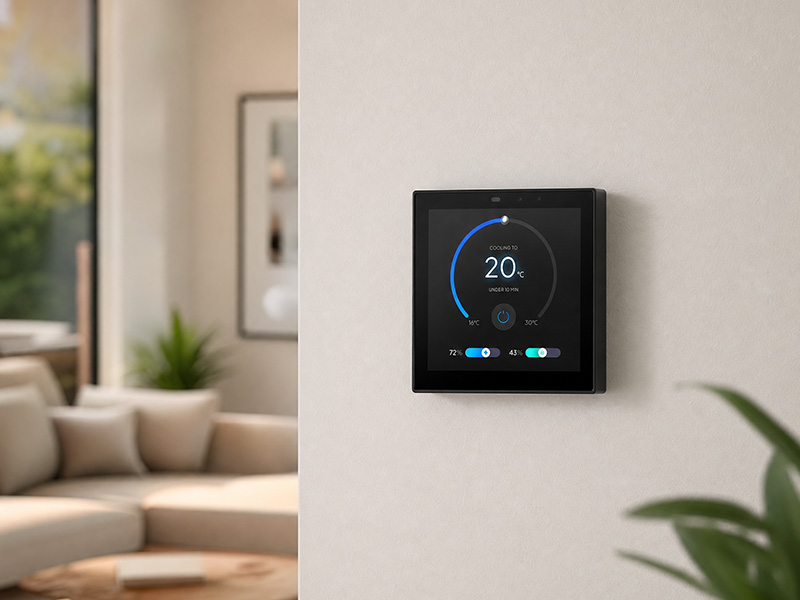
smart home control panel
2. Custom Enclosure Design
The aesthetic qualities of a smart control panel hold significant importance for both residential and commercial environments.
OEM manufacturing capabilities encompass:
- Customized housing architecture
- Plastic or metal enclosure options
- Multiple color and material selections
- Logo application and branding
- Custom mounting hardware solutions
For wall-mounted installations, manufacturers can provide tailored setup options including:
- UK 86-type wall box configurations
- EU wall box standards
- Customized bracket systems
This capability enables the ESP32 panel to integrate seamlessly into diverse settings, such as:
- Intelligent residential systems
- Hospitality environments
- Corporate workspaces
- Commercial facilities
3. Firmware and Software Customization
ESP32-based panels facilitate comprehensive software adaptation and development.
OEM clients have the ability to personalize:
- Firmware operational capabilities
- Device interaction protocols
- Touchscreen user interface design
- Automation system logic
- Over-the-air update mechanisms
Prevalent development frameworks include:
- ESP-IDF platform
- Arduino Framework ecosystem
- PlatformIO development environment
Engineers can implement specialized functionalities including:
- Intelligent illumination management
- Heating, ventilation, and air conditioning control
- Automated window covering systems
- Environmental sensor data collection
- Power consumption optimization
4. Custom User Interface (UI) Design
The touchscreen interface is capable of comprehensive customization.
Utilizing frameworks such as LVGL, original equipment manufacturer projects can implement:
- Customized icons
- Organization-aligned interfaces
- Dynamic dashboards
- Multilingual menu systems
- Tailored control interfaces
Illustrative scenario:
A hospitality enterprise can establish a guest accommodation interface incorporating:
- Greeting notification
- Ambient temperature regulation
- Illumination configurations
- Guest assistance requests
5. Communication Protocol Customization
Various sectors necessitate distinct communication methodologies.
ESP32 intelligent control panels can be configured to support:
- Wireless Communication Methods
- WiFi connectivity
- Bluetooth/BLE technology
- Zigbee integration (via supplementary modules)
- Matter-compliant frameworks (via intermediary gateways)
- Wired Communication Methods
- RS485 protocol
- Modbus RTU standard
- Ethernet connection
- MQTT-based network infrastructure
This functionality facilitates connectivity with:
- Intelligent residential automation systems
- Facility management infrastructure
- Automated industrial systems
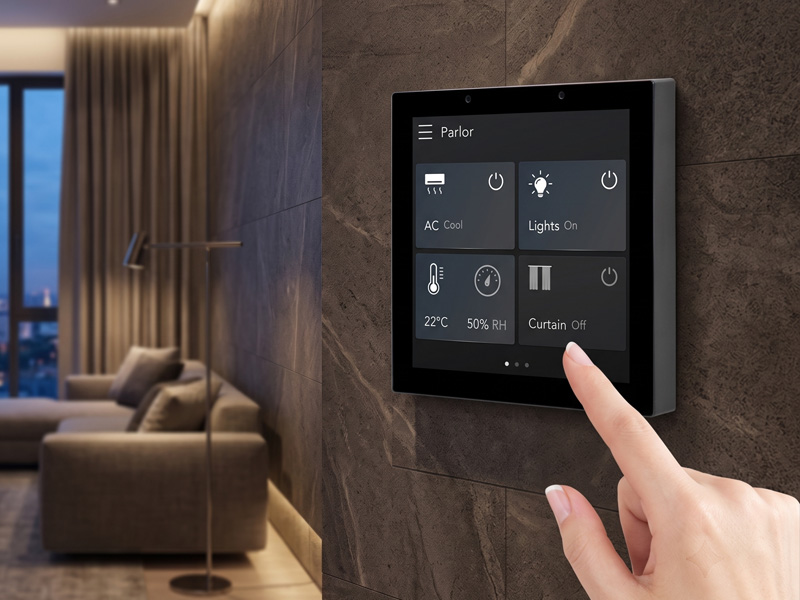
Smart Home Touch Control Panel
ESP32 OEM Manufacturing Process
A comprehensive OEM initiative encompasses the following phases:
Phase 1: Requirements Specification
Establish:
- Intended application context
- Display dimensions
- Technical specifications
- Data transmission standards
- Operational capabilities
Phase 2: Hardware Architecture Development
Engineering activities include:
- Circuit board layout
- Electronic component procurement
- Connectivity setup
- Test unit fabrication
Phase 3: Firmware and Software Engineering
Comprehends:
- Embedded system programming
- User interface development
- Protocol validation and testing
- Performance enhancement
Phase 4: Validation and Prototype Assessment
Evaluation encompasses:
- Input responsiveness verification
- Communication reliability
- Operational consistency
- Energy efficiency metrics
- Condition-based performance assessment
Phase 5: Commercial-Scale Production
Following authorization:
- Surface mount technology assembly
- Assembled circuit board validation
- Enclosure integration
- Compliance verification
- Final packaging and distribution
Portworld ESP32 Smart Control Panel OEM Solution
Portworld delivers comprehensive OEM/ODM manufacturing services specializing in ESP32 smart touch panel solutions.
The YC-SM43P ESP32-S3 Smart Touch Panel represents a versatile platform engineered to accommodate customization requirements across diverse applications.
Core technical specifications include:
- ESP32-S3 dual-core processor architecture
- 4-inch capacitive touchscreen interface
- WiFi and Bluetooth 5.0 connectivity
- Ethernet integration capability
- RS485 communication protocol support
- LVGL UI development framework compatibility
Available OEM customization capabilities encompass:
- Proprietary hardware design and engineering
- Customized firmware development and optimization
- Tailored user interface design
- Brand identity and packaging customization
- Alternative interface configurations and mounting methodologies
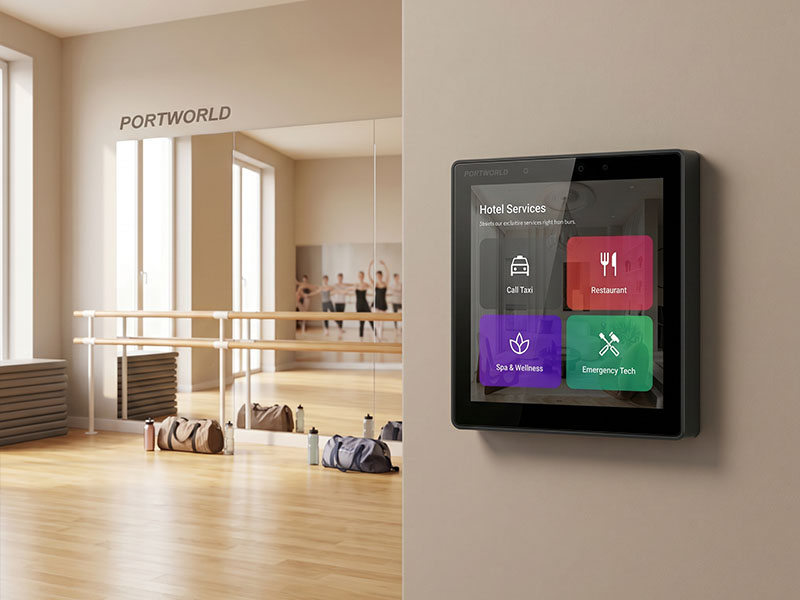
4″ KNX Smart Touch Control Panel
Utilization Scenarios for OEM ESP32 Smart Panels
Smart Home Manufacturers
Develop branded control interfaces for:
- Lighting automation systems
- HVAC management solutions
- Automated curtain control systems
- Security system integration
Hospitality Automation Enterprises
Engineer customized guest accommodation panels supporting:
- Lighting control
- Temperature regulation
- In-room service request systems
- Industrial IoT Enterprises
Design customized HMI terminals facilitating:
- Real-time machine monitoring
- Equipment operational control
- Comprehensive data visualization
Intelligent Building Solutions
Integrate with existing infrastructure including:
- HVAC system networks
- Energy management platforms
- Building automation ecosystems
Why Select the ESP32 for Original Equipment Manufacturer Smart Control Panels?
Economical Solution
The ESP32 delivers comprehensive Internet of Things capabilities while maintaining an economical price point.
Adaptable Engineering
Facilitates the development of proprietary firmware and personalized user interfaces.
Robust Communication Infrastructure
Incorporates the following capabilities:
- WiFi
- Bluetooth
along with compatibility for supplementary communication interfaces.
Appropriate for Large-Scale Manufacturing
ESP32 implementations are extensively deployed across scalable Internet of Things projects.
The ESP32 smart control panel represents an optimal selection for Original Equipment Manufacturer and Original Design Manufacturer production initiatives. Organizations possess the capability to tailor virtually all components, encompassing hardware architecture, physical enclosure design, embedded software, interactive display interface, data transmission standards, and corporate identification.