How Do I Choose a Smart Control Panel for Hotel Rooms?
Modern hotels are increasingly adopting smart control panels to improve guest experiences, simplify room management, and reduce energy consumption. A hotel room control panel allows guests to manage lighting, air conditioning, curtains, entertainment systems, and service functions from one centralized touchscreen interface.
However, choosing the right smart control panel for hotel rooms requires considering factors such as display size, operating system, communication protocols, installation method, and customization requirements.
1. Choose the Right Screen Size
The display size directly affects the user experience and installation style.
Suitable for:
- Basic room control
- Bedside installation
- Lighting switches
- Temperature adjustment
Advantages:
- Compact design
- Easy wall installation
- Cost-effective
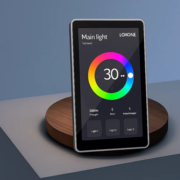
- 7 Inch Smart Control Panels
A 7-inch panel is one of the most popular choices for hotel rooms.
Suitable for:
- Guest room automation
- Lighting scenes
- HVAC control
- Curtain control
- Room information display
Advantages:
- Comfortable touchscreen experience
- Enough space for multiple controls
- Good balance between design and functionality
10 Inch or Larger Panels
Suitable for:
- Luxury hotels
- Large suites
- Meeting areas
- Commercial spaces
Advantages:
- Expanded user interface
- Enhanced information presentation capabilities
- Compatibility with sophisticated applications
2. Determine the Suitable Operating System
The operating system establishes software adaptability and functional application capacity.
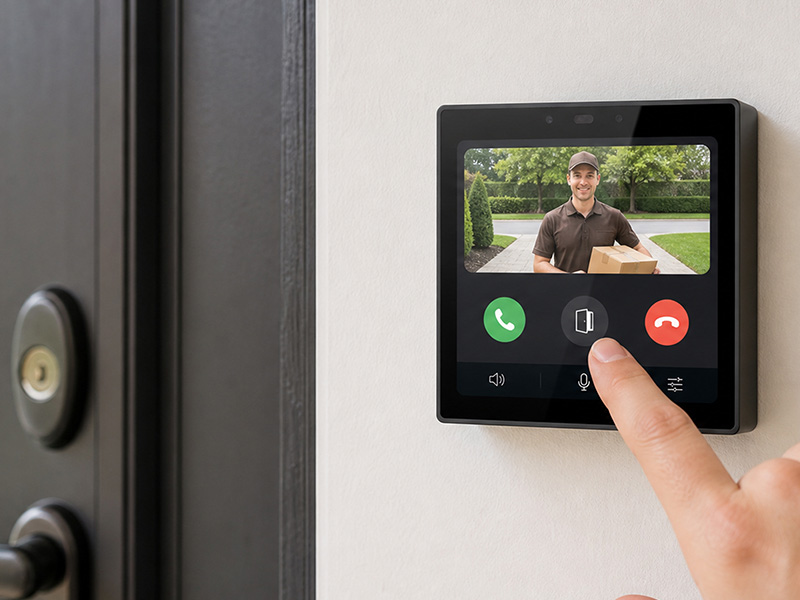
4″ Smart Control Panel
Android-based panels are extensively implemented in hotel automation systems due to their support for:
- Customized Android applications
- Touchscreen user interfaces
- Integration with third-party software solutions
- Remote system updates
Suitable for:
- Intelligent hotel management platforms
- Automated digital concierge services
- Multimedia management and control
Processors including the Rockchip RK3566 deliver adequate computational performance for Android-based hotel room control panels.
Linux-based panels are appropriate for:
- Embedded system applications
- Customized user interface designs
- Industrial-grade automation infrastructure
Advantages:
- Reliable and consistent performance
- Extensive customization possibilities
- Minimal computational resource requirements
ESP32-based panels are well-suited for the following applications:
- Basic room management
- Internet of Things implementations
- Energy-efficient automation solutions
Key Benefits:
- Minimal energy requirements
- WiFi and Bluetooth capabilities
- Affordable implementation options
3. Evaluate Compatible Communication Protocols
A hotel room control panel must facilitate communication across various connected devices.
Critical protocols encompass:
Ethernet / PoE
Highly advantageous for hotel environments.
Key Advantages:
- Dependable network reliability
- Simplified deployment procedures
- Integrated power and data transmission via single cable
Primary Applications:
- Centralized management infrastructure
- Individual room control systems
- Comprehensive building automation frameworks
WiFi
Applicable to:
- Cloud-based services
- Mobile application platforms
- Internet of Things ecosystems
Bluetooth / BLE
Appropriate for:
- Sensory devices
- Secure access systems
- Guest communication interfaces
- RS485 / Modbus
Essential for hotel climate control systems.
Applications include:
- Heating and cooling system management
- Temperature regulation devices
- Facility management platforms
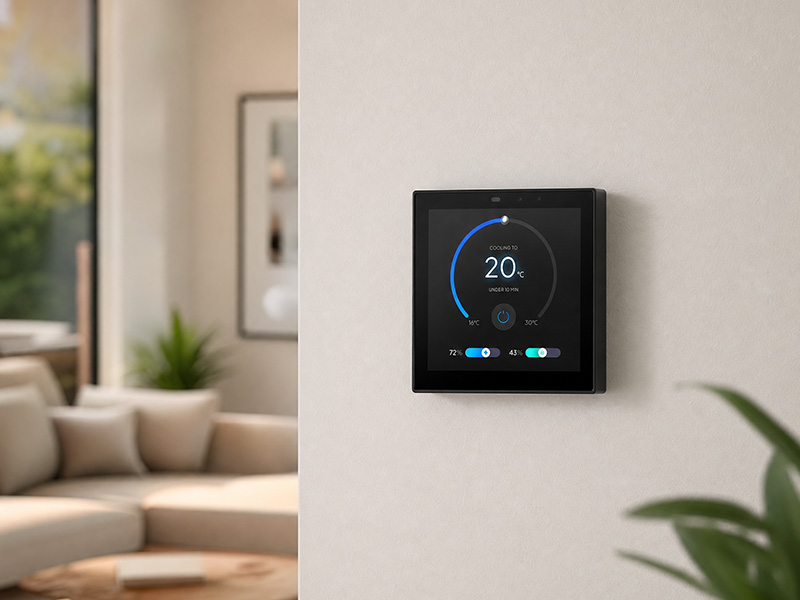
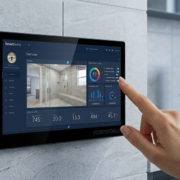
smart home control panel
Illustrative Example:
Smart Panel → RS485 Modbus → HVAC Controller
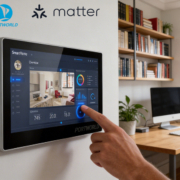
Zigbee / Matter
Beneficial for distributed intelligent device networks.
Use Cases:
- Intelligent illumination systems
- Sensory equipment
- Automated switching mechanisms
4. Evaluate Hotel Room Installation Requirements
A superior hotel control panel must facilitate professional installation procedures.
Essential capabilities encompass:
Wall Embedded Installation
Delivers:
- Refined aesthetic appearance
- Contemporary interior design integration
- Enhanced guest satisfaction
Prevalent specifications:
- UK 86 type wall box
- European Union wall box
- Tailored mounting brackets
- Power over Ethernet Support
Power over Ethernet streamlines hotel deployment through minimized cabling infrastructure.
Rather than implementing separate power and network conductors:
Single Ethernet Cable = Power Supply + Data Transmission
Advantages:
- Accelerated installation timeline
- Simplified maintenance operations
- Optimized room aesthetics
5. Select Hardware Performance in Accordance with Application Requirements
Various hotel projects necessitate distinct levels of computational capacity.
Elementary Room Automation
Requirements:
- Illumination management
- Window covering operation
- Climate control modification
Recommended hardware:
- ESP32
- Entry-level ARM processors
Comprehensive Hotel Automation
Requirements:
- Tailored applications
- Entertainment system management
- Video communication systems
- Automated guest services
Recommended hardware:
- Rockchip RK3566
- Advanced-performance ARM processors
6. Facilitate Proprietary Hotel Application Integration
Hotel establishments frequently require purpose-built user interfaces.
An appropriate intelligent control interface should incorporate:
- Customizable user interface design
- Hotel identity representation
- Multilingual support capabilities
- In-room service connectivity
- Property management system integration
Illustrative example:
Guest-facing interface:
- Initial welcome presentation
- Adjustable illumination configurations
- Climate preference controls
- Facility request submission
7. Evaluate OEM/ODM Customization Capabilities
Customization represents a critical consideration for hotel infrastructure projects.
Reputable manufacturers should deliver:
- Hardware Customization
- Processor selection options
- Interface configuration flexibility
- PCBA customization services
- Sensor integration capabilities
- Appearance Customization
- Logo imprinting services
- Housing color selection
- Bracket design modifications
- Packaging solutions
- Software Customization
- User interface design
- Firmware development services
- Android/Linux customization options
- Illustrative Example: Portworld Hotel Smart Control Panel Solutions
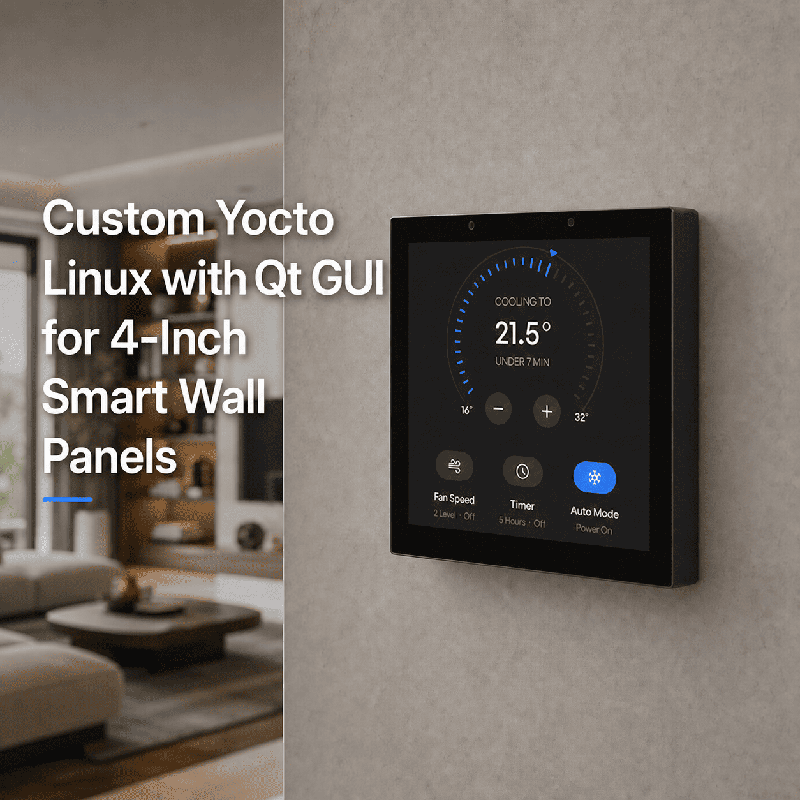
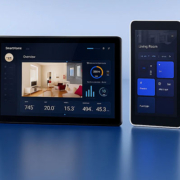
smart home control panel
Portworld delivers customized smart control panels engineered for hotel room automation applications.
Offered solutions encompass:
YC-SM43P ESP32-S3 Smart Touch Panel
Applications include:
- Internet of Things hotel control systems
- Compact room panel installations
- Customized automation system implementations
Key capabilities:
- ESP32-S3 processor technology
- Touchscreen interface functionality
- WiFi and Bluetooth connectivity
- Ethernet and RS485 communication options
YC-SM51P 5.5-Inch Intelligent Touch Control Panel
Applications:
- Hotel room management systems
- Wall-integrated automation solutions
Specifications:
- Android and Linux compatibility
- RK3566 or RK3506 processor configurations
- Wireless connectivity via WiFi
- Bluetooth 5.2 technology
- RJ45 Power over Ethernet (PoE) connectivity
- YC-SM10P 10-Inch Intelligent Control Interface Panel
Applications:
- Premium hotel environments
- Comprehensive room automation systems
Specifications:
- Expanded touchscreen display
- Android operating system
- Ethernet and Power over Ethernet (PoE) integration
When selecting an intelligent control panel for hotel room environments, the following factors warrant careful consideration:
- Display dimensions tailored to specific room specifications
- Operating system selection from Android, Linux, or ESP32 platforms based on functional requirements
- Connectivity options including Ethernet, Power over Ethernet, WiFi, RS485, Zigbee, and Matter protocols
- Structural compatibility with wall-mounted installation systems
- Availability of customizable software and hardware solutions
For the majority of hotel automation implementations, a touchscreen panel measuring between 5 and 7 inches delivers an optimal combination of user interface quality, spatial efficiency, and financial viability. Conversely, larger display units are recommended for premium accommodations and sophisticated smart hotel systems.