How Do Smart Home Control Panels Connect to IoT Devices?
A smart home control panel serves as a central hub that links users to various IoT devices, enabling them to control lighting, HVAC systems, curtains, security systems, sensors, and appliances via a single touchscreen interface.
To facilitate communication with IoT devices, smart control panels employ a mix of wireless protocols, wired communication interfaces, and smart home gateways.
1. Wireless Connection Methods
WiFi: Direct Network-Based Communication
WiFi is among the most prevalent methods for connecting smart home devices.
A smart control panel establishes connections with:
- Smart appliances
- IP cameras
- Smart speakers
- Cloud platforms
- IoT servers
through the home or building’s network.
Advantages:
- High data transmission speed
- Seamless integration with cloud platforms
- Ideal for video and multimedia applications
Typical applications:
- Smart home dashboards
- Security monitoring
- Remote device management
Bluetooth: Short-Range Device Connection
Bluetooth technology is frequently utilized for establishing connections between nearby IoT devices.
Examples include:
- Smart sensors
- Smart locks
- Temperature monitors
- Wearable devices
Bluetooth Low Energy (BLE) is particularly advantageous for battery-operated devices due to its minimal power usage.
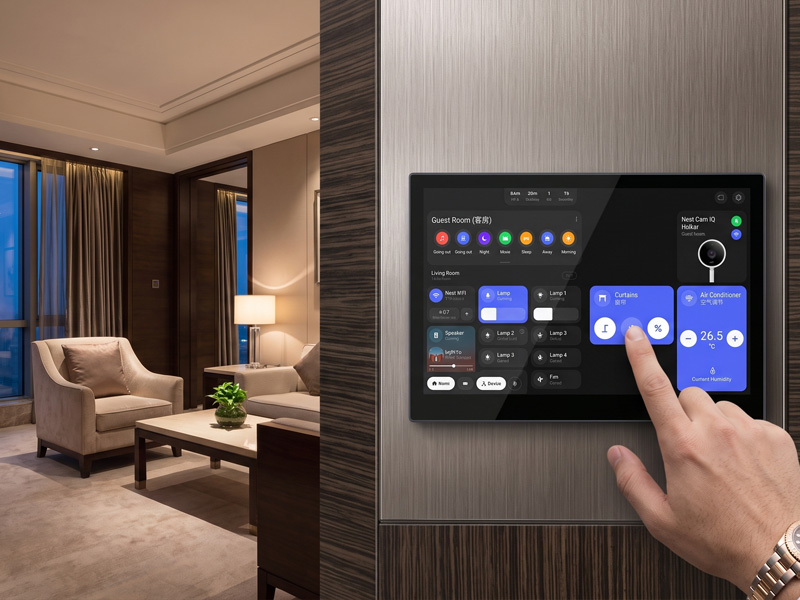
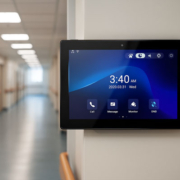
smart home control panel
Zigbee: Low-Power Mesh Networking
Zigbee is extensively employed in the realm of smart home automation.
A smart control panel interfaces with Zigbee devices via an integrated Zigbee module or an external gateway.
Common Zigbee devices consist of:
- Smart lighting
- Motion sensors
- Door sensors
- Curtain controllers
- Smart switches
Advantages include:
- Low power consumption
- Support for mesh networking
- Dependable communication across multiple devices
Thread and Matter: Advanced Connectivity for Smart Homes
The latest smart home systems are increasingly incorporating:
- Thread
- Matter
Matter enhances compatibility across various ecosystems, including:
- Apple Home
- Google Home
- Amazon Alexa
Thread facilitates a low-power mesh network specifically designed for IoT devices.
2. Wired Communication Techniques
- Ethernet Connection
- Ethernet ensures stable communication between smart panels and network systems.
Applications include:
- Building automation
- Commercial smart homes
- Hotel systems
- Office automation
Advantages include:
- Reliable connection
- High-speed communication
- Suitable for continuous operation
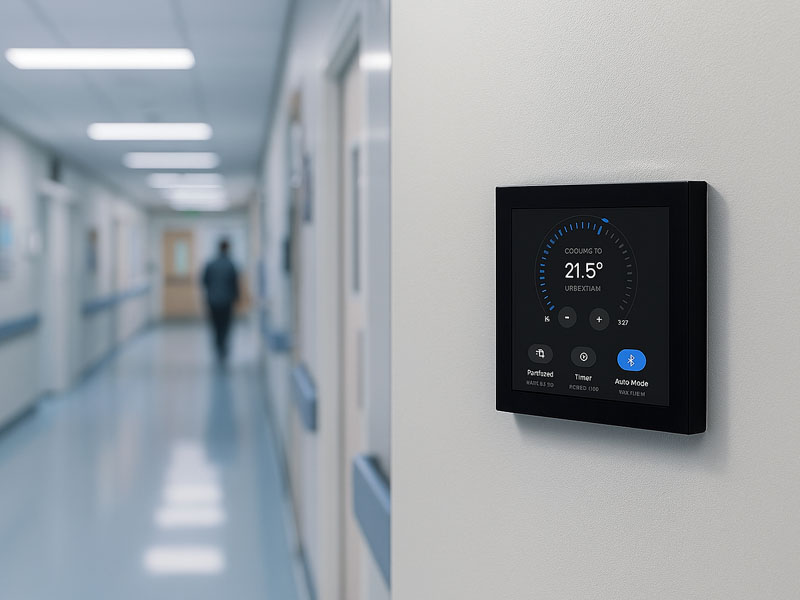
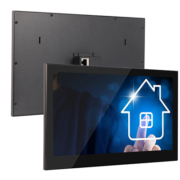
YC-SM10P
10.1 inch Smart Home Control Panel
PoE (Power over Ethernet)
PoE smart control panels integrate:
- Network communication
- Power supply
via a single Ethernet cable.
Advantages include:
- Simplified installation
- Reduced wiring complexity
- Centralized network management
PoE is commonly utilized in:
- Hotels
- Office buildings
- Hospitals
- Smart buildings
RS485 / Modbus Communication
Numerous professional automation devices utilize RS485.
A smart control panel is capable of directly interfacing with:
- HVAC controllers
- Lighting controllers
- Energy meters
- Industrial equipment
via the Modbus protocol.
Example:
Touch Panel → RS485 → HVAC Controller
When the user modifies the temperature on the panel, the command is transmitted directly to the HVAC system.
3. Smart Home Gateway Integration
A significant number of IoT devices are unable to communicate directly with touchscreen panels.
In this context, a smart gateway serves as a bridge.
The communication framework is as follows:
Smart Control Panel
↓
Smart Home Gateway
↓
IoT Devices
The gateway facilitates the conversion of various protocols, including:
Zigbee → IP
Modbus → Cloud API
Bluetooth → WiFi
Matter → Smart Home Platform
This functionality enables diverse devices to operate in unison.
4. Integration of Cloud and Mobile Applications
Contemporary smart control panels are capable of connecting to cloud platforms.
The configuration:
IoT Device
↓
Smart Control Panel
↓
Cloud Platform
↓
Mobile App
Users have the ability to remotely:
- Switch lights on/off
- Modify temperature
- Oversee security
- Regulate energy usage
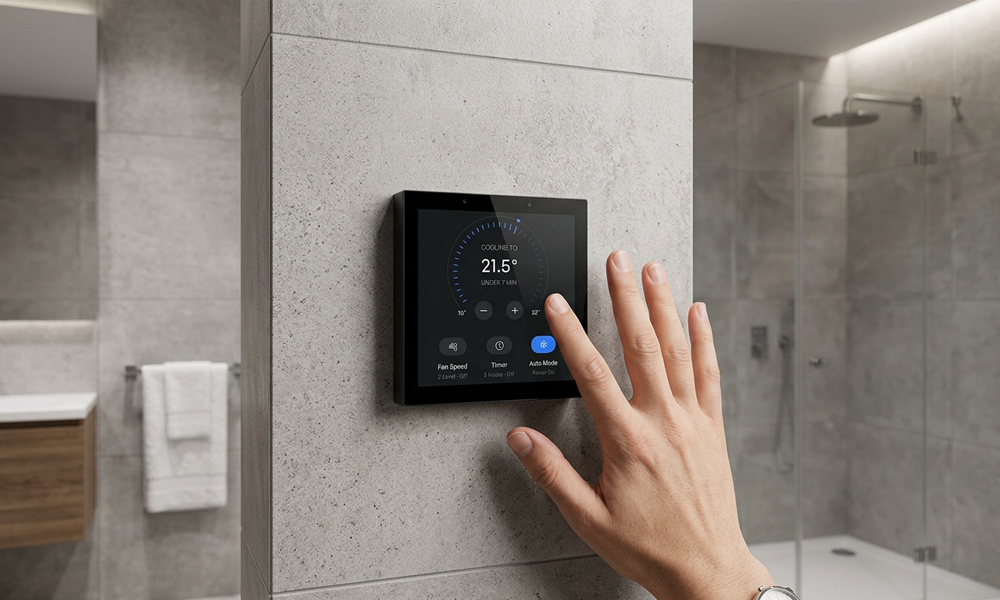
smart home control panel
5. Smart Scenes and Automation Protocols
Upon establishing a connection, smart control panels can formulate automation scenarios.
Illustrations:
Home Mode
With a single touch:
- Illuminate lights
- Adjust HVAC setting
- Draw curtains
- Engage security system
Meeting Room Mode
Automatically:
- Power on display
- Modify lighting
- Set temperature
- Initiate conference system
Hotel Room Mode
Upon guest arrival:
- Activate welcome lighting
- Regulate air conditioning
- Open curtains
Common IoT Connection Architecture
A modern smart home system may look like this:
Smart Control Panel
|
————————-
| | |
WiFi Zigbee RS485
| | |
Cameras Sensors HVAC
Devices Lights Controllers
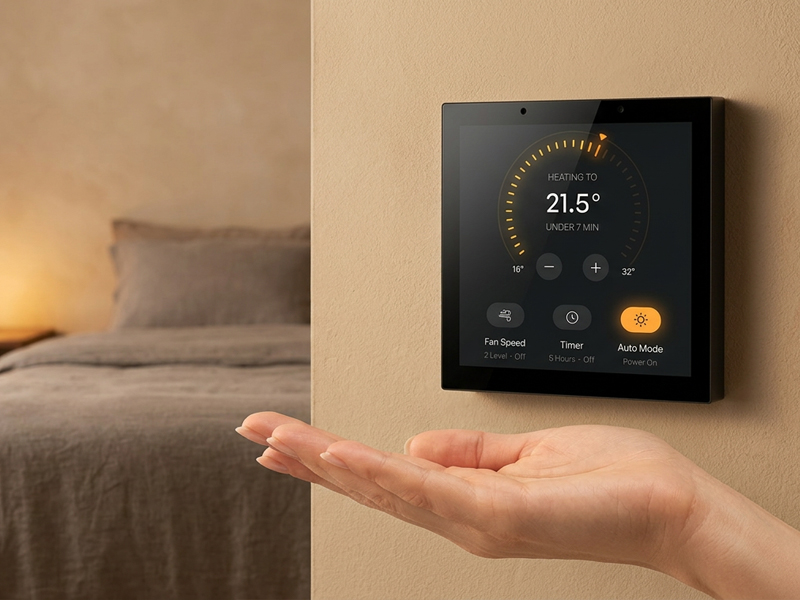
smart control panel1
Portworld Smart Control Panel Connectivity Solutions
Portworld’s smart touch panels offer a variety of IoT communication methods tailored for automation projects.
YC-SM43P ESP32-S3 Smart Touch Panel
Specifications:
- ESP32-S3 processor
- WiFi connectivity
- Bluetooth 5.0
- Ethernet support
- Power over Ethernet (PoE)
- RS485 communication capability
- Customizable interface using LVGL
Ideal for:
- IoT terminals
- Smart switches
- Building automation systems
Android/Linux Smart Control Panels
Specifications:
- RK3566/RK3568 processors
- Operating systems: Android/Linux
- Touchscreen interface
- Ethernet and PoE support
- RS485/Modbus compatibility
Use Cases:
- Smart homes
- Hotels
- Office environments
- Hospitals
- Commercial buildings
Smart home control panels interface with IoT devices using a variety of technologies, including WiFi, Bluetooth, Zigbee, Thread, Matter, Ethernet, PoE, and RS485/Modbus.
In simpler residential settings, wireless protocols facilitate straightforward installation. Conversely, for hotels, offices, and smart buildings, a blend of Ethernet, PoE, RS485, and IoT gateways offers a more dependable and scalable automation solution.