Can a Smart Control Panel Be Customized for Building Automation?
Affirmative—a smart control panel can indeed be tailored for building automation purposes. Contemporary commercial facilities necessitate centralized management solutions to oversee illumination, heating and cooling systems, security infrastructure, energy management, and other interconnected equipment. A tailored smart control panel delivers an accessible touchscreen interface while maintaining compatibility with existing building management systems (BMS).
Through customization of hardware components, software applications, communication standards, and interface design, manufacturers can develop smart panels specifically engineered for offices, hospitality establishments, retail centers, residential complexes, medical facilities, and comparable commercial settings.
How Does a Smart Control Panel Function in Building Automation?
A smart control panel functions as the central interaction point between operators and building infrastructure.
The standard operational framework:
Touchscreen Control Panel
↓
Building Automation Gateway / Controller
↓
HVAC + Lighting + Security + Energy Systems
Operators can observe and regulate diverse building operations from a unified display.
Applications include:
- Modify ambient temperature settings
- Regulate lighting configurations
- Observe power utilization metrics
- Oversee entry control mechanisms
- Operate automated window coverings
What Elements Can Be Tailored for Building Automation Systems?
1. Hardware Customization
Building automation initiatives frequently necessitate specialized hardware configurations.
Intelligent control panels may be configured with:
Processor Selections
- ESP32 / ESP32-S3 for Internet of Things control panels
- Rockchip processors for Android-based smart terminals
- Intel processors for sophisticated HMI applications
Display Dimensions
Prevalent alternatives:
- 4-inch
- 5-inch
- 7-inch
- 8-inch
- 10-inch
- 15.6-inch
Various dimensions accommodate distinct applications:
- Wall-mounted switches
- Conference facilities
- Centralized building control facilities
- Lobby environments
2. Communication Protocol Customization
Building automation systems employ a variety of communication protocols. A customized smart control panel can accommodate multiple interface types.
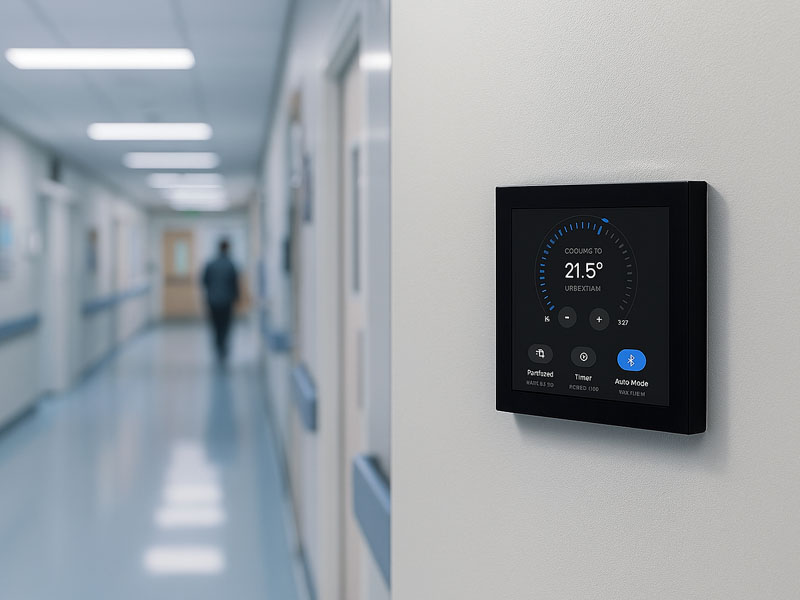
YC-SM10P
10.1 inch Smart Home Control Panel
RS485 / Modbus
Commonly utilized for:
- HVAC controllers
- Temperature sensors
- Energy meters
- Fan coil units
Example:
Smart Control Panel
↓ RS485 Modbus
HVAC System
Ethernet
Applicable to:
- Large-scale buildings
- Centralized management systems
- Industrial network infrastructure
Advantages:
- Dependable communication
- Extended-distance connectivity
- Simplified network implementation
WiFi and Bluetooth
Implemented in:
- Wireless Internet of Things devices
- Intelligent sensors
- Mobile device connectivity
Zigbee and Matter
Within smart building environments, Zigbee and Matter facilitate integration with:
- Intelligent lighting systems
- Sensor networks
- Wireless control switches
- Internet of Things devices
3. Customized Software and User Interface Development
A building automation control panel necessitates an intuitive and accessible user interface.
Manufacturers have the capability to customize:
- Touchscreen user interface design
- Building management dashboards
- Multilingual language support
- User access and permission controls
- Automated control scenes
Example interface:
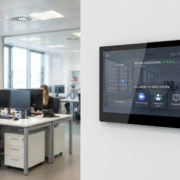
Office Building Dashboard
Displays:
- Floor-level temperature readings
- Lighting system status
- Building occupancy data
- Energy consumption metrics
4. HVAC System Control Integration
Heating, ventilation, and air conditioning systems represent one of the most prevalent applications for intelligent control panels.
A customized panel can regulate:
- Air conditioning systems
- Heating systems
- Ventilation systems
- Fan coil unit operations
Functions include:
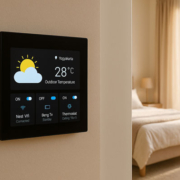
- Temperature adjustment capabilities
- Cooling and heating mode selection
- Fan speed regulation
- Operational scheduling
- Energy conservation modes
RS485 Modbus communication protocol is the standard method employed for HVAC system integration.
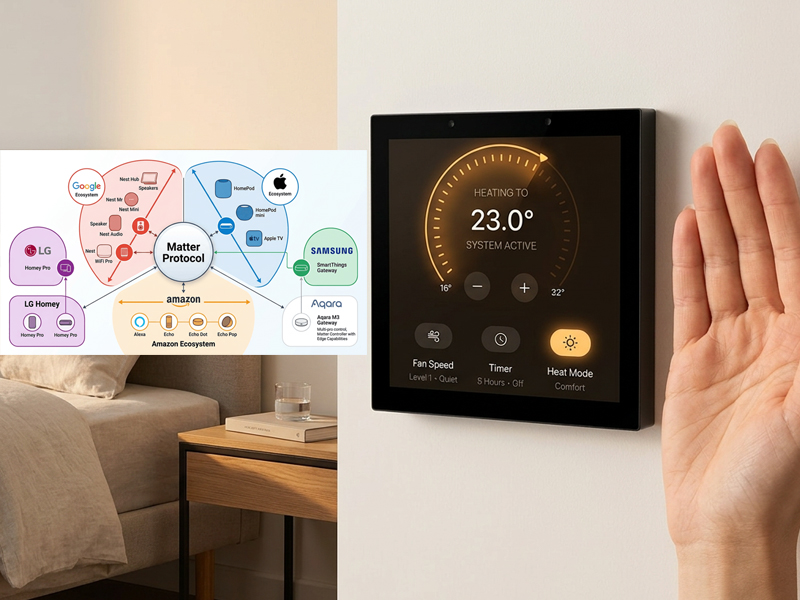
smart home control panel
5. Lighting and Energy Management Systems
Intelligent control panels can be integrated with lighting infrastructure to enhance energy efficiency performance.
Functions:
- Power control (ON/OFF)
- Illumination intensity adjustment
- Lighting scene configuration
- Automated scheduling functionality
Example:
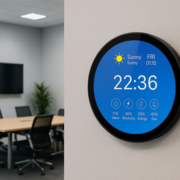
Meeting Room Mode
Single-button activation:
- Activate presentation lighting
- Lower window coverings
- Modify room temperature
- Enable audiovisual equipment
6. Intelligent Building Security System Integration
A specialized control interface can establish connections with:
- Intelligent locking mechanisms
- Entry management solutions
- Perimeter detection sensors
- Video monitoring infrastructure
Capabilities for operators include:
- Real-time security status observation
- Alert notification review
- Access credential administration
Illustration: Portworld Intelligent Control Panel Technology for Facility Automation
Portworld delivers customized OEM/ODM intelligent control panel solutions engineered for facility automation environments.
YC-SM51P Intelligent Touch Interface Panel
Applications include:
- Commercial building management
- Hospitality room control systems
- Residential smart home environments
Technical specifications:
- 5.5-inch IPS display technology
- Android and Linux compatibility
- RK3566 or RK3506 processing units
- WiFi and Bluetooth 5.2 wireless protocols
- RJ45 Ethernet connectivity with Power over Ethernet capability
- RS485 serial communication support
- Wall-mounted configuration option
ESP32-S3 Intelligent Control Interface Panels
Applications include:
- Connected building system management
- Climate control system interfaces
- Intelligent switching solutions
Technical specifications:
- Energy-efficient operation
- WiFi and Bluetooth communication capabilities
- Adaptable software development options
- MQTT and Modbus protocol compatibility
Original Equipment Manufacturer and Original Design Manufacturer Customization Capabilities
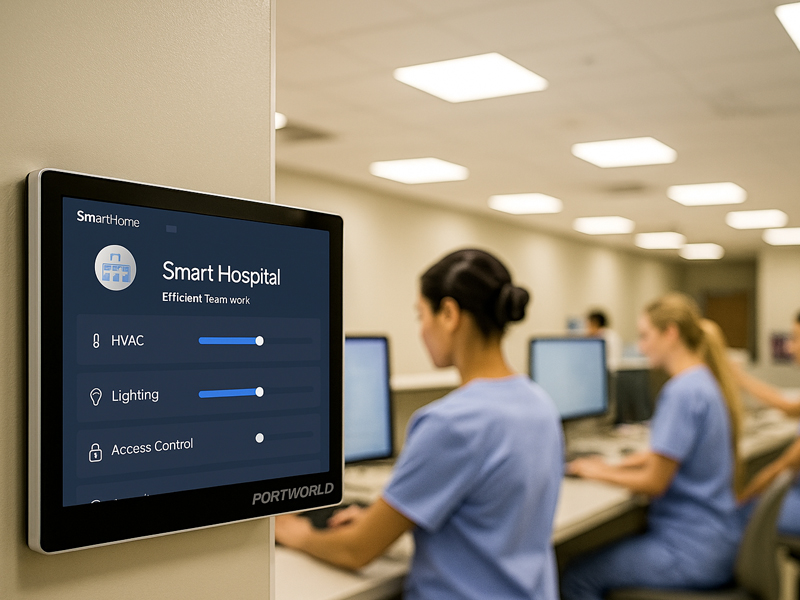
smart touch control panel8
For building automation initiatives, manufacturers have the capacity to customize:
Hardware Components
- Display dimensions
- Processing unit
- Communication ports
- Detection devices
- Power over Ethernet capability
- Physical housing configuration
Software Solutions
- Android and Linux system modifications
- ESP32 microcontroller programming
- Proprietary application development
- User interface customization
Identity and Presentation
- Trademark application
- Exterior finish coloration
- Container and delivery materials
Utilization of Customized Building Automation Control Systems
Office Facilities
Regulation of:
- Conference spaces
- Illumination systems
- Heating, ventilation, and air conditioning
- Power consumption infrastructure
Hospitality Establishments
Administration of:
- Residential accommodations
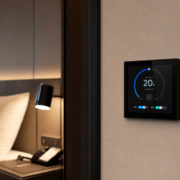
- Thermal regulation
- Window coverings
- Illumination configurations
Intelligent Residential Units
Management of:
- Residential automation systems
- Access control mechanisms
- Environmental conditioning
Industrial and Commercial Facilities
Supervision of:
- Power consumption metrics
- Operational device performance
- Integrated facility systems
A smart control panel can be fully customized for building automation by modifying the hardware, software, communication protocols, and user interface.
With support for technologies such as RS485 Modbus, Ethernet, WiFi, Bluetooth, Zigbee, and Matter, customized smart control panels can integrate with HVAC, lighting, security, and energy management systems.