Can ESP32 Control HVAC Through a Smart Control Panel?
The regulation of Heating, Ventilation, and Air Conditioning (HVAC) represents a critical operational function within intelligent residential environments, hospitality establishments, corporate offices, and large-scale commercial facilities. As Internet of Things (IoT) technology continues to advance, ESP32 intelligent control panels have become increasingly prevalent as sophisticated interfaces designed to supervise and regulate HVAC system performance.
An ESP32 intelligent control panel facilitates HVAC system management through established communication channels with HVAC controllers, utilizing protocols including RS485/Modbus, WiFi, Bluetooth, MQTT, and intelligent gateway systems. This infrastructure enables occupants to modify temperature settings, regulate fan velocity, select operational modes, and establish scheduling parameters directly via an interactive touchscreen display.
Operational Mechanism of ESP32 Smart Control Panels in HVAC Management
A conventional HVAC regulatory system operates according to the following sequence:
Touchscreen Interface
↓
ESP32 Processing Unit
↓
Communication Protocol
↓
HVAC Controller / System
Upon user modification of the temperature setting on the touchscreen interface, the ESP32 processor executes the command and transmits corresponding directives to the HVAC system.
Illustrative Scenario:
User establishes temperature parameter at 24°C
↓
ESP32 panel transmits command instruction
↓
HVAC controller modifies air conditioning operational parameters
↓
Temperature sensor relays feedback information to the control panel
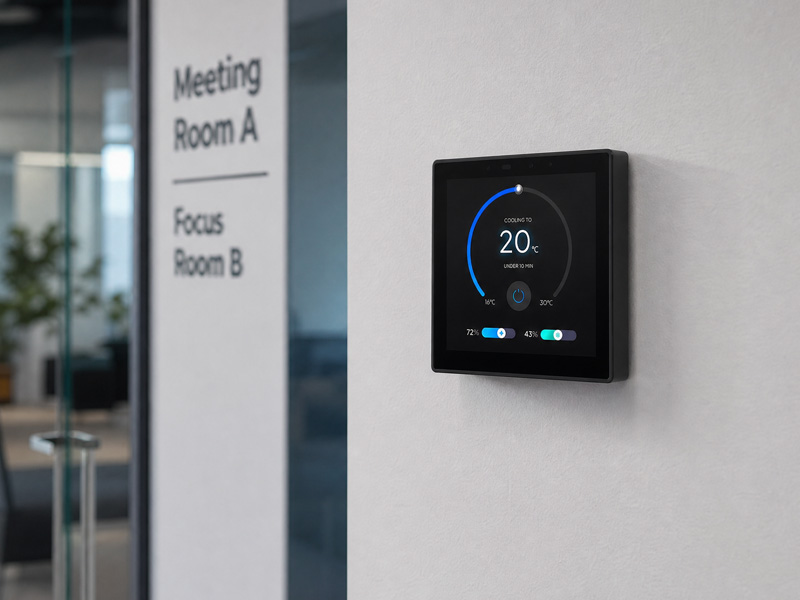
smart home control panel
1. ESP32 Control HVAC Through RS485 Modbus
RS485 Modbus represents one of the most prevalent methodologies for establishing communication between ESP32 panels and HVAC systems.
Numerous commercial HVAC devices, including:
- Air conditioning units
- Fan coil assemblies
- Temperature regulation devices
- Building management systems
support Modbus communication protocols.
The connection architecture:
ESP32 Smart Panel
↓ RS485
Modbus HVAC Controller
Via Modbus commands, the ESP32 can regulate:
- Temperature configuration parameters
- Cooling and heating operational modes
- Fan velocity control
- Power operational status
- Maintenance and operation schedules
Key benefits:
- Extended-range communication capability
- Superior dependability and fault tolerance
- Optimal implementation for commercial facilities
2. ESP32 HVAC Control Through WiFi
WiFi connectivity is extensively utilized in smart home environments and Internet of Things-based HVAC systems.
The system architecture:
ESP32 Panel
↓ WiFi
Smart Home Server / Gateway
↓
HVAC System
WiFi capabilities include:
- Remote operation via mobile applications
- Integration with cloud-based platforms
- Intelligent automation routines
Illustrative scenario:
Upon the homeowner’s arrival:
- Smart lock disengages
- ESP32 panel becomes operational
- HVAC system initiates automatically
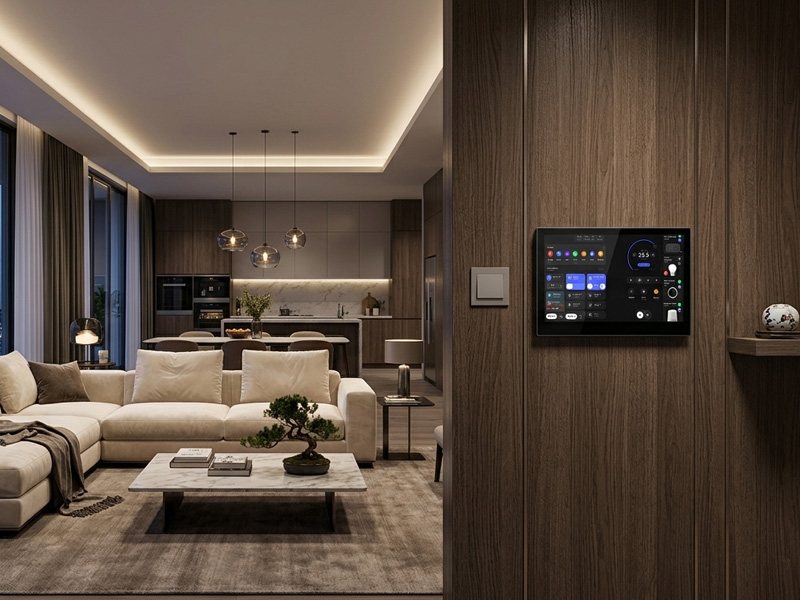
smart home control panel-1
MQTT is frequently employed in Internet of Things heating, ventilation, and air conditioning applications.
The communication framework:
ESP32 Panel
↓
MQTT Broker
↓
HVAC Controller
Illustrative MQTT message examples:
Temperature configuration:
Topic:
home/livingroom/hvac/set
Message:
24℃
HVAC status:
Topic:
home/livingroom/hvac/status
Message:
Cooling ON
MQTT allows multiple devices to communicate through one smart building platform.
4. ESP32 with HVAC Smart Gateways
Contemporary HVAC systems frequently employ proprietary communication protocols.
In such circumstances, an ESP32 panel can establish connectivity through a gateway.
Example:
ESP32 Touch Panel
↓ WiFi/Ethernet
HVAC Gateway
↓
Air Conditioning System
The gateway facilitates protocol conversion and enables intelligent control integration.
What HVAC Functions Can an ESP32 Panel Control?
A touchscreen ESP32 HVAC panel is capable of delivering:
Temperature Control
Users are able to:
- Establish target temperature
- Monitor current temperature
- Alternate between Celsius/Fahrenheit
- Operating Modes
Manage:
- Cooling
- Heating
- Fan only
- Automatic mode
- Fan Speed Adjustment
Users may choose:
- Low speed
- Medium speed
- High speed
- Auto fan
- Scheduling and Automation
Develop intelligent scenes:
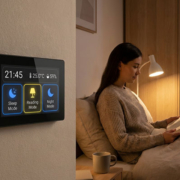
Sleep Mode
- Decrease temperature
- Reduce fan speed
- Disable unnecessary devices
Energy Saving Mode
- Modify HVAC operation automatically
- Minimize power consumption
What Hardware Components Are Required for ESP32-Based HVAC Control Systems?
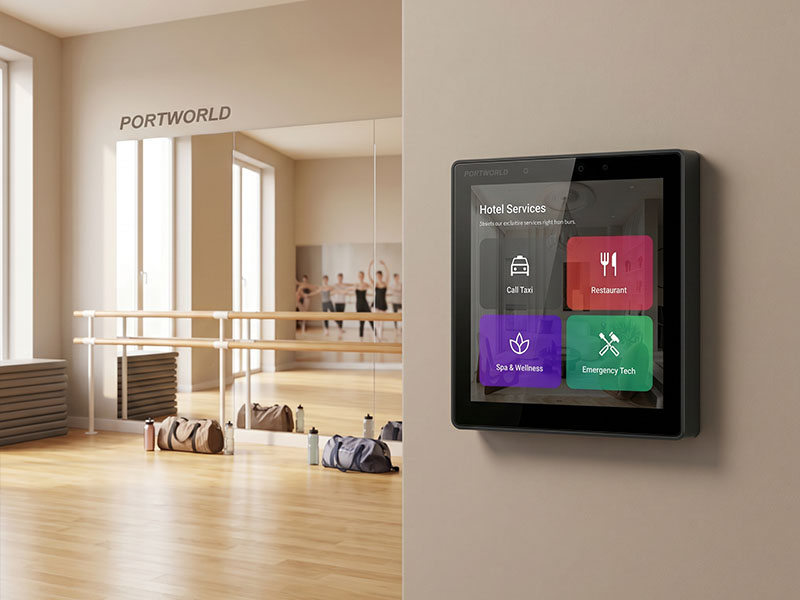
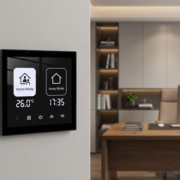
4″ KNX Smart Touch Control Panel
A standard ESP32 HVAC control panel comprises the following essential components:
ESP32-S3 Microprocessor
Delivers the following capabilities:
- Touchscreen interface management
- Internet of Things connectivity
- Energy-efficient operation
- Touchscreen Display Unit
Utilized for presenting:
- Temperature readings
- HVAC system status
- Operational control interfaces
- Communication Protocols and Modules
Selected based on specific requirements:
- RS485 serial communication
- WiFi wireless connectivity
- Bluetooth wireless technology
- Ethernet wired connectivity
The Portworld YC-SM43P represents an advanced ESP32-S3 intelligent touch panel engineered specifically for Internet of Things and automation environments.
This device incorporates the following technical capabilities:
- Dual-core ESP32-S3 microprocessor
- 4-inch capacitive touch display
- WiFi connectivity
- Bluetooth 5.0 technology
- Ethernet interface
- RS485 serial communication protocol
- LVGL graphical user interface framework
Leveraging its RS485 connectivity and comprehensive IoT integration capabilities, the YC-SM43P demonstrates considerable versatility for HVAC control implementations across diverse applications, including:
- Residential smart home systems
- Hospitality room automation
- Commercial office environments
- Integrated building management platforms
ESP32 vs Traditional HVAC Controllers
| Feature | ESP32 Smart Panel | Traditional HVAC Controller |
|---|---|---|
| Touchscreen Interface | ✅ | Limited |
| WiFi Connectivity | ✅ | Usually unavailable |
| IoT Integration | ✅ | Limited |
| Custom UI | ✅ | Limited |
| Cost | Lower | Higher |
ESP32 adds smart connectivity and a modern user interface to traditional HVAC systems.
YC-SM10P
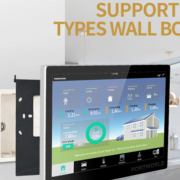
10.1 inch Smart Home Control Panel
Applications of ESP32 HVAC Smart Control Panels
Smart Homes
Management:
- Air conditioning units
- Radiant floor heating systems
- Mechanical ventilation solutions
Hospitality Sector
Deliver to guests:
- Individualized temperature adjustment
- Automated energy conservation features
- Intelligent environmental presets
Commercial Facilities and Infrastructure
Compatibility with:
- Heating, ventilation, and air conditioning infrastructure
- Comprehensive building management systems
- Facility-wide energy optimization platforms
An ESP32 microcontroller is capable of managing HVAC systems through an intelligent control panel by leveraging communication protocols including RS485 Modbus, WiFi, MQTT, and smart gateway technologies.
ESP32-equipped touchscreen control panels deliver an economical and adaptable approach for integrating sophisticated automation capabilities into HVAC systems, rendering them appropriate for:
- Residential smart home applications
- Hospitality establishments
- Corporate office environments
- Commercial facility infrastructure
Utilizing advanced solutions such as the Portworld YC-SM43P ESP32-S3 intelligent touch panel, software engineers and developers can construct tailored HVAC management interfaces and Internet of Things automation frameworks designed for contemporary intelligent building ecosystems.