How Can Digital Signage Displays Be Used for Queue Management?
Extended waiting periods and ambiguous service procedures can adversely impact the customer experience across hospitals, financial institutions, government agencies, airports, and commercial retail establishments. Conventional queue management systems typically depend on verbal announcements or physical signage, which impedes the delivery of instantaneous information updates.
A digital signage solution for queue administration offers an enhanced approach by displaying queue identifiers, operational status, anticipated wait durations, and navigational guidance instantaneously.
Through the integration of digital signage technology with specialized queue management software, organizations can enhance operational efficiency and deliver an improved customer experience.
Advantages of Implementing Digital Signage for Queue Management
Conventional queue systems present numerous operational challenges:
- Customers lack awareness of their position within the queue
- Personnel are required to deliver repetitive announcements
- Information dissemination experiences delays
- Congested waiting zones generate disorientation
Digital signage platforms address these challenges by delivering:
- Instantaneous queue status notifications
- Explicit visual communication
- Optimized customer movement and flow
- Diminished congestion in waiting facilities
Primary Applications of Queue Management Digital Signage Systems
1. Hospitals and Healthcare Facilities
Healthcare institutions represent a predominant sector for implementing digital queue display technologies.
These systems are capable of presenting:
- Patient identification numbers
- Physician availability status
- Departmental details
- Expected wait durations
- Consultation appointment statuses
Supplementary interactive terminals facilitate:
- Automated patient registration
- Directional guidance to departments
- Access to patient-related information services
Such implementations substantially diminish operational confusion and enhance patient throughput efficiency.
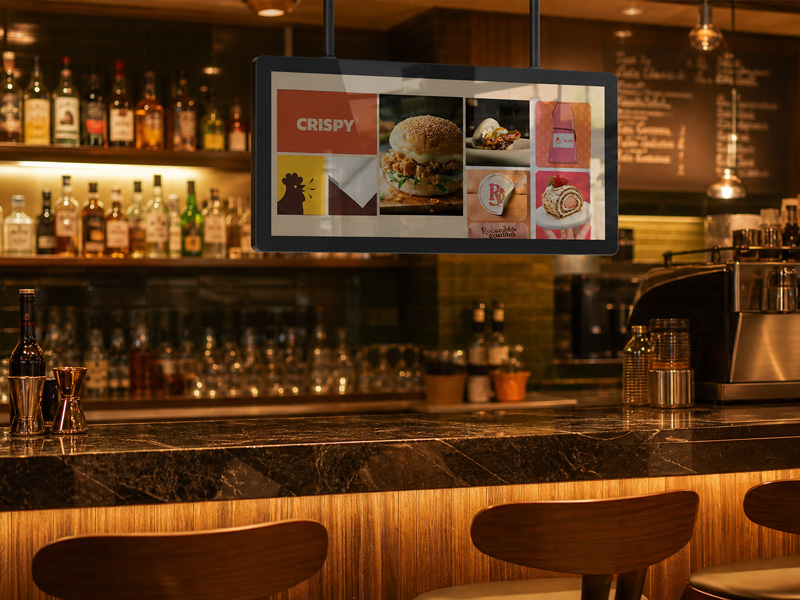
Stretch Bar Monitor
2. Banks and Financial Services
Financial institutions deploy digital signage queue management solutions to elevate customer service standards.
Key implementations encompass:
- Numerical queue display systems
- Service counter designation
- Transactional service notifications
- Promotional financial offerings
- Patrons experience enhanced comfort during waiting periods while simultaneously accessing pertinent information.
3. Government Service Centers
Public administration offices frequently contend with substantial visitor traffic volumes.
Digital queue display infrastructure delivers:
- Service ticket numerals
- Designated service counter locations
- Administrative processing status updates
- Official public communications
These systems substantially enhance operational productivity and minimize reliance on conventional interpersonal communication methods.
4. Retail Establishments and Service Facilities
Retail enterprises may implement queue management displays across the following operational areas:
- Customer service departments
- Equipment repair facilities
- Product collection points
- Automated service stations
Patrons obtain transparent direction throughout their waiting period.
Operational Mechanisms of Digital Queue Display Systems
A comprehensive queue management system comprises the following components:
Presents:
- Queue identification numbers
- Current service conditions
- Operational guidance
- Promotional content
Queue Management Software
Manages:
- Customer ticket allocation
- Service level prioritization
- Customer sequence organization
- Visual content presentation
Network Infrastructure
Facilitates system interconnectivity via:
- Ethernet connections
- Wireless networking
- Cloud-based solutions
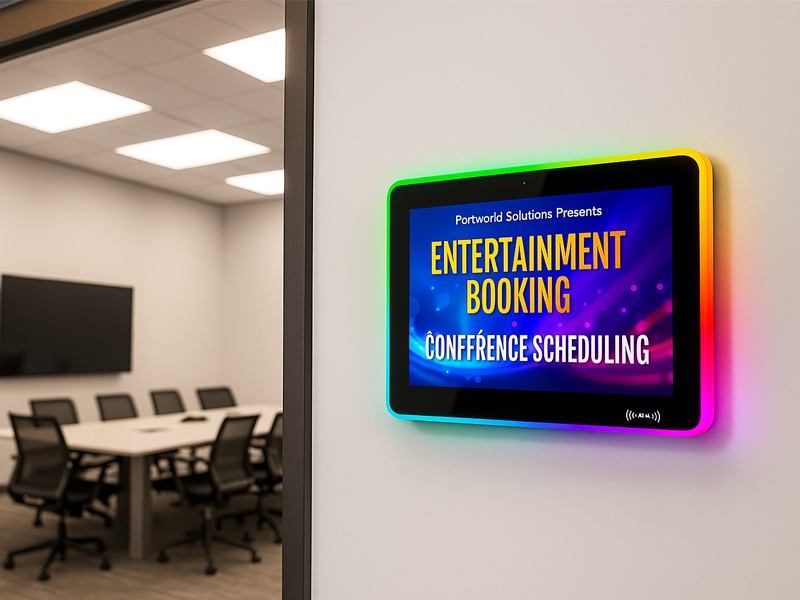
YC-LE156
15.6″ Meeting Room Display Panels
Essential Characteristics of Queue Management Display Systems
Instantaneous Data Presentation
Display systems facilitate immediate information dissemination regarding:
- Present queue numbe Subsequent customer identification
- Operational service station availability
- Customer queue status
Interactive Touchscreen Functionality
Advanced interactive systems deliver the following capabilities:
- Ticket issuance selection
- Service category designation
- Customer satisfaction assessment
- Data retrieval and inquiry
Predominant touch interface methodologies:
- Capacitive sensing technology
- Infrared detection technology
Multimedia Display Capabilities
During customer waiting periods, systems can present:
- Commercial promotional content
- Operational service documentation
- Health and safety directives
- Instructional and informational materials
This enhancement elevates the customer experience during wait times and establishes supplementary engagement channels.
Centralized Remote Administration
Large-scale enterprises can administer multiple queue display installations from a centralized location.
Administrative functions encompass:
- Display content modification
- System performance surveillance
- Application updates and patches
- Coordinated multi-site operations
Hardware Platforms for Queue Management Displays
Professional queue management systems depend on dependable embedded hardware infrastructure.
Prevalent processor architectures encompass:
- Rockchip RK3566
- RK3568
- RK3576
- RK3588
These platforms facilitate:
- Android-based applications
- Linux operating environments
- Touchscreen interface capabilities
- Database and network-based applications
Operating System Alternatives
Android
Optimal for:
- Interactive self-service kiosks
- Customer support terminals
- Touch-enabled applications
Linux / Debian / Ubuntu
Optimal for:
- Tailored queue management solutions
- Large-scale organizational implementations
- Extended operational lifecycles
Yocto Linux
Optimal for:
- Specialized commercial display terminals
- Purpose-built hardware configurations
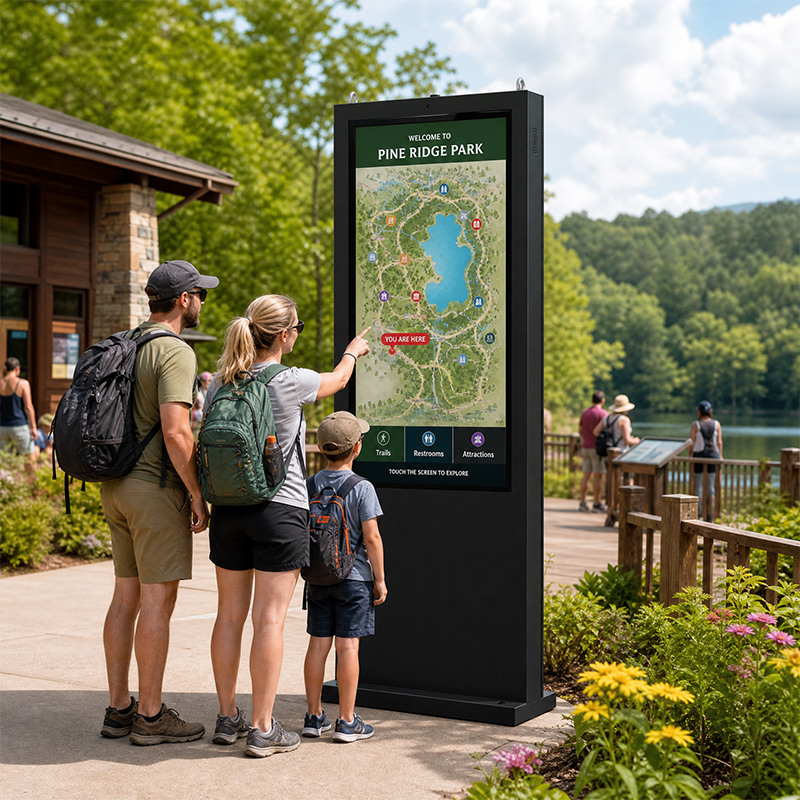
yc-5520 outdoor floor stand digital kiosk
Portworld Queue Management Digital Signage Solutions
Portworld delivers tailored touchscreen and digital signage systems engineered for queue management operations.
Key Capabilities:
- Android/Linux/Debian compatibility
- RK3566/RK3568/RK3576/RK3588 processor architectures
- Touchscreen kiosk platforms
- Ethernet and WiFi communication interfaces
- Centralized remote content management system
- NFC/RFID technology and integrated camera functionality
- Proprietary motherboard engineering
- Comprehensive OEM/ODM solutions
Implementation Sectors:
- Healthcare facility queue administration
- Financial institution service terminals
- Public sector information displays
- Commercial retail customer engagement systems
- Automated self-service terminal installations