What Protocols Should a Hotel Smart Control Panel Support?
Communication Technologies for Smart Hotel Room Automation
A hotel smart control panel serves as the primary interface enabling guests to manage various room functions including lighting, HVAC systems, curtains, entertainment systems, and smart locks. To achieve compatibility with diverse hotel automation systems, the control panel must accommodate multiple communication protocols.
The optimal protocol selection depends on the hotel’s specific automation infrastructure; however, contemporary smart hotel control panels generally incorporate RS485/Modbus, Ethernet, WiFi, Bluetooth, Zigbee, MQTT, and API-based communication capabilities.
1. RS485 / Modbus RTU — Essential for Hotel HVAC Control
RS485 Modbus represents one of the most prevalent protocols employed in hotel automation environments.
It finds extensive application in:
- Fan coil units (FCU)
- Air conditioning systems
- Temperature controllers
- Energy meters
- Building management systems (BMS)
Example:
- Hotel Smart Control Panel
- ↓ RS485 Modbus
- HVAC Controller
Guests are able to modify:
- Room temperature
- Cooling/heating mode
- Fan speed
- Energy-saving settings
Advantages:
- Extended-distance communication capability
- Dependable connection reliability
- Appropriate for multi-room installations
- Extensively supported by HVAC manufacturers
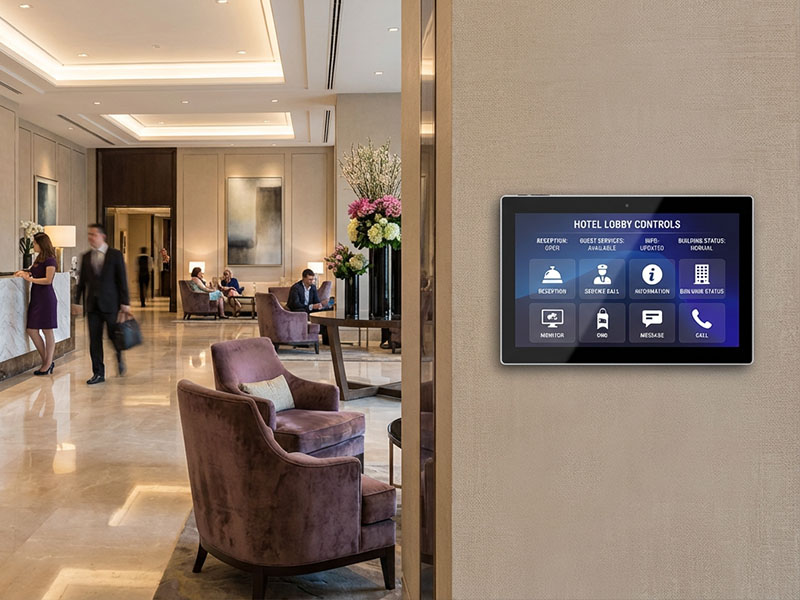
YC-SM10P
10.1 inch Smart Home Control Panel
2. Ethernet / Modbus TCP — Facilitating Centralized Hotel Management Systems
Ethernet infrastructure proves essential for hospitality establishments requiring unified management capabilities.
Applications:
- Integrated building management systems
- Centralized hotel server infrastructure
- Automated room control networks
- Front desk surveillance and monitoring systems
Example:
- Intelligent Room Control Interface
- ↓ Ethernet
- Centralized Hotel Automation Server
Advantages:
- Superior system reliability
- Rapid data transmission capabilities
- Streamlined network installation and configuration
Numerous commercial-grade smart control panels incorporate Power over Ethernet (PoE) technology, enabling a single cable to simultaneously deliver electrical power and network connectivity.
3. WiFi — Wireless Smart Device Integration
WiFi serves as a standard connectivity solution in hotel smart control panels, facilitating connections to:
- Cloud platforms
- Mobile applications
- Smart appliances
- Internet of Things devices
Primary Applications:
- Guest-initiated mobile control
- Remote room management capabilities
- Cloud-integrated hotel management systems
Key Advantages:
- Straightforward implementation and deployment
- Eliminates the necessity for supplementary wiring infrastructure
- Provides comprehensive support for IoT ecosystem integration
4. Bluetooth / BLE — Short-Range Device Connection
Bluetooth Low Energy technology proves particularly valuable for:
- Intelligent locking mechanisms
- Sensor integration
- Guest smartphone pairing functionality
- Portable wearable technology
Operational Example:
Guest smartphone
↓
Bluetooth connectivity
↓
Hotel room control panel
BLE Technology Delivers:
- Minimal power consumption requirements
- Expedited device pairing procedures
- Dependable short-distance communication capabilities
5. Zigbee — Wireless Hotel Automation Network
Zigbee is predominantly utilized for low-power intelligent devices.
Applications:
- Intelligent lighting systems
- Entry point sensors
- Movement detection sensors
- Automated window coverings
Advantages:
- Minimal energy consumption
- Network mesh architecture
- Accommodates extensive device connectivity
A hotel smart panel may function as a Zigbee gateway or establish connection via an external Zigbee hub.
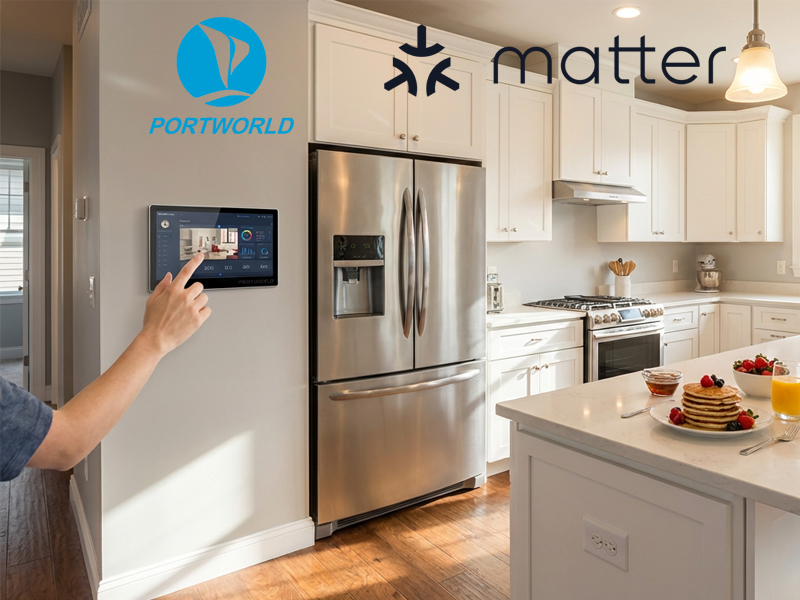
Smart Home Touch Control Panel
6. Matter — Multi-Brand Smart Hotel Integration
- Matter is progressively gaining significance in smart building and hospitality environments.
- It facilitates interoperability among devices manufactured by various companies.
Supported platforms include:
- Apple Home
- Google Home
- Amazon Alexa
- SmartThings
Applications:
- Intelligent lighting solutions
- Smart sensing devices
- Connected appliances
A hotel smart control panel equipped with Matter compatibility ensures superior interoperability with forthcoming intelligent devices.
7. MQTT — IoT Data Communication
MQTT serves as a prevalent protocol in smart hotel systems.
It facilitates data exchange among:
- Smart control panels
- Cloud-based platforms
- Hotel operational management systems
IoT connectivity gateways
Example:
Smart panel transmits:
“Room 305 Temperature = 24°C”
↓
MQTT Broker
↓
Hotel Management System
Benefits:
- Efficient data transmission
- Instantaneous information updates
- Cloud-compatible architecture
8. Application Programming Interface / Representational State Transfer Interface — Integration With Hotel Systems
For sophisticated hotel automation capabilities, intelligent control panels frequently require Application Programming Interface support.
Utilized for integration with:
- Property Management Systems (PMS)
- Guest service platforms
- Reservation systems
Capabilities:
- Automated check-in procedures
- Real-time room status modifications
- Service request management
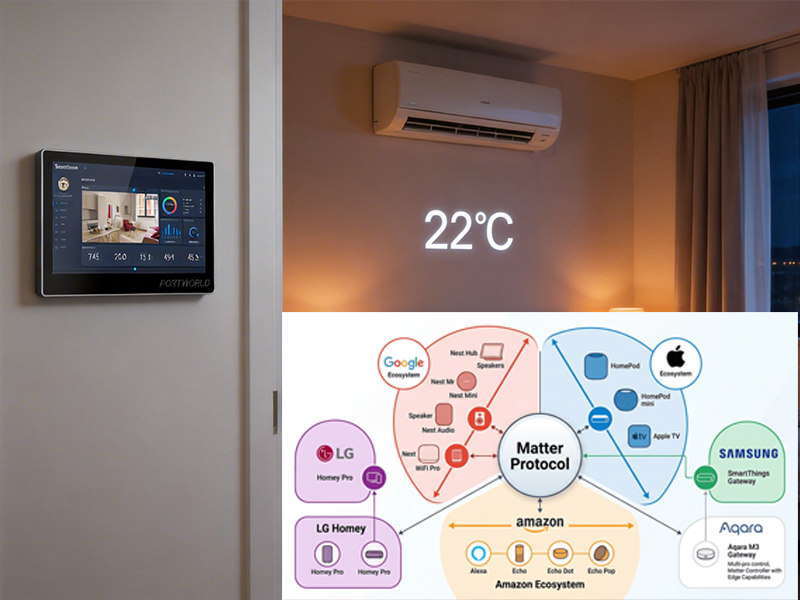
smart control panel
Recommended Protocol Combination for Hotel Smart Control Panels
| Application | Recommended Protocol |
|---|---|
| HVAC control | RS485 Modbus |
| Lighting control | Zigbee / KNX gateway / Ethernet |
| Smart curtains | Zigbee / RS485 |
| Central management | Ethernet |
| Cloud platform | MQTT / API |
| Mobile control | WiFi / Bluetooth |
| Smart devices | Matter / Zigbee |
Technical Specifications for Hotel Smart Control Panel Systems
Standard Components of Professional Hotel Smart Panels
- Communication Connectivity Options
- RS485 serial communication port
- RJ45 Ethernet network interface
- WiFi wireless connectivity
- Bluetooth wireless protocol
- Optional Zigbee and Matter protocol compatibility
Operating System Alternatives
- Android operating system
- Linux operating system
- ESP32-based microcontroller solutions
Mounting and Installation Methods
- Wall-mounted installation configuration
- UK 86-type wall box compatibility
- European standard wall box compatibility
- Customizable mounting bracket solutions
Portworld Hotel Smart Control Panel Solutions Overview
Portworld manufactures adaptable smart control panels engineered for hotel automation systems and integrated building management.
YC-SM51P Intelligent Touch Panel System
Intended Applications:
- Automated hotel room management
- Intelligent building control systems
- Commercial office automation
Technical Capabilities:
- 5.5-inch capacitive touchscreen display
- Android and Linux operating system compatibility
- WiFi connectivity functionality
- Bluetooth 5.2 wireless protocol support
- RJ45 Ethernet interface with Power over Ethernet capability
- RS485 serial communication protocol
- Proprietary user interface customization services
Implementation Use Cases:
- Illumination and lighting system control
- Heating, ventilation, and air conditioning regulation
- Motorized window covering and curtain operation
- Guest room service request management systems
Original Equipment Manufacturer and Original Design Manufacturer Customization Solutions for Hospitality Facilities
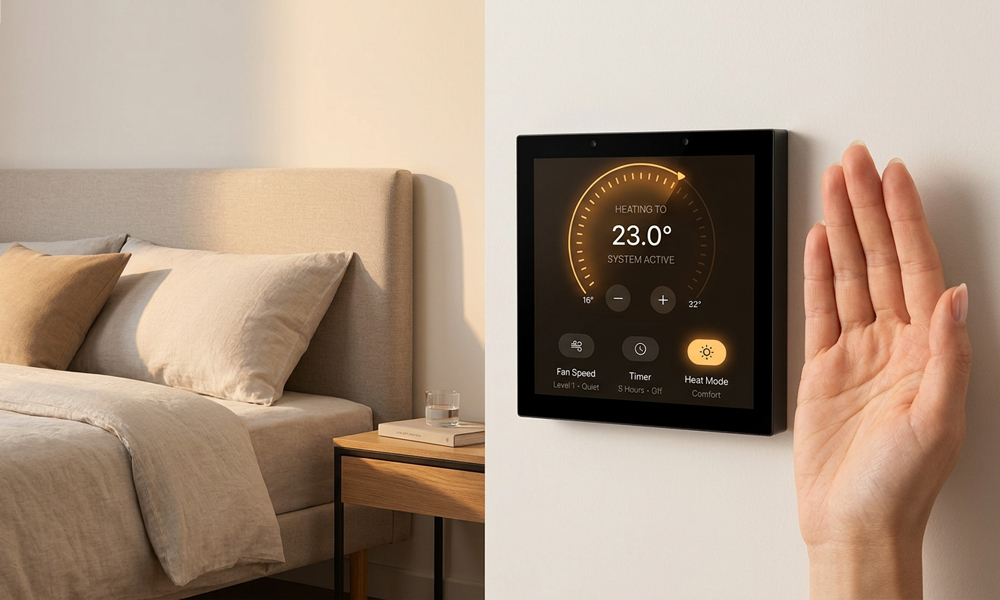
smart home control panel
Hotel intelligent control panels are available for customization across the following categories:
Hardware Components
- Display dimensions ranging from 4 to 10 inches
- Processor configuration options
- RS485, Ethernet, and Power over Ethernet connectivity interfaces
- Zigbee and Bluetooth Low Energy module integration
Software Capabilities
- Tailored user interface for hotel room environments
- Property Management System integration
- MQTT protocol development and implementation
- Customized automation functionalities
Physical Customization
- Brand logo incorporation
- Custom enclosure design
- Color selection and packaging specifications
A hotel intelligent control panel must accommodate multiple communication protocols to guarantee interoperability with diverse hotel automation infrastructure systems.
The primary protocols essential for implementation include:
- RS485 Modbus protocol for heating, ventilation, and air conditioning systems
- Ethernet and Power over Ethernet for dependable network connectivity
- WiFi and Bluetooth technologies for Internet of Things device communication
- Zigbee protocol for wireless automation functionality
- MQTT protocol for cloud-based platform integration
- Matter protocol for forthcoming smart device ecosystem compatibility