How to Choose a Digital Signage Display for Transportation Applications
Transportation infrastructure including airports, train stations, bus terminals, and metro networks necessitates expeditious, precise, and dependable information dissemination. A specialized digital signage solution designed for transportation applications enables operators to deliver instantaneous passenger communications, facilitate wayfinding, and optimize the overall travel experience.
Nonetheless, transportation environments present considerable operational challenges, encompassing prerequisites for continuous operation, outdoor visibility capabilities, network dependability, and technological integration. Selecting an appropriate display system demands thorough evaluation of multiple considerations.
1. Assess Installation Location: Indoor Versus Outdoor
The preliminary phase involves determining the deployment environment.
Interior Transportation Display Systems
Deployed in:
- Airport terminals
- Train station waiting zones
- Underground transit stations
- Ticketing facilities
Essential specifications:
- Superior image resolution
- Expansive viewing angles
- Compact form factor
- Streamlined content administration
Exterior Transportation Display Systems
Deployed in:
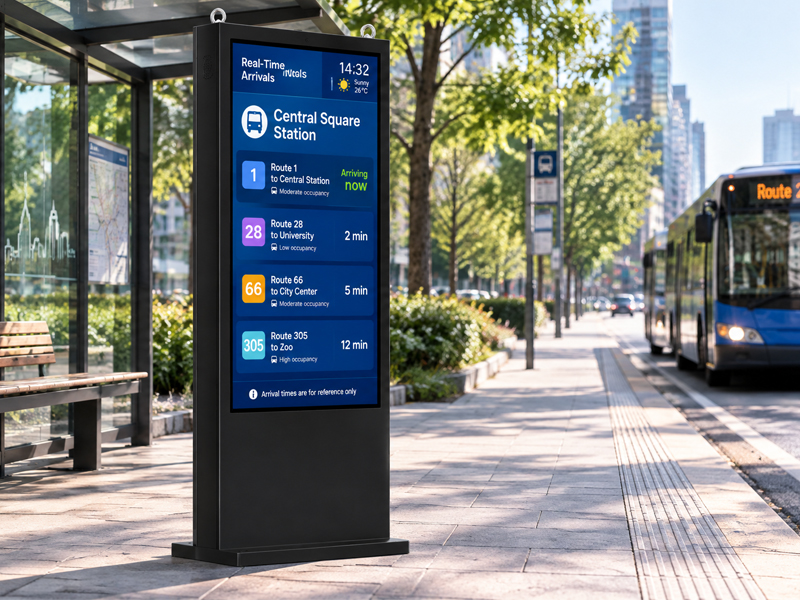
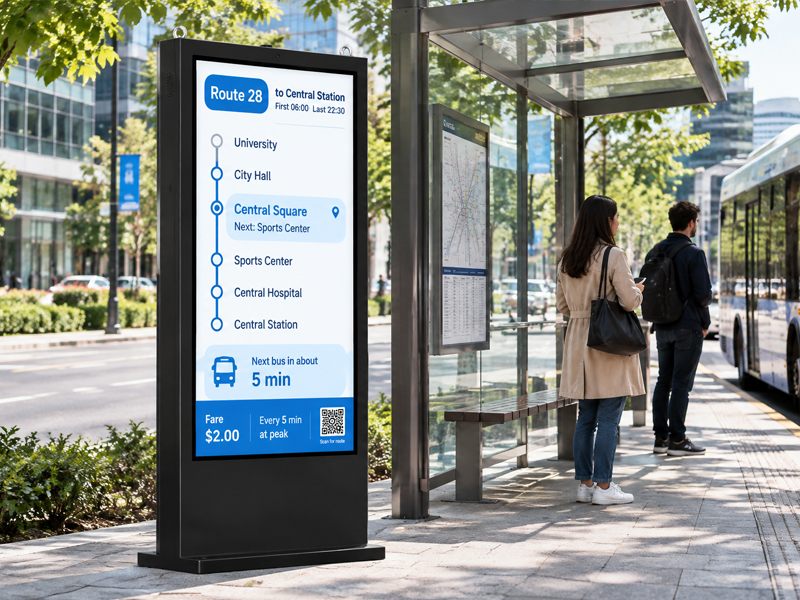
- Transit stops
- Exterior station platforms
- Vehicle parking facilities
- Public transit information stations
Critical specifications:
- Elevated luminosity output
- Moisture-resistant construction
- Environmental durability
- Protective mechanisms against damage
digital Signage display
2. Select Appropriate Display Brightness Levels
Visibility represents a fundamental requirement in transportation settings.
Recommended brightness specifications:
- 300–700 nits: Interior stations and passenger terminals
- 700–1500 nits: Partially covered outdoor locations
- 1500–3000 nits: Fully exposed sunlight conditions
Optimal-brightness displays facilitate passenger comprehension of:
- Scheduled arrival and departure times
- Current platform notifications
- Directional navigation information
- Critical safety announcements
3. Maintain Continuous 24/7 System Reliability
Transportation infrastructure typically functions without interruption, necessitating displays capable of sustained performance.
Essential operational characteristics include:
- Commercial-grade internal components
- Dependable electrical power regulation
- Effective thermal management systems
- Extended operational lifespan
Transportation-grade display systems require engineering for:
- Uninterrupted functionality
- High-volume passenger throughput environments
- Minimal servicing demands
4. Evaluate Environmental and Protective Specifications
Outdoor transportation applications demand comprehensive protective measures.
Recommended protective specifications:
IP65 Certification
Delivers:
- Particulate matter resistance
- Moisture and liquid protection
- Dependable outdoor performance
IK10 Protective Glass Technology
Delivers:
- Collision and shock resistance
- Safeguarding in public spaces
- Enhanced structural integrity
Supplementary protective requirements:
- Rust-resistant housing construction
- Extended operational temperature range
- Sealed connection systems
digital Signage display
5. Evaluate Appropriate Communication Infrastructure
Transportation infrastructure necessitates dependable data transmission capabilities between display units and management systems.
Primary connectivity alternatives:
Ethernet
Key benefits:
- Consistent and stable performance
- Optimal for expansive network deployments
WiFi
Key benefits:
- Adaptable installation procedures
- Streamlined implementation processes
4G/5G
Applications include:
- Isolated transit terminals
- Public-facing digital information stations
Supplementary communication protocols:
- RS485
- RS232
- GPIO
- CAN
These interfaces facilitate seamless connectivity with transportation infrastructure and Internet of Things ecosystems.
6. Assess Centralized Control and Oversight Capabilities
Extensive transportation networks frequently encompass numerous display installations.
A comprehensive digital signage platform should incorporate:
- Centralized content distribution and modification
- Real-time system performance monitoring
- Automated software maintenance and upgrades
- Coordinated multi-display administration
Operators maintain centralized oversight of display networks spanning:
- Multiple transit hubs
- Geographically dispersed urban centers
- Diverse transportation infrastructure facilities

55″ Outside Floor Standing Digital Signage
7. Selecting the Appropriate Hardware Platform
Transportation digital signage systems necessitate robust embedded hardware to ensure reliable multimedia playback and seamless system integration.
Prevalent processor platforms encompass:
- Rockchip RK3566
- RK3568
- RK3576
- RK3588
Key functionalities include:
- 4K video playback capability
- Multiple display output options
- Artificial intelligence processing
- Internet of Things connectivity
8. Determining the Suitable Operating System
Various transportation initiatives may necessitate distinct software platforms.
Android
Optimal for:
- Interactive passenger information kiosks
- Touchscreen-based information terminals
- Multimedia-rich applications
Linux / Debian / Ubuntu
Optimal for:
- Proprietary transportation software solutions
- Extended industrial-grade deployment scenarios
Yocto Linux
Optimal for:
- Embedded transportation system implementations
- Tailored platform configurations
- Security-critical applications
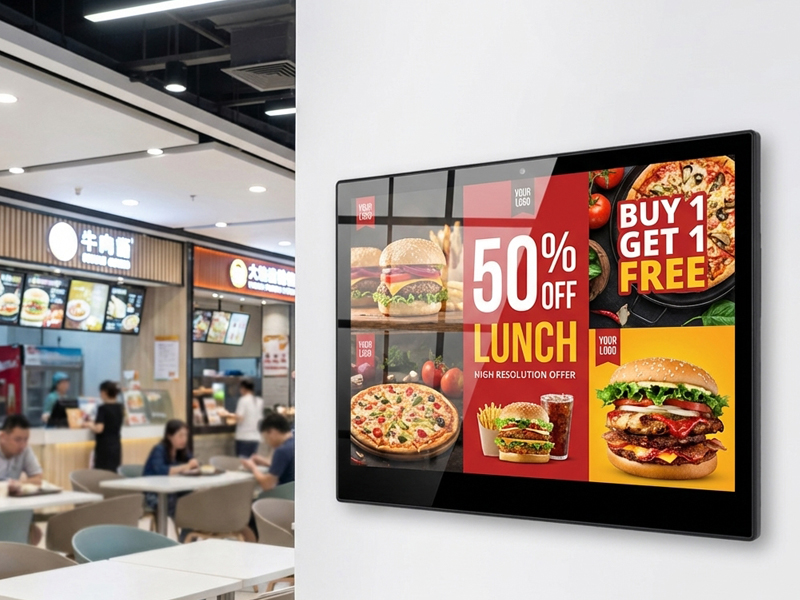
digital signage display
Digital Signage Display Applications in Transportation Environments
Digital signage systems are extensively deployed across:
Airports
Implementations include:
- Flight status information displays
- Passenger navigation assistance
- Commercial advertising platforms
Railway Stations
Implementations include:
- Train schedule information
- Platform-specific details
- Critical safety notifications
Bus Terminals
Implementations include:
- Bus arrival time information
- Route navigation guidance
- Facility-wide announcements
Metro Networks
Implementations include:
- Station layout maps
- Connection and transfer details
- Passenger information systems
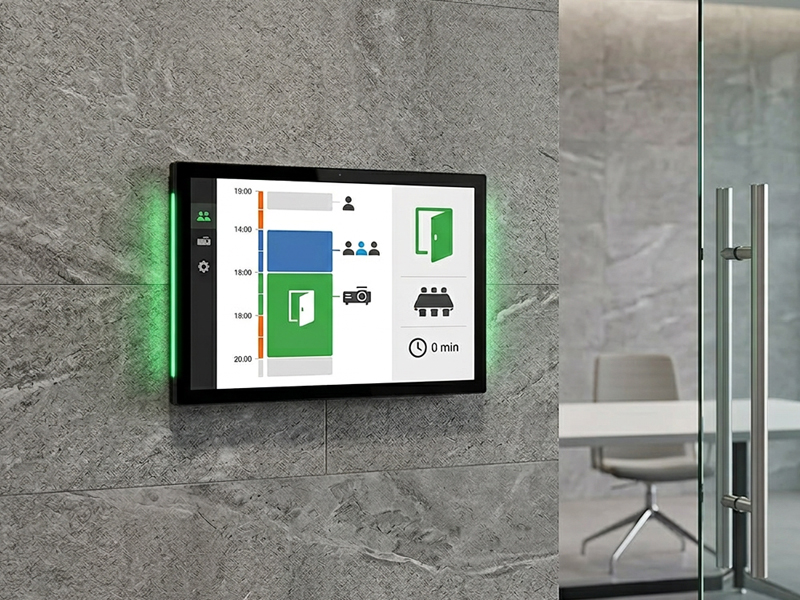
digital signage display-1
Portworld Transportation Digital Signage Solutions
Portworld delivers tailored digital signage solutions specifically designed for transportation environments.
Key Features:
- High-brightness display options
- Indoor and outdoor designs
- IP65 waterproof protection
- IK10 anti-vandal glass options
- Android/Linux/Debian support
- RK3566/RK3568/RK3576/RK3588 platforms
- Ethernet/WiFi/4G connectivity
- Remote CMS management
- Touchscreen customization
- OEM/ODM development
Applications:
- Train station information displays
- Airport passenger terminals
- Bus stop information systems
- Metro guidance displays
- Smart transportation kiosks
OEM/ODM Customization for Transportation Projects
Portworld facilitates comprehensive customization capabilities:
Hardware Customization
- Screen size selection
- Outdoor enclosure design
- High-brightness panel integration
- Custom motherboard development
Software Customization
- Firmware development
- UI customization
- Transportation system integration
- Remote management platforms
Manufacturing Support
- Prototype development
- Mass production
- Compliance testing
- CKD/SKD solutions
Choosing the right digital signage display for transportation applications requires balancing brightness, durability, connectivity, hardware performance, and system integration.
Whether used in airports, train stations, metro systems, or bus terminals, reliable digital signage helps deliver real-time information and improve passenger experiences.