How Do You Customize an ESP32 Smart Control Panel?
An ESP32 smart control panel offers extensive customization capabilities to accommodate the diverse needs of various applications, encompassing smart homes, hotel automation, HVAC control, office buildings, and industrial IoT systems.
Customization extends beyond aesthetic considerations. A comprehensive ESP32 smart control panel customization process encompasses hardware design, display selection, communication interfaces, firmware development, UI design, and mechanical customization.
1. Customize the ESP32 Hardware Platform
The initial phase involves selecting an appropriate ESP32 platform aligned with specific application requirements.
Primary options include:
- ESP32
- ESP32-S3
- ESP32-C3
For smart touchscreen applications, the ESP32-S3 is frequently chosen due to its provision of:
- Enhanced processing performance
- Superior graphical interface capabilities
- Expanded GPIO resources
- LVGL UI development support
Hardware customization may encompass:
- Processor selection
- Memory configuration
- Storage capacity
- Power design
- Interface expansion
2. Customize the Display and Touchscreen
The display constitutes a critical component of a smart control panel.
Manufacturers may customize:
Screen Size
Available dimensions include:
- 3.5 inch
- 4 inch
- 5 inch
- 7 inch
- 10 inch
Different sizes fit different applications:
| Application | Recommended Size |
|---|---|
| Smart wall switch | 3–5 inch |
| Hotel room control | 4–7 inch |
| Smart home dashboard | 5–10 inch |
| Building automation | 7 inch+ |
Display Specifications
Customization options:
- IPS display
- Resolution
- Brightness
- Viewing angle
- Touch sensitivity
Examples:
- 480×480
- 720×1280
- 800×480
- Touch Functions
The touchscreen is capable of supporting:
- Single touch
- Multi-touch
- Swipe gestures
- Zoom in/out
- Custom gestures
3. Customize Communication Interfaces
Various projects necessitate distinct communication methodologies.
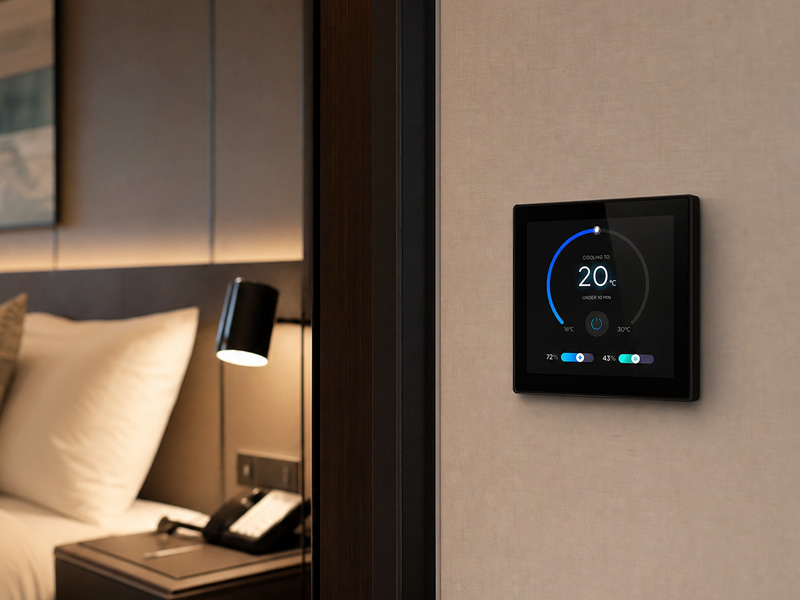
smart home control panel
An ESP32 smart control panel may be customized to incorporate:
WiFi
Utilized for:
- Smart home devices
- Cloud platforms
- IoT applications
Bluetooth / BLE
Applicable for:
- Device pairing
- Sensors
- Smart locks
- RS485 / Modbus
Prevalent in:
– HVAC systems
– Building automation
– Industrial equipment
Example:
ESP32 Smart Panel
↓
RS485 Modbus
↓
Air Conditioning Controller
Ethernet
For commercial applications:
- Hotels
- Offices
- Smart buildings
Advantages:
- Stable connection
- Reliable communication
- Centralized management
4. Customize Firmware and Software
Firmware customization enables the ESP32 panel to execute specialized functions.
Developers have the capability to customize:
- Device control logic
- Communication protocols
- Sensor integration
- Network configuration
- Cloud connection
Prevalent development platforms include:
- ESP-IDF
- Arduino Framework
- PlatformIO
5. Customize the User Interface (UI)
An intelligent control panel necessitates an intuitive touchscreen interface.
Utilizing frameworks such as LVGL, developers can construct customized graphical interfaces.
UI customization encompasses:
- Icons
- Buttons
- Animations
- Themes
- Languages
- Dashboard layouts
Illustrative examples:
Smart Home UI
Capabilities:
- Lighting control
- Temperature adjustment
- Curtain control
- Security monitoring
Hotel Room UI
Capabilities:
- Do Not Disturb mode
- Room temperature
- Lighting scenes
- Service requests
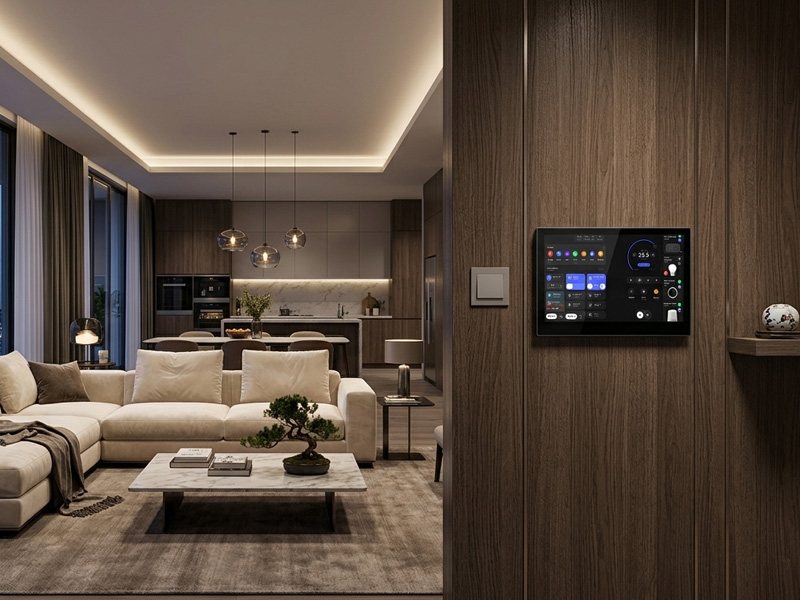
smart home control panel-1
6. Add Smart Home Protocol Support
ESP32 smart control panels can be tailored to interface with diverse smart ecosystems.
Supported technologies may encompass:
- MQTT
- Matter gateways
- Zigbee gateways
- Modbus
- REST API
This facilitates integration with:
- Smart lighting
- HVAC systems
- Smart locks
- Sensors
- Motorized curtains
7. Customize Enclosure and Installation Design
The physical design may also be tailored to specific requirements.
Customization options include:
- Housing material
- Color
- Logo printing
- Wall mounting design
- Brackets
Available installation options:
- UK 86 type wall box
- EU wall box
Custom mounting solutions
This customization capability permits the ESP32 panel to harmonize with diverse architectural environments.
8. Customize Power Solutions
Various applications necessitate distinct power delivery approaches.
Available alternatives encompass:
- Direct current (DC) power input
- USB Type-C connectivity
- Power over Ethernet (PoE)
- Battery-based power systems
Within building automation initiatives, PoE technology streamlines deployment by delivering:
- Electrical power
- Network connectivity
Illustration: Portworld ESP32 Smart Control Panel Customization
Portworld delivers comprehensive OEM/ODM customization solutions for ESP32 intelligent control panels.
The YC-SM43P ESP32-S3 Smart Touch Panel accommodates customization across:
Hardware Components
- ESP32-S3 microprocessor
- Interactive touchscreen interface
- WiFi and Bluetooth capabilities
- RS485 serial communication interface
- Ethernet connectivity alternatives
Software Development
- Proprietary firmware development
- LVGL graphical user interface design
- MQTT protocol implementation
- Intelligent home system application creation
Mechanical Engineering
- Specialized housing design
- Branded logo application
- Aesthetic color options
- Packaging solution design
Implementation Domains:
- Residential smart home systems
- Hospitality room management
- Climate control systems
- Commercial building management
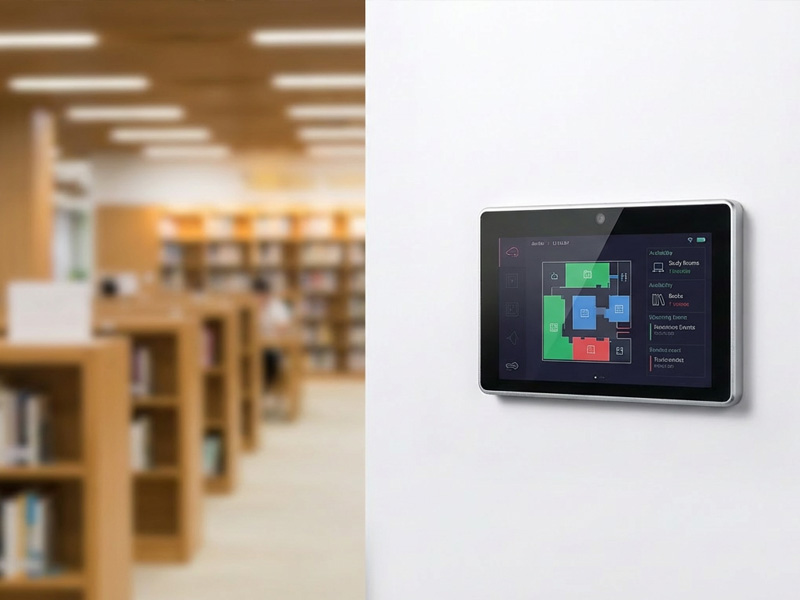
smart home control panel
ESP32 Intelligent Control Panel Customization Methodology
A standard Original Equipment Manufacturer (OEM) and Original Design Manufacturer (ODM) implementation sequence:
1. Requirements Specification
↓
Designated application scope, display dimensions, connectivity options, and operational capabilities
↓
2. Hardware Architecture Development
↓
Printed Circuit Board Assembly (PCBA) engineering and prototype fabrication
↓
3. Embedded Software Engineering
↓
Interface protocols and operational control mechanisms
↓
4. User Interface Development
↓
Touchscreen display interface configuration and personalization
↓
5. Quality Assurance and Validation
↓
Hardware performance assessment, software verification, and durability evaluation
↓
6. Commercial-Scale Manufacturing
↓
Surface Mount Technology (SMT) assembly procedures and comprehensive production execution
An ESP32-based intelligent control panel offers comprehensive customization capabilities spanning both hardware and software components to accommodate diverse automation requirements.
Available customization options encompass:
- ESP32 microprocessor selection
- Display dimensions and touchscreen interface configuration
- Connectivity protocols including WiFi, Bluetooth, RS485, and Ethernet
- Custom firmware development
- LVGL user interface personalization
- Enclosure design and brand identity implementation