What Certifications Are Required for Smart Home PCBA?
A smart home device represents more than merely an electronic product; it constitutes an integrated Internet of Things (IoT) system. Regardless of whether the device functions as a smart control panel, intelligent gateway, smart switch, temperature regulator, or home automation controller, the Printed Circuit Board Assembly (PCBA) contained within must satisfy multiple safety standards, electromagnetic compatibility requirements, wireless communication protocols, and environmental specifications prior to market entry in global regions.
The PCBA serves as the fundamental component of any smart home product. The specific certification requirements are contingent upon:
- Intended geographic market
- Wireless communication technologies employed
- Electrical power input configuration
- Operational environment conditions
- Product-specific safety mandates
Consequently, which certifications are necessary for smart home PCBA compliance?
Primary certifications and applicable standards encompass:
- CE
- FCC
- RoHS
- REACH
- UL
- IPC-A-610
- ISO 9001
- Wireless protocol certifications (WiFi, Bluetooth, Zigbee, Matter)
1. CE Certification — Mandatory for European Market Access
CE certification represents a fundamental compliance requirement for smart home PCBAs distributed throughout the European Union.
The CE marking signifies that a product satisfies all pertinent EU directives concerning safety, electromagnetic compatibility, and radio frequency standards.
Smart home device certification under CE typically encompasses:
Electromagnetic Compatibility (EMC)
Verifies that the device:
- Refrains from generating detrimental electromagnetic interference
- Functions appropriately within electromagnetic environments
- Radio Equipment Directive (RED)
Applicable to wireless devices incorporating:
- WiFi technology
- Bluetooth connectivity
- Zigbee protocols
- Thread standards
- Additional RF transmission technologies
- Safety Compliance Standards
Addresses:
- Electrical safety specifications
- Product integrity safeguards
- End-user protection measures
Illustrative Case:
An Android-based smart control interface equipped with WiFi and Bluetooth capabilities would ordinarily necessitate CE certification prior to market entry in Europe.
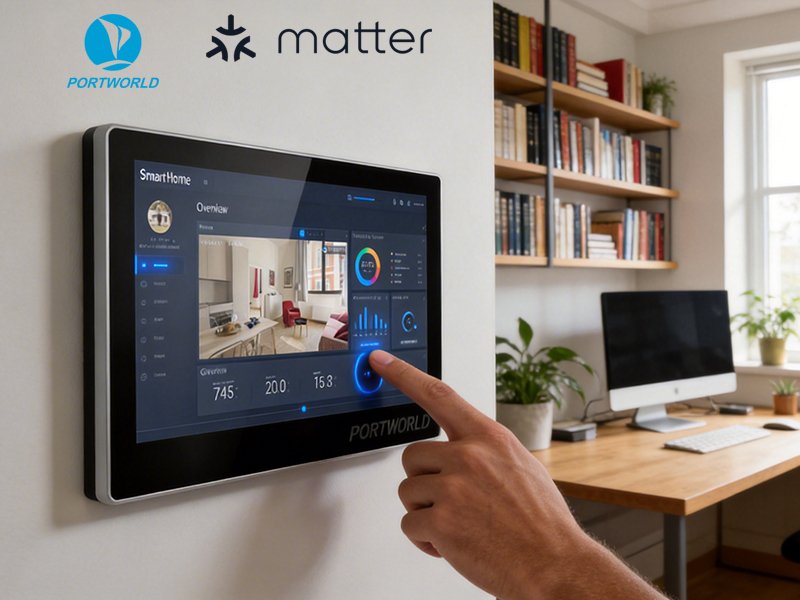
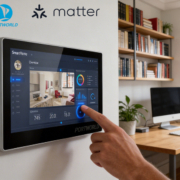
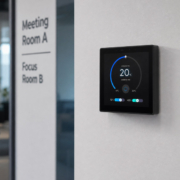
smart home control panel
2. FCC Certification — Mandatory for United States Market Access
FCC certification constitutes a mandatory compliance requirement for smart home PCBAs marketed within the United States, particularly those incorporating wireless communication capabilities or digital electronic components.
FCC evaluation procedures primarily assess:
- Radiofrequency emission levels
- Electromagnetic interference characteristics
- Wireless transmission performance
Devices subject to FCC certification requirements include:
- WiFi-enabled smart control panels
- Bluetooth-based control systems
- Zigbee network gateways
- Integrated IoT hub solutions
Illustrative Case:
↓
WiFi / Bluetooth Module
↓
FCC Testing
↓
US Market Approval
3. RoHS Compliance — Restriction of Hazardous Substances
RoHS constitutes an environmental compliance mandate designed to restrict the presence of hazardous materials within electronic products.
It regulates the following substances:
- Lead (Pb)
- Mercury (Hg)
- Cadmium (Cd)
- Hexavalent chromium
- Specific flame retardant compounds
For smart home PCBAs, RoHS requirements encompass:
- Printed circuit board materials
- Soldering materials
- Electronic components
- Connector assemblies
Advantages:
- Environmentally sustainable manufacturing practices
- Enhanced safety of electronic products
- Facilitated international market accessibility
4. REACH Compliance — Chemical Safety Requirements
REACH addresses the management of chemical substances incorporated within manufactured products.
It mandates that manufacturers conduct oversight of:
- Polychlorinated biphenyl materials
- Polymeric compounds
- Protective surface treatments
- Bonding agents
- Electronic assemblies
REACH compliance holds particular significance for products destined for European Union markets.
5. UL Certification — Electrical Safety for North America
UL certification establishes benchmarks for product safety assurance.
It assesses:
- Electrical hazard mitigation
- Flammability and fire resistance
- Substance safety characteristics
- Heat management capabilities
Prevailing standards encompass:
- UL 62368-1 applicable to electronic devices
- UL 94 pertaining to material combustibility ratings
UL certification is frequently mandated by:
- Distribution and retail entities
- Industrial and institutional purchasers
- Construction and infrastructure initiatives
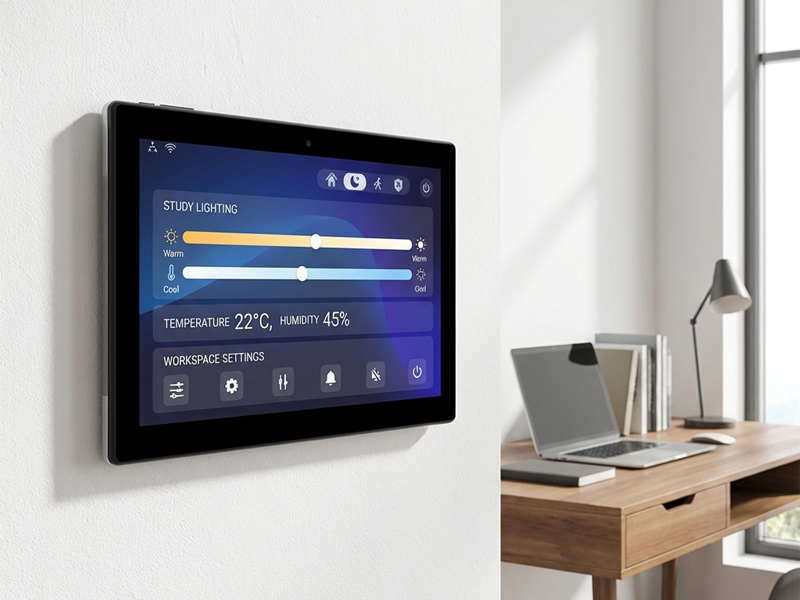
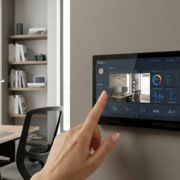
sm55p-smart home control panel
6. IPC Standards for PCBA Manufacturing Quality
While CE and FCC certifications address product compliance requirements, IPC standards establish benchmarks for manufacturing quality assurance.
IPC-A-610
Establishes acceptable criteria for:
- Component placement
- Solder joints
- Assembly quality
Standard classifications:
IPC-A-610 Class 2
Applicable to:
- Consumer electronics
- Smart home devices
- IPC-A-610 Class 3
Applicable to:
High-reliability industrial applications
7. ISO 9001 — Manufacturing Quality Management
ISO 9001 represents a comprehensive quality management system certification.
For smart home PCBA manufacturers, this certification guarantees:
- Systematic production processes
- Quality assurance inspections
- Product traceability
- Ongoing process improvement
A certified manufacturer typically implements:
- Incoming material inspection
- Surface mount technology process control
- Functional testing procedures
- Final quality assurance checks
8. Wireless Protocol Certifications
Should a smart home PCBA incorporate wireless communication capabilities, supplementary certifications may become necessary.
WiFi Certification
Applicable to products utilizing WiFi technology:
- Smart panels
- IoT gateways
- Smart appliances
Certification validates:
- Network compatibility
- Reliable communication
- Bluetooth SIG Certification
Mandatory for products equipped with Bluetooth functionality.
Commonly implemented in:
- Smart locks
- Sensors
- Smart control panels
- Zigbee Certification
Applicable to Zigbee-enabled smart home devices:
- Smart lighting
- Sensors
- Curtain controllers
- Matter Certification
Designed for next-generation smart home interoperability standards.
Matter certification establishes verified compatibility across disparate smart home ecosystems.
Implemented across:
- Smart home hubs
- Controllers
- Connected devices
9. Japan Market Certifications
When introducing smart home printed circuit board assemblies into the Japanese market, supplementary compliance requirements may be necessary.
Illustrative Examples:
TELEC / MIC
Applicable to wireless devices incorporating:
- WiFi
- Bluetooth
- RF communication
- PSE
Required for specific electrical devices and power management systems.
Certification Requirements by Market
| Market | Common Certifications |
|---|---|
| European Union | CE, RoHS, REACH |
| United States | FCC, UL |
| United Kingdom | UKCA, RoHS |
| Japan | TELEC, PSE |
| Canada | IC, UL/CSA |
| Global OEM Projects | ISO 9001, IPC-A-610 |
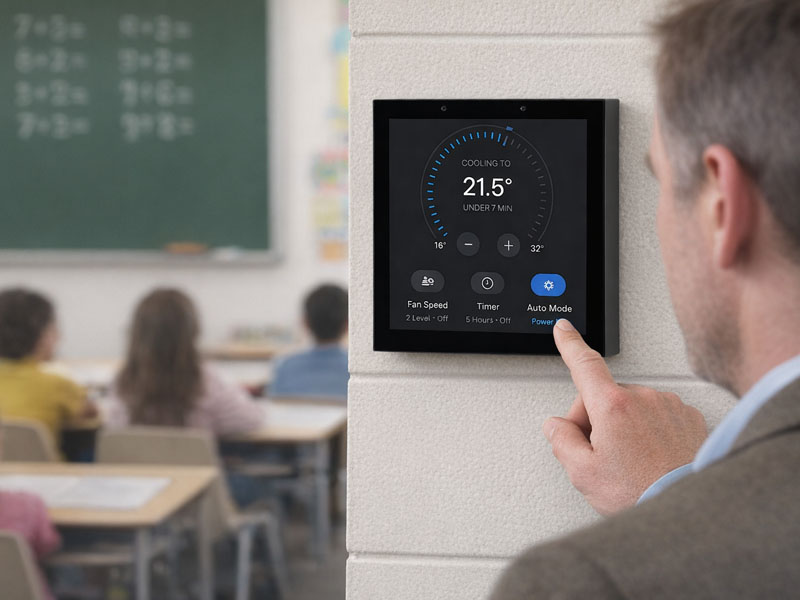
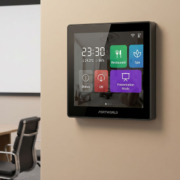
Smart Home Touch Control Panel0-1
Certification Considerations Throughout PCBA Design
Certification requirements should be integrated into the initial phases of PCB design rather than addressed following production completion.
Engineers must evaluate:
Radiofrequency Design
Applicable to:
- WiFi
- Bluetooth
- Zigbee
- Matter
Critical considerations:
- Antenna positioning
- Electromagnetic interference mitigation
- Ground plane architecture
- Electrical Power Design
Essential for:
- Power over Ethernet panels
- Direct current-powered control systems
- Wall-integrated intelligent panels
Required elements:
- Safety and protection mechanisms
- Regulated voltage delivery systems
- Thermal dissipation strategies
- Electronic Component Selection
Implement:
- Pre-certified integrated circuits
- Reputable component manufacturers
- Compliance-verified materials
This approach substantially diminishes certification-related risks and accelerates the testing timeline.
Intelligent Control Panel PCBA Certification Requirements
An Android-based smart control panel featuring WiFi and Bluetooth connectivity may necessitate the following:
Hardware Components:
- RK3566 processor
- WiFi module
- Bluetooth module
- Ethernet interface
- RS485 interface
Applicable Certifications:
- CE
- FCC
- RoHS
- REACH
- UL (contingent upon specific market requirements)
- IPC-A-610 manufacturing standard
Portworld Smart Control Panel Manufacturing Capability
Portworld specializes in the design and manufacture of intelligent touchscreen control panels intended for deployment in:
- Residential smart home environments
- Hospitality sector establishments
- Commercial office spaces
- Integrated building automation systems
- Industrial human-machine interface applications
The company’s product offerings encompass:
YC-SM43P ESP32-S3 Smart Panel
Key specifications:
- ESP32-S3 microprocessor architecture
- WiFi and Bluetooth connectivity
- RS485 serial communication protocol
- LVGL graphical user interface framework
Intended use cases:
- Internet of Things control systems
- Intelligent switching mechanisms
- Residential automation solutions
YC-SM10P Android Smart Control Panel
Key specifications:
- RK3566 processor platform
- Android operating system
- Ethernet connectivity with Power over Ethernet support
- RS485 serial communication protocol
- Customizable software development capabilities
Intended use cases:
- Residential smart home installations
- Hospitality industry applications
- Conference and meeting room environments
- Commercial and institutional building systems