How Do You Design PCBA for a Smart Home Control Panel?
A smart home control panel transcends the functionality of a mere touchscreen interface. Rather, it represents an integrated embedded system that consolidates processing capabilities, communication infrastructure, power management systems, display control mechanisms, and Internet of Things connectivity within a unified device architecture.The Printed Circuit Board Assembly (PCBA) serves as the foundational hardware infrastructure that facilitates the control panel’s capacity to establish communication with intelligent devices and automation frameworks.The development of a PCBA for a smart home control panel necessitates meticulous consideration of multiple critical factors:
- Processor selection
- Display and touch interface
- Wireless communication
- Industrial protocols
- Power supply design
- PCB layout
- Thermal management
- Firmware compatibility
What methodology should be employed when designing a PCBA for a smart home control panel?
1. Establish Smart Control Panel Specifications
Prior to commencing PCB design activities, engineering professionals must establish the product’s intended application parameters.
Distinct applications necessitate differentiated hardware architectures.
Characteristic specifications include:
- Touchscreen interface
- WiFi connectivity
- Bluetooth capability
- Zigbee/Matter gateway functionality
- Smart lighting control integration
- HVAC system integration
- Hotel Room Control
- Room automation
- Curtain control
- Door access integration
- Guest interface customization
- Building Automation
May require:
- RS485
- Modbus RTU
- Ethernet
- PoE
- BMS integration
2. Select the Main Processor
The processor serves as the central processing unit of the intelligent control panel.
Processor selection is contingent upon specific performance specifications and operational demands.
Microcontroller Unit-Based Architecture
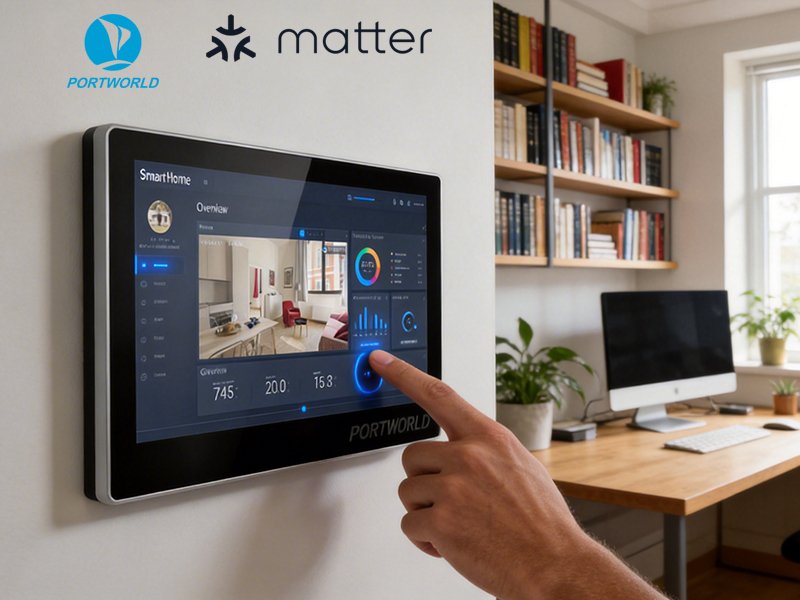
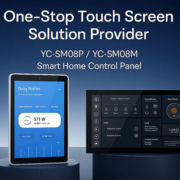
smart home control panel
Representative Example:
ESP32-S3
Applicable to:
- Internet of Things control panels
- Intelligent switching systems
- Basic human-machine interface applications
Key Benefits:
- Minimal energy consumption
- Integrated wireless connectivity (WiFi and Bluetooth)
- Compatibility with LVGL graphical libraries
- Economically efficient solution
ARM Processor Design
Example:
Rockchip RK3566 / RK3568
Suitable for:
- Android smart panels
- Large touchscreens
- Advanced automation interfaces
Advantages:
- Executes Android/Linux operating systems
- Enables sophisticated user interface applications
- Delivers enhanced multimedia performance
- Provides superior computational capacity
Example architecture:
RK3566 Processor
|
—————————-
Display Memory Ethernet
Touch Storage WiFi/Bluetooth
3. Establish the Display and Touch Interface Configuration
The touchscreen serves as the primary mechanism for user engagement and interaction.
The PCBA must incorporate support for:
LCD Interface
Prevalent interface standards:
- MIPI DSI
- RGB
- LVDS
- HDMI
- Touch Controller
Capabilities include:
- Capacitive touch technology
- Multi-touch gesture recognition
- Touch calibration functionality
The PCB design must guarantee:
- Minimized signal routing paths
- Electromagnetic interference mitigation
- Reliable data transmission
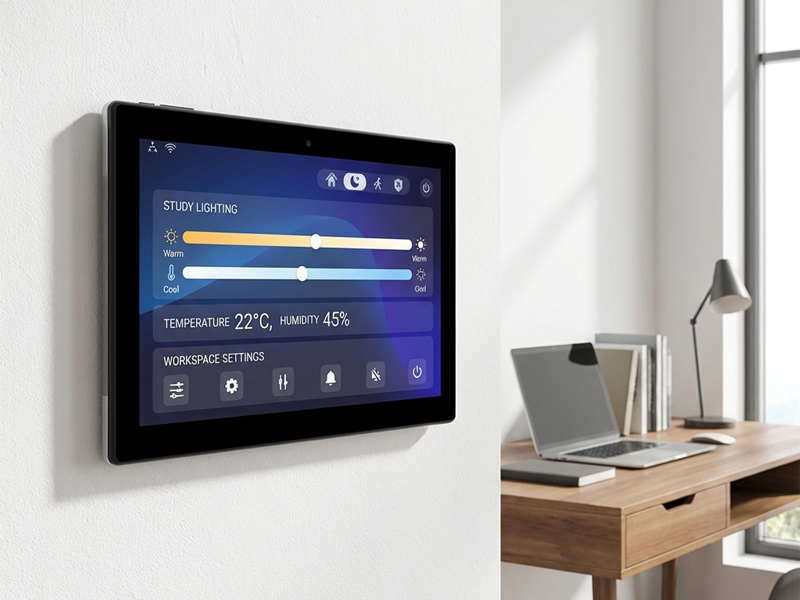
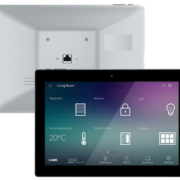
sm55p-smart home control panel
4. Integrate Communication Interface Protocols
A smart home control panel requires communication capabilities with numerous connected devices.
A comprehensive PCBA implementation may incorporate multiple communication protocols.
WiFi
Utilized for:
Cloud-based connectivity
Intelligent home ecosystems
Internet of Things infrastructure
Engineering considerations:
- Transmitter-receiver positioning
- Radiofrequency shielding
- Data transmission quality
Bluetooth
Utilized for:
- Sensory systems
- Secure access mechanisms
- Device synchronization
- Zigbee / Thread / Matter
Designated for minimal-power intelligent devices.
Implemented with:
- Intelligent illumination systems
- Sensory systems
- Control mechanisms
- Ethernet and Power over Ethernet
- Designated for enterprise-level installations.
Key benefits:
- Dependable network performance
- Simultaneous power and data transmission via unified infrastructure
Standard configuration:
Ethernet PHY
|
RJ45 + PoE
|
Main Processor
RS485 / Modbus
Critical for HVAC and building management systems.
Applications include:
- Air conditioning systems
- Temperature regulation devices
- Energy consumption meters
Illustration:
Smart Panel
|
RS485
|
HVAC Controller
5. Design the Power Management System
Power management design constitutes a critical component of PCBA development.
A sophisticated control panel may incorporate support for:
- DC 12V input
- DC 24V input
- USB Type-C
- PoE power
The power circuit typically encompasses:
DC-DC Conversion
Transforms input voltage into regulated output rails:
- 5V
- 3.3V
- 1.8V
- Core voltage
- Protection Circuits
Comprising:
- Over-voltage protection
- Over-current protection
- Surge protection
- ESD protection
6. PCB Layout Design
Optimal PCB layout enhances system reliability.
Engineers must strategically position:
High-Speed Components
Including:
- Processor
- Memory
- Ethernet
- Display interface
Specifications:
- Minimized signal paths
- Controlled impedance
- Appropriate routing
RF Components
Wireless modules necessitate particular consideration.
Essential guidelines:
- Position antennas at a distance from interference sources
- Eliminate copper placement beneath antenna regions
- Isolate RF circuitry from digital circuitry
Power Distribution Architecture
Power delivery systems must incorporate:
Minimized conductor lengths
Expanded trace dimensions
Adequate grounding infrastructure
7. Thermal Management Design
Advanced smart panels dissipate considerable thermal energy.
Particularly those incorporating:
- RK3566
- RK3568
- Android OS
Thermal management strategies may encompass:
- Heat dissipation devices
- Thermal interface materials
- Metallic enclosure construction
- Enhanced circulation patterns
Maintaining optimal temperature stability extends product operational longevity.
8. Firmware and Hardware Integration
PCBA design must be aligned with software specifications.
Examples:
Hardware requirements:
- Processor compatibility
- Display driver implementation
- Touch driver implementation
- WiFi/Bluetooth driver implementation
- Linux Smart Panel
Hardware requirements:
- Kernel compatibility
- Device tree setup
- Interface driver implementation
- ESP32 Smart Panel
Hardware requirements:
- FreeRTOS compatibility
- LVGL interface implementation
- Peripheral driver implementation
9. Prototype and Testing
Prior to mass production, engineering teams develop prototypes.
Testing encompasses:
Electrical Testing
Verify:
- Voltage output levels
- Current consumption metrics
- Power stability performance
- Communication Testing
Validate:
- WiFi functionality
- Bluetooth functionality
- Ethernet functionality
- RS485 functionality
- Touch and Display Testing
Verify:
- Touch accuracy performance
- Screen brightness levels
- UI responsiveness
- Reliability Testing
Incorporating:
- Temperature stress testing
- Extended operational duration testing
- Electromagnetic compatibility testing
Smart Home Control Panel PCBA Design Flow
Requirement Analysis
↓
Processor Selection
↓
Circuit Design
↓
PCB Layout
↓
PCB Fabrication
↓
Prototype Assembly
↓
Firmware Integration
↓
Testing & Optimization
↓
Mass Production
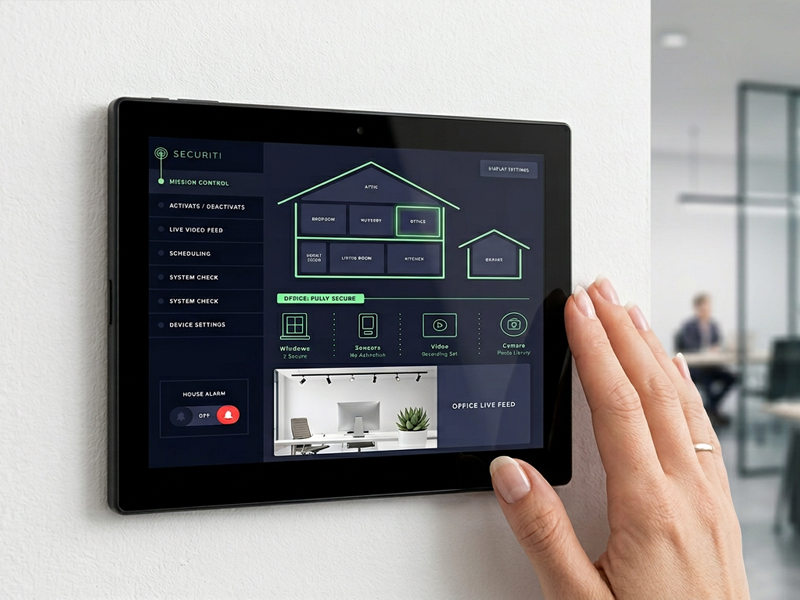
smart home control panel
Portworld Smart Control Panel PCBA Development
Portworld delivers tailored smart control panel solutions encompassing the following components:
- Hardware design
- PCBA development
- Embedded software
- Display integration
- Firmware customization
- OEM/ODM manufacturing
Illustrative platforms:
YC-SM43P ESP32-S3 Smart Panel
Applications:
- IoT controllers
- Smart switches
- Embedded HMI systems
Key specifications:
- ESP32-S3 processor
- LVGL support
- WiFi + Bluetooth
- RS485 communication
- Compact embedded design
YC-SM10P Android Smart Control Panel
Applications:
- Smart homes
- Hotels
- Offices
Key specifications:
- RK3566 processor
- Android OS
- 10-inch touchscreen
- Ethernet + PoE
- RS485 support
Developing a PCBA for a smart home control panel necessitates the integration of hardware engineering, communication infrastructure, and embedded software solutions.
An effective design must incorporate:
- Robust processing performance
- Dependable communication protocols
- Reliable power management systems
- Responsive touchscreen functionality
- Scalable IoT connectivity options