How to Choose an Android Smart Control Panel for Home Automation?
Selecting the Appropriate Android Smart Panel for a Contemporary Smart Home
As smart home technology continues to advance rapidly, an increasing number of homeowners and integrators are seeking a centralized touchscreen solution to oversee lighting, HVAC, curtains, security systems, and various other connected devices. An Android smart control panel offers an intuitive interface that integrates smart device management, automation scenes, and multimedia functionalities into a single wall-mounted terminal.
Nevertheless, selecting the appropriate Android smart control panel necessitates thorough consideration of hardware performance, connectivity, installation, and software compatibility.
1. Select the Appropriate Screen Size and Touch Experience
The display serves as the primary interaction interface of a smart control panel. The ideal size is contingent upon the application scenario.
Small Panels (4–5 inch)
Appropriate for:
- Room lighting control
- Smart switches
- Bedroom control
- Hotel room automation
Compact panels are well-suited for replacing traditional wall switches while preserving a tidy interior design.
Medium Panels (7–10 inch)
Appropriate for:
- Smart home central control
- Office automation
- Meeting rooms
- Apartment projects
Larger displays offer additional space for dashboards, device status, and automation scenes.
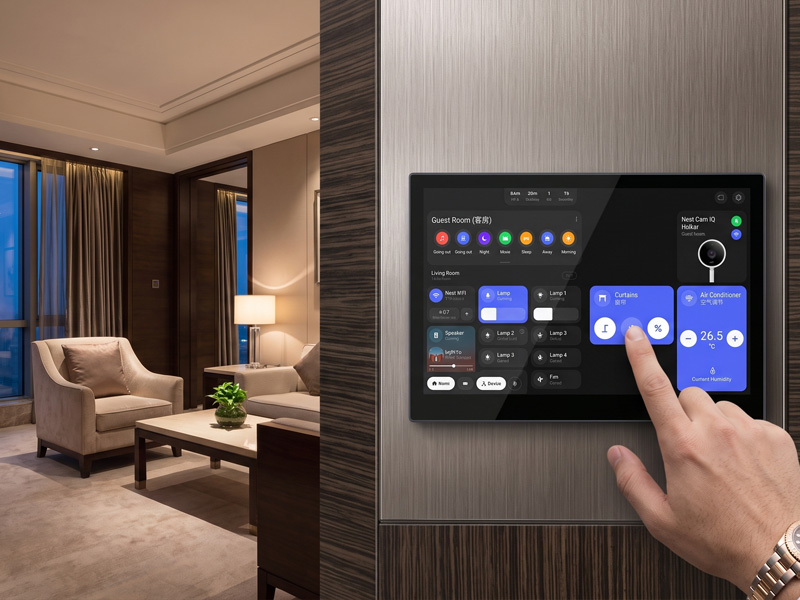
smart home control panel
Large Panels (12–14 inch)
Appropriate for:
- Luxury homes
- Smart villas
- Commercial buildings
- Building automation systems
A larger touchscreen enables users to manage multiple systems from a unified interface.
An effective Android smart panel should also support:
- Capacitive multi-touch
- High brightness IPS display
- Smooth gesture operation
- Accurate touch calibration
2. Evaluate Processor Efficiency and Memory
The processor plays a crucial role in the seamless operation of applications and automation software on the smart panel.
For home automation solutions, ARM-based processors are frequently utilized due to their ability to deliver commendable performance while maintaining low power consumption.
Recommended hardware specifications include:
- Quad-core ARM processor
- 2GB RAM or more
- 16GB–32GB storage
- Hardware graphics acceleration
For instance, Rockchip processors like the RK3566 and RK3568 are extensively employed in smart control panels as they offer adequate performance for Android applications, user interface rendering, and IoT integration.
3. Assess Android Version Compatibility
The version of Android influences both application compatibility and the device’s long-term usability.
When choosing an Android smart control panel, it is important to consider:
- Android 11 or later
- Support for custom firmware
- Capability for OTA updates
- Flexibility in application installation
Android-based panels are favored for their ability to support:
- Custom smart home applications
- Home Assistant dashboards
- Cloud services
- Third-party automation solutions
Additionally, Android devices can seamlessly integrate with smart home ecosystems through various applications and platforms that manage devices such as lighting, thermostats, locks, and cameras.
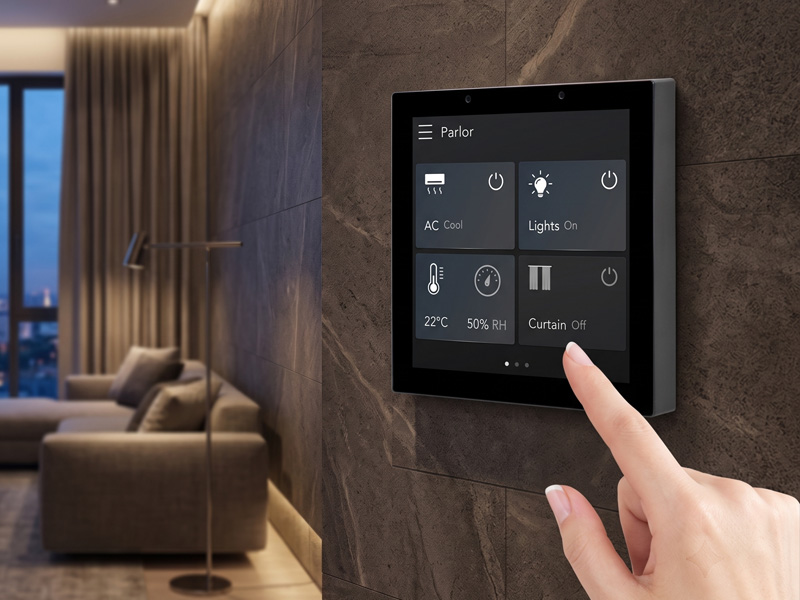
Smart Home Touch Control Panel
4. Select Appropriate Connectivity Options
A professional smart home control panel ought to accommodate various communication methods.
Ethernet and PoE
For newly constructed homes and upscale projects, Ethernet with Power over Ethernet (PoE) is an outstanding option.
Benefits:
- Reliable network connection
- Single cable for both power and data
- Simplified installation
- Ideal for extensive deployments
- WiFi and Bluetooth
Wireless connectivity proves beneficial for:
- Smart sensors
- Mobile applications
- Wireless Internet of Things (IoT) devices
RS485 Communication
RS485 plays a crucial role in professional automation systems.
It facilitates connections with:
- HVAC controllers
- Lighting systems
- Modbus devices
- Building automation equipment
Opting for a panel that includes multiple interfaces enhances compatibility with various smart home solutions.
5. Ensure Compatibility with Smart Home Systems
Before choosing an Android smart control panel, verify its ability to integrate with your automation ecosystem.
Common integrations include:
- Home Assistant
- KNX systems
- Modbus devices
- Zigbee gateways
- MQTT platforms
- Custom IoT solutions
For instance, a smart villa may necessitate integration with lighting, air conditioning, curtains, security cameras, and energy monitoring systems. A versatile Android panel can amalgamate these functionalities into a single customized dashboard.
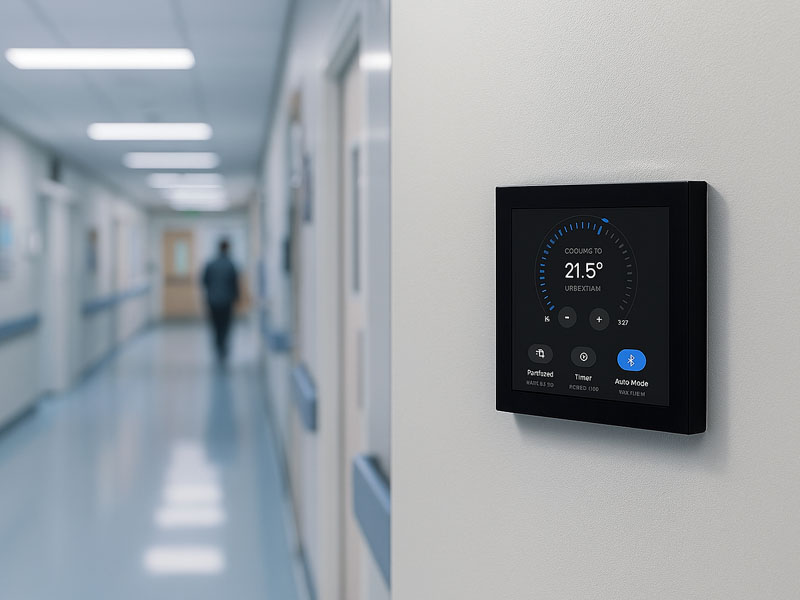
YC-SM10P
10.1 inch Smart Home Control Panel
6. Consider Wall Installation Compatibility
A professional smart control panel should facilitate straightforward installation.
Key factors include:
- Wall-mounted design
- Flush installation support
- Standard wall box compatibility
- PoE wiring options
For international projects, compatibility with various wall standards is particularly crucial, including:
- UK 86-type boxes
- EU wall boxes
- US wall boxes
This minimizes installation complexity for contractors and system integrators.
7. Choose a Panel with Customization Support
Various smart home brands frequently necessitate tailored designs.
OEM/ODM customization options may encompass:
- Custom Android UI
- Brand logo and boot animation
- Custom applications
- Hardware interface modifications
- Enclosure design
- Color customization
This is particularly vital for:
- Smart home brands
- Hotel automation companies
- Building solution providers
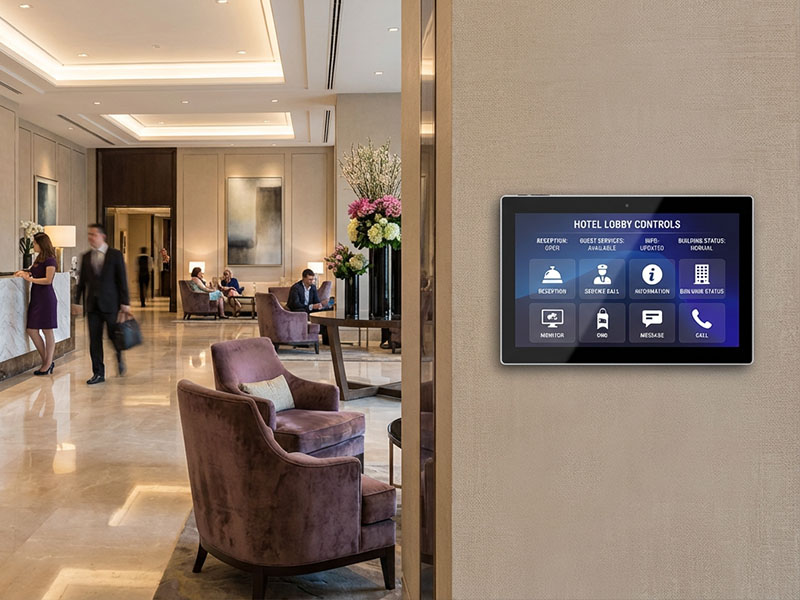
YC-SM10P
10.1 inch Smart Home Control Panel
Portworld Android Smart Control Panel Solutions
Portworld offers Android smart touch control panels tailored for smart homes, hotels, offices, and commercial automation projects.
The YC-P5 5-inch smart control panel is a compact Android solution powered by the RK3566 processor. It supports WiFi, Bluetooth 5.2, Ethernet, RS485, and PoE, rendering it suitable for room automation and smart switch applications.
The YC-SM08P 8-inch smart control panel boasts Android 11, RK3566 processing capabilities, IPS touchscreen, PoE Ethernet, and RS485 communication for smart home and hotel projects.
The YC-SM10P 10-inch smart control panel features an expansive interface and supports Android versions 11 and 13, making it ideal for central control in smart homes, meeting rooms, and office automation.
The YC-SM14P 14-inch smart touch panel delivers a high-end large-screen experience, powered by RK3568, and is compatible with both Android and Linux. It also supports Power over Ethernet (PoE) and offers versatile installation options.
Selecting the appropriate Android smart control panel for home automation involves considerations beyond mere screen size. Aspects such as processor capabilities, the version of Android, connectivity options, installation compatibility, and the ability to customize all play a significant role in shaping the overall user experience.
For basic room control, a smaller 4 to 5-inch panel may suffice. However, for comprehensive home automation or commercial uses, larger Android panels equipped with PoE, Ethernet, RS485, and tailored software solutions present a more robust option.