What Brightness Is Best for Indoor Museum Digital Signage Displays?
Museums require digital signage displays that deliver clear, accurate, and comfortable viewing experiences while protecting the quality of displayed content. Unlike retail environments, museum spaces often have controlled lighting conditions and require displays that can show detailed images, artwork, historical information, and interactive content.
Choosing the right brightness level for indoor museum digital signage displays is essential for achieving excellent visibility without causing glare or affecting the visitor experience.
Why Brightness Matters for Museum Digital Signage
Brightness determines how clearly visitors can see content under different lighting conditions.
A display that is too dim may appear unclear, especially in bright exhibition halls. However, excessive brightness can create glare and reduce viewing comfort.
The ideal museum display should balance:
- Visibility
- Color accuracy
- Visitor comfort
- Energy efficiency
- Exhibition environment requirements
Recommended Brightness Levels for Indoor Museums
200–300 nits: Dark Exhibition Areas
In museums featuring regulated illumination or dimly lit galleries, a brightness level of 200–300 nits typically proves adequate.
Applicable to:
- Artwork presentations
- Historical collections and artifacts
- Multimedia projection facilities
- Minimally illuminated exhibition spaces
Key Benefits:
- Optimal visual comfort
- Minimized luminous reflection
- Enhanced operational efficiency
- Appropriate for preservation-sensitive display settings
- 300–500 nits: Standard Museum Environments
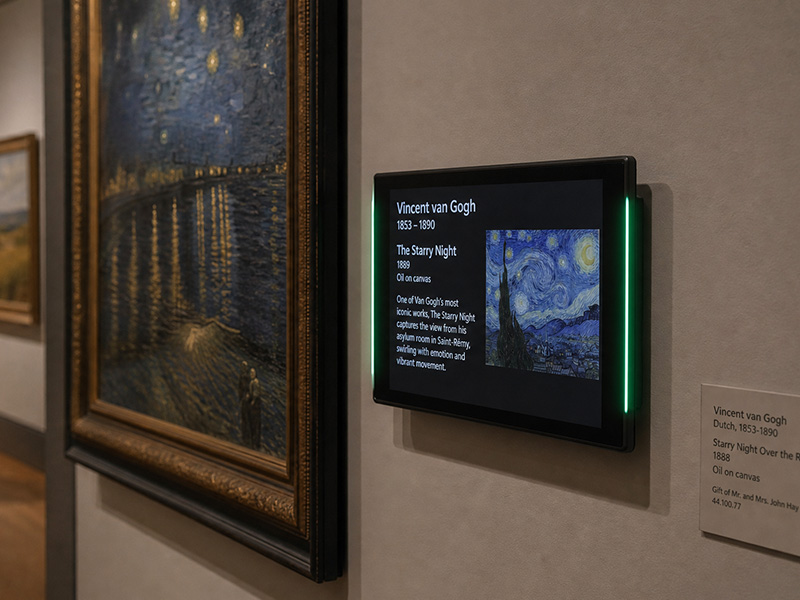
Museum Exhibit Interactive Touch Digital Signage Screen
For the majority of indoor museum installations, a brightness range of 300–500 nits represents the optimal specification.
Applicable to:
- Visitor orientation and information systems
- Interactive display terminals
- Digital exhibition interfaces
- Museum navigation and guidance displays
Key Advantages:
- Enhanced image legibility and definition
- Reliable functionality within conventional interior lighting conditions
- Optimal equilibrium between display luminosity and energy utilization
500+ nits: Bright Indoor Public Areas
Certain museum environments feature elevated illumination levels, including:
- Entrance halls
- Reception areas
- Glass-walled exhibition spaces
- Large public areas
High-luminance displays ranging from 500–700 nits deliver enhanced visibility within these settings.
Key Features for Museum Digital Signage Displays
High Color Accuracy
Museums frequently present artwork, photographs, and historical materials.
Essential display specifications:
- IPS panel technology
- Wide viewing angle
- High color reproduction
- High resolution
Precise color representation ensures the authentic appearance of displayed materials is maintained.
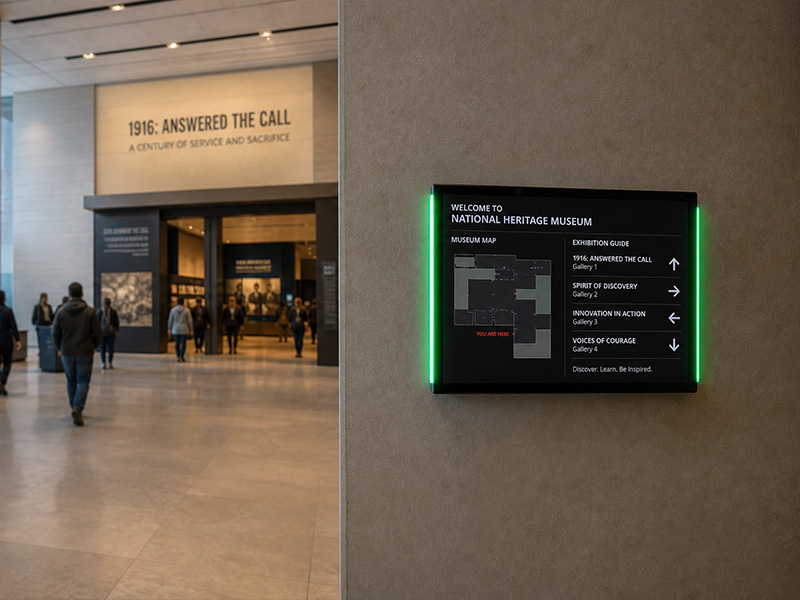
Museum Exhibit Interactive Touch Digital Signage Screen
Touchscreen Interaction
Interactive museum displays can enhance visitor engagement and experience.
Typical applications include:
- Digital exhibit guides
- Historical information browsing
- Interactive maps
- Educational experiences
Standard implementations:
- 10-point capacitive touch
- Infrared touch technology
Anti-Glare Display Surface
Museum environments frequently generate reflections that compromise screen visibility.
Anti-glare glass technology delivers the following benefits:
- Enhanced text and image clarity
- Minimized surface reflections
- Optimal visual comfort across multiple viewing positions
Dependable Continuous Operation
Museum display systems must function reliably during all operational hours while maintaining consistent performance standards.
Essential specifications include:
- Industrial-strength hardware components
- Passive thermal management without cooling fans
- Extended operational lifespan
- Robust embedded software platforms
Portworld Museum Digital Signage Solutions
Portworld delivers adaptable digital signage display systems specifically engineered for museums and cultural institutions.
Key Capabilities:
- 10.1″–65″ display range
- Android/Linux compatibility
- IPS high-resolution screen technology
- 300–1000 nits luminosity specifications
- Touchscreen personalization options
- WiFi/Ethernet communication protocols
- NFC/RFID and integrated camera functionality
- 24/7 continuous commercial-grade operation
Primary Use Cases:
- Interactive museum information kiosks
- Exhibition content presentation displays
- Digital guided tour systems
- Visitor wayfinding and navigation solutions
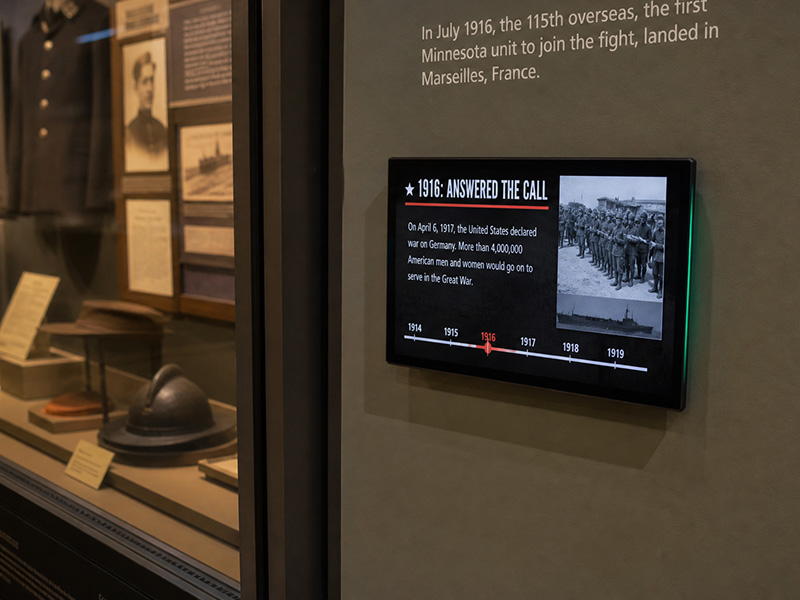
Museum Exhibit Interactive Touch Digital Signage Screen
Customized OEM/ODM Solutions for Museum Installations
Portworld specializes in tailored implementations encompassing:
- Custom display dimensions
- Luminosity fine-tuning
- Touchscreen integration capabilities
- Bespoke enclosure fabrication
- Android/Linux operating system customization
- Content management system integration
- Audio and sensor module integration
The recommended brightness range for the majority of indoor museum digital signage installations is 300–500 nits, as this level ensures adequate visibility while preserving viewer comfort. In dimly lit gallery environments, reduced brightness displays may be more suitable, whereas well-lit public areas may necessitate increased brightness capabilities.