How to Choose a Digital Signage Display for Museum Exhibitions
Museums have evolved beyond the confines of traditional display cases and printed descriptions. Contemporary exhibitions are increasingly incorporating digital signage displays to foster interactive experiences, deliver comprehensive information, and enhance visitors’ understanding of cultural artifacts.
From interactive exhibition guides to expansive video walls and information kiosks, digital displays have emerged as a vital resource for museums aiming to boost visitor engagement.
Nonetheless, selecting the appropriate digital signage display for a museum necessitates meticulous consideration of factors such as display quality, reliability, interactivity, installation environment, and content management capabilities.
The Importance of Digital Signage Displays in Museums
Conventional museum labels offer only a limited scope of information. Digital signage empowers museums to showcase content in more dynamic formats, which include:
- High-resolution images of artifacts
- Historical video presentations
- Interactive timelines
- 3D animations
- Explanations in multiple languages
- Visitor guidance information
- Announcements regarding exhibitions
This approach fosters a more immersive and educational experience for visitors.
Key Considerations When Selecting Digital Signage Displays for Museums
1. Opt for a High-Quality Display Panel
Museums necessitate displays that can faithfully reproduce images and videos.
Key display characteristics include:
High Resolution
High-resolution screens enable visitors to appreciate:
- Intricate details of artwork
- Historical documents
- Cultural artifacts
- Detailed graphics
Common choices comprise:
- Full HD
- 2K
- 4K displays
Wide Viewing Angle
Museum attendees observe displays from various angles.

Museum Exhibit Interactive Touch Digital Signage Screen
IPS panels with wide viewing angles guarantee:
- Consistent color representation
- Clear images
- Enhanced visitor experience
High Color Accuracy
For art museums and exhibitions, precise color representation is essential.
Displays should offer:
- Natural color reproduction
- Stable brightness
- Professional-grade panels
2. Consider Touchscreen Interaction
Interactive touchscreen displays have the potential to convert passive observation into active engagement.
Visitors are able to:
- Browse information about artifacts
- Zoom in on details of artworks
- Select various languages
- Explore historical contexts
- View supplementary multimedia content
Common touchscreen technologies include:
- Capacitive touch
- Infrared touch
- Multi-touch interaction
3. Select a Reliable 24/7 Commercial Display
Museums typically operate for extended hours each day.
A professional digital signage display must support:
- Continuous operation
- Stable performance
- Industrial-grade components
- Efficient heat dissipation
Consumer tablets are generally not intended for permanent public use.
4. Choose the Right Installation Type
Different exhibition environments necessitate distinct display designs.
Appropriate for:
- Exhibition information boards
- Gallery introductions
- Visitor announcements
Benefits include:
- Space efficiency
- Aesthetic appeal
- Simple installation
Floor-Standing Interactive Kiosks
Appropriate for:
- Museum navigation
- Interactive guides
- Self-service information terminals
Benefits include:
- Ample touch area
- Enhanced visitor interaction
- Flexible positioning
Embedded Exhibition Displays
Appropriate for:
- Artifact showcases
- Interactive exhibits
- Special exhibitions
Displays can be seamlessly integrated into:
- Display cabinets
- Exhibition walls
- Custom structures
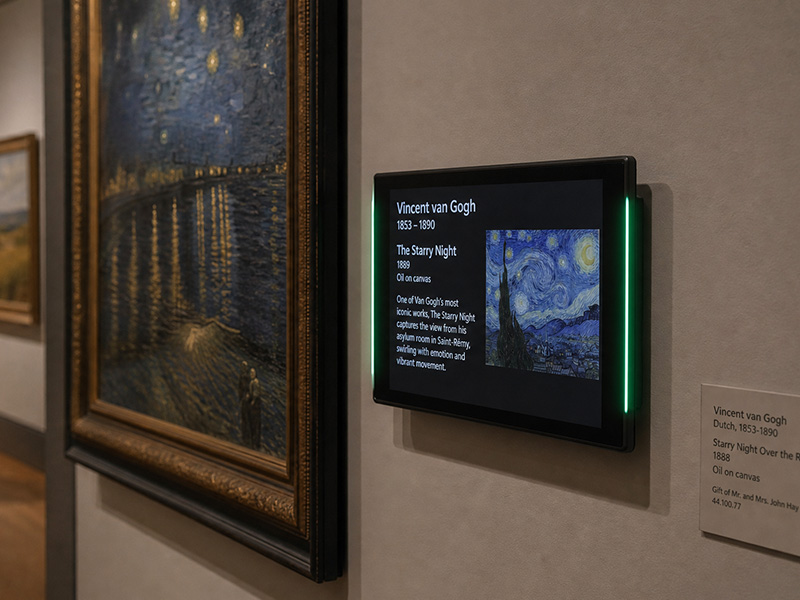
Museum Exhibit Interactive Touch Digital Signage Screen
5. Support Remote Content Management
Large museums frequently encompass multiple exhibition spaces.
A digital signage CMS enables administrators to:
- Update content from a distance
- Schedule exhibition details
- Manage numerous screens
- Alter languages
- Publish announcements
This minimizes maintenance efforts and enhances management efficiency.
6. Evaluate Connectivity and System Compatibility
Digital signage systems in museums may require integration with various platforms.
Useful interfaces include:
- WiFi
- Ethernet
- Bluetooth
- USB
- HDMI
- RS485
Operating system options include:
- Android
- Linux
- Debian
- Ubuntu
The selection is contingent upon software requirements and integration necessities.
Portworld Digital Signage Solutions for Museums
Portworld offers tailored digital signage and touchscreen display solutions for museums, galleries, and cultural exhibitions.
Available solutions include:
Interactive Touch Displays
Intended for:
- Museum information terminals
- Interactive exhibits
- Digital guides
- Educational displays
Features include:
- Multi-point touch
- Support for Android/Linux
- Customizable screen sizes
- Optional cameras and NFC modules
- YC-55MT Series Wall-Mount Digital Signage Display
The YC-55MT Series is ideal for:
- Exhibition information displays
- Museum announcements
- Interactive content playback
Key features include:
- 10.1″–65″ screen options
- Customization for Android/Linux
- Installation in landscape and portrait modes
- Optional touchscreen functionality
- 24/7 operational capability
OEM/ODM Customization for Museum Projects
Portworld offers tailored solutions that include:
- Custom enclosure design
- Screen size modification
- Touch integration
- NFC/RFID capabilities
- Camera modules
- Personalized UI software
- CMS integration
This enables museums to develop distinctive interactive exhibition experiences.
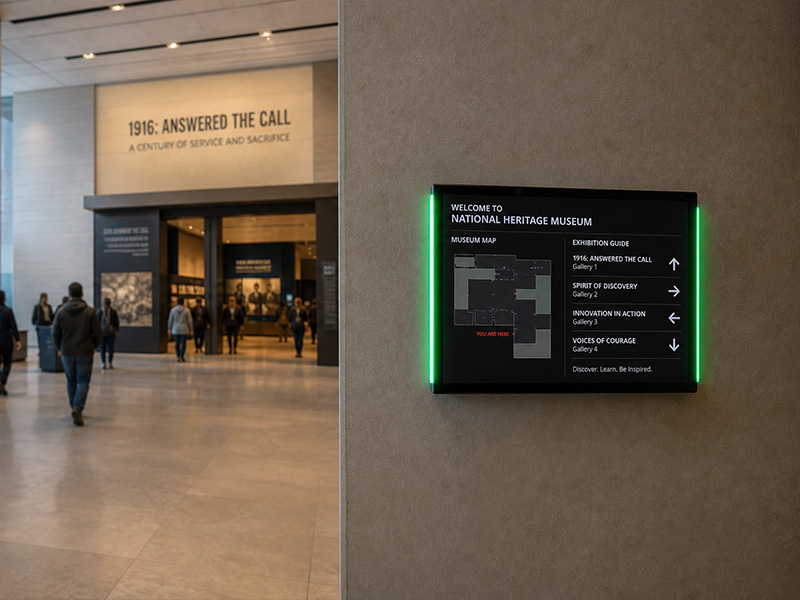
Museum Exhibit Interactive Touch Digital Signage Screen
Benefits of Digital Signage in Museums
Enhance Visitor Experience
Multimedia content enhances engagement and comprehension of exhibitions.
Improve Accessibility
Support for multiple languages assists international visitors.
Protect Valuable Exhibits
Digital displays can convey additional information without the need for physical labels.
Enable Smart Museum Development
Integration with IoT and cloud technologies facilitates contemporary digital management.
Selecting the appropriate digital signage display for museum exhibitions necessitates a balance between visual quality, durability, interactivity, and management adaptability.
A professional museum display should not merely present content but also foster an immersive communication platform between visitors and exhibits.