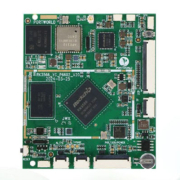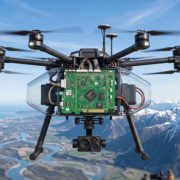
RK3566 Compute Module Architecture: CPU, GPU, VPU, and NPU Explained
The Rockchip RK3566 is a quad-core 64-bit application processor engineered for embedded computing, smart devices, and AIoT applications. Its architecture integrates a CPU for general-purpose processing, a GPU for graphics acceleration, dedicated video processing hardware, and an NPU for neural network inference.
Comprehending how these processing units function enables engineers to identify an appropriate compute module for smart home control panels, industrial terminals, IoT gateways, smart displays, and other embedded products.
The RK3566 compute module architecture holds particular significance for developers who must optimize computing performance, graphics capabilities, multimedia processing, AI acceleration, power consumption, and hardware integration.
This article delineates the functions of the CPU, GPU, VPU, and NPU, their collaborative operation, and the considerations developers should evaluate when incorporating an RK3566-based compute module into an embedded product.
1. What Is the RK3566 Processor?
The RK3566 is an application processor developed by Rockchip. It consolidates multiple processing and multimedia components into one system-on-chip (SoC), minimizing the requirement for separate processors dedicated to general computing, graphics, video processing, and supported AI workloads.
According to Rockchip’s published product specifications, the RK3566 comprises a quad-core Arm Cortex-A55 CPU, an Arm Mali-G52 2EE GPU, a neural processing unit with a capacity of up to 1 TOPS, and hardware acceleration for video decoding and encoding. It additionally supports interfaces for displays, cameras, memory, networking, and peripheral devices. (Rockchip RK3566 specifications)
The main processing components have different responsibilities:
| Component | Primary Function | Example Application |
|---|---|---|
| CPU | General-purpose computing and system control | Running Linux, applications, and device services |
| GPU | Graphics rendering and supported parallel computing | Touchscreen interfaces, animations, and visual applications |
| VPU / video processing hardware | Accelerated video decoding and encoding | Video playback, display terminals, and multimedia devices |
| NPU | Neural network inference acceleration | Supported image classification and object detection models |
These components complement one another. Their combined capabilities can help embedded systems handle multiple workloads without relying entirely on the CPU.
motherboard OEM 与 ODM
2. RK3566 CPU: Quad-Core Arm Cortex-A55
The CPU is the central general-purpose processing unit in an RK3566-based embedded system. It executes operating system instructions, runs applications, manages processes, and coordinates communication between software and hardware.
The RK3566 uses four Arm Cortex-A55 CPU cores based on a 64-bit Arm architecture. The processor is designed for efficient general-purpose computing in embedded and mobile-oriented applications.
What Does the Cortex-A55 CPU Do?
- The CPU may handle tasks such as:
- Running Android or Linux-based operating systems
- Managing application processes and background services
- Processing user input from a touchscreen
- Coordinating communication with sensors and external controllers
- Executing business logic and device management software
- Managing data exchange between different system components
For example, in a smart home control panel, the CPU can run the user interface application, process touch events, communicate with connected devices, and manage system settings.
In an industrial terminal, it can execute the main application, communicate with external equipment, and manage the device’s operating state.
Why Is a Quad-Core CPU Beneficial?
Multiple processing cores enable an operating system to distribute distinct operations across available computational resources. This capability can enhance system responsiveness when software applications execute multiple functions concurrently.
Nevertheless, actual computational performance is contingent upon application architecture, available memory resources, operating system settings, thermal management conditions, and the inherent complexity of the processing task.
Key takeaway: The RK3566 CPU serves as the primary processor for general-purpose computing and system management. It establishes the computational infrastructure upon which embedded applications are executed.
PortPi 3A
Single Board Computer
3. RK3566 GPU: Arm Mali-G52 2EE
The graphics processing unit, commonly referred to as a GPU, enhances the speed of graphics rendering and facilitates supported parallel computing operations.
While the CPU is engineered to accommodate a comprehensive spectrum of sequential and general-purpose operations, the GPU is specifically engineered for graphics tasks that can be executed in parallel fashion.
The RK3566 incorporates the Arm Mali-G52 2EE graphics processor. Rockchip documentation indicates compatibility with graphics and computational interfaces including OpenGL ES, Vulkan, and OpenCL. The precise accessible API versions and available capabilities are determined by the software implementation and driver configuration. (Rockchip RK3566 specifications)
How Does the GPU Enhance Embedded Applications?
- The GPU provides assistance with:
- Rendering graphical user interfaces
- Presenting menus, icons, and visual effects
- Accelerating compatible 2D and 3D graphics operations
- Enabling supported graphical applications
- Managing workloads that leverage supported GPU computing APIs
For instance, an intelligent control panel may present device status, room management controls, lighting preferences, and interactive menus. GPU acceleration facilitates the rendering of graphical components while the CPU oversees application logic and system services.
In a digital signage application, the GPU can facilitate the rendering of visual content and graphical components, whereas specialized video processing hardware manages supported video decoding functions.
GPU versus CPU: Understanding the Distinction
The CPU and GPU possess distinct architectural objectives. The CPU executes general-purpose instructions and manages system logic, whereas the GPU focuses on graphics processing and specific parallel operations.
A GPU does not inherently accelerate all applications. Applications must employ supported graphics APIs or computing interfaces to capitalize on its performance advantages.
Primary consideration: The Mali-G52 2EE GPU holds particular significance for embedded systems incorporating graphical interfaces, visual-oriented applications, and compatible graphics workloads.
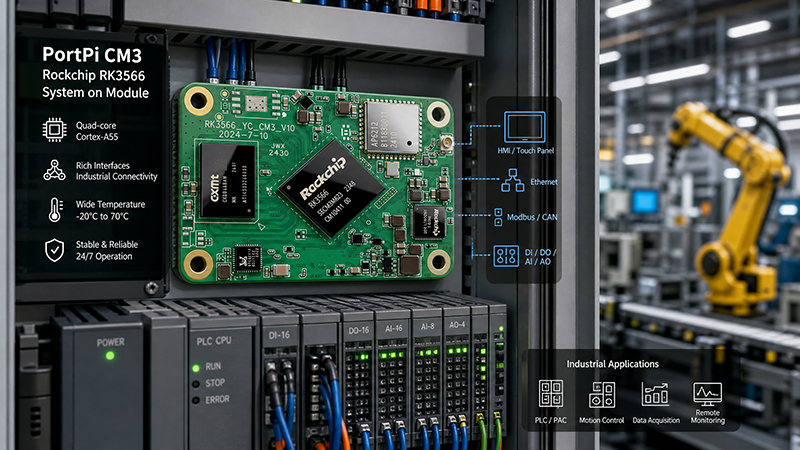
PortPi CM3 Industrial Control
4. RK3566 VPU: Specialized Video Processing Hardware
The Video Processing Unit (VPU) represents dedicated hardware for video processing integrated within the SoC. In the RK3566 context, this specialized component handles video-related computational tasks.
Rockchip’s technical specifications indicate support for hardware-accelerated decoding of H.264, H.265, and VP9 video formats at resolutions up to 4K and frame rates of 60 frames per second, alongside H.264/H.265 encoding capabilities at up to 1080p resolution and 60 frames per second. Actual performance and compatibility vary based on the specific codec employed, video profile specifications, software implementation details, and individual device configuration parameters.
The Significance of Dedicated Video Processing Hardware
Video decoding and encoding operations demand substantial computational resources. Specialized hardware components execute supported video operations with greater efficiency compared to exclusive reliance on general-purpose CPU resources.
Relevant use cases encompass:
- Digital signage and commercial display systems
- Intelligent information terminals
- Multimedia information kiosks
- Embedded video playback systems
- Video surveillance and display infrastructure
Consider a digital signage application presenting high-resolution video material. The dedicated video processing hardware manages decoding of compatible video streams, the CPU oversees playback control and operational logic, and the GPU handles rendering of user interface components.
This functional separation enables the system to efficiently distribute workloads across specialized processing components.
Does the RK3566 Support 4K Video?
Rockchip specifies 4K at 60 frames per second hardware decoding capabilities for compatible H.264, H.265, and VP9 codecs. However, this specification does not guarantee that all RK3566-based devices can deliver 4K video output across every available interface or operational configuration.
Successful 4K video implementation requires the entire system to provide appropriate display output capabilities, adequate memory bandwidth, compatible software drivers, suitable video profiles, and correct display timing parameters.
Design engineers must thoroughly evaluate the specifications of the specific compute module and carrier board before proceeding with 4K display product development.
Key takeaway: The RK3566’s specialized video processing hardware plays a critical role in embedded systems requiring high-resolution video decoding or encoding with supported formats.
5. RK3566 NPU: Neural Network Acceleration for Edge AI
The neural processing unit (NPU) is engineered to optimize supported neural network computations. In contrast to general-purpose processors, an NPU provides specialized acceleration for mathematical operations fundamental to machine learning inference.
The RK3566 incorporates an NPU designed for edge-based artificial intelligence applications. According to Rockchip’s technical specifications, the RK3566 NPU delivers performance up to 1 TOPS. TOPS represents trillion operations per second; however, TOPS measurements alone do not fully characterize actual AI application performance. (Rockchip RK3566 specifications)
What Can an NPU Accomplish?
Based on the specific model, compatible operations, software framework, and operational environment, an NPU can enhance performance for tasks including:
- Image classification
- Object detection
- Image recognition
- Specific computer vision applications
- Other compatible neural network inference operations
For instance, an embedded imaging system may employ an AI model for image classification or object identification. The CPU orchestrates application logic and data management, while the NPU executes compatible neural network operations.
An industrial application might leverage a supported model to detect visual patterns or categorize products. Comprehensive testing must validate whether the complete application satisfies its performance latency and accuracy specifications.
PortPi CM3 Industrial Control
CPU vs. GPU vs. NPU for AI
| Processing Unit | Typical Role in AI Applications |
|---|---|
| CPU | Application control, preprocessing, data management, and unsupported operations |
| GPU | Graphics and supported parallel workloads |
| NPU | Acceleration of compatible neural network operations |
Not all artificial intelligence models are capable of executing directly on the Neural Processing Unit. Models may require conversion, quantization, or additional optimization tailored to the intended runtime environment. Unsupported operators may necessitate alternative execution strategies, contingent upon the software framework employed.
Developers should assess model compatibility, inference latency, memory consumption, accuracy, and power efficiency rather than selecting a platform exclusively based on TOPS metrics.
A Note Regarding RK3566 NPU Performance
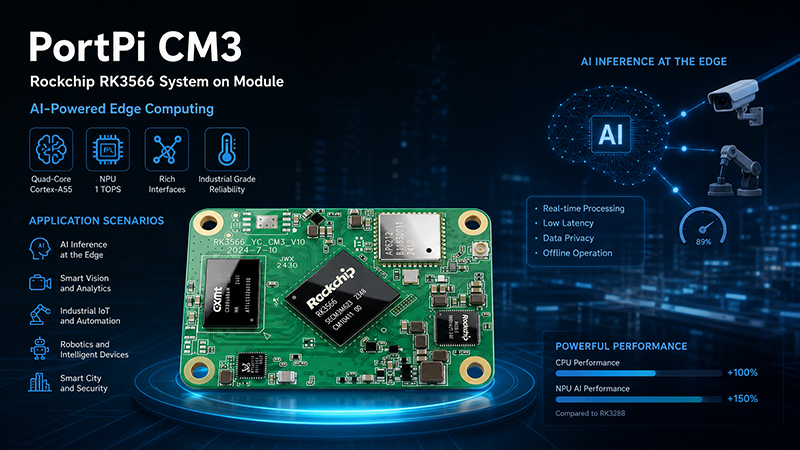
Rockchip’s official RK3566 System-on-Chip specifications indicate a maximum capacity of 1 TOPS. The PortPi CM3 product documentation provided by Portworld specifies an NPU capacity of 0.8 TOPS.
These specifications should not be considered equivalent without verification of the particular module version, specification methodology, and operational parameters. For commercial product documentation or technical design purposes, reference the validated specification corresponding to the precise hardware being procured.
Primary consideration: The RK3566 NPU can enhance compatible edge artificial intelligence models; however, practical performance is determined by software compatibility, model optimization, and the overall system architecture.
6. Integration and Coordination of CPU, GPU, VPU, and NPU
The principal benefit of consolidating multiple processing units within a single System-on-Chip is the capacity to allocate distinct computational tasks to appropriate hardware components.
Consider an intelligent terminal featuring a touchscreen interface, video material, and an integrated artificial intelligence recognition capability.
- Central Processing Unit: Manages the operating system, oversees application execution, and handles user input processing.
- Graphics Processing Unit: Manages interface rendering and compatible graphical enhancements.
- Video Processing Unit / video acceleration hardware: Processes compatible video formats.
- Neural Processing Unit: Optimizes supported machine learning inference operations.
- This allocation of functions can minimize the requirement to execute all operations through the Central Processing Unit.
7. RK3566 Compute Module Applications
An RK3566 compute module incorporates the processor onto a compact board that serves as the computational core of a larger embedded system.
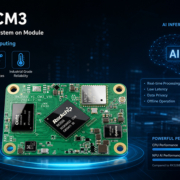
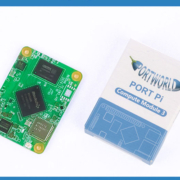
Portworld’s PortPi CM3 Compute Module, constructed on the RK3566 architecture, is engineered for integration into embedded products. Based on available product documentation, it provides flexible memory and eMMC storage configurations, alongside compatibility with Android and various Linux-based operating systems.
Relevant application domains encompass the following.
Smart Home Control Panels
A smart home control panel must execute its graphical interface, process touch-based interactions, establish communication with home automation systems, and oversee operational services.
The RK3566 processor and graphics processing unit facilitate application execution and visual rendering capabilities. Connectivity options through serial interfaces and network protocols are contingent upon the particular module configuration and associated carrier board architecture.
Industrial HMI and Control Terminals
Industrial human-machine interfaces (HMIs) establish a visual communication layer between operators and industrial machinery.
An RK3566-based implementation may be evaluated for use cases demanding graphical user interface functionality, information visualization, interfacing with peripheral controllers, and on-site computational processing. Compatibility of available interfaces and conformance to environmental specifications must be validated for the final product deployment.
Digital Signage and Smart Displays
Specialized video processing hardware can facilitate compatible high-resolution video playback, whereas the GPU processes graphical content and the CPU oversees playback applications.
The proposed design must be assessed against the specified display resolution, output interface, content format, and playback workload requirements.
IoT Gateways and Edge Devices
IoT gateways typically aggregate data, establish communication with devices, execute information processing, and establish network connectivity for local equipment.
An RK3566-based module can deliver a multipurpose computing infrastructure for such implementations. The necessary Ethernet, wireless, serial, and expansion interfaces must be present in the designated hardware configuration.
Embedded AI Applications
The NPU may prove advantageous for applications employing compatible neural network models, including specific image classification and object detection operations.
Prior to choosing an RK3566 compute module for artificial intelligence purposes, developers must evaluate the target model and runtime on the designated hardware to confirm compatibility, performance, and resource consumption.
8. What Should You Consider When Choosing an RK3566 Compute Module?
The processor represents merely one component of the embedded computing platform. Selecting an appropriate module necessitates comprehensive evaluation of the entire system architecture.
Memory and Storage
RAM capacity influences multitasking capabilities, application memory demands, and data processing performance. eMMC storage determines the available space for the operating system, applications, and local data storage.
PortPi CM3 provides standard configurations of 2GB LPDDR4 RAM and 32GB eMMC storage, with available alternatives of 4GB or 8GB RAM and 64GB or 128GB eMMC. Verify current availability for your specific product revision.
Customization and Production
Should your product require custom connectors, alternative carrier boards, specialized enclosures, or application-specific software solutions, confirm the availability of engineering and manufacturing services from your supplier.
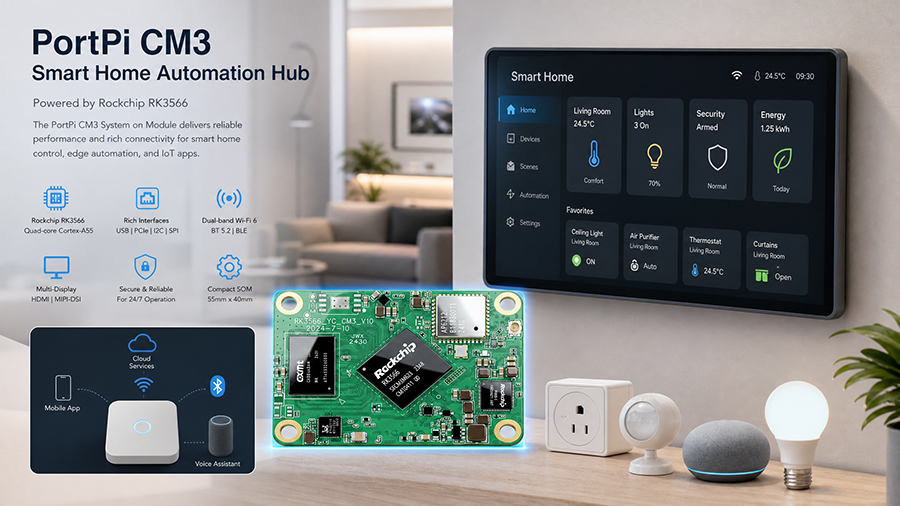
PortPi CM3 Smart Home
Portworld PortPi CM3 for Embedded Product Development
Portworld specializes in providing embedded computing hardware and intelligent device solutions designed for product developers, system integrators, and enterprises that require tailored hardware platforms.
The PortPi CM3 Compute Module, built upon the Rockchip RK3566 architecture, serves as a foundational platform for embedded applications demanding integrated computational capabilities, adaptable memory and storage configurations, and seamless carrier-board compatibility.
Depending on project specifications and hardware requirements, the development process typically encompasses:
- Determining an appropriate memory and storage configuration
- Integrating the module with a proprietary carrier board
- Attaching compatible display systems and peripheral devices
- Modifying the operating system and application-level software
- Conducting comprehensive hardware and software validation
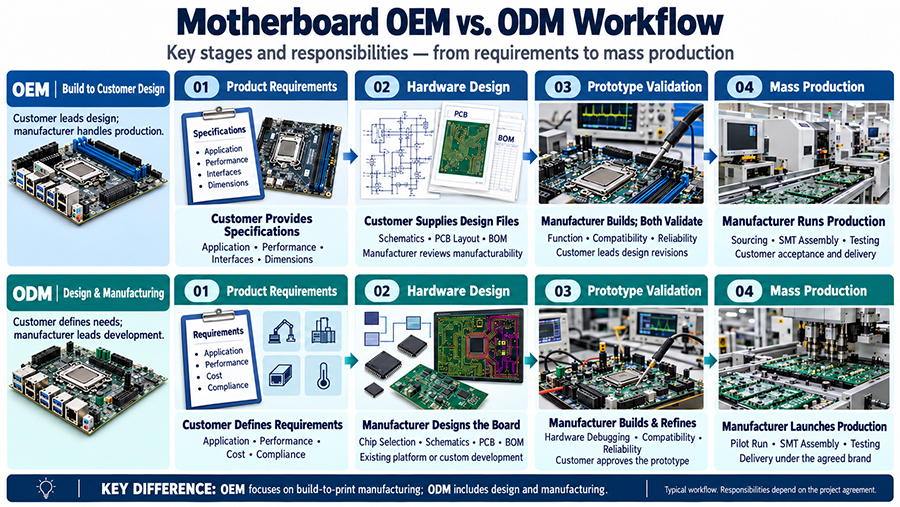
- Assessing OEM/ODM customization and production manufacturing alternatives
For projects in their initial phases, it proves advantageous to establish the intended application domain, preferred operating system, display specifications, required interfaces, artificial intelligence processing demands, power consumption limitations, and anticipated manufacturing volume prior to finalizing the hardware architecture.
Portworld’s comprehensive embedded hardware collection encompasses single-board computers and intelligent hardware solutions that may prove beneficial for initiatives requiring an integrated computing solution rather than an isolated compute module.