How I2C, UART, RS232, and RS485 Are Used in Embedded Systems
I2C, UART, RS232, and RS485 represent prevalent communication interfaces employed in embedded systems for establishing connections between processors and various peripheral components including sensors, controllers, displays, and external devices. While all four facilitate data communication, they are distinguished by their respective operational purposes and electrical specifications.
Comprehending these interfaces enables engineers to make informed decisions when selecting appropriate embedded motherboards or compute modules for applications such as smart home control systems, industrial equipment, IoT gateways, and other intelligent devices.
1. Defining I2C, UART, RS232, and RS485
I2C (Inter-Integrated Circuit) functions as a two-wire communication bus predominantly utilized for connecting on-board peripherals, including sensors, memory devices, and compatible control integrated circuits. The architecture permits multiple addressed devices to operate concurrently on identical SDA and SCL lines. This configuration proves particularly advantageous in scenarios where printed circuit board space and pin availability are constrained.
UART (Universal Asynchronous Receiver-Transmitter) constitutes a hardware interface facilitating asynchronous serial communication. It conventionally employs TX and RX signals to facilitate data exchange among devices, such as between a processor and a communication module. UART establishes the data transmission protocol, whereas the electrical interface implementation remains contingent upon the specific application.
RS232 represents a serial communication standard predominantly employed for point-to-point connections linking embedded equipment with external devices. It incorporates designated electrical signaling characteristics and maintains prevalence in industrial instrumentation, configuration interfaces, and legacy systems.
RS485 constitutes a differential signaling standard engineered to facilitate dependable serial communication. It accommodates multipoint network architectures and demonstrates extensive utilization in industrial automation, building management systems, and inter-controller peripheral device communication.
A critical differentiation exists in that UART designates a serial communication interface, whereas RS232 and RS485 establish electrical signaling standards. A UART interface may be integrated with RS232 or RS485 specifications through implementation of appropriate transceiver circuitry. Technical reference: Microchip I2C documentation and Texas Instruments interface solutions.
PortPi 3A
Single Board Computer
2. What Are These Interfaces Used For?
| Interface | Common Applications | Main Advantage |
|---|---|---|
| I2C | Sensors, RTCs, peripheral chips | Few signal lines |
| UART | Module communication, debugging, serial devices | Simple asynchronous communication |
| RS232 | Instruments, configuration ports, point-to-point devices | Established serial interface |
| RS485 | PLCs, building automation, industrial controllers | Differential signaling and multipoint communication |
The optimal interface selection is contingent upon multiple factors, including the connected device specifications, cable length requirements, electrical environment conditions, communication protocols, and hardware architecture considerations.
For instance, I2C is frequently employed for intra-PCB component communication, whereas RS485 proves more suitable when an embedded controller must establish communication with external apparatus across extended cable runs within electromagnetically challenging industrial settings.
3. Interface Selection Methodology for Embedded Product Development
During the motherboard or compute module evaluation phase, the following considerations warrant examination:
- What devices require connection? Identify the interface requirements specified by sensors, controllers, displays, and peripheral equipment.
- What distances separate the devices? On-board interconnections and external industrial wiring installations present distinct electrical specifications.
- How many devices will participate in communication? RS485 technology can accommodate multipoint network architectures when appropriately engineered and configured.
- What capabilities does the processor board provide? Verify the accessible pins, voltage specifications, transceiver components, connectors, and available software drivers.
- These considerations should be evaluated during the initial phases of hardware development to minimize integration complications and preclude unnecessary circuit board modifications.
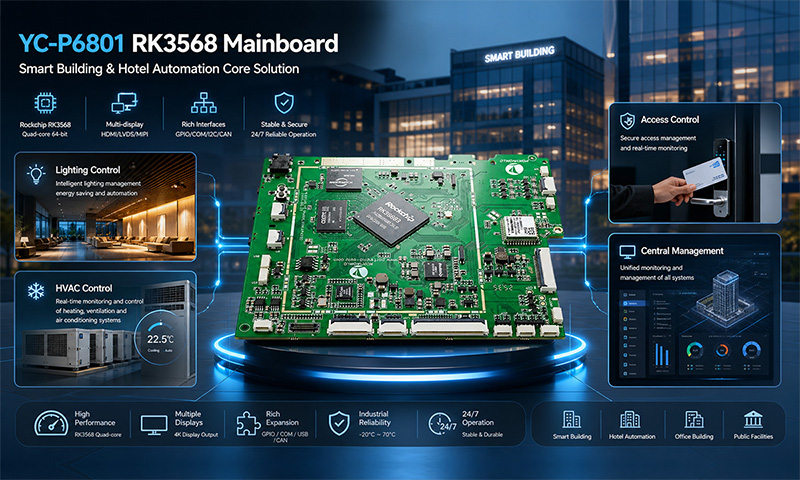
YC-P6802 RK3568 Mainboard
4. Portworld Embedded Hardware and Customization Services
Portworld delivers embedded computing platforms and intelligent hardware solutions designed for enterprises developing specialized electronic products.
Its comprehensive product portfolio encompasses:
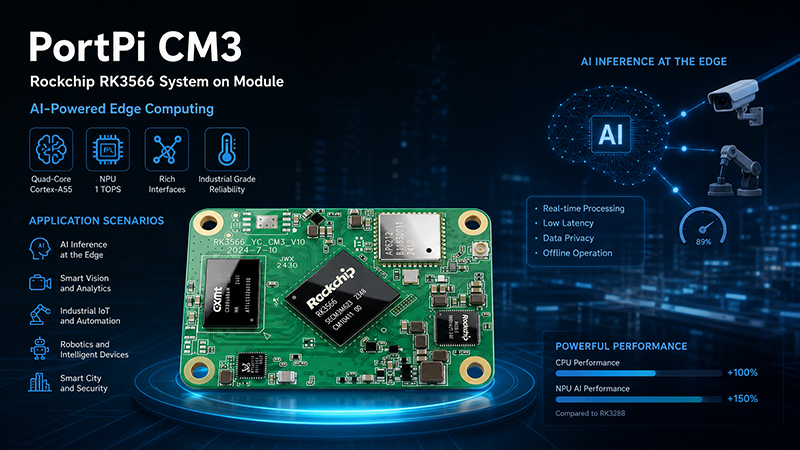
- Embedded motherboards and compute modules: Featuring the PortPi CM3 built on Rockchip RK3566 architecture alongside additional embedded computing platforms.
- Single-board computers: Including the PortPi 3A, constructed on Rockchip RK3568 technology.
- Smart home control panels: Engineered for residential automation, facility management, and automated control systems.
- Embedded touch displays and industrial terminals: Designed for user interaction interfaces and commercial or industrial applications.
- PoE expansion boards and associated hardware: Facilitating network connectivity and power distribution for compatible products.
Based on the chosen platform and specific project parameters, Portworld is prepared to address OEM/ODM development, PCBA customization, carrier board engineering, interface connectivity, operating system configuration, and CKD/SKD-related offerings.
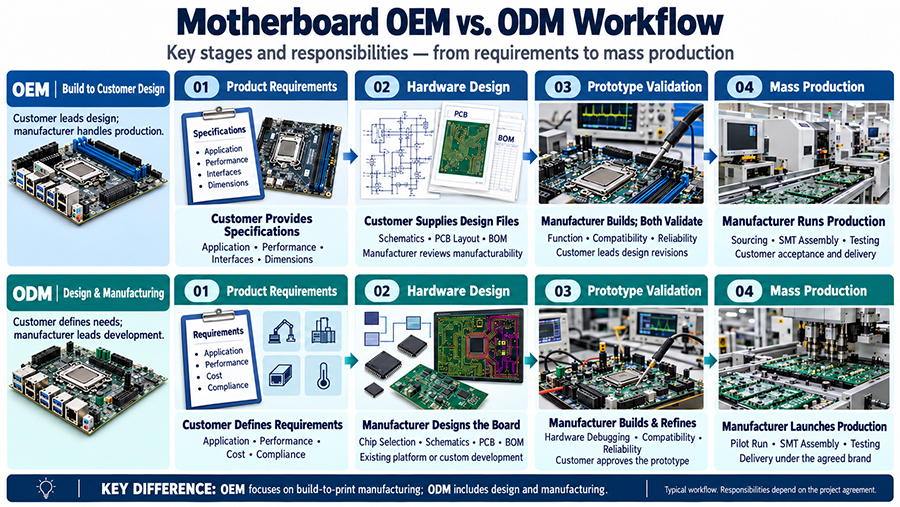
motherboard OEM 与 ODM
Should your application necessitate I2C, UART, RS232, or RS485 communication protocols, the appropriate interfaces must be validated according to the particular board specifications. Supplementary signal converters, connection components, or carrier board adaptations may be necessary to fulfill your requirements.
I2C, UART, RS232, and RS485 protocols fulfill distinct communication requirements within embedded systems environments. I2C is predominantly employed for integrated on-board peripherals, UART facilitates straightforward serial data transmission, RS232 enables point-to-point serial connectivity, and RS485 proves advantageous for dependable communication with industrial equipment.
Selecting the appropriate interface necessitates comprehensive understanding of your specific application and thorough verification of hardware specifications.
Requiring an embedded motherboard or specialized hardware configuration? Reach out to Portworld to examine your necessary interfaces, computing architecture, and OEM/ODM development requirements.