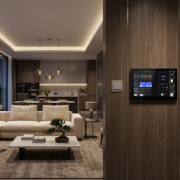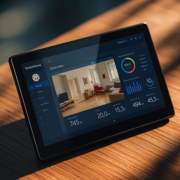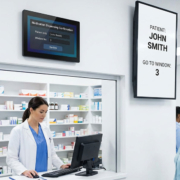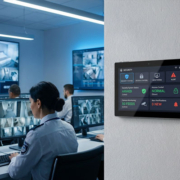
Custom vs off the shelf smart home control panel
When evaluating smart home control panel options, original equipment manufacturers must make a critical determination: should they opt for a pre-built, immediately deployable solution, or commit resources to developing a bespoke system tailored to their particular operational needs?
Each approach presents distinct benefits. Pre-built control panels enable manufacturers to expedite product launches and minimize initial engineering expenditures. Conversely, bespoke panels provide enhanced adaptability regarding hardware specifications, software functionality, aesthetic design, and platform compatibility.
The optimal selection hinges upon the intended use case, financial constraints, anticipated production quantities, and overarching business objectives. Examining these distinctions enables smart home manufacturers, channel partners, and implementation specialists to circumvent superfluous development expenses while delivering solutions that align with end-user expectations.
What Constitutes a Pre-Built Smart Home Control Panel?
A pre-built smart home control panel represents a standardized offering engineered for broad market applications. The manufacturer has previously finalized its processing architecture, screen specifications, physical housing, and foundational software framework.
Procurement specialists can identify an appropriate model according to display dimensions, computational capacity, system software, data transmission capabilities, and supplementary technical attributes. Contingent upon the vendor’s offerings, restricted customizations including brand identification, startup sequences, localization preferences, or bundled software may be obtainable.
For instance, a smart home integrator may opt for a standard 4-inch panel to manage room-level lighting and curtain control, or select a larger 10-inch panel to provide a more extensive interface.
Since the foundational product is already available, purchasers can typically proceed directly to sample evaluation and acquisition without undertaking a comprehensive hardware development initiative. This characteristic renders off-the-shelf panels particularly valuable for prototype development, limited-scope projects, and organizations seeking to assess market viability before committing to customized solutions.
Nevertheless, a standard product may not address all requirements. The existing processor specifications, available communication interfaces, mounting configurations, user interface design, or enclosure specifications may prove incompatible with a particular project’s needs.
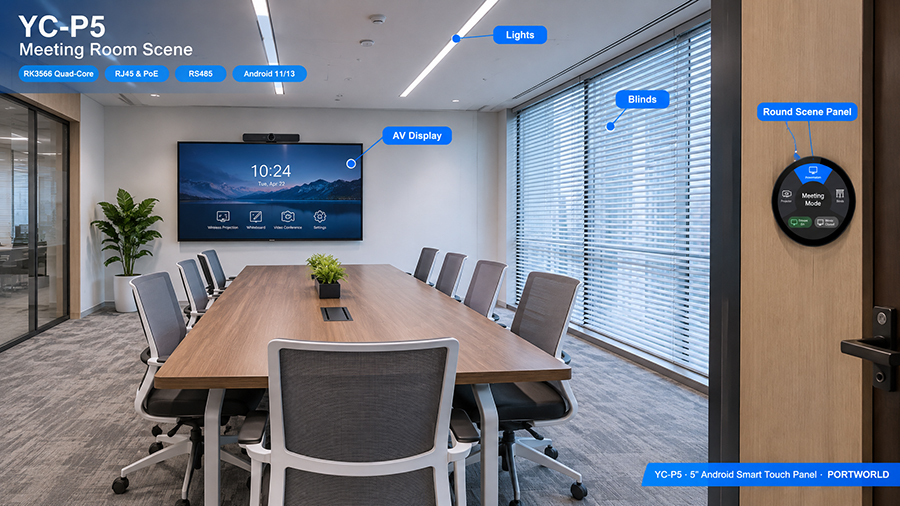
YC-P5 smart home control panel
What Constitutes a Custom Smart Home Control Panel?
A custom smart home control panel represents a solution that has been modified or engineered to fulfill a particular brand’s technical, operational, or aesthetic specifications.
Customization efforts may encompass minor modifications such as branding adjustments through to substantial OEM/ODM engineering initiatives. Contingent upon the project scope, customization may involve an alternative screen dimension, specialized PCBA configuration, different processor architecture, unique communication protocols, a reimagined enclosure structure, or a specialized software platform.
For instance, a building automation enterprise may necessitate a wall-mounted control interface that seamlessly integrates with its current management infrastructure, accommodates designated communication standards, and presents a proprietary visual design. Although a conventional configuration may serve as a beneficial foundation, supplementary hardware or software engineering may be required to accomplish the intended objectives.
Customization further enables purchasers to establish a more uniform brand presence across varying display dimensions or operational contexts. Rather than conforming the product to the manufacturer’s predetermined specifications, the purchaser can collaborate with the manufacturer to establish a configuration that aligns more effectively with project requirements.
The corresponding consideration is that bespoke development may necessitate supplementary engineering expenditures, prototype assessment, regulatory compliance procedures, manufacturing equipment investment, or extended lead times preceding full-scale production.
Custom vs. Off-the-Shelf: Key Differences
| Factor | Off-the-shelf panel | Custom panel |
|---|---|---|
| Initial investment | Usually lower | May involve engineering or tooling fees |
| Time to market | Generally faster | Depends on development scope |
| Hardware configuration | Limited to available models and options | Can be adapted to project requirements |
| Software and UI | Standard software, with optional minor changes | Greater flexibility for applications and branding |
| Appearance | Existing enclosure and finishes | May allow customized colors, materials, and dimensions |
| System integration | Depends on existing interfaces and software | Can be designed around specific integration requirements |
| MOQ | Depends on the supplier and model | Depends on customization and production requirements |
| Product differentiation | More limited | Greater potential for a distinctive product |
| Long-term maintenance | Based on the standard product roadmap | Requires clear agreements on revisions and ongoing support |
Neither alternative demonstrates inherent superiority. The determination should be grounded in evaluating the degree to which an existing product aligns with specified requirements and the extent to which supplementary customization will deliver measurable benefits.
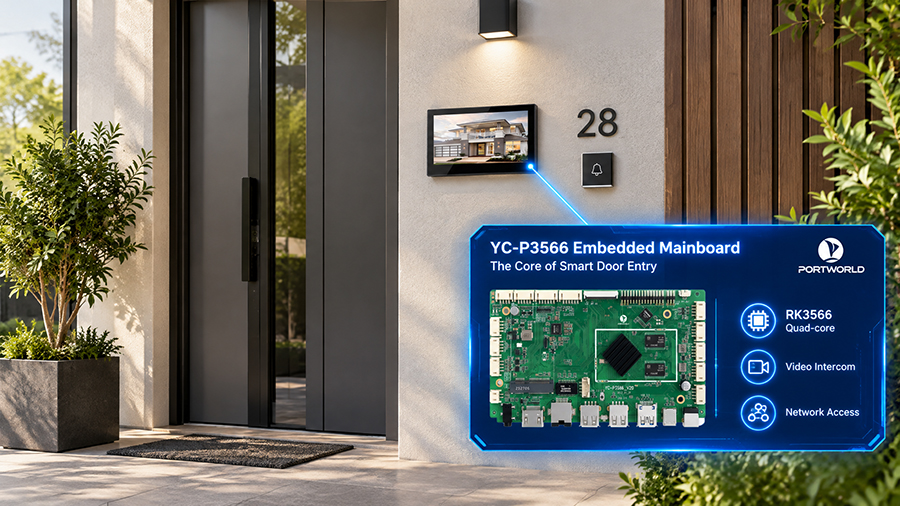
YC-P3566 Smart home control panel
Cost: Is Custom Panel Development Invariably More Costly?
A commercially available panel typically incurs reduced initial development expenditures, as the manufacturer has previously finalized the fundamental hardware and mechanical architecture. Purchasers can concentrate on procurement, system integration, and implementation.
A tailored panel may necessitate non-recurring engineering (NRE) expenditures, proprietary software development charges, specialized enclosure manufacturing, prototype fabrication, or comprehensive quality assurance. These outlays can substantially elevate the preliminary capital requirement, particularly for limited-volume acquisitions.
Nonetheless, restricting analysis to unit cost alone presents an incomplete assessment.
Should a standard panel demand considerable modifications, supplementary conversion equipment, additional communication infrastructure, or significant application software customization, the aggregate initiative expense may escalate. A tailored panel incorporating requisite connectivity and capabilities directly into the apparatus could diminish these ancillary expenditures.
Original Equipment Manufacturer (OEM) purchasers should consequently evaluate the comprehensive expenditure associated with the solution, encompassing development, peripherals, system integration, regulatory compliance, stock management, and ongoing support. Additionally, they should assess the anticipated manufacturing volume: a purpose-built product may demonstrate superior economic viability when its upfront development expenditures are distributed across a greater quantity of manufactured units.
Time to Market: When Does Standard Hardware Represent the Optimal Selection?
When expeditious delivery constitutes the primary objective, a commercially available panel typically represents the more pragmatic alternative.
Given that the fundamental hardware infrastructure and physical housing are already finalized, purchasers can ordinarily proceed directly to sample assessment and system integration activities. This approach proves particularly advantageous for pilot initiatives, client presentations, and implementations operating under predetermined timelines.
A purpose-built panel necessitates extensive preliminary planning. The undertaking may require hardware evaluations, application development, prototype assessment, structural verification, and formal authorization prior to manufacturing commencement.
The implementation schedule is contingent upon the extent of customization required. Modifying branding elements or configuring pre-installed software differs substantially from engineering an entirely new printed circuit board assembly and physical enclosure.
An advantageous methodology involves commencing with an established hardware foundation and modifying exclusively those components that are indispensable for the initial product offering. This strategy facilitates the reconciliation of delivery speed with competitive differentiation while preserving capacity for more comprehensive modifications throughout subsequent product iterations.
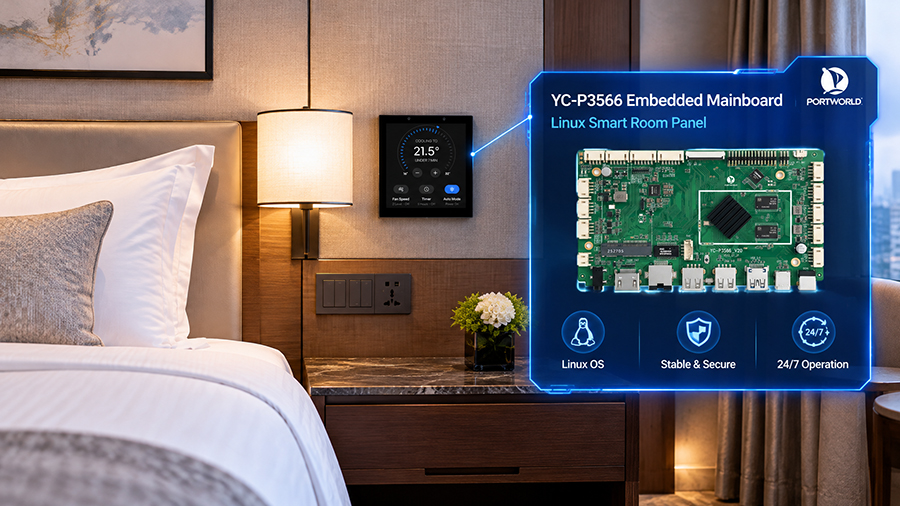
YC-P3566 Linux Smart home control panel
Hardware and Software Flexibility
The capabilities of a smart home control panel are fundamentally constrained by its underlying hardware architecture. Critical specifications encompassing the processor, RAM, storage capacity, display interface, Ethernet connectivity, PoE support, Wi-Fi, Bluetooth, RS485, and supplementary interfaces directly influence which operational functions can be executed.
An existing commercial panel proves appropriate when its current technical specifications align with the project’s performance and connectivity demands. Prospective purchasers must examine the precise model documentation rather than presuming that panels sharing identical screen dimensions necessarily incorporate identical interfaces or operating systems.
Customization gains significance when the implementation demands a specialized processor, a unique interface configuration, supplementary peripheral components, or an alternative physical design.
Software considerations hold equivalent importance. A conventional Android or Linux-based panel may accommodate the necessary application with minimal modifications. More complex implementations may necessitate a proprietary graphical interface, scheduled application initialization, specialized device drivers, protocol connectivity, or a customized software configuration.
For deployments incorporating KNX, Zigbee, Modbus, MQTT, BACnet, or Matter protocols, purchasers must validate comprehensive integration specifications. The mere existence of a hardware port or wireless communication module does not independently ensure interoperability with all connected devices or supported protocols.
Product Differentiation and Brand Identity
For distributors and smart home manufacturers, product differentiation represents a significant consideration when evaluating customization options.
An off-the-shelf panel provides an efficient solution for launching a product utilizing an existing hardware framework. Standard branding capabilities may prove sufficient when end-users emphasize operational performance and cost-effectiveness over aesthetic considerations.
A customized panel enables greater flexibility in establishing alignment between the product and the brand’s visual and functional identity. This may encompass a distinctive user interface, tailored enclosure materials and finishes, variable display sizes, branded initialization sequences, or a hardware architecture optimized for specialized applications.
Consider a hospitality automation provider seeking uniform visual presentation across all guest-room interface systems, or a smart home manufacturer requiring proprietary interface design and preset automation workflows.
Decision-makers should evaluate which distinguishing characteristics hold significance for their target market. Not all initiatives require entirely new product development; frequently, a strategically chosen standard platform combined with selective customization achieves optimal equilibrium between expenditure and market differentiation.
Minimum Order Quantity and Extended Supply Chain Considerations
Minimum order quantity represents a critical variable when evaluating standard versus customized smart home control panels.
Off-the-shelf models typically present more accessible procurement pathways, though the specific minimum order quantity remains contingent upon the supplier, technical specifications, and contractual arrangements. Bespoke implementations frequently necessitate elevated minimum quantities due to proprietary components, custom enclosure manufacturing, or production setup requirements.
Procurement professionals must differentiate between the minimum order quantity applicable to standard products, the minimum order quantity for customized configurations, and any distinct minimum purchase thresholds for individual components.
Extended supply continuity warrants careful consideration. Smart home control panels frequently remain operational for extended periods, and installations across multiple facilities may necessitate subsequent orders, replacement components, or functionally equivalent substitute units.
Prior to manufacturer selection, inquire regarding component sourcing reliability, hardware version management, firmware support, product lifecycle roadmap, and the approval mechanism for modifications across successive manufacturing runs.
These factors hold significance for both standard and customized offerings, particularly when maintaining uniformity across distributed installations proves essential.
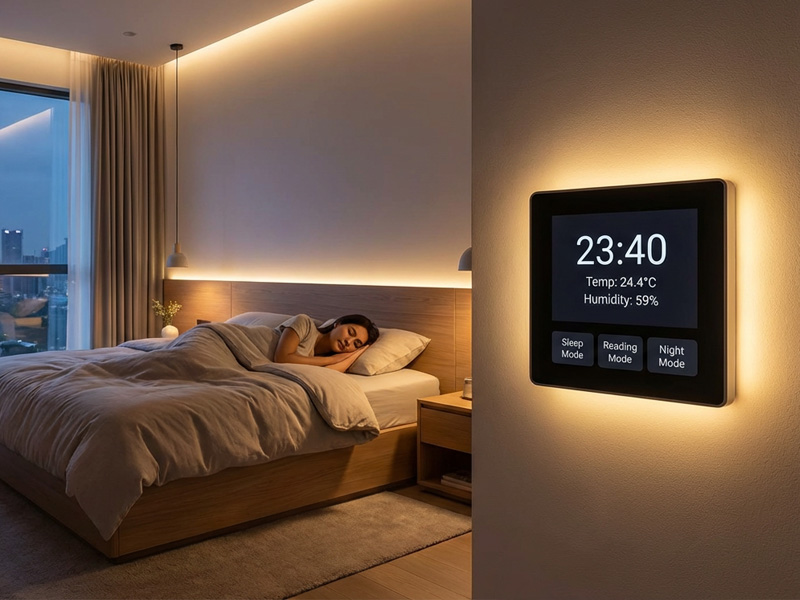
smart control panel factory-1
Which Option Should You Select?
A commercially available smart home control panel typically represents an optimal selection when the current technical specifications align with your application needs, project timelines are constrained, and budget constraints necessitate minimal upfront expenditure.
A purpose-built smart home control panel merits serious consideration when your project demands specialized hardware components, requires a unique visual design, incorporates proprietary software solutions, necessitates particular communication protocols, or demands seamless integration with your current automation infrastructure.
A viable compromise solution also exists: select a standard panel and implement modifications to specific functionalities. This strategy enables retention of the majority of the efficiency and financial benefits associated with standard equipment while delivering sufficient customization capacity to fulfill your project’s essential objectives.
Prior to finalizing your selection, stakeholders must establish documentation regarding the necessary display dimensions, computational architecture, software platform, data transmission protocols, application capabilities, physical installation specifications, anticipated production volume, and intended operational duration. A supplier can subsequently determine whether an existing product offering suffices or whether additional customization efforts are economically justified.
Portworld provides smart home control panels available in multiple screen dimensions and hardware specifications, featuring OEM/ODM capabilities for appropriate applications.
Prospective customers can examine current offerings including the 4-inch YC-SM41P, circular 5-inch YC-P5, 5.5-inch YC-SM55P, and 10-inch YC-SM10P. The accessible hardware components, software platforms, connection protocols, and modification possibilities differ according to each configuration and must be validated against specific project parameters.
For customers whose specifications surpass standard offerings, customization possibilities encompass brand identity, software tuning, hardware modifications, screen configurations, and connectivity protocols. The suitable customization scope is contingent upon the intended use case, purchase volume, and engineering specifications.
The most productive approach involves determining which capabilities are critical and assessing their alignment with an existing model’s functionality. When a standard solution addresses the majority of requirements, minimal customization may prove adequate. Conversely, when critical specifications cannot be satisfied, a comprehensive OEM/ODM engagement may deliver superior value over time.
Ultimately, determining between tailored and commercially available smart home control panels transcends a simple trade-off between affordability and adaptability. Rather, it represents a strategic assessment of reconciling product specifications, engineering expenditure, deployment timeline, and prospective expansion potential.