What Is the MOQ for Custom Smart Home Control Panels?
When procuring smart home control panels, one of the primary inquiries that original equipment manufacturer (OEM) buyers present is: What constitutes the minimum order quantity (MOQ)? For emerging enterprises establishing a new smart home brand, distributors evaluating a new market segment, and system integrators designing tailored solutions, MOQ substantially influences the initial capital expenditure, unit product cost, and adaptability of the procurement strategy.
The determination depends upon the classification of the control panel, the extent of customization required, and the manufacturer’s production capacity constraints. Acquiring a standard Android touchscreen featuring a company logo differs significantly from engineering an entirely new control panel incorporating a customized motherboard, enclosure, communication interfaces, and proprietary software.
For purchasers collaborating with a smart home control panel manufacturer such as Portworld, comprehending these distinctions facilitates more effective project planning and selection of the appropriate initial approach.
Typical MOQ for Varying Levels of Customization
No standardized MOQ exists across all smart home control panels. As a reference framework, Portworld’s published sourcing guide delineates the subsequent ranges corresponding to distinct customization specifications. Precise quantities must be validated for the designated model and corresponding project requirements.
| Customization type | Indicative MOQ |
|---|---|
| Standard model with logo printing | 50–100 units |
| Custom UI on existing hardware | 100–300 units |
| Custom housing color or finish | 300–500 units |
| Special protocol integration, such as KNX | 200–500 units |
| Custom packaging and manuals | 100–300 units |
| Full hardware ODM, including custom PCB or enclosure | 500–1,000+ units |
These figures serve as planning references and do not constitute guaranteed order minimums. Various factors including specialized components, bespoke tooling, regulatory compliance requirements, and software engineering initiatives may alter the ultimate quantity and pricing.
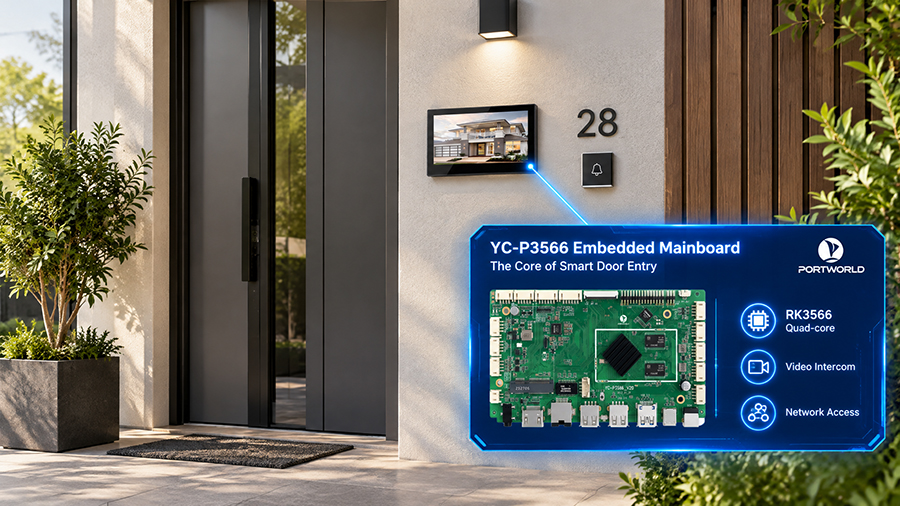
YC-P3566 Smart home control panel
1. Ordering an Existing Smart Home Control Panel with Your Logo
For purchasers seeking to introduce a branded product to market expeditiously, leveraging an established control panel model frequently represents the most efficient approach.
Rather than undertaking new hardware development, purchasers may select an appropriate panel and modify elements including corporate branding, boot sequence animation, initial application configuration, localization preferences, or product packaging. The existing processor architecture, display technology, and physical housing may remain unmodified.
This methodology diminishes engineering requirements and eliminates expenditures associated with developing novel circuit boards or mechanical designs. It may additionally streamline prototype assessment and accelerate the timeline to commercial production.
As an illustration, a smart home enterprise may opt for an established 4-inch or 5-inch Android control panel and incorporate proprietary branding prior to presenting the product to regional distribution partners or installation specialists.
For initiatives characterized by modest preliminary market demand, inquire whether the manufacturer can facilitate a limited pilot order prior to committing resources to a substantial production run.
2. Does Custom Software Increase the MOQ?
Software customization may influence MOQ levels, though the extent of this influence is contingent upon the complexity and breadth of the development requirements.
Minor modifications, including alterations to the boot logo, pre-installation of applications, or adjustment of startup configurations, can typically be implemented without necessitating hardware modifications.
More substantial undertakings may encompass the creation of a bespoke user interface, incorporation of third-party smart home ecosystems, modification of device drivers, or deployment of specialized communication protocols. Such initiatives frequently demand expanded engineering capacity, comprehensive software validation, and system integration efforts.
Crucially, software development expenditures and MOQ represent distinct considerations. A manufacturer may accommodate a reduced production volume while imposing a distinct engineering charge for bespoke software solutions.
Consequently, OEM purchasers should solicit quotations that delineate one-time engineering expenses from per-unit recurring costs to the greatest extent feasible.
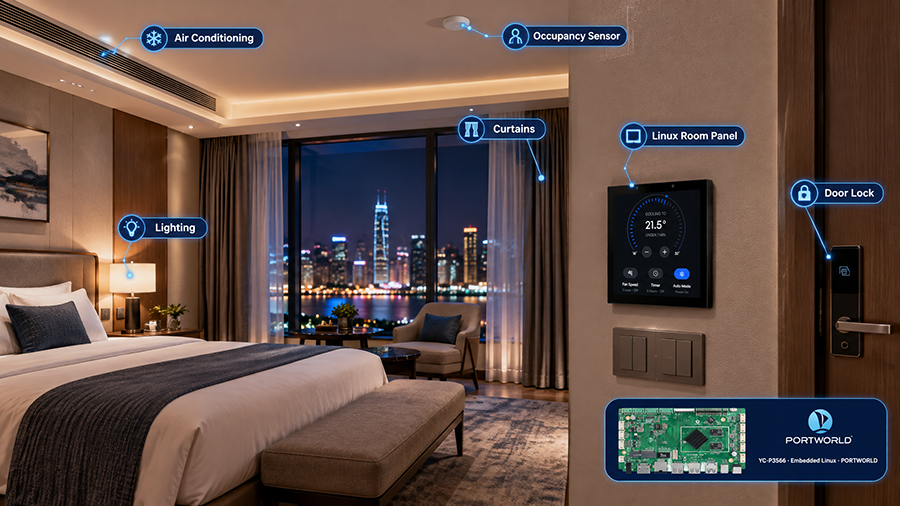
YC-P3566 Linux smart home control panel
3. Why Does Custom Hardware Typically Necessitate a Higher Minimum Order Quantity?
When an existing panel fails to satisfy the project’s specifications, purchasers may require a customized PCBA, alternative processor, supplementary interfaces, redesigned enclosure, or distinctive display arrangement.
These modifications introduce supplementary factors to consider.
First, electronic components frequently carry supplier-imposed acquisition thresholds. A proprietary wireless module, display, or processor specification may necessitate procuring a greater volume of components than a modest production run requires.
Second, a redesigned enclosure may demand tooling, mechanical assessment, and expanded production setup. These expenditures must be addressed either through preliminary engineering fees or through the financial viability of the manufacturing order.
Third, hardware modifications demand engineering assessment. The manufacturer must evaluate power utilization, display integration, heat dissipation performance, data transmission pathways, and operational reliability prior to sanctioning full-scale manufacturing.
Consequently, purchasers should recognize the distinction between modifying an established platform and constructing an entirely novel product. Should the current hardware already fulfill the majority of specifications, restricting modifications to critical adjustments can facilitate expense management during the preliminary phase.
4. The Impact of Communication Protocols on Minimum Order Quantity
Intelligent home control panels frequently require communication capabilities with supplementary devices and integrated building automation systems. Contingent upon the specific application requirements, the initiative may necessitate compatibility with KNX, Zigbee, Modbus, MQTT, BACnet, or Matter protocols.
Protocol integration, however, does not invariably demand a comprehensive redesign of the printed circuit board assembly. Certain functionalities can be realized through software implementation, whereas others mandate supplementary hardware components, a specialized radio module, an appropriate interface, or an external gateway solution.
Prior to addressing minimum order quantity considerations, purchasers must articulate which devices and systems the control panel is required to interface with. Additionally, they should specify whether the requirement encompasses a tangible physical interface, protocol-level software, gateway connectivity, or comprehensive end-to-end system compatibility.
This clarification enables the manufacturer to evaluate the comprehensive development requirements and ascertain whether an existing product configuration can be modified appropriately or whether more substantial hardware modifications are warranted.
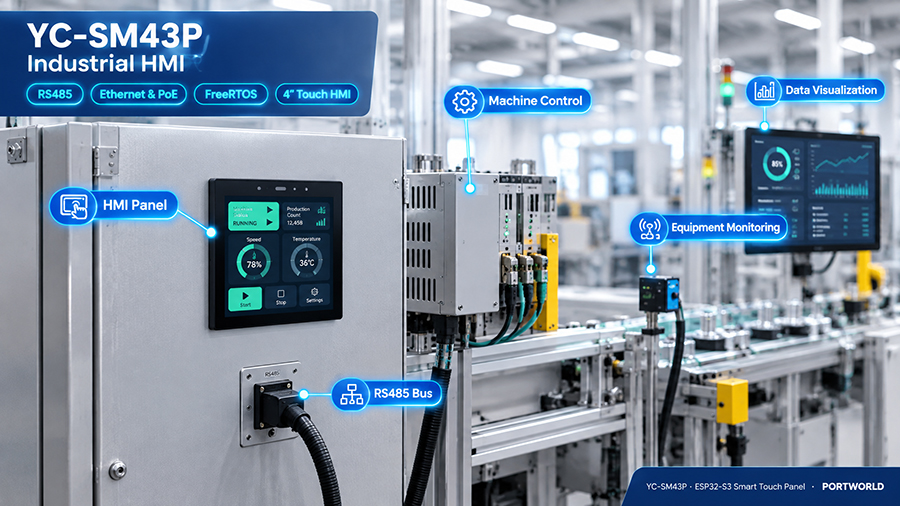
YC-SM43P ESP32 4″ Smart Touch Panel
5. What Strategies Can Purchasers Employ to Decrease the MOQ for Initial Orders?
For purchasers who are unable to commit to substantial quantities of customized panels, several strategies may facilitate a reduction in the initial financial commitment.
Commence with an established product line. Select a conventional panel that meets the necessary screen dimensions, operating system requirements, and interface specifications. Apply branding customization initially and defer non-critical hardware modifications.
Procure samples prior to full-scale manufacturing. Utilize engineering samples to validate the display, firmware, installation dimensions, data communication interfaces, and integration compatibility with the designated smart home infrastructure.
Focus on critical customization requirements. Rather than modifying the enclosure, printed circuit board assembly, firmware, and packaging concurrently, determine which modifications are essential for the initial product launch.
Address development expenses independently. Should a reduced production volume prove feasible, allocating an established engineering or setup fee may prove more advantageous than accepting a higher minimum order quantity solely to distribute these expenses across additional units.
Establish a roadmap for subsequent acquisitions. If the initiative is anticipated to expand, address component sourcing, future order specifications, product version management, and sustained supplier relationships with the manufacturer at the outset.
These methodologies do not assure a diminished MOQ; however, they can assist purchasers in determining a more cost-effective pathway to commercialization.
Portworld specializes in manufacturing smart home control panels available in various screen dimensions and hardware specifications, offering OEM/ODM solutions for qualifying initiatives. Depending on the chosen configuration, modifications may encompass brand identity, software parameters, display characteristics, connectivity protocols, and hardware modifications.
For organizations developing a tailored solution, the initial phase involves selecting an established model that satisfies the majority of technical specifications. Should supplementary modifications prove necessary, the initiative can subsequently be assessed based on required hardware components, software architecture, mechanical specifications, and manufacturing volume.
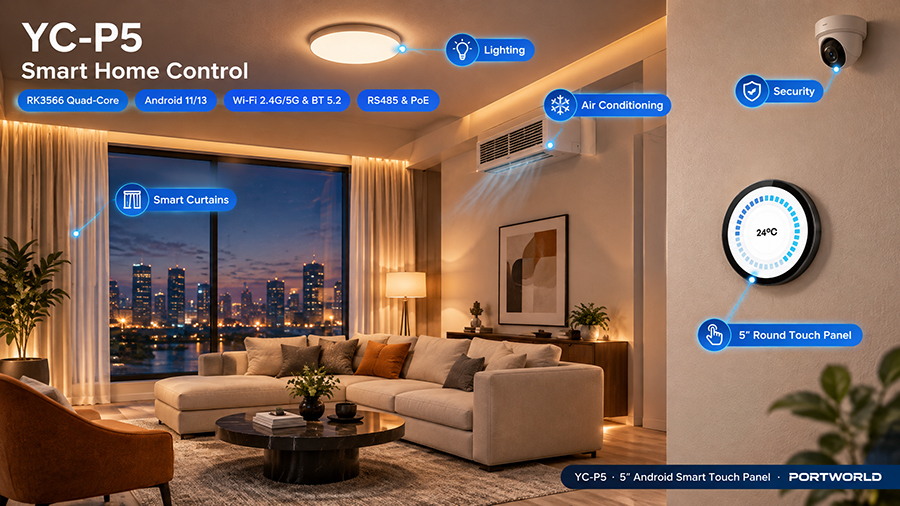
YC-P5 smart home control panel
To secure a precise minimum order quantity and cost estimate, compile the following particulars:
- Desired display dimensions and unit quantity for each model
- Selected processor type, operating system platform, and memory specifications
- Necessary connectivity ports and intelligent home automation communication standards
- Brand identity, user interface design, structural design, and packaging customization specifications
- Intended geographic market and pertinent regulatory compliance obligations
- Anticipated initial purchase volume and projected future demand trajectory
Utilizing this information, the manufacturing partner can assess the initiative and establish the applicable minimum order quantity, prototype expenses, engineering costs, per-unit expenses, and delivery schedule.