How Does a Smart Control Panel Connect to IoT Devices?
Smart Control Panels as the Gateway to IoT Systems
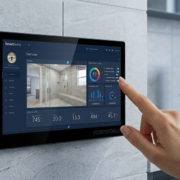
With the expansion of smart homes, intelligent buildings, and industrial IoT applications, the capability to interconnect various devices has become crucial. A smart control panel serves as a central interface that links users to IoT devices, enabling them to monitor, manage, and automate multiple systems from a single touchscreen.
By accommodating a range of communication technologies and network protocols, smart control panels can interface with smart lighting, HVAC systems, security devices, sensors, appliances, and other IoT equipment.
How Smart Control Panels Communicate with IoT Devices
A smart control panel establishes connections with IoT devices through various wired and wireless communication methods. The selection of the method is influenced by the application environment, type of device, and system requirements.
WiFi Connection
WiFi is among the most prevalent methods for linking smart control panels with IoT devices.
Through WiFi, the panel can interact with:
- Smart home devices
- Cloud platforms
- Mobile applications
- Wireless sensors
- Smart appliances
WiFi offers flexible installation options and is extensively utilized in residential automation projects.
Bluetooth Connectivity
Bluetooth technology is frequently utilized for communication between devices over short distances.
A smart control panel equipped with Bluetooth can establish connections with:
- Smart sensors
- Wireless accessories
- Audio devices
- Nearby IoT equipment
Bluetooth is particularly advantageous for rapid pairing and local device management.
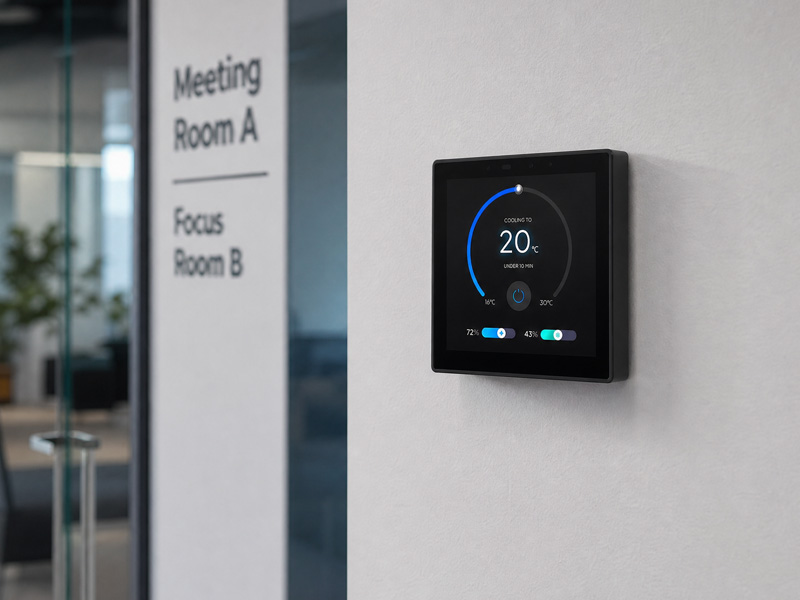
smart home control panel
Ethernet and PoE Network Connection
In the context of commercial and professional automation initiatives, Ethernet offers a more reliable connection compared to wireless options.
Numerous smart control panels are compatible with RJ45 Ethernet and PoE (Power over Ethernet), enabling the transmission of both power and network data through a single cable.
The benefits include:
- Stable network connection
- Simplified installation
- Reduced maintenance costs
- Ideal for hotels, offices, and commercial establishments
PoE smart panels are frequently employed in meeting rooms, building automation, and centralized control systems.
RS485 Communication for Building Automation
RS485 is extensively utilized in industrial and building automation settings due to its dependability and capacity for long-distance communication.
Smart control panels featuring RS485 can connect directly with:
- HVAC controllers
- Lighting systems
- Industrial equipment
- Modbus devices
- Energy management systems
smart home control panel
This renders RS485-enabled smart panels appropriate for professional automation projects.
Smart control panels, in addition to their hardware interfaces, can facilitate various IoT protocols via software integration.
The most prevalent protocols are:
- Zigbee
- Thread
- MQTT
- Modbus
- KNX
- Home Assistant integrations
By accommodating multiple protocols, a smart panel serves as a cohesive control platform for diverse IoT ecosystems.
For instance, a smart home panel can integrate Zigbee lighting, WiFi sensors, and RS485 HVAC systems into a single touchscreen interface.
The Importance of Operating Systems in IoT Connectivity
The operating system plays a crucial role in determining the ease with which a smart control panel can connect with IoT devices.
Android panels are well-suited for IoT applications that demand:
- Rich graphical interfaces
- Integration with mobile applications
- Access to cloud services
- Compatibility with third-party applications
These panels are frequently utilized in:
- Smart homes
- Hotels
- Office environments
- Commercial touch terminals
Linux Smart Control Panels
Linux offers extensive customization options for embedded IoT systems.
It is ideal for:
- Industrial automation
- Tailored IoT gateways
- Professional building management
- Long-term embedded solutions
Linux platforms enable the use of customized drivers, communication stacks, and frameworks such as Qt/QML and LVGL.
smart home control panel
Portworld Smart Control Panels for IoT Applications
Portworld offers intelligent touch control panels tailored for IoT integration, smart homes, hotels, and building automation.
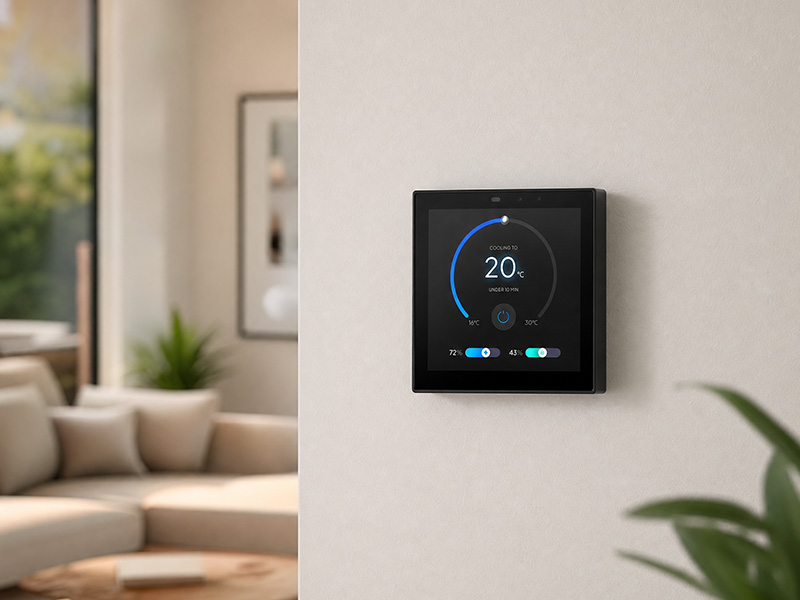
The YC-SM41P 4-inch smart touch panel delivers a compact IoT control solution featuring Ethernet, RS485, WiFi, Bluetooth, and PoE options. It is well-suited for smart switches, sensors, and embedded automation applications.
The YC-SM43P ESP32-S3 smart HMI panel facilitates LVGL graphical development and supports WiFi, Bluetooth 5.0, Ethernet, and RS485 communication, making it perfect for customized IoT terminals and industrial HMI projects.
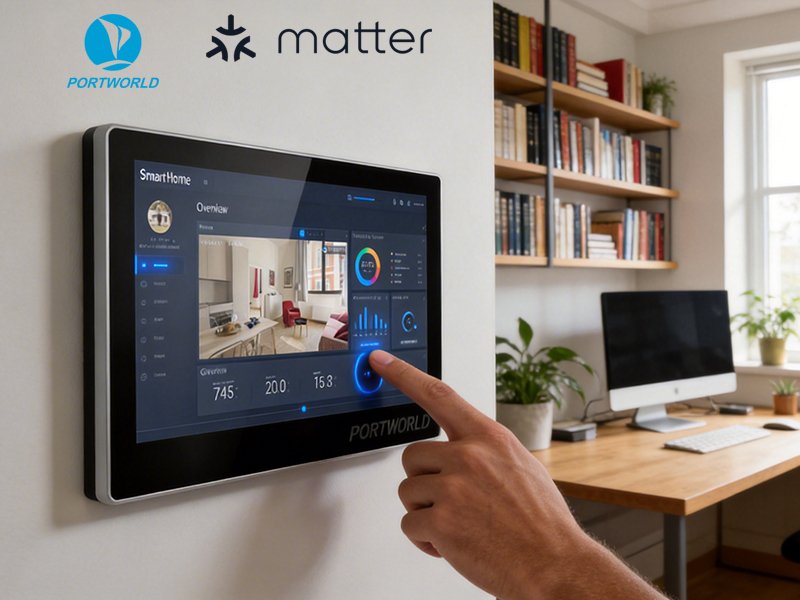
The YC-SM08P, YC-SM10P, and YC-SM14P smart control panels offer larger touchscreen solutions powered by Rockchip processors. They support Android/Linux systems, PoE, Ethernet, and various communication interfaces, making them ideal for sophisticated smart home and building automation applications.
OEM/ODM Smart IoT Control Panel Customization
Various IoT platforms necessitate distinct hardware and software configurations. Portworld offers comprehensive OEM/ODM customization services, which encompass:
- Customization of Android/Linux systems
- Development of Yocto Linux BSP
- Integration of custom communication protocols
- Integration with IoT platforms
- Development of custom user interfaces and applications
- Expansion of hardware interfaces
- Customization of enclosures and branding
These services empower clients to create smart control panels that integrate effortlessly with their own IoT ecosystems.
A smart control panel interfaces with IoT devices utilizing a variety of communication technologies, such as WiFi, Bluetooth, Ethernet, PoE, RS485, and IoT protocols like Zigbee and MQTT.
By merging robust hardware, adaptable operating systems, and tailored software, smart control panels offer a unified solution for overseeing connected devices in smart homes, hotels, offices, and industrial settings.