Zigbee vs. Thread: What Are the Key Differences?
As smart home automation advances, wireless communication protocols are becoming increasingly important for linking lights, sensors, switches, thermostats, and other smart devices.
Zigbee and Thread are widely used low-power wireless mesh networking technologies for smart home and IoT applications. Both rely on IEEE 802.15.4 radio technology and enable communication among connected devices. However, they differ considerably in network architecture, IP connectivity, application-layer design, and ecosystem integration.
For smart home manufacturers, system integrators, and embedded hardware developers, understanding these distinctions is critical when choosing a communication protocol for a new project.
So, Zigbee or Thread—which is better for smart home automation? Let’s examine their main features, benefits, limitations, and applications.
1. What Is Zigbee?
Zigbee is a low-power wireless communication protocol for connected devices used in home automation, building control, and industrial applications.
It builds on IEEE 802.15.4 for its radio and MAC technology and provides its own network and application layers.
Zigbee is widely used in smart lighting, wireless switches, temperature sensors, motion detectors, smart plugs, and other home automation products.
Key Features of Zigbee
- Low-power wireless communication
- Mesh networking
- Support for battery-operated sensors
- Device profiles and application-layer specifications
- Centralized network management
- A wide-ranging smart home device ecosystem
A key advantage of Zigbee is its well-established device ecosystem. Many smart home manufacturers already produce Zigbee-compatible devices, making it a practical choice for projects that connect various sensors, switches, and lighting products.
How Does a Zigbee Network Work?
A typical Zigbee network consists of three device types:
- Coordinator: Creates and manages the Zigbee network. A network generally has a single coordinator.
- Router: Relays messages between devices and helps expand network coverage. Many mains-powered smart plugs and lighting products can serve as routers.
- End Device: Communicates via a parent device or the coordinator. Battery-powered sensors often operate as end devices to conserve energy.
- In a Zigbee mesh network, messages can pass through multiple routing devices, helping sustain communication between devices in different rooms.
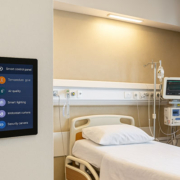
4 inch smart home control panel
2. What Is Thread?
Thread is a low-power, IPv6-based wireless mesh protocol created for connected devices in smart homes and IoT settings.
Like Zigbee, Thread operates over IEEE 802.15.4 radio technology. Its network architecture, however, is based on Internet Protocol (IP), enabling Thread devices to communicate through IPv6.
Thread plays a key role in modern smart home systems by providing the networking foundation for Matter devices that use Thread.
Key Features of Thread
- IPv6-based networking
- Low-power wireless communication
- IEEE 802.15.4 radio technology
- Self-healing mesh networking
- Secure device commissioning
- Support for multiple application-layer technologies
Unlike Zigbee, Thread does not specify a complete smart home application layer. Instead, it supplies the underlying network infrastructure for application protocols such as Matter.
How Does a Thread Network Operate?
Thread networks include several types of device roles:
- Leader: Manages specific network functions. If needed, this role can transfer to another device dynamically.
- Router: Routes IPv6 packets among Thread devices and supports mesh connectivity.
- End Device: Communicates through a parent router and typically does not relay traffic for other devices.
Border Router: Links a Thread network to other IP networks, including Ethernet and Wi-Fi. This enables Thread devices to communicate with applications and services across the broader home network.
Unlike Zigbee, Thread does not depend on one permanent coordinator to manage the network. However, communication between the Thread mesh and the wider IP network generally requires a Thread Border Router.
3. Zigbee and Thread: Key Differences
While Zigbee and Thread use the same underlying radio technology, they differ in their network and application architectures.
The following comparison outlines their main characteristics.
| Feature | Zigbee | Thread |
|---|---|---|
| Underlying radio | IEEE 802.15.4 | IEEE 802.15.4 |
| Common frequency | 2.4 GHz | 2.4 GHz |
| Network architecture | Wireless mesh | IPv6 wireless mesh |
| IP support | Not natively IP-based | Native IPv6 |
| Application layer | Defined by Zigbee specifications | Application-agnostic |
| Network management | Coordinator-based | Distributed roles with dynamic leadership |
| Network connection | Typically uses a gateway for IP integration | Uses a Border Router for external IP connectivity |
| Power consumption | Low | Low |
| Mesh networking | Yes | Yes |
| Matter support | Through a compatible bridge | Supported as a native Matter transport |
| Typical applications | Lighting, sensors, switches | Matter smart home devices, sensors, locks, switches |
The key distinction is that Zigbee defines its own networking and application specifications, whereas Thread provides an IP-based networking foundation that can support different application protocols.
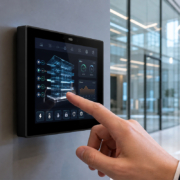
4 inch smart home control panel0
4. Network Architecture: Zigbee vs. Thread
Network architecture is among the most significant differences between the two technologies.
Zigbee Uses Its Own Network Stack
Zigbee specifies its own network and application layers on top of IEEE 802.15.4.
Devices communicate through Zigbee-specific network addressing and application specifications. To communicate with an IP-based system, a Zigbee device typically relies on a gateway or bridge to connect the two environments.
For instance, a Zigbee lighting system might connect to a smart home platform through a Zigbee coordinator linked to an automation server.
This established architecture works effectively for many residential automation projects.
Thread Uses IPv6 Networking
Thread uses IPv6 and 6LoWPAN to enable IP communication across low-power IEEE 802.15.4 networks.
As a result, Thread devices can participate in IP-based network architectures without the same kind of protocol translation commonly required by traditional Zigbee networks.
A Thread Border Router links the Thread mesh to the broader IP network.
For developers, this approach can simplify integration with IP-based applications, network diagnostic tools, and other connected systems.
However, Thread still depends on suitable application software and device integration. Native IP connectivity alone does not ensure that two devices can interpret each other’s application functions.
5. Power Consumption and Mesh Networking
Both Zigbee and Thread are designed for low-power use. They suit devices that need to run on batteries for long periods, including:
- Temperature and humidity sensors
- Door and window sensors
- Motion detectors
- Wireless switches
- Smart locks
- Environmental monitoring devices
Both technologies support mesh networking, in which compatible routing devices relay messages between network nodes.
Zigbee Mesh Networking
Zigbee establishes and maintains its mesh network using coordinators, routers, and end devices.
Mains-powered devices can serve as routers, extending coverage to more distant rooms. Battery-powered sensors typically function as end devices.
Thread Mesh Networking
Thread also uses routing devices to extend coverage and maintain communication.
Its routers can organize the network dynamically, while a leader handles selected network functions. If the leader becomes unavailable, another eligible device can assume that role.
When properly designed, both protocols can provide reliable communication across multiple rooms.
Actual range and reliability depend on device placement, antenna design, transmission power, building materials, radio interference, and the number and placement of routing devices.
Neither protocol can be assumed to provide better coverage in every building.
6. Matter and Its Relationship to Zigbee and Thread
Matter is an important consideration when comparing Zigbee and Thread.
However, Matter, Zigbee, and Thread are distinct technologies and are not interchangeable.
Matter is a smart home application-layer standard intended to improve interoperability among compatible devices and ecosystems.
It operates over IP-based networking technologies, including:
- Wi-Fi
- Ethernet
- Thread
Thread provides the low-power wireless network, while Matter enables standardized communication at the application layer.
Matter over Thread
A Matter-over-Thread device connects to the network using Thread and uses Matter to communicate its supported smart home functions.
For example, a Matter-over-Thread temperature sensor can communicate with a compatible Matter controller over a Thread network.
This architecture is well suited to battery-powered smart home devices that require low-power connectivity.
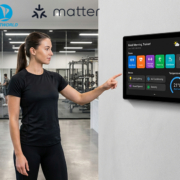
4 inch smart home control panel9
Can Zigbee Devices Work with Matter?
Yes, although they cannot communicate directly using native protocols.
Zigbee and Matter have distinct network and application architectures. A compatible Matter bridge can make supported Zigbee devices and their functions available within a Matter ecosystem.
For example:
- Zigbee Sensors and Lights → Zigbee Coordinator / Bridge → Matter Ecosystem
- The bridge translates supported device information and commands between the two environments.
- A bridge may not expose every Zigbee device or proprietary feature. Compatibility depends on the bridge’s implementation and the device functions it supports.
- For existing Zigbee installations, this offers a migration path that does not require replacing every device.
7. Zigbee vs. Thread: Which Is Better for Different Smart Home Applications?
There is no single best option. The right choice depends on the project’s requirements, device ecosystem, and integration architecture.
When Should You Choose Zigbee?
Zigbee is a practical option for projects that rely on an established smart home device ecosystem.
Consider Zigbee when:
- The project already includes Zigbee lighting and sensors.
- A broad range of compatible devices is essential.
- The automation system already supports Zigbee gateways.
- The project requires established device profiles and application specifications.
- Developers need to connect existing Zigbee products to a centralized automation platform.
For residential automation, Zigbee remains a practical choice for lighting control, wireless switches, sensors, and managing devices across multiple rooms.
When Should You Choose Thread?
Thread is worth considering for new smart home products that require IP-based networking and Matter integration.
Consider Thread when:
- The project involves developing Matter-over-Thread products.
- Native IPv6 connectivity is a priority.
- The system requires battery-powered sensors and other low-power devices.
- The system must connect to an IP-based smart home architecture.
- Developers need an application-agnostic networking foundation.
Thread is particularly relevant for next-generation smart home sensors, locks, switches, and other Matter-compatible products.
Can Zigbee and Thread Work Together?
Yes. A smart home system can support both technologies.
For instance, an existing Zigbee lighting network can continue running through its Zigbee coordinator, while new Matter-over-Thread sensors connect through a Thread Border Router.
A centralized automation platform can manage both networks using their respective integrations.
This hybrid architecture is useful for smart home projects that need to retain existing devices while adopting newer technologies.
8. What Should Developers Consider When Selecting Hardware?
For embedded hardware manufacturers and smart home developers, choosing a communication protocol is just one part of the design process.
The hardware must offer the necessary radio capabilities, interfaces, processing resources, and software support.
8.1 Wireless Chipset Compatibility
Zigbee and Thread both use IEEE 802.15.4, but having a compatible radio does not, by itself, enable a product to support both protocols.
Developers must also consider the wireless chipset, firmware, protocol stack, memory resources, and certification requirements.
Some wireless chipsets support multiple protocols, but the specific combinations available depend on the hardware and software implementation.
8.2 Processor and Operating System
The processor and operating system should be selected to suit the application’s level of complexity.
For example:
ARM-based Linux platforms can run gateway software, customized networking services, and sophisticated automation applications.
Android-based platforms are well suited to touchscreen interfaces and app-driven smart home control.
MCU platforms can handle lightweight interfaces and dedicated wireless control functions.
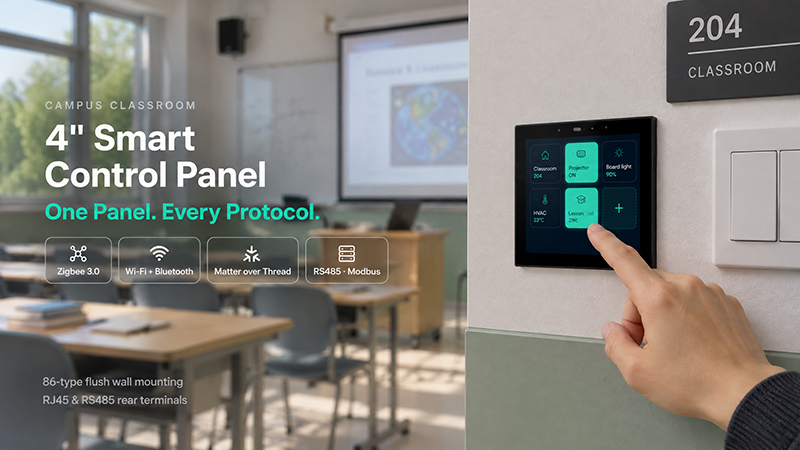
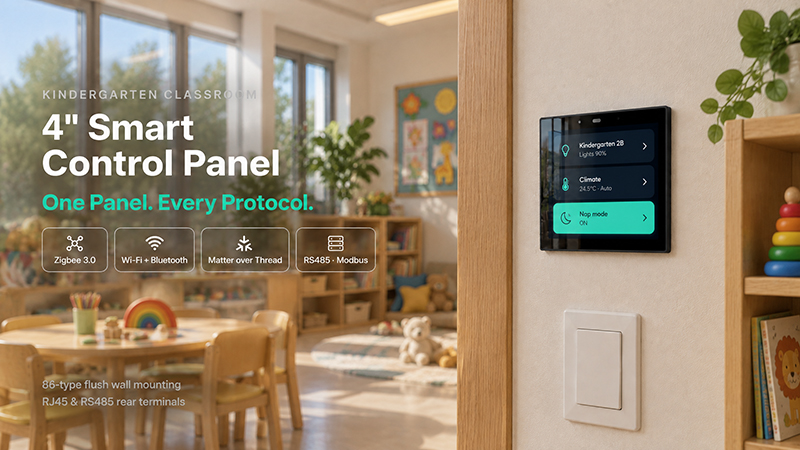
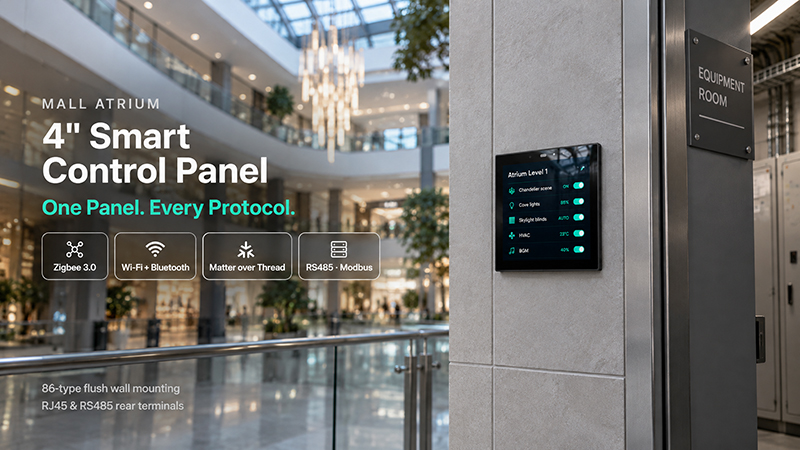
A touchscreen panel can communicate with a separate Zigbee or Thread gateway via Ethernet or Wi-Fi, meaning the panel does not necessarily need its own wireless radio.
8.3 Connectivity and Interfaces
Smart home integration may require additional interfaces.
Common options include:
- Ethernet
- Wi-Fi
- Bluetooth
- RS485
- USB
- GPIO
- UART
For wall-mounted touchscreen panels, Power over Ethernet (PoE) can make installation simpler by delivering network connectivity and power through a single Ethernet cable.
8.4 Software Development and Integration
Hardware compatibility alone is insufficient.
Developers should also assess:
- Support for the Zigbee or Thread protocol stack
- Gateway and Border Router software
- Integration with the Matter SDK
- Compatibility with Home Assistant
- Device commissioning processes
- Firmware update capabilities
- Security configuration
- Long-term software maintenance
Evaluate these requirements early in product development to prevent costly hardware or software redesigns.
9. Portworld Smart Home Control Panels for Zigbee and Thread Projects
Portworld develops touchscreen control panels and embedded hardware solutions for residential automation, smart buildings, and IoT applications.
With more than 18 years of experience in embedded hardware development and manufacturing, Portworld supports OEM/ODM projects, including touchscreen hardware, motherboard customization, operating system development, and UI/UX design.
Its product range includes multiple hardware platforms that can function as user interfaces or embedded components in smart home systems.
Rockchip-Based Android and Linux Touch Panels
Portworld offers several smart home control panels built on Rockchip platforms.
For example:
- YC-SM41P
- 4-inch touchscreen
- 480 × 480 resolution
- Rockchip RK3566
- 2GB RAM + 32GB storage configuration
- Android 11 or Debian 11 options
- Optional PoE
- YC-SM55P
- 5.5-inch touchscreen
- 720 × 1280 resolution
- Rockchip RK3566
- 2GB RAM + 16GB storage
- Android platform
- Optional PoE
- YC-SM10P
- 10-inch touchscreen
- 1280 × 800 resolution
- Rockchip RK3566
- 500-nit brightness
- Android 11
- 2GB RAM + 32GB storage
- PoE connectivity
These panels can provide touchscreen interfaces for smart home platforms connected to Zigbee gateways or Thread Border Routers.
Specific integration requirements vary according to the gateway selected, the application software, and the network configuration.
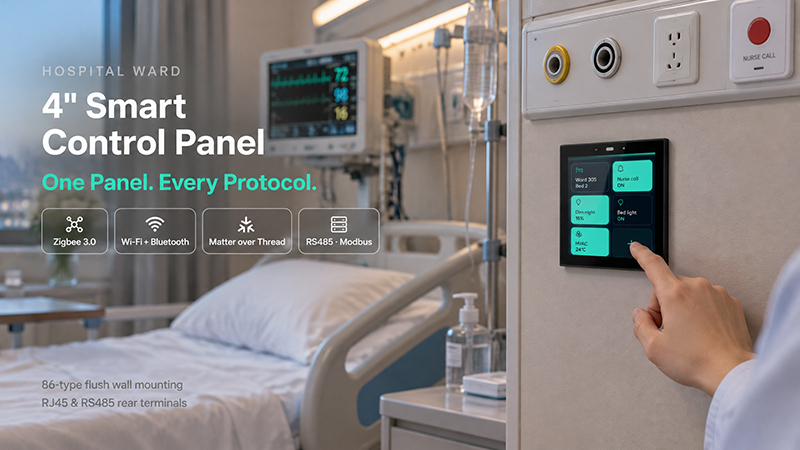
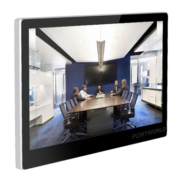
4 inch smart home ocntrl panel
ESP32-S3 Touchscreen Solutions
For projects that need a lightweight embedded interface, Portworld also provides ESP32-S3-based touchscreen solutions, including the YC-SM43P.
The platform supports interface development with LVGL and can serve as a dedicated smart home control device.
One key hardware distinction is worth noting: the ESP32-S3 includes Wi-Fi and Bluetooth connectivity, but not a built-in IEEE 802.15.4 radio.
As a result, it cannot function on its own as a Zigbee coordinator or Thread device; compatible radio hardware and software must be added.
OEM/ODM Customization Services
Every smart home project has unique hardware and software requirements.
Portworld offers:
- Custom touchscreen hardware development
- PCB and motherboard design
- Android and Linux customization
- UI/UX design and branded interfaces
- Logo, packaging, and boot animation customization
- Ethernet, Wi-Fi, PoE, RS485, and other interface options, depending on the model
- Smart home protocol and gateway integration
- SDKs, documentation, and technical development support
Whether your project is based on Zigbee, Thread, Matter, or a hybrid architecture, Portworld can develop touchscreen hardware and integration solutions tailored to your requirements.
10. Conclusion: Should You Choose Zigbee or Thread for Your Smart Home Project?
Zigbee and Thread are both capable, low-power wireless mesh technologies, but each is suited to different architectural requirements.
Zigbee has a well-established network and application ecosystem, making it a practical option for existing smart home devices, lighting systems, and sensor networks.
Thread offers native IPv6 connectivity and a flexible foundation for modern IP-based smart home applications, especially products that use Matter over Thread.
Developers should consider device compatibility, gateway architecture, application needs, hardware resources, and long-term product plans when choosing between them.
For some projects, combining both technologies may be the most practical approach.