Which Is Better for a Smart Home Control Panel: Android or Linux?
The selection between Android and Linux represents a consequential determination in the development of a bespoke smart home control panel. Both operating systems demonstrate capability in supporting wall-mounted touchscreens, illumination regulation, automated window coverings, climate control systems, and intelligent building infrastructure integration. Nevertheless, these platforms exhibit distinctions regarding application development methodologies, computational resource allocation, system customization capabilities, and ongoing maintenance obligations.
In summary: Android typically constitutes the superior alternative for smart home panels emphasizing sophisticated tactile user interfaces and software application interoperability, whereas Linux frequently proves advantageous for embedded control architectures that emphasize operational adaptability, computational efficiency, and comprehensive hardware-level modification capabilities. The optimal selection ultimately hinges upon the device’s designated operational scope and associated development specifications.
1. Android vs. Linux: Key Differences
| Comparison | Android | Embedded Linux |
|---|---|---|
| User interface | Well suited to rich, modern touch interfaces | Highly customizable; often uses Qt, LVGL, or other frameworks |
| Application development | Supports Android apps and Java/Kotlin development | Supports C/C++, Python, Qt, and other suitable frameworks |
| Hardware requirements | Generally benefits from more memory and processing resources | Can be optimized for relatively low resource consumption |
| Customization | Supports launcher, application, system image, and UI customization | Offers extensive control over the operating system, services, and system architecture |
| Third-party apps | Broad Android app ecosystem, subject to compatibility | Depends on available Linux software and application porting |
| Boot and system behavior | Depends on the Android build and configuration | Can be tailored to the product’s startup and service requirements |
| Hardware integration | Supported through drivers, HALs, and vendor BSPs | Supported through kernel drivers, device trees, BSPs, and system services |
| Best suited for | Feature-rich smart home touch panels | Dedicated embedded controllers and specialized HMI systems |
One important distinction: Android itself is built on the Linux kernel. In this comparison, “Linux” generally refers to embedded Linux distributions such as Debian, Ubuntu, or Buildroot rather than the kernel alone.
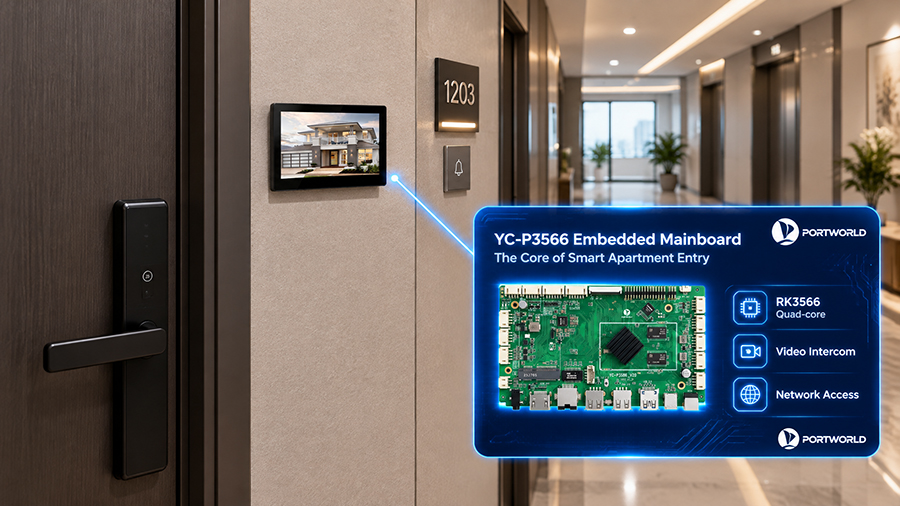
YC-P3566 Smart Mainboard
2. When Is Android the Better Choice?
Android proves optimal for feature-comprehensive smart home control panels.
Android represents a superior selection when a product requires an aesthetically appealing touchscreen interface, diverse application support, multimedia functionalities, or compatibility with pre-existing Android ecosystems.
The platform’s application framework and development utilities facilitate the streamlined development of dynamic user interactions. Furthermore, developers may leverage compatible cross-platform frameworks, including Qt for Android.
Android demonstrates particular suitability for smart home control panels requiring the following capabilities:
- A contemporary user interface incorporating animations, icons, and interactive dashboards.
- Compatibility and integration with third-party Android applications.
- Unified interface for managing lighting, HVAC systems, curtains, security features, and scene configurations.
- Support for voice interaction, video intercom functionality, and additional multimedia capabilities.
- An established and familiar application development workflow for Android developers.
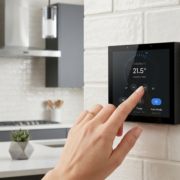
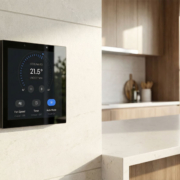
Consider a 10-inch wall-mounted control panel deployed in a luxury residential or hospitality environment, which must present room status information, facilitate lighting adjustments, manage air conditioning systems, and execute a specialized home automation application. An Android platform can serve as an effective technological foundation for such implementations.
Conversely, Android typically demands greater system resources compared to a minimal embedded Linux implementation. The underlying hardware must additionally provide adequate vendor support for the designated Android version, display technology, touch input controller, and associated peripherals.
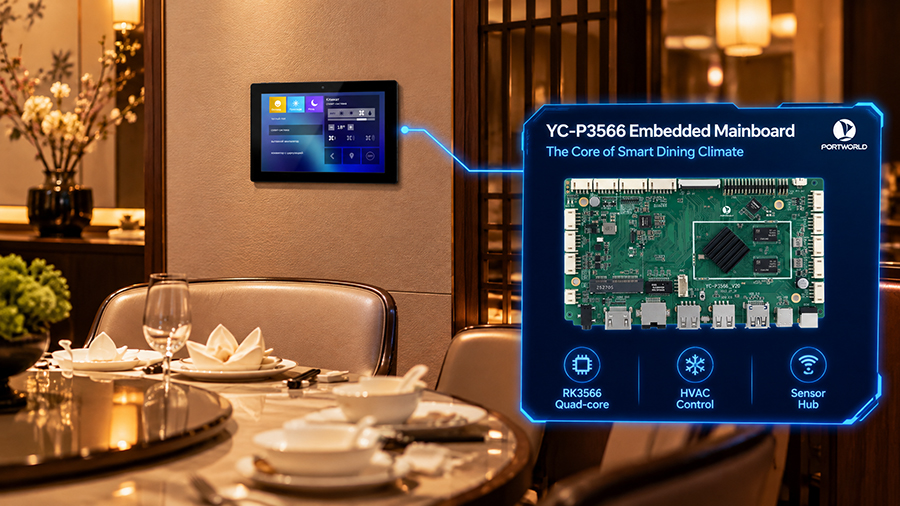
YC-P3566 Smart Mainboard
3. When Is Linux the Better Choice?
Linux is ideal for highly customized embedded systems.
Embedded Linux allows developers to tailor the operating system, system services, startup behavior, and application environment to the product’s specific requirements. It can be especially usefulfor dedicated control interfaces and systems with specialized hardware integration.
Linux may represent the superior choice when a smart home panel requires:
- A specialized interface dedicated to executing a single primary application.
- Proprietary drivers or direct hardware-level integration capabilities.
- A minimal operating system with precisely managed resource allocation.
- Tailored initialization sequences and managed background operations.
- Compatibility with C/C++ applications, Qt, or comparable embedded development platforms.
- Enhanced oversight regarding software distribution and system architecture.
As an illustration, a wall-integrated panel engineered primarily for illumination configurations, thermal regulation monitoring, and interaction with infrastructure management systems may not require a comprehensive Android application framework. A purpose-built Linux implementation could deliver the necessary interface through a more focused and efficient software architecture.
Conversely, Linux does not inherently offer reduced development complexity or lower implementation costs. A purpose-built Linux deployment may necessitate supplementary efforts in bootloader support packages, hardware abstraction layers, graphical rendering infrastructure, application distribution mechanisms, firmware updates, and sustained operational support. Hardware acceleration optimization and touch interface validation must similarly be confirmed.
4. Which Operating System Demonstrates Superior Performance for KNX, Zigbee, and Alternative Smart Home Protocols?
Neither Android nor Linux possesses inherent superiority across all smart home communication protocols. The determination of compatibility is contingent upon hardware interfaces, protocol implementation methodologies, driver availability, and software architecture design.
In the context of KNX-based building automation systems, the control panel must be equipped with the appropriate KNX interface or a compatible gateway, accompanied by the requisite software infrastructure to facilitate communication with the KNX installation. Zigbee integration may necessitate a suitable radio module or an external gateway solution.
Both Android and Linux are capable of functioning as the application platform, provided that the necessary components and software support are available.
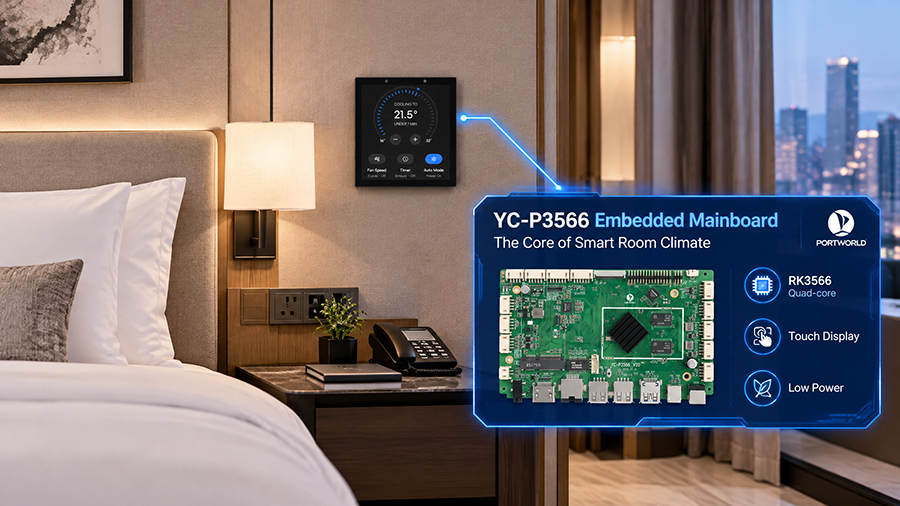
YC-P3566 Smart Mainboard
When evaluating an operating system selection, the following considerations warrant examination:
- Does the panel require communication capabilities with KNX, Zigbee, RS485, MQTT, or comparable systems?
- Are the essential protocol libraries and software development kits accessible for the designated platform?
- Is continuous background operation of the application a requirement?
- Will the panel function autonomously, or will it establish connectivity with a centralized automation server?
- Which entity will assume responsibility for software maintenance and security updates throughout the product lifecycle?
For commercial smart home applications, establishing protocol compatibility during the initial hardware selection phase frequently supersedes the significance of operating system selection based on general market prevalence.
5. How Should You Choose the Hardware Platform?
The operating system and hardware should be designed together. A powerful processor does not automatically guarantee a good user experience, and a lightweight operating system does not compensate for unsupported drivers or an unsuitable display interface.
Here are three common development approaches.
Option A: Android with an application processor
Optimal for manufacturers creating interactive smart home display panels featuring sophisticated user interfaces, multiple concurrent applications, and rich multimedia capabilities.
Example: Portworld’s YC-SM41P, YC-P5, and YC-SM55P product lines leverage Rockchip-based platforms to facilitate Android application deployment.
Option B: Embedded Linux with a customized motherboard
Optimal for specialized control terminals necessitating a purpose-built software framework, particular connectivity specifications, and enhanced authority over system operations.
The appropriate processor and memory specifications must be determined based on the user interface sophistication and the quantity of connected peripheral devices.
Option C: ESP32-S3 with a lightweight UI framework
Optimal for streamlined control interfaces, space-constrained IoT solutions, and implementations where an integrated graphical user interface proves adequate.
Portworld’s YC-SM43P incorporates an ESP32-S3 platform and facilitates LVGL-based graphical interface development.
The aforementioned examples represent distinct developmental pathways rather than functionally equivalent hardware alternatives. The ultimate selection is contingent upon the requisite display dimensions, computational demands of the application, communication infrastructure, software ecosystem, and manufacturing objectives.
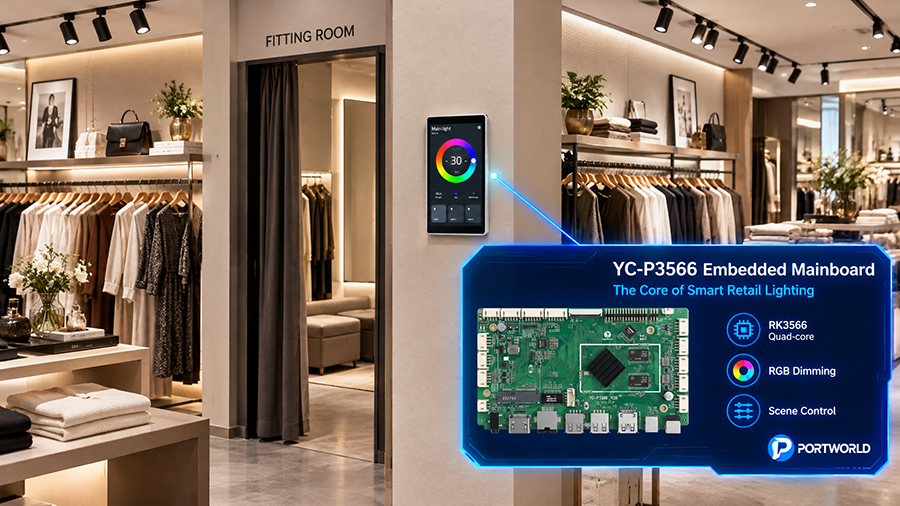
YC-P3566 Smart Mainboard
Android versus Linux: Which Platform Is Optimal for OEM/ODM Smart Home Control Panels?
For OEM/ODM undertakings, the determination should encompass the comprehensive product lifecycle—extending beyond the preliminary development phase.
Android presents advantages for enterprises seeking a recognized application marketplace and sophisticated visual presentation capabilities. Linux demonstrates value for initiatives demanding a purpose-built embedded infrastructure and enhanced authority over hardware subsystems. Both methodologies may necessitate considerable technical investment, contingent upon the extent of system modification required.
An experienced manufacturing and development collaborator can facilitate assessment of microprocessor specifications, storage capacity, display connectivity protocols, communication infrastructure, circuit board and assembly design, operating system foundation support, system customization, and interface design implementation.
Portworld supplies intelligent residential touch interface panels across multiple dimensions and hardware specifications, encompassing both Android-based and Linux-based implementations. For specialized applications, the most suitable operating system can be assessed relative to the intended functionality, system interoperability standards, physical housing requirements, and manufacturing parameters.
Prior to selecting a definitive platform, validating a functional model incorporating the actual touchscreen interface, application programming, network setup, and connected automation systems proves beneficial. This validation process facilitates the identification of potential integration complications before large-scale manufacturing commences.