What Components Are Used in a Smart Home Control Panel PCBA?
A smart home control panel extends far beyond a simple wall-mounted touchscreen. Beneath the display lies a printed circuit board assembly (PCBA) that consolidates computing capabilities, power management systems, communication interfaces, and peripheral control circuits into a streamlined embedded system. These integrated components function synergistically to deliver a responsive user interface and facilitate connectivity between the panel and various smart home devices, including lighting systems, motorized curtains, HVAC equipment, sensors, and additional smart home technologies.
For smart home manufacturers and system integrators developing bespoke control panels, comprehensive knowledge of PCBA components represents a critical consideration when evaluating appropriate hardware platforms. The specific component architecture substantially influences system performance, communication interoperability, energy efficiency, manufacturing expenses, and opportunities for future system modifications.
1. Primary Processor or System-on-Chip (SoC)
The processor, typically implemented as a system-on-chip (SoC), constitutes the fundamental computing element within a smart home control panel. It executes the operating system, interprets user interactions, generates the graphical display, and orchestrates communication protocols with interconnected devices.
Distinct use cases necessitate varying levels of computational resources. A fundamental panel engineered for lighting and motorized curtain management may require substantially less processing capacity compared to a panel executing a feature-rich Android interface, video intercom functionality, multimedia capabilities, or multiple concurrent smart home management dashboards.
Embedded platforms utilizing Rockchip and comparable processor architectures can be chosen based on performance requirements, operating system specifications, interface capabilities, and budgetary constraints. For instance, certain Portworld smart home control panel configurations employ hardware built on the Rockchip RK3566 processor.
When evaluating a processor, OEM purchasers must assess CPU performance metrics, graphics processing capabilities, operating system compatibility, available peripheral interfaces, power consumption levels, and availability of sustained software support.
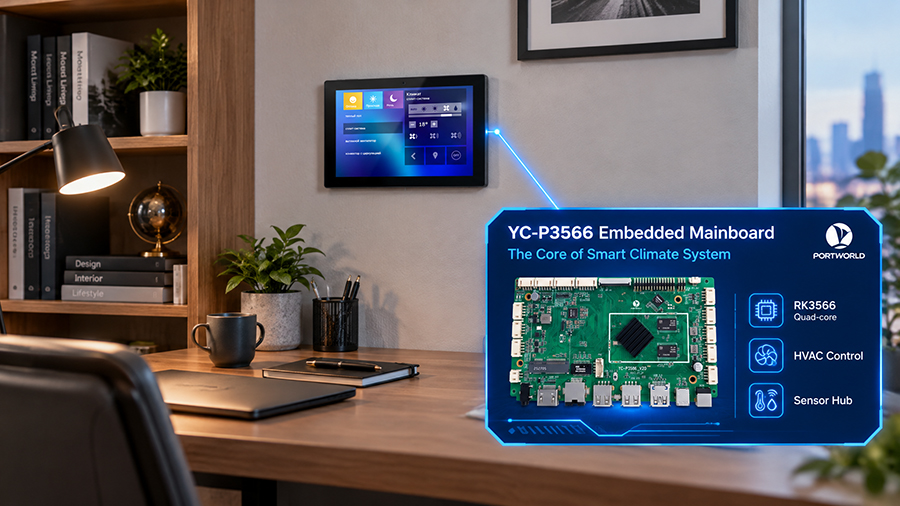
YC-P3566 smart home control panel
2. Memory and Storage
Memory and storage components facilitate the operation of the operating system, applications, user interface functionality, and system data management.
RAM functions as operational memory for executing applications and managing background services. Inadequate RAM capacity may result in delayed interface responsiveness or frequent application reloading, particularly when the panel executes multiple concurrent services.
Flash storage, typically implemented through eMMC or alternative supported storage solutions, maintains the operating system, applications, configuration parameters, and other long-term data.
The necessary storage capacity is contingent upon the software requirements. A basic embedded control interface requires different storage specifications compared to an Android-based panel incorporating third-party applications, multimedia capabilities, and substantial graphical resources.
For OEM initiatives, RAM and storage selections should be determined by the intended software architecture rather than cost considerations exclusively. Purchasers should additionally verify whether the configuration permits modifications to accommodate various product iterations.
3. Power Management Circuit
The power management section transforms the incoming electrical supply into the regulated voltage levels necessary for the processor, memory, display, and peripheral subsystems.
Depending on the specific board architecture, this section may incorporate DC-DC converters, low-dropout regulators (LDOs), power management integrated circuits (PMICs), inductors, capacitors, and protective components.
An optimally engineered power circuit ensures consistent performance during processor execution, display refreshes, and network operations. Furthermore, it influences thermal output, power consumption efficiency, and system longevity.
For wall-mounted smart home control panels, the power infrastructure must align with the designated installation approach. Certain models feature DC power inputs, whereas others incorporate Power over Ethernet (PoE) functionality, enabling both power delivery and network communication via a single Ethernet connection.
When evaluating a PoE implementation, users should verify the applicable PoE standard, available power capacity, input safeguards, and interoperability with the designated network infrastructure.
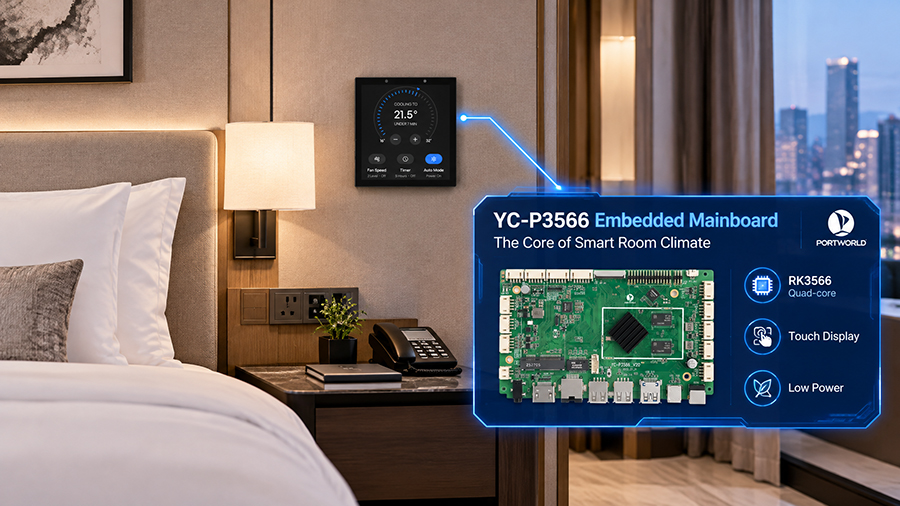
YC-P3566-smart home control panel
4. Touchscreen and Display Interface
The display system establishes the visual communication pathway between end users and the smart home ecosystem. Contingent upon the panel configuration, the PCBA may incorporate display connectors and auxiliary circuitry supporting protocols including MIPI DSI, LVDS, eDP, or HDMI.
A dedicated touch controller manages tactile input and interfaces with the primary processor, typically via USB or I²C protocols, contingent upon the specific implementation approach.
The ultimate design configuration is determined by display technology selection, screen resolution specifications, touch capability requirements, and mechanical design considerations. For instance, a 4-inch control panel necessitates substantially different display and housing specifications compared to a 10-inch wall-mounted installation.
Original equipment manufacturer purchasers must establish confirmation of screen dimensions, resolution parameters, luminosity levels, multi-touch capabilities, connector specifications, and driver compatibility requirements during the initial development phase. Display integration compatibility should be thoroughly validated against the designated motherboard or PCBA rather than extrapolated solely from processor technical specifications.
5. Wireless Communication Modules
Smart home control panels typically require wireless connectivity to facilitate communication with local devices, mobile applications, or network services. The specific wireless technologies integrated into the PCBA depend on project requirements and may encompass Wi-Fi and Bluetooth modules or a unified wireless solution.
Wi-Fi generally enables network connectivity for cloud-based services, local network communication, and firmware updates. Bluetooth facilitates device pairing, system configuration, or interaction with compatible peripherals.
Additional wireless technologies may be necessary to support particular smart home ecosystems. Zigbee, for instance, can be implemented via a dedicated radio module or alternative compatible hardware architecture. Implementation of any wireless standard is contingent upon the chosen chipset, firmware specifications, antenna configuration, and protocol stack.
For OEM projects, procurement specialists should identify which wireless technologies are essential and determine whether the panel requires direct device communication or communication through an intermediary gateway.
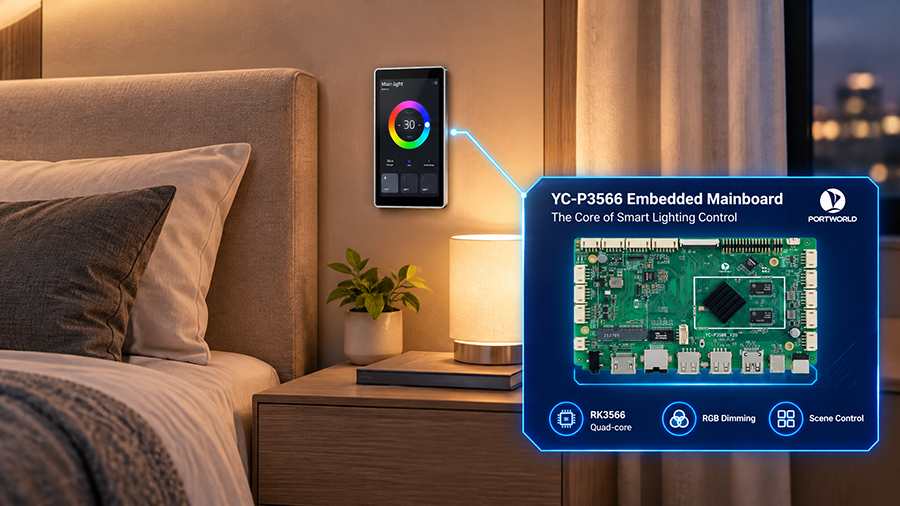
YC-P3566-smart home control panel
6. Ethernet, PoE, and Wired Communication Interfaces
Wired interfaces serve as essential components when smart home control panels require dependable network connectivity or must interface with building automation systems.
A typical Ethernet interface comprises an appropriate PHY or integrated network interface controller, an RJ45 connector, and supporting circuit elements. Depending on implementation requirements, the circuit board may necessitate isolation magnetics and electrostatic discharge (ESD) protection components.
For products incorporating PoE functionality, supplementary circuitry is necessary to extract power from the Ethernet connection and transform it into the voltage levels required by the device.
Additional wired interfaces may encompass RS485, UART, USB, I²C, SPI, or GPIO. RS485 is commonly selected for industrial and building-control applications, whereas UART and GPIO may facilitate external module connectivity, system diagnostics, or specialized control operations.
Nevertheless, the mere existence of a physical interface does not ensure compatibility with all protocols. For instance, an RS485 port demands appropriate software implementation and protocol support to establish communication with a specific building automation platform.
7. Protocol-Specific Hardware and Gateway Interfaces
Intelligent home automation control panels may require compatibility with various automation protocols including KNX, Modbus, BACnet, MQTT-based systems, or Matter-enabled environments.
These protocols operate according to fundamentally different specifications. Certain protocols necessitate dedicated transceivers or specialized communication modules, whereas others rely predominantly on software implementations, network infrastructure, gateway solutions, or formal certification processes.
For instance, a KNX-based implementation may necessitate compatible KNX hardware components or an external gateway interface, contingent upon the overall system design. Zigbee integration typically demands a compatible radio module and corresponding firmware architecture. MQTT-based communication generally depends on network infrastructure and software capabilities rather than requiring a dedicated MQTT processor.
Original equipment manufacturer purchasers should establish and communicate a comprehensive protocol and integration specification prior to initiating printed circuit board assembly development. This preliminary documentation enables the hardware engineering team to identify which components are essential and which operational requirements can be fulfilled through software solutions or peripheral devices.
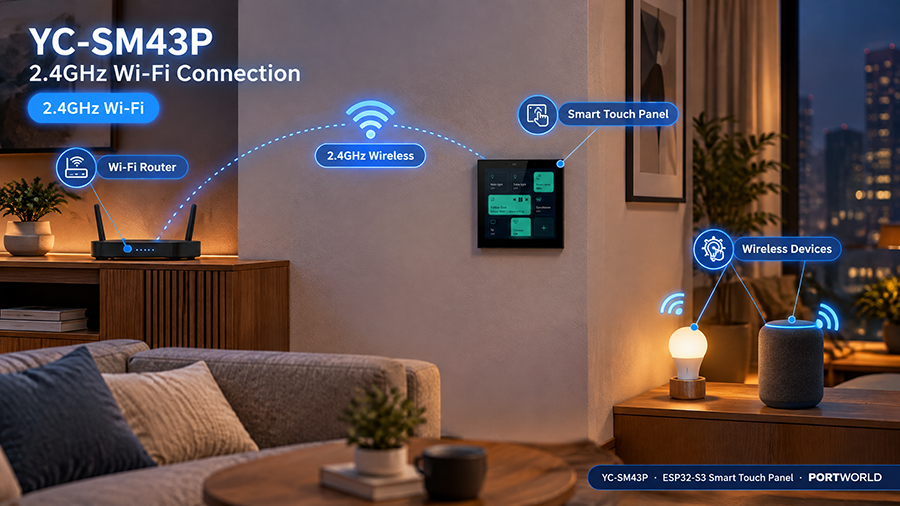
YC-SM43P smart home control panel
8. Audio, Microphone, and Camera Interfaces
Certain smart home control panels incorporate video intercom functionality, voice communication capabilities, or remote surveillance features. Such implementations may necessitate supplementary PCBA components.
Based on the specific implementation approach, audio hardware may encompass an audio codec, signal amplifier, microphone input interface, speaker output connector, and corresponding filtering circuitry. Camera functionality may demand a suitable camera connector and interface protocol, such as MIPI CSI, alongside appropriate driver software and system support.
Not all control panels require these capabilities. A panel designated exclusively for illumination and climate control regulation may not necessitate audio or camera electronics, whereas a video intercom panel may demand a more elaborate multimedia architecture.
Integrating exclusively the necessary components facilitates the reduction of circuit board complexity, electrical power requirements, and overall manufacturing expenses.
9. Sensors and Peripheral Interfaces
Numerous smart home panels incorporate environmental sensing capabilities or establish connections with external sensor devices. Depending on the specific product configuration, these instruments may quantify temperature, humidity, ambient light levels, or additional environmental metrics.
The PCBA may encompass sensor integrated circuits, connector circuitry, pull-up resistors, filtering elements, and communication interfaces including I²C or GPIO protocols. Alternative designs establish connections to external sensors via wired or wireless communication channels rather than integrating them directly onto the primary circuit board.
Sensor positioning carries significant importance. For instance, temperature measurements may be influenced by thermal energy produced by the processor, display, power distribution circuits, and housing materials. Original equipment manufacturer designers must evaluate thermal insulation strategies, ventilation patterns, and the placement of sensor access points.
Should a panel be designated to regulate HVAC systems utilizing environmental data, purchasers should verify the sensor precision specifications and ascertain the manner in which the application software will interpret and utilize these measurements.
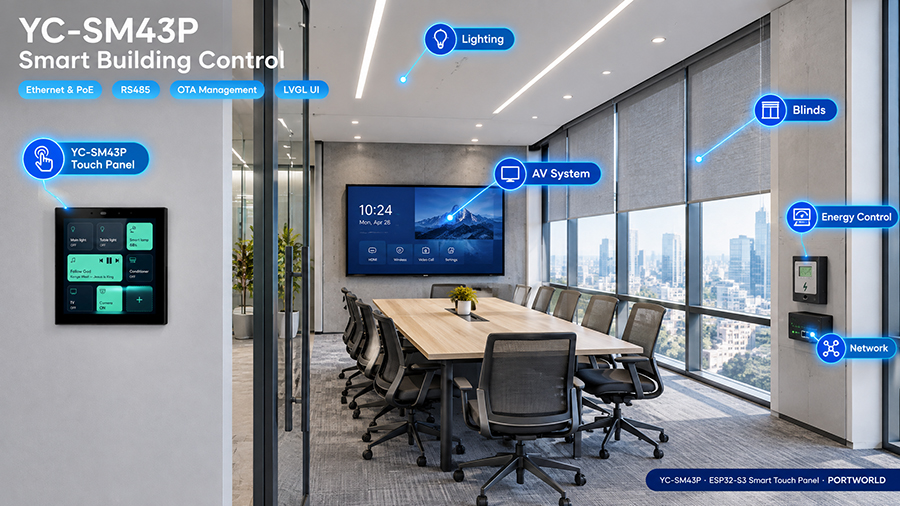
YC-SM43P ESP32 4″ Smart Touch Panel
10. Protection, Clock, and Supporting Components
A PCBA incorporates numerous supporting components that, while not always apparent to end users, are critical for dependable performance.
These encompass crystal oscillators or clock sources, reset circuits, pull-up and pull-down resistors, capacitors, inductors, ESD protection devices, fuses, and additional input-protection components.
Their roles encompass delivering timing references, regulating power stability, establishing default signal states, safeguarding interfaces, and facilitating proper board initialization or recovery.
Both component selection and PCB layout are significant factors. Inadequate routing, insufficient protection mechanisms, or deficient power architecture can result in communication failures, operational instability, or heightened vulnerability to electromagnetic interference.
For OEM purchasers, the manufacturer’s design validation and production testing protocols are equally vital as the component specifications themselves.
The Influence of PCBA Design on OEM Smart Home Control Panel Development
The selection of components integrated into a smart home control panel’s PCBA is fundamentally determined by the device’s designated operational purpose. Although a basic Android touchscreen interface, a KNX-compatible control panel, and a video intercom system may incorporate certain shared foundational components, each necessitates distinct communication infrastructure, multimedia processing capabilities, and power management circuits.
Portworld provides comprehensive smart home control panel customization services and specialized embedded hardware development for qualifying projects. Depending on the specific configuration requirements, OEM/ODM development initiatives may encompass processor evaluation, memory and storage architecture, display interface specifications, wired and wireless communication systems, power supply design, PCBA customization, and software implementation.
Prior to project initiation, purchasers should establish a comprehensive specification document that addresses display characteristics, operating system requirements, processor capabilities, memory capacity, connectivity options, automation protocols, installation procedures, and budgetary constraints. Collaborative review of these specifications enables manufacturers to engineer a PCBA that precisely aligns with the intended application while eliminating superfluous hardware components.
In conclusion, the effectiveness of a smart home control panel is determined not by the quantity of integrated components, but rather by the strategic selection of an optimal combination of computational, power management, communication, and peripheral circuit elements tailored to the product’s practical operational needs.