Embedded Hardware Design Considerations for Smart Control Panels
Smart control panels are extensively deployed across smart homes, hotels, offices, and building automation systems. Developing a dependable panel involves considerably more than selecting a touchscreen and processor. Hardware engineers must evaluate computational performance, display quality, connectivity, power management, and extended operational stability.
1. Processor and Memory Selection
The processor governs how efficiently a smart control panel executes its user interface, control applications, and communication services.
For elementary control interfaces, a low-power processor may prove adequate. More complex applications incorporating sophisticated graphics, concurrent processing, or on-site data analysis may necessitate a more robust platform.
RAM and storage capacity should correspondingly align with the operating system and application specifications. Android and Linux-based panels may demonstrate distinct memory and software requirements.
2. Display and Touchscreen Design
The display substantially influences user experience. Engineers should evaluate screen dimensions, resolution, luminosity, viewing angle, and operational environment.
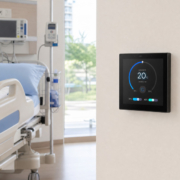
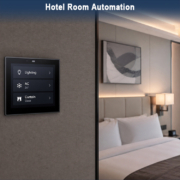
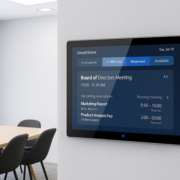
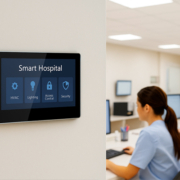
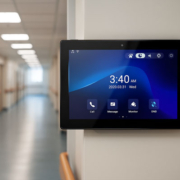
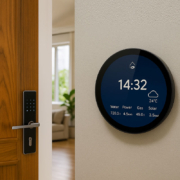
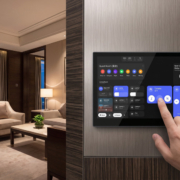
Capacitive touchscreens are predominantly utilized in contemporary smart control panels due to their support for intuitive multi-touch functionality. For wall-mounted installations, the panel architecture should additionally incorporate front-panel aesthetics, mounting framework, and tactile responsiveness.
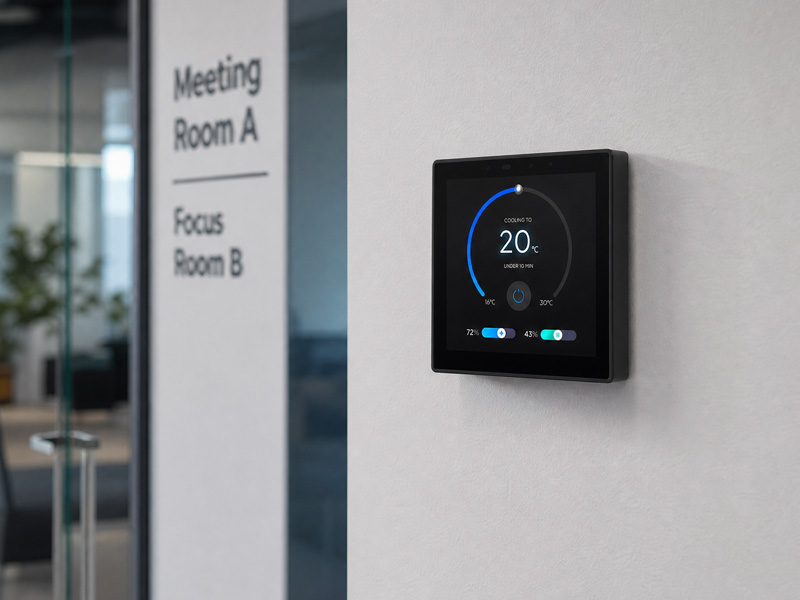
smart home control panel
3. Connectivity and Communication Interfaces
Intelligent control panels frequently require communication capabilities with sensors, controllers, gateways, and building automation systems.
Primary interfaces encompass:
- Ethernet and Wi-Fi: Network-based connectivity enabling remote administration.
- Bluetooth: Wireless communication over limited distances.
- RS485: Interface for communicating with compatible industrial and building automation devices.
- I2C and UART: Communication protocols for internal peripherals and hardware integration.
Interface selection is contingent upon the intended application and supported communication protocols. Hardware engineers must validate electrical specifications, connector positioning, and interface accessibility during the initial development phase.
4. Power Supply and Thermal Management
Power system design holds particular significance for wall-installed and perpetually active control panels. Design engineers must evaluate input voltage specifications, power consumption requirements, voltage stabilization mechanisms, and safeguards against electrical anomalies.
Power over Ethernet (PoE) presents an opportunity to streamline installation by consolidating power delivery and network connectivity through a single Ethernet connection, contingent upon the panel and network infrastructure supporting compatible PoE standards.
Thermal regulation is of comparable importance. Microprocessor selection, circuit board configuration, enclosure composition, and air circulation mechanisms collectively influence maximum operating temperature and overall system reliability.
5. PCB Layout and Product Integration
Successful embedded system design necessitates meticulous PCB layout, comprehensive signal integrity management, and strategic isolation of sensitive circuit components. The design framework must also incorporate connectors, antennas, mounting mechanisms, and the mechanical architecture of the end-use product.
Initial prototype evaluation can effectively detect potential deficiencies in touch responsiveness, wireless communication performance, power supply stability, and thermal management prior to full-scale manufacturing.
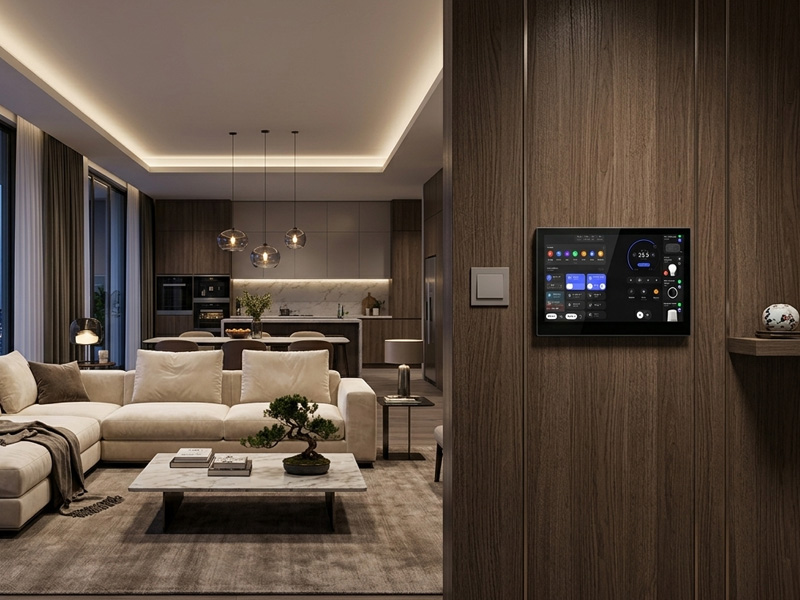
smart home control panel-1
How Portworld Facilitates Smart Control Panel Development
Portworld delivers intelligent control panels, embedded computing platforms, touchscreen technologies, and customized hardware solutions tailored for OEM and ODM applications.
The company’s product range encompasses the YC-SM41P 4-inch intelligent control panel, equipped with a 480 × 480 capacitive touchscreen interface, PX30 quad-core processing unit, Ethernet connectivity, Wi-Fi capability, Bluetooth 4.0 support, RS485 communication protocol, and compatibility with 48V Power over Ethernet. Supported operating system configurations for this device include Android and Debian Linux.
For applications demanding alternative processor architectures, display specifications, or interface arrangements, Portworld facilitates embedded hardware development through the following specialized services:
- OEM/ODM hardware customization
- PCBA and carrier board design
- Interface and peripheral integration
- Embedded Linux or Android customization
- Prototype development and product integration
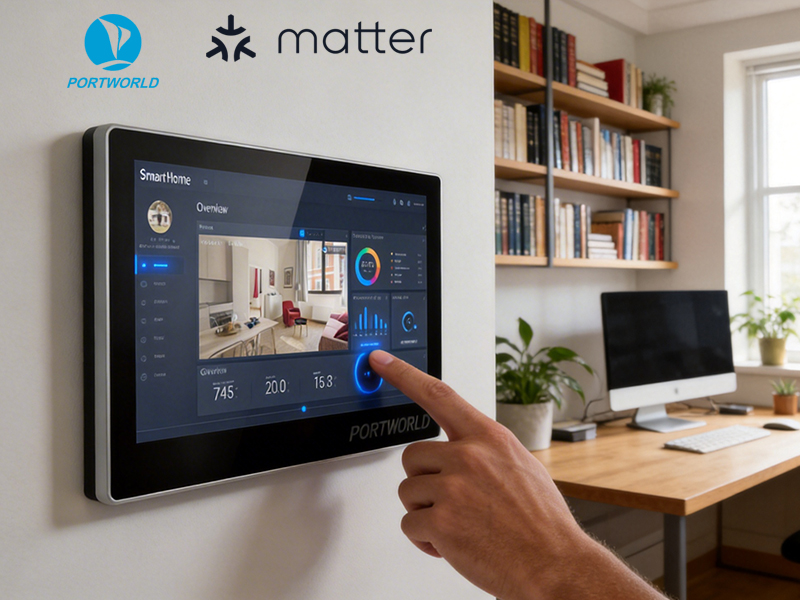
smart home control panel
The scope of available interfaces and customization capabilities is contingent upon the designated hardware platform and specific project parameters.
The development of an effective smart control panel requires careful equilibrium among processing capability, touchscreen interface quality, communication protocols, energy consumption optimization, heat management systems, and production specifications.
Through early establishment of these specifications and collaboration with a qualified embedded hardware provider, organizations can minimize integration challenges and create smart control panels tailored to their specific operational needs.
Requiring a tailored smart control panel solution? Portworld specializes in OEM/ODM services for intelligent residential environments, intelligent workplace systems, hospitality automation platforms, and comparable embedded touchscreen technologies.