What Display Size Is Suitable for an ESP32 Control Panel?
As smart home technology, industrial Internet of Things, and automation solutions have expanded significantly, touchscreen control panels have emerged as a critical interface for managing interconnected devices.
From residential wall-mounted smart home systems to industrial human-machine interfaces, the physical dimensions of the display substantially influence user experience, spatial requirements for installation, energy consumption levels, and the overall architecture of the product.
When designing an ESP32-based control panel, the selection of an appropriate display size represents a critical consideration.
Various applications necessitate distinct screen dimensions, and the optimal selection is contingent upon several key factors:
- User interaction specifications
- Physical installation conditions
- Complexity of the user interface
- Capabilities of the underlying hardware
- Budgetary constraints
Therefore, which display size would be most appropriate for an ESP32 control panel?
Prevalent Display Dimensions for ESP32 Control Panels
ESP32 control panels generally incorporate compact touchscreen displays with dimensions spanning from 2.4 inches to 10.1 inches.
The most frequently utilized dimensions are:
- 2.4–3.5 inch displays
- 4 inch displays
- 5 inch displays
- 7 inch displays
- 10 inch displays
Each dimension category serves distinct application requirements.
2.4–3.5 Inch Display | Compact IoT Control Interface
Small displays represent an optimal choice when spatial constraints and budget limitations are primary factors.
Key Benefits:
- Minimized footprint
- Reduced energy requirements
- Cost-effective solutions
- Seamless embedded system integration
Ideal Use Cases:
- Intelligent switching systems
- Compact IoT management devices
- Data acquisition terminals
- Portable electronic devices
- Lightweight automation systems
For straightforward user interfaces including:
- Temperature readings
- Operational status assessment
- Elementary command functions
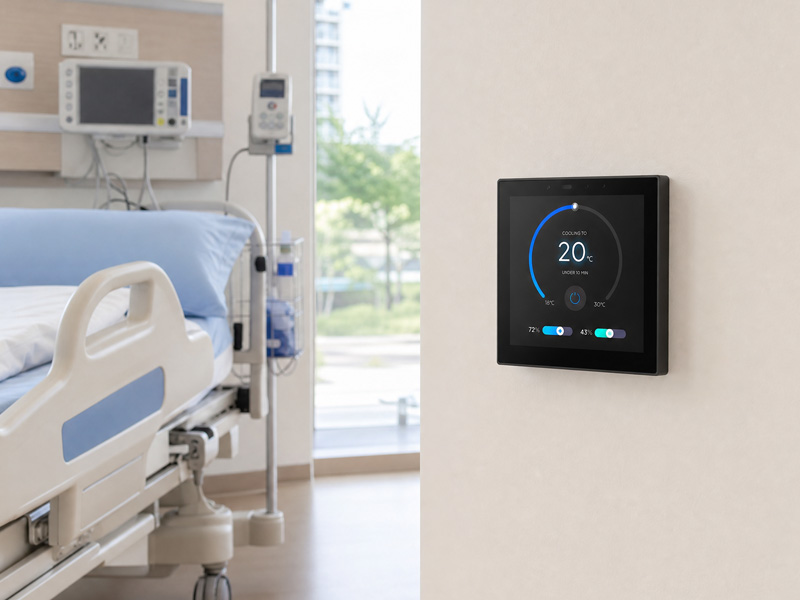
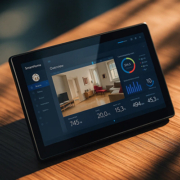
smart home control panel-1
a 2.4–3.5 inch display typically fulfills requirements.
4 Inch Display | Smart Home and Embedded HMI Applications
A 4-inch touchscreen interface represents one of the most widely adopted solutions for ESP32-S3 control systems.
It delivers an effective equilibrium among:
- Operational usability
- Physical installation dimensions
- Financial viability
- Standard Specifications:
- 480×480 pixel resolution
- Capacitive touch technology
- LVGL graphical framework compatibility
- Compact wall-installation capability
Primary Applications:
- Residential automation control systems
- Hospitality room management interfaces
- Facility management terminals
- Connected device monitoring platforms
For installations requiring standard wall-mounted enclosures, a 4-inch display frequently represents the most suitable option.
5 Inch Display | Enhanced Interactive Smart Control Panels
A 5-inch display offers expanded space for more sophisticated user interfaces.
In comparison to a 4-inch panel, it facilitates:
- Expanded button dimensions
- Increased information presentation capacity
- More sophisticated dashboard configurations
Applications:
- Smart home central control units
- Energy management display systems
- Industrial monitoring platforms
- Security management terminals
A 5-inch ESP32-S3 panel is well-suited for users requiring greater visual data while preserving a space-efficient form factor.
7 Inch Display | Sophisticated HMI and Automation Solutions
A 7-inch touchscreen interface is frequently employed in professional control environments.
The expanded display enables:
- Multiple operational interface screens
- Quantitative information representation
- Visual representations and analytical displays
- Advanced navigation structures
Applications:
- Professional industrial HMI platforms
- Integrated building management solutions
- Automotive control system interfaces
- Premium smart home display systems
Nonetheless, expanded display sizes necessitate:
- Enhanced computational resources
- Expanded memory allocation
- Optimized energy consumption management
ESP32-S3 demonstrates capability for select 7-inch implementations when configured with appropriate display connectivity solutions and optimized memory architecture.
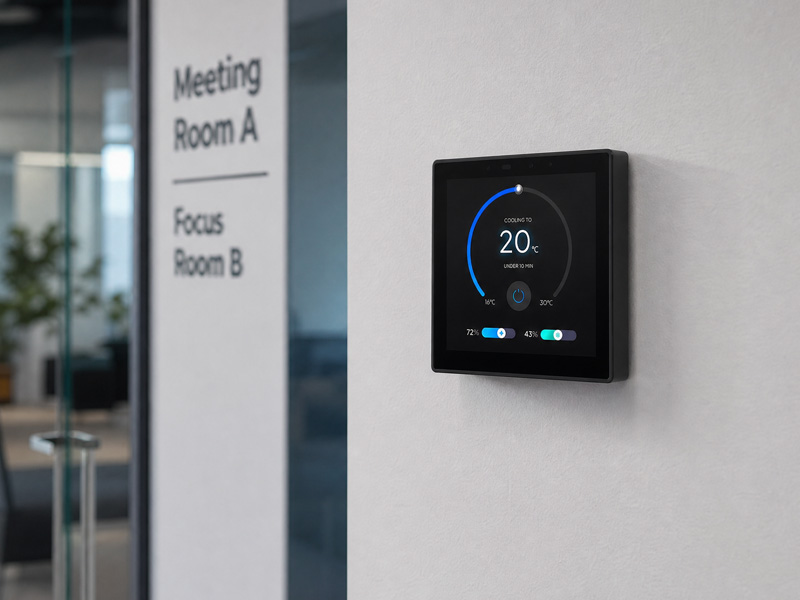
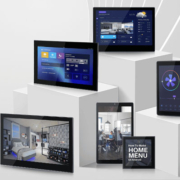
smart home control panel
10-Inch Display | Comprehensive Smart Display Solutions and Professional Terminal Systems
Large-format displays are predominantly utilized for sophisticated visualization and data presentation applications.
Primary Applications:
- Commercial automation control panels
- Comprehensive information display terminals
- Advanced Human-Machine Interface systems
For 10-inch display implementations, operational requirements typically encompass:
- Enhanced computational performance capabilities
- Robust processor architectures
- Sophisticated graphics processing functionality
In certain scenarios, elevated-performance computing platforms including RK3568, RK3588, or comparable embedded processing solutions may prove more advantageous.
How to Choose the Right Display Size for ESP32?
The best display size depends on the application.
| Application | Recommended Display Size |
|---|---|
| Smart Switch | 2.4–3.5 inch |
| Smart Home Panel | 4–5 inch |
| Hotel Room Controller | 4–5 inch |
| IoT Gateway | 4–7 inch |
| Industrial Mini HMI | 5–7 inch |
| Machine Control Panel | 7 inch+ |
| Large Interactive Display | 10 inch+ |
The ESP32-S3 demonstrates particular suitability for touchscreen control panel applications due to its comprehensive feature set, which encompasses:
- Dual-core high-performance processing architecture
- LVGL graphics framework integration
- External PSRAM capability
- Multiple display interface options
- Wi-Fi and Bluetooth connectivity functionality
To achieve optimal UI performance, developers must evaluate the following considerations:
Display Resolution
Increased resolution demands greater memory allocation and computational resources.
Prevalent resolution standards include:
- 320×240
- 480×320
- 480×480
- 800×480
Memory Configuration
Within graphical application environments:
- Firmware and UI resource storage utilizes Flash memory
- PSRAM enhancement facilitates improved rendering efficiency
A representative ESP32-S3 HMI implementation typically incorporates:
- 8MB PSRAM capacity
- 16MB Flash storage
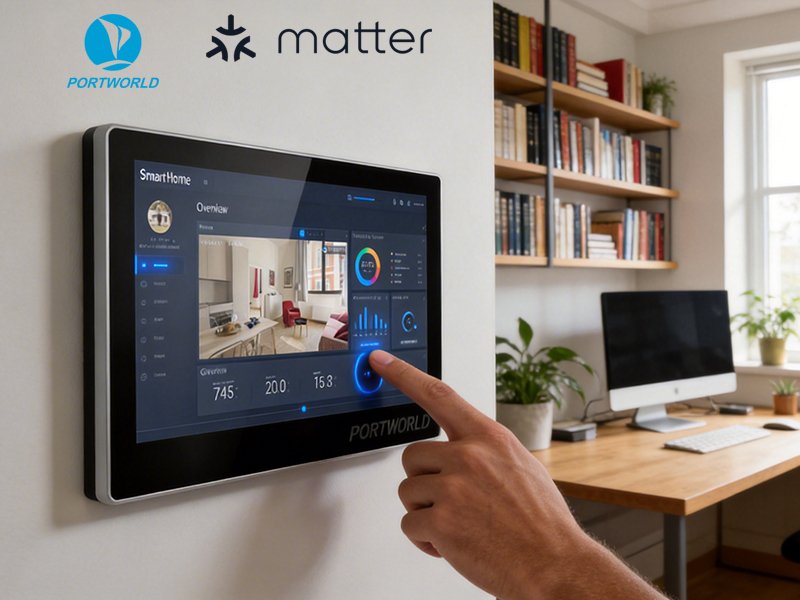
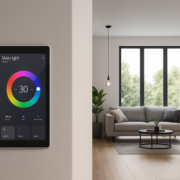
smart home control panel
ESP32 Control Panel Display Interface Options
Based on display dimensions and performance specifications, ESP32 panels may employ:
SPI Display
Applicable to:
- Compact displays
- Budget-conscious applications
- RGB Interface
Applicable to:
- Extended display dimensions
- Enhanced graphics processing speed
- 8080 Parallel Interface
Applicable to:
- Industrial human-machine interface systems
- Touch Interfaces
Prevalent configurations:
- I2C-based touch controller
- SPI-based touch controller
Portworld ESP32-S3 Smart Control Panel Solutions
Selecting an appropriate display size represents merely one component in the development of an effective smart control panel.
Portworld delivers comprehensive ESP32-S3 HMI solutions, encompassing:
Hardware Design
- ESP32-S3 control boards
- 2.4–7 inch touchscreen integration
- Custom PCB development
- Sensor and communication interfaces
Software Development
- LVGL UI design
- ESP-IDF firmware
- Touch optimization
- IoT connectivity
Product Customization
- Prototype development
- PCBA manufacturing
- OEM/ODM services
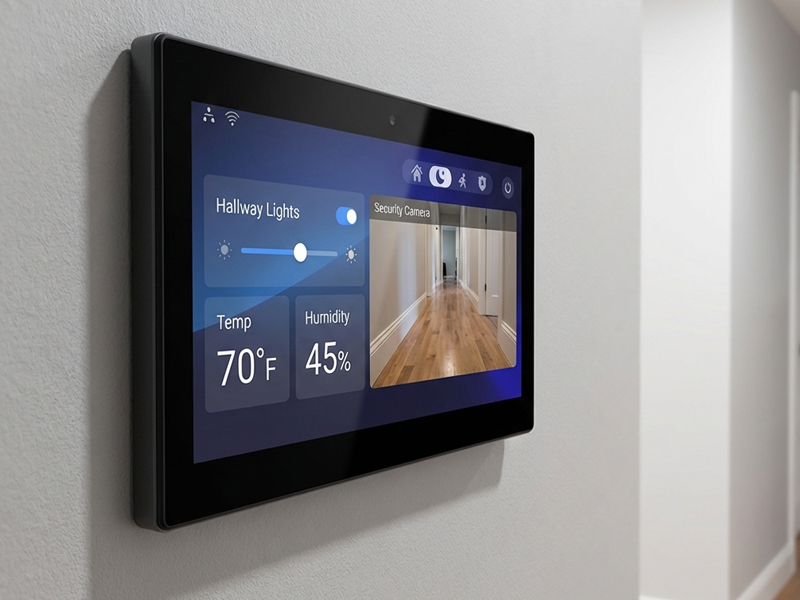
smart home control panel-1
Ranging from compact smart switches to industrial IoT terminals, Portworld assists clients in manufacturing tailored ESP32 touchscreen products.
The selection of an optimal display size for an ESP32 control panel is contingent upon specific application requirements, as no universally superior option exists.
- 2.4–3.5 inch: Minimalist Internet of Things devices and straightforward control systems
- 4 inch: Residential automation interfaces and integrated human-machine interaction applications
- 5 inch: Advanced interactive management systems
- 7 inch: Manufacturing environments and sophisticated process automation platforms
- 10 inch+: Expansive professional-grade displays necessitating enhanced computational resources
Within the context of most ESP32-S3 intelligent control panel implementations, 4-inch and 5-inch touchscreen displays deliver an optimal equilibrium among user experience, operational efficiency, and financial considerations.