RK3576 vs. RK3588S: Which Fits Your Embedded Product?
Choosing the right Rockchip processor is a crucial part of developing an embedded product. As industrial equipment, smart terminals, robotics, and edge AI systems grow more sophisticated, developers must weigh CPU performance, AI acceleration, graphics capabilities, connectivity, and overall hardware integration.
Two processors to consider are the Rockchip RK3576 and RK3588S. Both offer octa-core ARM CPUs, integrated NPUs, advanced multimedia engines, and support for Linux and Android development. However, they reflect different priorities in performance and system integration.
The RK3576 is designed for a new generation of AIoT and embedded applications. It combines Cortex-A72 and Cortex-A53 CPU cores with a 6 TOPS-class NPU and extensive industrial connectivity. The RK3588S features a more powerful Cortex-A76 and Cortex-A55 architecture, a Mali-G610 GPU, and advanced 8K multimedia support.
Which processor is the best fit for your next embedded product?
This guide compares their architectures, AI capabilities, multimedia performance, interfaces, and application scenarios to help you make an informed choice.
1. RK3576 vs. RK3588S: Key Specifications at a Glance
The first step is to understand the fundamental hardware differences.
| Specification | RK3576 | RK3588S |
|---|---|---|
| CPU Architecture | 4× Cortex-A72 + 4× Cortex-A53 | 4× Cortex-A76 + 4× Cortex-A55 |
| Maximum CPU Frequency | Up to 2.2GHz | Up to 2.4GHz |
| GPU | Mali-G52 MC3 | Mali-G610 MP4 |
| NPU | Up to 6 TOPS* | Up to 6 TOPS |
| AI Precision | INT4/8/16, FP16, BF16, TF32 | INT4/8/16, FP16 |
| Memory Support | LPDDR4/4X/5 | LPDDR4/4X/5 |
| Video Decoding | Up to 8K@30fps under supported formats | Up to 8K@60fps under supported formats |
| Video Encoding | Up to 4K@60fps | Up to 8K@30fps |
| ISP | 16MP | Up to 48MP |
| Display | HDMI, eDP, DP, MIPI and others | HDMI, eDP, DP, dual MIPI DSI |
| High-Speed Connectivity | PCIe 2.1, SATA 3.0, USB 3.0 combinations | PCIe 2.1, SATA 3.0, USB 3.1 combinations |
| Ethernet Controllers | Dual RGMII | Gigabit Ethernet interface |
| Operating Systems | Android, Linux | Android, Linux |
The RK3576’s published 6 TOPS rating is based on sparse-computing conditions. It should not be considered directly comparable to the RK3588S’s 6 TOPS rating across all workloads.
These specifications apply to the SoCs and may not reflect the features of every finished motherboard. RAM capacity, connectors, display outputs, networking ports, and storage options vary according to the board design.
The key difference is straightforward: the RK3588S offers a more powerful CPU and GPU platform, whereas the RK3576 features a newer, AIoT-focused architecture with useful industrial connectivity features.
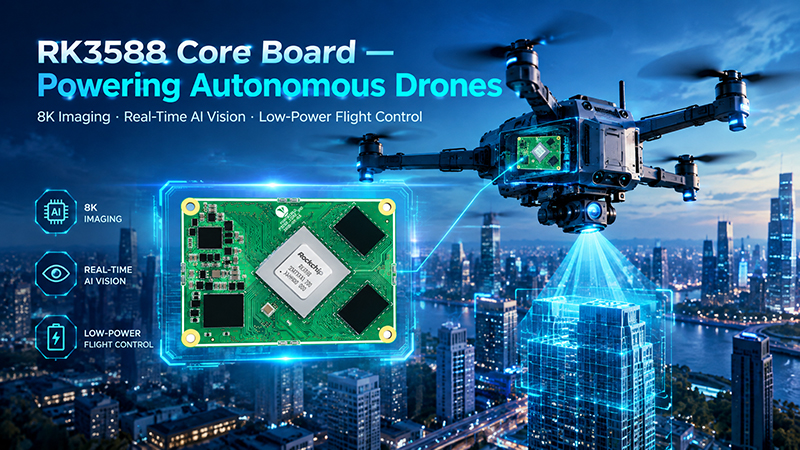
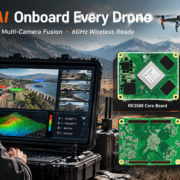
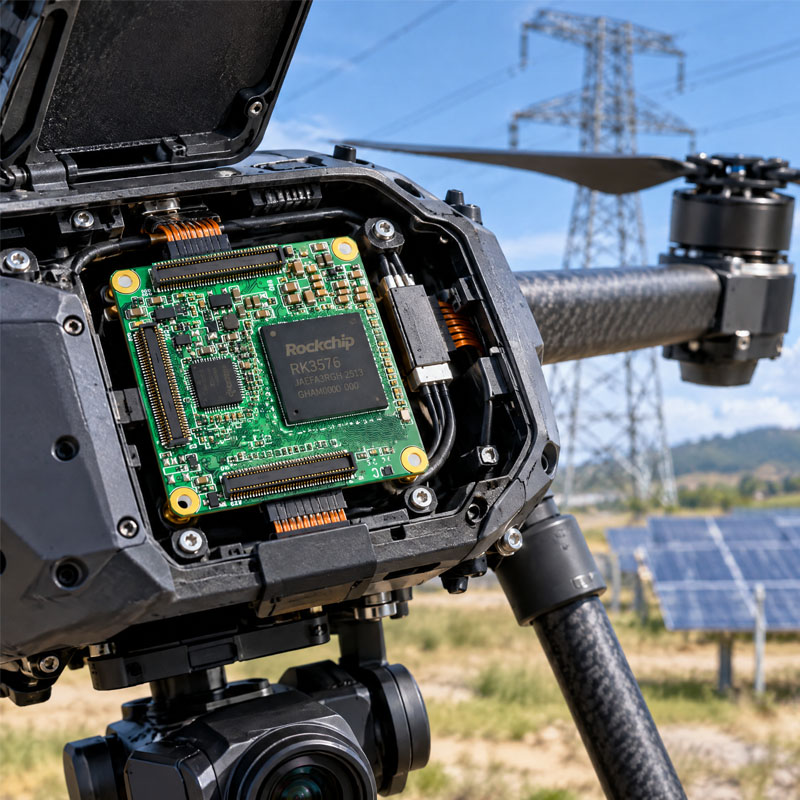
RK3588 Drone Application Scene 1
2. CPU Performance: Cortex-A72 vs. Cortex-A76
CPU architecture directly affects application responsiveness, multitasking, and overall computing performance.
RK3576: Cortex-A72 + Cortex-A53
The RK3576 includes:
- 4× Cortex-A72 cores, clocked at up to 2.2GHz
- 4× Cortex-A53 cores, clocked at up to 1.8GHz
This big.LITTLE architecture pairs performance-focused cores with more energy-efficient cores.
The Cortex-A72 cores run demanding application workloads, while the Cortex-A53 cores handle background services and lighter system tasks.
This configuration is well suited to embedded devices that must perform several functions at once, including:
- Industrial touchscreen interfaces
- Smart home control panels
- Embedded IoT gateways
- Smart vending machines
- Robot control terminals
- Intelligent commercial equipment
For instance, an industrial HMI may need to present live equipment data, communicate with external controllers, and operate a graphical interface simultaneously. The RK3576 offers a capable CPU platform for handling these requirements.
RK3588S: Cortex-A76 and Cortex-A55
The RK3588S features a more advanced CPU architecture, with:
- 4× Cortex-A76 cores running at up to 2.4 GHz
- 4× Cortex-A55 cores running at up to 1.8 GHz
Compared with the Cortex-A72, the Cortex-A76 is a newer, more powerful architecture designed for high performance.
This makes the RK3588S well suited to applications that require demanding multitasking, complex software, multimedia processing, or high-performance edge computing.
Potential applications include:
- Advanced industrial computing terminals
- High-performance robotics
- AI-powered commercial displays
- Multi-camera processing systems
- Complex graphical user interfaces
- Edge computing devices
- Which CPU is better?
For CPU-intensive applications, the RK3588S generally offers an advantage thanks to its newer Cortex-A76 architecture and higher maximum clock speed.
However, real-world performance also depends on memory bandwidth, software optimization, cooling, and the specific workload.
3. GPU and Graphics: Which Is Better for Visual Applications?
Graphics performance is becoming increasingly important in embedded products.
A modern smart terminal may need to render animated interfaces, show high-resolution images, play video, and run interactive touchscreen applications.
The two processors feature different GPUs.
- RK3576: Mali-G52 MC3
- The RK3576 incorporates an ARM Mali-G52 MC3 GPU.
- It supports several graphics technologies, including:
- OpenGL ES
- OpenCL
- Vulkan
This GPU is suited to embedded graphical interfaces, interactive control panels, commercial terminals, and multimedia applications.
For products focused mainly on displaying dashboards, menus, equipment parameters, and moderately complex graphics, the Mali-G52 MC3 provides a suitable graphics foundation.
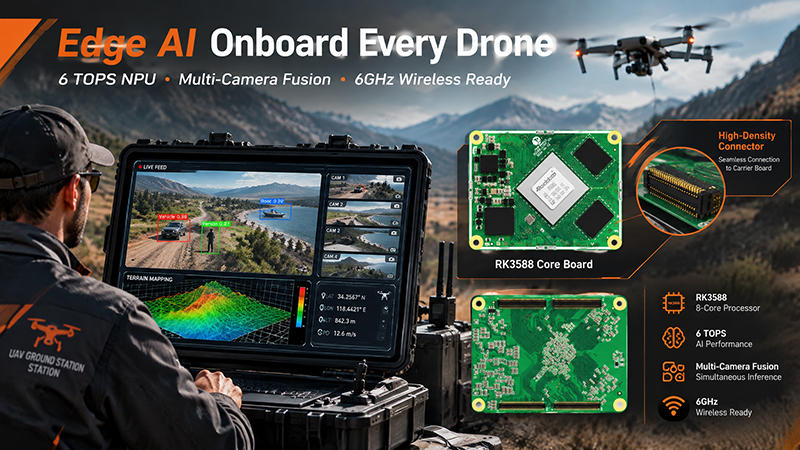
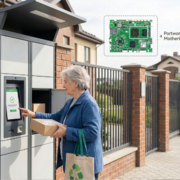
RK3588 Drone Application Scene
RK3588S: Mali-G610 MP4
The RK3588S features the more powerful Mali-G610 MP4 GPU.
It supports:
- OpenGL ES 1.1, 2.0, and 3.2
- OpenCL 2.2
- Vulkan 1.2
Thanks to its advanced GPU architecture, the RK3588S is better suited to graphics-intensive applications.
Examples include:
- 3D graphical interfaces
- High-resolution interactive displays
- Advanced multimedia terminals
- Visual applications featuring complex animations
- Graphics-intensive embedded software
GPU recommendation: Choose the RK3576 for mainstream embedded graphics and interactive interfaces. Consider the RK3588S when stronger 3D graphics performance or more demanding visual processing is required.
4. AI Computing: Comparing the 6 TOPS NPUs
AI acceleration is a key factor when choosing a modern embedded processor.
The RK3576 and RK3588S both include dedicated NPUs with published peak performance of up to 6 TOPS, although their AI computing capabilities differ.
RK3576: An NPU Designed for AIoT
The RK3576 incorporates a self-developed NPU delivering up to 6 TOPS of INT8 performance under the specified sparse-computing conditions.
Supported numerical formats include:
- INT4
- INT8
- INT16
- FP16
- BF16
- TF32
Potential applications include:
- Object detection
- Image classification
- Visual inspection
- Intelligent camera processing
- People counting
- Gesture recognition
- Local AI inference
This platform is especially suited to AIoT products that pair conventional embedded control with lightweight or moderately demanding AI inference workloads.
RK3588S: High-Performance Edge AI
The RK3588S delivers up to 6 TOPS of NPU computing performance.
Its NPU features three processing cores, which can operate independently or work together on supported workloads.
The platform supports INT4, INT8, INT16, and FP16 operations. It also supports AI development workflows using frameworks such as TensorFlow, PyTorch, Caffe, and ONNX through compatible conversion tools and runtimes.
Its more capable CPU and GPU resources can further support AI applications that need additional preprocessing, visualization, or post-processing.
Potential applications include:
- Intelligent video analytics
- Machine vision systems
- AI-enabled robotics
- Multi-camera edge computing
- Smart transportation terminals
- Advanced visual recognition devices
Does the RK3588S Deliver Twice the AI Performance?
No. Both processors are specified with NPUs in the 6 TOPS class.
Assuming that the RK3588S automatically provides twice the AI inference performance because of its more powerful CPU and GPU would be misleading.
Actual AI performance depends on:
- NPU architecture and utilization
- Model architecture and complexity
- Quantization precision
- Sparse or dense computation
- Operator compatibility
- Memory bandwidth
- Software runtime and model optimization
For developers, benchmarking the target AI model on the intended hardware is more useful than comparing TOPS figures alone.
5. Video Processing and Display: RK3588S Holds the Advantage
In products that require video playback, camera input, or support for multiple displays, multimedia capabilities can be an important factor in processor selection.
RK3576 Multimedia Capabilities
The RK3576 offers:
- 16MP ISP featuring HDR and 3D noise reduction
- Video decoding up to 8K at 30fps for supported formats
- H.264/H.265 encoding up to 4K at 60fps
- Combined HDMI 2.1 and eDP interface
- DisplayPort 1.4
- MIPI DSI
Support for multiple displays driven by different sources
These features meet the needs of many smart terminals, industrial displays, and embedded vision products.
RK3588S Multimedia Capabilities
The RK3588S provides more advanced multimedia processing capabilities, including:
- ISP support for up to 48 MP under specified configurations
- 8K at 60 fps decoding for supported H.265, VP9, and AVS2 formats
- Encoding of up to 8K at 30 fps in H.264/H.265
- HDMI 2.1
- eDP
- DisplayPort 1.4
- Two MIPI DSI interfaces
- Advanced image processing
For applications requiring high-resolution video, sophisticated image processing, or demanding display configurations, the RK3588S offers greater capacity.
Supported codec profiles, concurrent display combinations, and actual output resolutions should be verified in the processor documentation and for the specific motherboard design.
Multimedia recommendation:The RK3576 is suitable for mainstream embedded displays and vision applications. The RK3588S is a stronger option for advanced video processing, high-resolution multimedia, and more demanding camera systems.
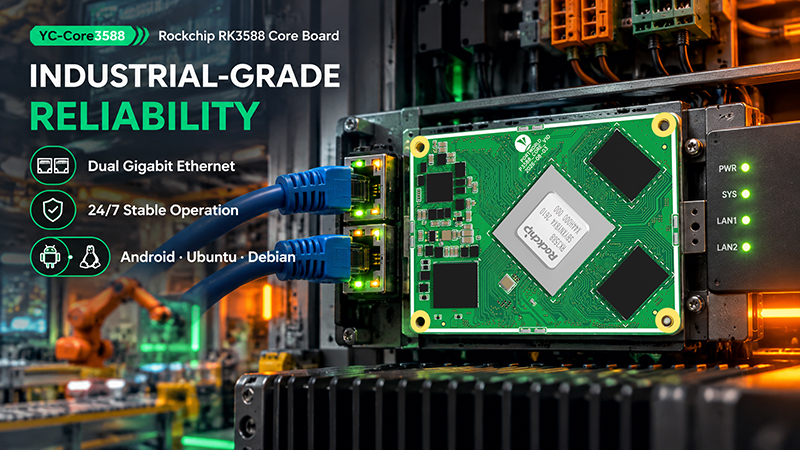
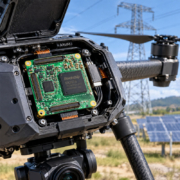
RK3588 core board
6. Connectivity and Expansion: A Key Distinction for Industrial Products
Processor performance matters, but connectivity often determines whether a motherboard can be incorporated into the finished product.
The RK3576 offers several especially useful features in this area.
RK3576 Interfaces
The RK3576 supports a wide range of interfaces, including:
- USB 3.0
- PCIe 2.1
- SATA 3.0
- Dual RGMII
- CAN FD
- UART
- SPI
- I2C
- I3C
- PWM
- GPIO
Dual RGMII and CAN FD are particularly valuable for industrial equipment, gateways, and embedded control applications.
RK3588S Interfaces
The RK3588S supports:
- USB 3.1 Gen 1
- USB 2.0
- PCIe 2.1
- SATA 3.0
- Gigabit Ethernet
- UART
- SPI
- I2C
- PWM
- GPIO
Multiple camera and display interfaces
It is important to distinguish the RK3588S from the full RK3588.
The RK3588S uses a different package and offers a more limited high-speed interface configuration. Unlike the full RK3588, it does not support PCIe 3.0 x4 expansion.
For products that require high-speed expansion, storage, and multiple external connections, developers should verify the specific SoC and board-level implementation instead of assuming that the RK3588S and RK3588 provide identical connectivity.
Which Processor Is Better for Industrial Integration?
RK3576 is a strong choice when a design requires interfaces such as CAN FD and dual Ethernet connectivity.
RK3588S is better suited to systems that need greater general-purpose computing power, graphics performance, and multimedia processing capabilities.
Neither processor inherently provides every interface on a completed motherboard. The interfaces available in practice depend on pin multiplexing, combo interfaces, PCB routing, and connector design.
7. RK3576 vs. RK3588S: Which Applications Best Suit Each Processor?
The right processor depends on the requirements of the complete embedded product.
Applications for RK3576
1. Industrial HMI and Control Panels
RK3576 offers a balanced combination of CPU performance, graphics, AI acceleration, and industrial connectivity.
It can power touchscreen interfaces, equipment monitoring, data visualization, and communication with external controllers.
2. Smart Home and Building Automation
In smart home control panels and building automation terminals, RK3576 can manage graphical interfaces, device management, communication services, and supported local AI functions.
3. Industrial IoT Gateways
With CAN FD, dual RGMII, and serial communication capabilities, RK3576 is a practical option for industrial gateway designs.
4. Robotics and Intelligent Equipment
RK3576 supports robot control terminals, sensor processing, communications, and compatible AI inference workloads.
It is especially well suited to projects requiring embedded intelligence but not top-tier CPU and GPU performance.
5. Smart Commercial Equipment
Potential applications include smart vending machines, commercial touchscreen terminals, self-service kiosks, and intelligent appliances.
Applications for RK3588S
1. High-Performance Edge AI Devices
RK3588S is suitable for applications that combine AI inference with intensive CPU and GPU workloads.
2. Advanced Machine Vision
Its 48MP ISP capability and support for multiple camera inputs make it a strong option for visual inspection and intelligent camera systems.
Actual camera compatibility depends on the sensors used, interface routing, and available software drivers.
3. High-Resolution Digital Signage
For commercial displays requiring advanced video decoding, graphics processing, and interactive content, RK3588S offers extensive multimedia capabilities.
4. Advanced Robotics
Robots that depend on complex graphical interfaces, several camera inputs, and more intensive on-device computing may be better suited to the RK3588S architecture.
For especially demanding robotics applications, a dedicated accelerator or a more powerful AI computing platform may still be required.
5. Multimedia and Smart Terminals
The RK3588S can support advanced smart terminals, multi-screen systems, and embedded multimedia devices that need enhanced graphics and video performance.
YC-Core3588 Core Board
8. Choosing Between the RK3576 and RK3588S
Rather than choosing a processor solely for its higher specifications, assess your project based on the following requirements.
| Project Requirement | Recommended Direction |
|---|---|
| Standard industrial HMI | RK3576 |
| Smart home control panel | RK3576 |
| Industrial IoT gateway with CAN FD | RK3576 |
| Compact AIoT terminal | RK3576 |
| Basic edge AI inference | RK3576, subject to model testing |
| Advanced 3D graphics | RK3588S |
| High-resolution multimedia | RK3588S |
| Demanding multi-camera processing | RK3588S |
| Advanced visual AI terminal | RK3588S |
| High-performance embedded computing | RK3588S |
Choose the RK3576 if:
- Your application calls for a balanced combination of CPU and AI performance.
- You require industrial connectivity features, such as CAN FD.
- Your product is designed for HMI, IoT, smart terminal, or embedded-control applications.
- You need a capable AIoT platform but do not require maximum GPU performance.
- Your software and hardware needs are supported by its available interfaces.
Choose the RK3588S if:
- Your application requires higher CPU performance.
- You need more sophisticated graphics processing.
- Your product must handle demanding video encoding and decoding.
- You require more advanced camera and image-processing capabilities.
- Your application would benefit from greater computing headroom.
Finally, consider power consumption and thermal management. A more powerful processor does not necessarily make a better product. The entire system must be designed to suit its workload, cooling solution, power supply, and operating environment.
9. Portworld RK3576 SoM and RK3588 Core Board Solutions
For manufacturers creating embedded products, selecting a processor is just the beginning. The next step is choosing a suitable motherboard or system-on-module (SoM) for integration into the finished device.
Portworld offers two computing platforms suited to projects with varying performance and hardware-flexibility requirements.
Portworld RK3576 SoM: Flexible Integration for AIoT Products
The Portworld RK3576 SoM is built for compact embedded systems that require AI acceleration, versatile connectivity, and customized hardware integration.
Key specifications include:
- Rockchip RK3576 octa-core processor
- 4 × Cortex-A72 cores, running at up to 2.2GHz
- 4 × Cortex-A53 cores, running at up to 1.8GHz
- Integrated NPU delivering up to 6 TOPS INT8 performance
- Mali-G52 MC3 GPU
- 4GB of onboard LPDDR4 memory
- Compact 38 × 38mm form factor
- 240-pin board-to-board connector
- Support for Linux, Ubuntu, and Android, depending on the BSP
With its SoM architecture, the module can be paired with a custom carrier board designed by the developer.
This approach suits manufacturers building industrial HMI systems, robotics, AIoT terminals, smart devices, and other embedded products.
Rather than designing processor and memory circuitry from scratch, developers can concentrate on application-specific interfaces, power configuration, and mechanical integration.
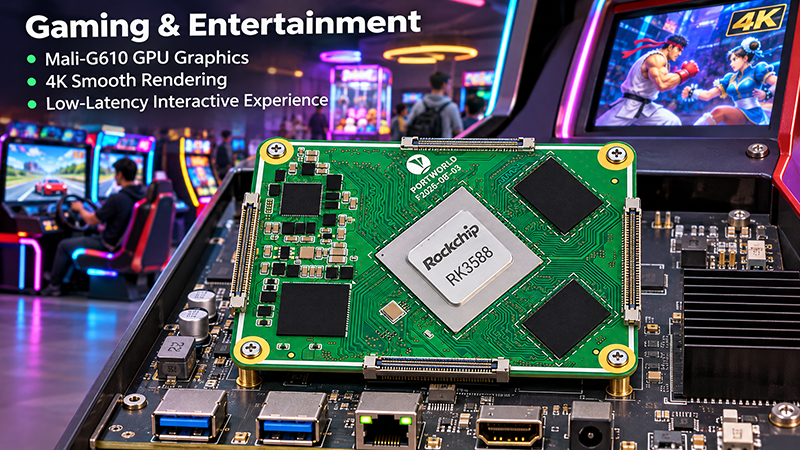
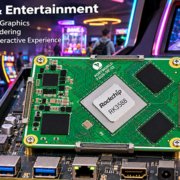
YC-Core3588 Game and entertainment application scenarios
Portworld RK3588 Core Board: Enhanced Performance for Advanced Embedded Applications
For projects demanding greater CPU and GPU capabilities, the Portworld RK3588 Core Board provides a high-performance computing platform.
Key specifications include:
- Rockchip RK3588 octa-core processor
- 4 × Cortex-A76 cores running at up to 2.3 GHz
- 4 × Cortex-A55 cores running at up to 1.8 GHz
- Integrated NPU delivering up to 6 TOPS
- Mali-G610 MP4 GPU
- 8K video decoding and encoding with supported configurations
- HDMI 2.1, eDP, DP, and MIPI display interfaces
- 400-pin high-density board-to-board connector
- PCIe, SATA, USB, and dual Gigabit Ethernet connectivity
- Support for Android, Ubuntu, and Debian
Important clarification: this is Portworld’s RK3588 Core Board, not an RK3588S product. The full RK3588 platform has a different interface configuration from the RK3588S and should be assessed separately.
The board is suitable for advanced robotics, machine vision, edge AI, industrial computing, and multi-screen commercial display applications.
OEM/ODM Support from Hardware Design Through Production
In addition to standard computing modules, Portworld provides embedded hardware development and customization services, including:
- Custom motherboard and carrier board design
- PCB and PCBA development
- RAM, storage, and interface configuration
- Customization for Android, Linux, Ubuntu, and Debian
- BSP, SDK, and driver adaptation
- UI and application integration
- CKD/SKD manufacturing support
- Prototype development and production coordination
Whether your project calls for an RK3576 SoM or a higher-performance RK3588 Core Board, the hardware configuration can be assessed against your application, enclosure, interfaces, and production requirements.
Both the RK3576 and RK3588S are capable processors for today’s embedded applications, but they address different priorities.
The RK3576 features Cortex-A72 and Cortex-A53 CPU cores, a 6 TOPS-class AI NPU, Mali-G52 graphics, and industrial connectivity options. These capabilities make it a strong choice for industrial HMI systems, IoT gateways, smart terminals, and AIoT devices.
The RK3588S pairs a more powerful Cortex-A76 and Cortex-A55 CPU architecture with Mali-G610 graphics and advanced multimedia processing. It is better suited to demanding visual workloads, high-resolution multimedia, and more computationally intensive embedded systems.