ARM vs. x86 Motherboards for Embedded Applications
When designing an embedded product, selecting the appropriate motherboard architecture can affect long-term system performance, energy consumption, software compatibility, and production costs.
Two processor architectures are central to many embedded computing applications: ARM and x86.
ARM-based motherboards are commonly found in smart devices, industrial HMI systems, IoT gateways, robotics, and edge AI terminals. x86-based motherboards, typically equipped with Intel or AMD processors, are often chosen for industrial PCs, Windows-based equipment, demanding computing tasks, and applications that rely on established PC software.
Today, the distinction is no longer merely low power versus high performance. Modern ARM platforms can manage increasingly demanding workloads, while x86 processors are also available in compact, energy-efficient embedded configurations.
How, then, should developers choose between ARM and x86 motherboards?
This guide compares their architectures, performance, power requirements, operating systems, interfaces, and industrial applications to support a practical decision.
1. ARM vs. x86: Understanding the Two Architectures
Before comparing motherboards, it is helpful to understand the differences between ARM and x86.
What Is an ARM Motherboard?
ARM is a processor instruction set architecture licensed to semiconductor manufacturers. Companies including Rockchip, NXP, and Qualcomm produce processors based on ARM architecture.
Many ARM processors use a System on Chip (SoC) design, combining several components in a single chip, including:
- CPU cores
- GPU
- NPU or AI accelerator
- Video processing engine
- Memory controllers
- Display controllers
- Peripheral interfaces
This extensive integration makes ARM platforms well suited to compact embedded products.
Examples include the Rockchip RK3566, RK3568, RK3576, and RK3588.
What Is an x86 Motherboard?
x86 is a processor architecture commonly used on platforms from Intel and AMD.
In contrast to many highly integrated ARM system-on-chips (SoCs), x86 embedded platforms often rely on a more modular motherboard design. Separate components and controllers handle different functions.
Depending on the processor and motherboard, an x86 platform may include:
- Intel or AMD CPU
- Integrated or discrete graphics
- DDR memory
- M.2 storage
- PCIe expansion
- Multiple USB ports
- Ethernet connectivity
- Support for standard PC operating systems
This architecture is widely used in industrial PCs, automation computers, embedded workstations, and Windows-based terminals.
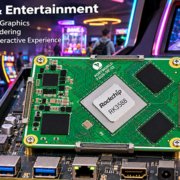
RK3588 Robot Application Scene 2
2. ARM vs. x86 Motherboards: Key Differences
The table below outlines the primary differences between ARM and x86 motherboards from an embedded development perspective.
| Comparison | ARM Motherboard | x86 Motherboard |
|---|---|---|
| Processor Architecture | ARM 32-bit or 64-bit | x86 / x86-64 |
| Main CPU Suppliers | Multiple SoC manufacturers | Primarily Intel and AMD |
| Hardware Integration | Often highly integrated SoC | Often more modular |
| Power Consumption | Frequently suitable for low-power designs | Wide range, including low-power and high-performance options |
| Thermal Design | Often supports compact and fanless designs | Depends on processor TDP and system configuration |
| Operating Systems | Linux, Android, Ubuntu, Debian, Buildroot | Windows, Windows IoT, Linux |
| Software Compatibility | Requires ARM-compatible applications and drivers | Broad compatibility with x86 PC software |
| AI Acceleration | Often integrated NPU on selected SoCs | Depends on CPU, GPU, NPU, or external accelerator |
| Expansion | Depends on SoC and motherboard design | Often offers PCIe, M.2, SATA, and standard PC expansion |
| Typical Applications | IoT, HMI, smart devices, robotics, edge AI | Industrial PCs, Windows terminals, machine control, complex computing |
These are general platform characteristics rather than fixed rules. High-performance ARM systems and low-power x86 systems may overlap in both computing performance and power consumption.
The overall motherboard design is the most important factor—not processor architecture alone.
3. Processing Performance: Which Architecture Performs Better?
CPU performance is often the first specification developers compare. However, comparing ARM and x86 solely by clock speed or core count can lead to misleading conclusions.
Processor generations differ in their microarchitectures, cache configurations, memory bandwidth, and instruction capabilities.
ARM: Scalable Computing for Embedded Applications
Modern ARM processors deliver a broad range of computing performance.
For example:
- RK3566 and RK3568 feature quad-core Cortex-A55 processors suited to mainstream embedded applications.
- RK3576 pairs Cortex-A72 and Cortex-A53 cores to handle more demanding AIoT workloads.
- RK3588 combines Cortex-A76 and Cortex-A55 cores for high-performance embedded computing.
Depending on the processor and software configuration, these platforms can support graphical interfaces, multimedia applications, device communications, and on-device AI inference.
x86: Broad Software Compatibility and Versatile Computing
Intel and AMD embedded processors span a range of performance levels, from low-power options for compact industrial systems to more powerful Core and Ryzen platforms.
x86 motherboards are especially valuable when an application needs:
- Existing Windows software
- Complex desktop applications
- Legacy industrial programs
- Multiple computing services
- Specialized libraries available only for x86
- High-performance CPU processing
For instance, an industrial machine may rely on a Windows application originally built for an x86 computer. Porting it to ARM could involve recompiling the software, making modifications, or replacing incompatible components.
In such cases, choosing x86 can reduce migration effort.
Selection principle: Choose ARM when its computing capabilities satisfy the application’s requirements and its integrated hardware provides a suitable solution. Choose x86 when a project relies on existing x86 software or needs the performance and expansion capabilities of a particular Intel or AMD platform.
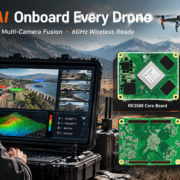
RK3588 Core Board- Drone Application Scene
4. Power Consumption and Thermal Design
Power consumption is a key factor in embedded products, particularly when a motherboard runs continuously or is installed in a compact enclosure.
ARM Motherboards: Well Suited to Compact, Low-Power Systems
Many ARM SoCs combine the CPU, GPU, multimedia engines, and AI accelerators on a single chip.
This integration can reduce the need for external components and simplify the overall hardware design.
Potential advantages include:
- Lower system power needs in appropriate configurations
- Reduced cooling requirements
- Compact PCB layouts
- Fanless product designs
- Greater suitability for power-constrained applications
For instance, an ARM-based touchscreen terminal could use a compact motherboard housed in a wall-mounted control panel or industrial enclosure.
However, actual power consumption varies with the processor, memory, peripherals, display, workload, and power-management configuration.
x86 Motherboards: Adaptable Performance and Power Choices
x86 platforms support a broader range of power levels than many developers might initially expect.
Low-power Intel processors can serve in compact industrial computers, while higher-performance Core and AMD Ryzen platforms can handle demanding applications.
Thermal requirements vary according to:
- Processor TDP
- Sustained CPU utilization
- Integrated or discrete GPU workload
- Memory and storage configuration
- Ambient temperature
- Enclosure design
For an industrial computer running complex Windows applications, the extra cooling requirements may be worthwhile given the software compatibility and computing capabilities it offers.
Practical recommendation: Assess power consumption across the entire system. Do not assume that every ARM motherboard consumes less power than every x86 motherboard.
5. Operating Systems and Software Compatibility
Operating system support is often a key consideration when choosing an embedded motherboard.
The processor architecture determines which native applications and drivers are compatible with the system.
- ARM: Linux and Android Development
- ARM-based embedded platforms typically support:
- Linux
- Ubuntu
- Debian
- Android
- Buildroot
The available operating systems vary according to the processor, motherboard, and Board Support Package (BSP).
ARM is well suited to products based on embedded Linux or Android applications.
Common development tasks include:
- Touchscreen interface development
- Device communication
- Sensor data collection
- Smart home control
- Embedded multimedia
- Local AI inference
- Industrial monitoring
Developers should confirm that the libraries, drivers, and third-party applications they need are compatible with the chosen ARM platform.
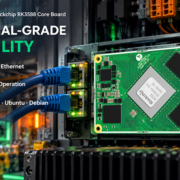
RK3588 core board
x86: Windows and Established PC Software
x86 platforms provide extensive compatibility with conventional PC software.
They are especially suitable for projects that require:
- Windows desktop applications
- Windows IoT Enterprise
- Existing x86 industrial software
- Established PC-based development tools
- Legacy applications that are difficult to recompile
- Linux is also widely supported across x86 systems.
Windows is available on ARM as well, so it is not limited to x86. However, developers should still confirm compatibility with ARM64 applications and drivers.
A Practical Example
Consider a company developing an industrial touchscreen control terminal.
If the application runs on Android and embedded Linux, an ARM motherboard may be a suitable platform.
If the equipment depends on an existing Windows application and x86-only drivers, an x86 motherboard may be the more practical option.
The central question is not merely which operating system you prefer, but whether the selected hardware supports the entire software stack.
6. AI Processing and Multimedia Capabilities
Edge AI is introducing new requirements for embedded motherboards.
Applications such as machine vision, object detection, intelligent monitoring, and robotics increasingly need local processing instead of depending entirely on cloud computing.
- ARM: Integrated AI Acceleration
- Some modern ARM SoCs feature dedicated NPUs.
- For example:
RK3576
- Octa-core CPU
- Mali-G52 MC3 GPU
- NPU delivering up to 6 TOPS INT8
- 4K video processing capabilities
- 16MP ISP
RK3588
- 4 × Cortex-A76 + 4 × Cortex-A55 CPU cores
- Mali-G610 MP4 GPU
- NPU delivering up to 6 TOPS
- 8K video decoding capability
- Multiple display output options
These processors can handle suitable edge AI workloads, such as object detection, image recognition, and intelligent terminal applications.
Actual AI performance varies depending on model compatibility, quantization, runtime support, and software optimization.
x86: Flexible AI Acceleration Options
x86 platforms can support AI processing through several options:
- Integrated GPU acceleration
- Dedicated AI accelerators
- External PCIe or M.2 accelerator modules
- Compatible CPU-based inference software
- Some newer Intel and AMD platforms also include integrated AI acceleration engines.
- For applications built around established x86 AI software, or those requiring substantial CPU and GPU resources, an x86 motherboard may be a suitable choice.
- Which Is Better for Edge AI?
- The best option depends on the AI workload.
An ARM platform with an integrated NPU can offer a compact solution for supported inference models.
An x86 system may be preferable when an application requires specific AI software, strong CPU performance, or the flexibility to add a dedicated accelerator.
For advanced robotics or machine vision, developers should benchmark their actual models on the intended hardware configuration instead of relying solely on theoretical TOPS values.
7. Hardware Interfaces and Expansion Capabilities
Motherboard interfaces determine how readily a processor can connect to displays, cameras, sensors, storage devices, and industrial equipment.
ARM Motherboards
Depending on the SoC and the board’s design, an ARM platform may offer:
- HDMI
- MIPI-DSI
- MIPI-CSI
- eDP
- USB
- PCIe
- SATA
- Ethernet
- UART
- SPI
- I2C
- CAN
These interfaces support the development of customized embedded devices.
For instance, an RK3588-based design can combine high-resolution displays, cameras, storage, and network connections in an application-specific system.
However, the finished motherboard may not expose every interface supported by the SoC.
x86 Motherboards
x86 embedded motherboards often provide a familiar, PC-style expansion architecture.
Depending on the design, they may feature:
- PCIe slots
- M.2 connectors
- SATA
- USB
- HDMI
- DisplayPort
- Ethernet
- COM ports
- GPIO
- Audio interfaces
This architecture can simplify integration with standard PC peripherals, storage devices, and expansion cards.
For industrial applications that rely on specialized PCIe hardware or existing PC expansion modules, x86 may provide a practical advantage.
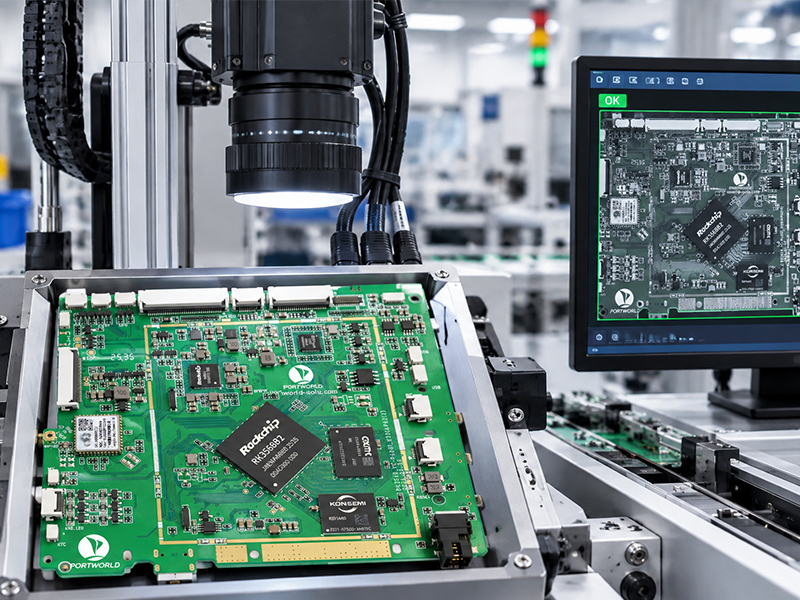
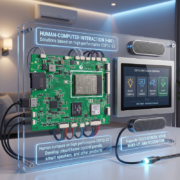
YC-P6602 RK3566 Motherboard
What Should Developers Check?
Before selecting a motherboard, prepare an interface checklist.
| Requirement | What to Verify |
|---|---|
| Display | Resolution, interface type, number of screens |
| Camera | MIPI-CSI, USB, or other supported connections |
| Networking | Gigabit Ethernet, Wi-Fi, additional network ports |
| Serial Communication | UART, RS232, RS485 transceiver implementation |
| Industrial Protocols | CAN, Modbus, fieldbus integration |
| Storage | eMMC, SATA, M.2, NVMe support |
| Expansion | PCIe, USB, GPIO |
| Power | Input voltage and power protection |
This is especially important when developing industrial HMIs, equipment controllers, and embedded gateways.
8. ARM vs. x86: Which Is Better for Different Embedded Applications?
Different embedded applications have different hardware priorities.
| Application | Recommended Architecture | Main Reason |
|---|---|---|
| Smart home control panels | ARM | Integrated SoC and Android/Linux support |
| Basic industrial HMI | ARM or x86 | Depends on software and interface requirements |
| Windows-based industrial terminals | x86 | Native compatibility with established x86 software |
| IoT gateways | ARM | Compact integration and embedded Linux support |
| Edge AI terminals | ARM or x86 | Depends on NPU/GPU and AI software requirements |
| Industrial machine vision | ARM or x86 | Depends on camera processing and inference workload |
| Digital signage | ARM or x86 | Depends on playback, display, and application requirements |
| Robotics controllers | ARM or x86 | Depends on control architecture and processing workload |
| Battery-powered embedded devices | ARM in many cases | Suitable low-power SoC options |
| Industrial computers with PCIe expansion | Often x86 | Broad availability of PC-style expansion options |
There is no single platform that is best in every situation. The right choice is the one that satisfies the finished product’s software, performance, interface, power, and lifecycle requirements.
9. Portworld ARM Motherboard Solutions for Embedded Applications
For developers creating ARM-based embedded products, Portworld offers Rockchip-based motherboards and System on Module solutions.
Its portfolio spans platforms for mainstream embedded computing, AIoT, and high-performance edge AI applications.
Two key options are the Portworld RK3576 SoM and the Portworld RK3588 Core Board.
Portworld RK3576 SoM
The RK3576 SoM is built for compact embedded systems that require greater processing capability and integrated AI acceleration.
Key specifications include:
- Rockchip RK3576 octa-core processor
- 4× Cortex-A72 cores, running at up to 2.2 GHz
- 4× Cortex-A53 cores, running at up to 1.8 GHz
- Mali-G52 MC3 GPU
- NPU delivering up to 6 TOPS INT8
- 4GB onboard LPDDR4
- Module dimensions of 38 × 38 mm
- 240-pin board-to-board connector
- Linux, Ubuntu, and Android support, depending on the BSP
Its compact design makes the module a suitable choice for AIoT terminals, industrial HMIs, robotics, smart devices, and machine vision systems.
Developers can pair the module with a custom carrier board to meet their product’s display, connectivity, and peripheral requirements.
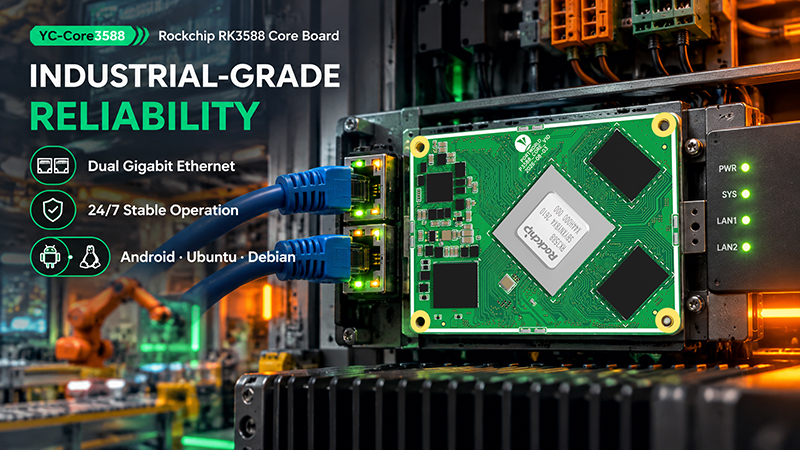
Portworld RK3588 Core Board
For projects that demand greater computing power and multimedia performance, Portworld offers the RK3588 Core Board.
Key specifications include:
- Rockchip RK3588 octa-core processor
- 4× Cortex-A76 cores running at up to 2.3 GHz
- 4× Cortex-A55 cores running at up to 1.8 GHz
- Mali-G610 MP4 GPU
- NPU delivering up to 6 TOPS
- 8K video decoding and encoding
- 400-pin high-density board-to-board connector
- HDMI 2.1, eDP, DP, and MIPI display interfaces
- PCIe, SATA, and USB expansion options
- Dual Gigabit Ethernet
- Support for Android, Ubuntu, and Debian
With its combination of CPU, GPU, NPU, and multimedia capabilities, the board is well suited to high-performance embedded computing, robotics, edge AI, and advanced commercial displays.
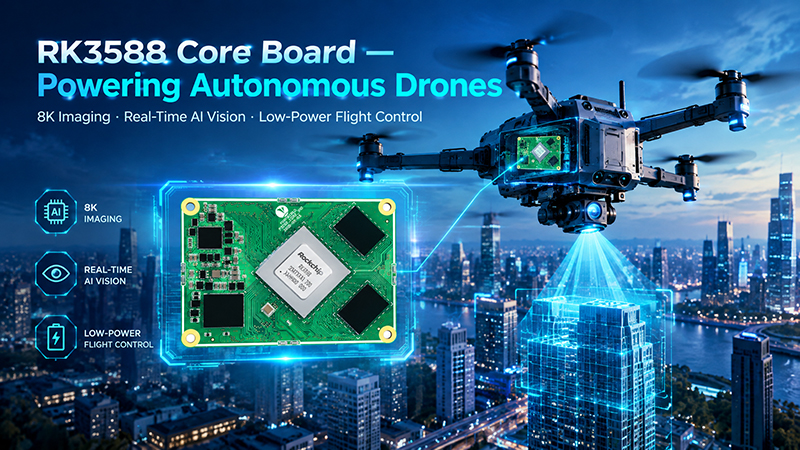
RK3588 Core Board- Drone Application Scene
What About x86 Platforms?
Not every embedded product requires an ARM architecture.
For projects that rely on Windows applications, x86 software compatibility, or Intel-based computing platforms, Portworld can also provide customized embedded hardware development based on the selected platform.
The right processor and motherboard should be chosen according to the application’s software, interfaces, performance needs, and mechanical design.
10. From Motherboard Selection to OEM/ODM Product Development
A standard motherboard may be adequate for a prototype, but a commercial embedded product often calls for further hardware and software integration.
For instance, an industrial touchscreen device may require:
- A customized display connection
- Specific touchscreen integration
- RS485 or RS232 communication
- Additional Ethernet or USB interfaces
- A dedicated power input
- A compact motherboard layout
- Customized mechanical housing
- A branded user interface
Portworld provides support for embedded hardware development, including:
- PCB and PCBA design
- ARM motherboard and SoM integration
- Customization of x86 embedded hardware
- Hardware interface and I/O customization
- Android and Linux system adaptation
- Windows platform integration, when applicable
- Display and touchscreen integration
- SDK provision and technical documentation
- OEM/ODM product development
- Prototype testing and mass-production support
Drawing on more than 18 years of experience in embedded hardware, Portworld helps customers progress from platform selection and prototype development to tailored production solutions.
The goal is to choose a platform suited to the finished product, rather than making the product conform to a standard development board.
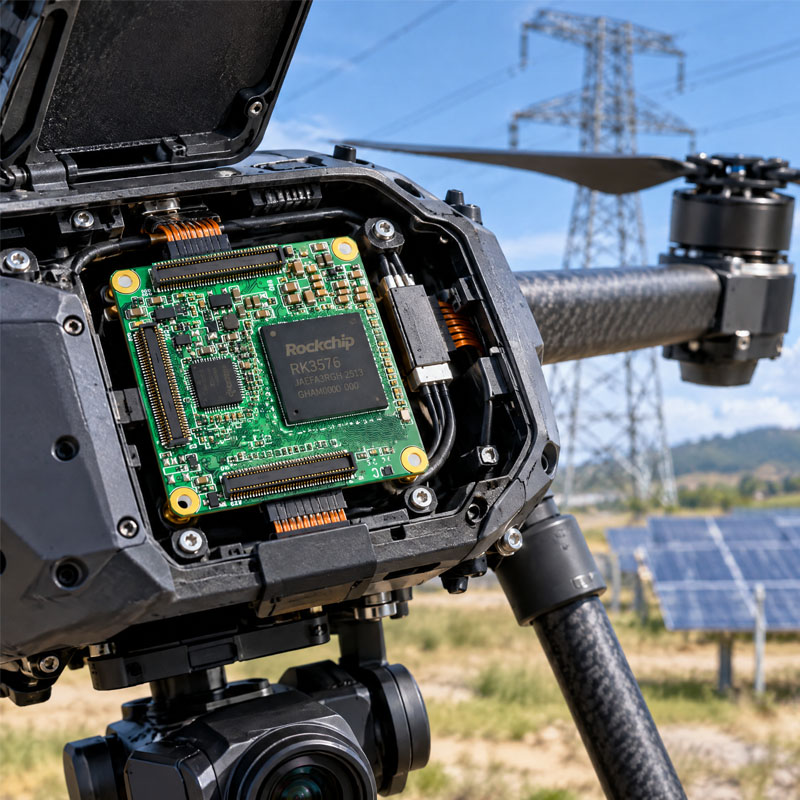
YC-Core3588 Core Board
11. Choosing the Right Architecture: Five Key Questions
Before selecting an ARM or x86 motherboard, consider the following five questions.
1. Which operating system does your product need?
ARM may be a good fit for applications based on Android or embedded Linux. If your product relies on existing x86 Windows software, choosing x86 may simplify software migration.
2. What level of computing performance is required?
Assess the actual workload, including CPU tasks, graphics, video, and AI inference. Do not base your choice solely on core count or clock speed.
3. What are the power and thermal constraints?
For compact or fanless products, assess the power consumption and heat dissipation of the entire system. ARM and x86 both offer products across a range of power levels.
4. Which hardware interfaces do you need?
Identify all required display, camera, storage, networking, and industrial communication interfaces. Confirm that the selected motherboard provides the necessary connections.
5. Is the product intended for long-term commercial production?
Evaluate component availability, BSP maintenance, board revisions, manufacturing capacity, customization options, and technical support.
These considerations can affect a project’s long-term success more than the motherboard’s initial price.