OEM vs. ODM Digital Signage Displays: Which Fits Your Project?
As digital signage becomes more prevalent in retail environments, restaurants, hotels, shopping centers, and public areas, companies are seeking display solutions that align with their branding, software, installation needs, and financial constraints. Although standard digital signage products can fulfill many fundamental requirements, certain projects necessitate tailored hardware, specialized interfaces, or a fully customized product designed for a specific application.
This is where OEM and ODM manufacturing play a crucial role.
Both models enable businesses to collaborate with a manufacturer to create digital signage products tailored to their respective markets. However, they vary in terms of product design, the extent of customization needed, and the allocation of development responsibilities.
Grasping the distinction between OEM and ODM digital signage displays can assist brand owners, distributors, system integrators, and commercial equipment manufacturers in selecting the appropriate development strategy prior to placing an order.
What is OEM Digital Signage Manufacturing?
OEM stands for Original Equipment Manufacturer. In the context of digital signage projects, OEM generally denotes a business arrangement where a manufacturer creates equipment based on the product design, specifications, or customization requirements provided by a customer.
The customer may possess a well-defined product concept, a specific hardware configuration, or an existing design that requires large-scale manufacturing. The manufacturer then fabricates the display in accordance with the established technical and production specifications.
For instance, a digital signage brand might choose a particular screen size, Android motherboard, interface layout, and enclosure design. It may seek a manufacturing partner to produce the hardware featuring its logo, model number, packaging, and necessary software configuration.
In such scenarios, OEM manufacturing enables the business to launch its product in the market without the need to set up its own display manufacturing facilities.
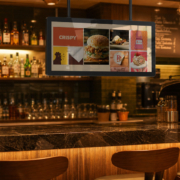
YC-L106 Bank Hall Banner
When Does OEM Become Beneficial?
OEM is frequently advantageous when a company has a clear understanding of its product needs and seeks a manufacturer to execute them.
Typical scenarios include:
- Established product designs: The company possesses drawings, technical specifications, or a defined hardware configuration.
- Branding requirements: The product necessitates a customer logo, model identification, packaging, or other agreed-upon brand elements.
- Hardware customization: The project demands specific interfaces, a particular motherboard, or alterations to an existing product.
- Repeat production: The company aims to produce consistent products for ongoing sales or deployment.
- Software requirements: The display requires a specified Android configuration, preinstalled applications, or a customized startup screen.
- The precise scope is determined by the agreement. Some OEM projects involve relatively straightforward branding and configuration, while others necessitate more extensive hardware modifications.
For digital signage companies with a well-defined product, OEM can serve as an effective means to access manufacturing capabilities while retaining control over the desired specifications.
What is ODM Digital Signage Manufacturing?
ODM refers to Original Design Manufacturer. In an ODM setup, the manufacturer plays a significant role in creating the product design and technical solution.
Instead of providing a fully specified design, the client may outline an application scenario, target market, desired features, budget, and overall performance criteria. The manufacturer then assists in converting those requirements into a viable product configuration.
For instance, a company may wish to create a digital menu board for restaurant chains but may not have determined the display dimensions, embedded motherboard, enclosure design, or operating system. An ODM partner can evaluate these specifications and propose a suitable solution.
ODM projects can encompass product structure, hardware selection, embedded system integration, interface planning, and software customization, depending on the manufacturer’s expertise and the agreed-upon development scope.
When Does ODM Make Sense?
ODM is a viable option when a business has a product concept but requires engineering assistance to transform it into a manufacturable solution.
Common scenarios encompass:
- New product development: The organization aims to launch a digital signage product that lacks a finalized design.
- Application-specific hardware: The display is required to fit within a designated kiosk, retail fixture, or commercial setup.
- Embedded motherboard integration: The initiative necessitates an appropriate processor platform, memory arrangement, and interface configuration.
- System integration: The product must be compatible with particular applications, peripherals, or an existing software framework.
- Engineering support: The client requires assistance in assessing hardware viability, enclosure specifications, and prototype setups.
- ODM does not inherently imply that every component will be created from the ground up. Depending on the project, the manufacturer might modify an existing product platform, merge established hardware modules, or create a more tailored design.
- The primary distinction lies in the extent of the manufacturer’s participation in the product design process.
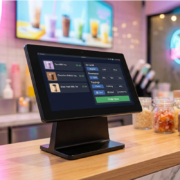
YC-L106 Shopping Mall Banner
OEM vs. ODM: What Is the Difference?
Although the terms are sometimes used interchangeably in commercial discussions, OEM and ODM generally describe different levels of customer design ownership and manufacturer involvement.
| Comparison | OEM Digital Signage | ODM Digital Signage |
|---|---|---|
| Initial design | Usually supplied or clearly defined by the customer | Developed or substantially defined with the manufacturer |
| Customer’s starting point | Existing design or detailed specifications | Product concept and application requirements |
| Manufacturer’s role | Manufacturing and agreed customization | Product development, engineering, and manufacturing |
| Hardware selection | Often specified by the customer | May be recommended by the manufacturer |
| Enclosure design | Based on the agreed design or modifications | May involve new or adapted mechanical design |
| Software configuration | Implemented according to agreed requirements | May be included in the product development process |
| Development workload | Depends on the amount of customization | Often involves more early-stage engineering |
| Typical use case | Existing product or established design | New product or application-specific solution |
These distinctions are general in nature rather than rigid regulations. Certain manufacturers provide hybrid options, and the specific responsibilities should be outlined in the project agreement.
A customer might initiate with ODM development and transition to ongoing OEM production once the design has been finalized.
How to Select Between OEM and ODM for Digital Signage Displays
The appropriate choice hinges on the clarity of the product definition, the level of engineering support required, and the intended use of the display.
1. Begin with Your Product Requirements
Prior to reaching out to a manufacturer, ascertain the functionalities required of the display.
For instance, a retail advertising screen may solely need to showcase promotional content, whereas an interactive kiosk might necessitate touchscreen capabilities, peripheral connections, and tailored software.
Draft a fundamental specification that includes screen size, resolution, brightness, operating system, processor specifications, connectivity options, installation methods, and anticipated operating hours.
If these particulars are already established, OEM may be suitable. Conversely, if significant technical decisions are still pending, ODM can offer a structure for navigating the design process.
YC-L106 Reception Desk Banner
2. Assess Your Hardware and Software Requirements
The embedded hardware plays a crucial role in a digital signage system. It influences how the display manages content playback, executes applications, communicates with peripherals, and integrates with the system.
For Android-based digital signage, it is essential that the processor, RAM, storage capacity, Android version, and supported multimedia functionalities align with the anticipated software demands.
Portworld provides embedded motherboard and System on Module solutions utilizing platforms such as Rockchip RK3566, RK3568, RK3576, and RK3588. Each of these platforms offers varying computing capabilities and interface options, making the selection dependent on the specific requirements of the application rather than solely on the processor model.
Should your team have already chosen a motherboard and operating system, pursuing an OEM project may be the right approach for implementing the agreed-upon configuration. Conversely, if assistance is needed in selecting a platform or integrating it into a display system, an ODM or hybrid development strategy might be more suitable.
Portworld’s embedded hardware offerings are capable of supporting projects that involve commercial displays, industrial touchscreen systems, and tailored computing hardware.
3. Evaluate the Necessity for Custom Development of the Enclosure
Not all digital signage initiatives can utilize a standard housing.
For instance, a restaurant chain might require a display tailored to a specific menu board design. A retailer could need a bespoke mounting solution, while a kiosk manufacturer may necessitate the integration of the screen, motherboard, and external interfaces within an existing enclosure.
If a standard enclosure fulfills your needs, OEM customization might suffice. However, if the project demands a new mechanical design or substantial modifications to the display assembly, ODM engineering could be advantageous.
Portworld is available to discuss hardware customization and display integration for appropriate projects. It is essential to define requirements such as external dimensions, mounting points, connector locations, ventilation, and environmental protection early in the process to minimize the risk of redesign.
For outdoor digital signage, purchasers should also indicate brightness levels, operating temperature ranges, and necessary IP protection. Any requested impact rating, such as IK08 or IK10, must be validated against the final product configuration and supporting test documentation.
4. Assess the Level of Android Customization Required
Certain businesses may find that a standard Android system, paired with a compatible digital signage application, suffices. Conversely, others may necessitate a more regulated software environment.
Potential requirements might encompass preinstallation of applications, automatic launching of applications, tailored boot screens, branding, and specific system configurations. More intricate projects could demand further integration efforts to accommodate proprietary applications or peripherals.
Should the software requirements be clearly defined, OEM production with the agreed-upon system customization could be adequate.
If there is still a need to evaluate the hardware and software architecture in tandem, ODM development can offer greater flexibility for collaborative technical planning.
Portworld provides Android customization services for supported embedded hardware projects. The functionalities available will vary based on the chosen platform, software requirements, and the defined project scope.
Prior to placing an order, it is essential to verify the Android version, application compatibility, installation methods, update requirements, and whether the software must interact with external systems.
5. Analyze Development Expenses and Future Production Requirements
It is essential to evaluate OEM and ODM not solely based on their initial quotes.
OEM initiatives might necessitate minimal new design efforts when product specifications are already finalized. Conversely, ODM initiatives could entail further engineering, prototyping, and validation prior to mass production.
Nonetheless, the overall cost is influenced by various factors, such as hardware intricacy, the extent of customization, tooling needs, certification, order volume, and production yield.
A comprehensive comparison should encompass:
- Initial engineering and development expenditures.
- Prototype and testing costs.
- Tooling or enclosure development, if relevant.
- Unit pricing at varying order volumes.
- Software adaptation and maintenance obligations.
- Production lead times and component availability.
- Warranty, technical support, and long-term supply agreements.
For products intended for repeated manufacturing, it is also important to specify which specifications must remain constant and how any component substitutions will be authorized.
The most economical choice is the one that fulfills the project’s requirements throughout its intended lifecycle, rather than merely the option with the lowest initial unit cost.
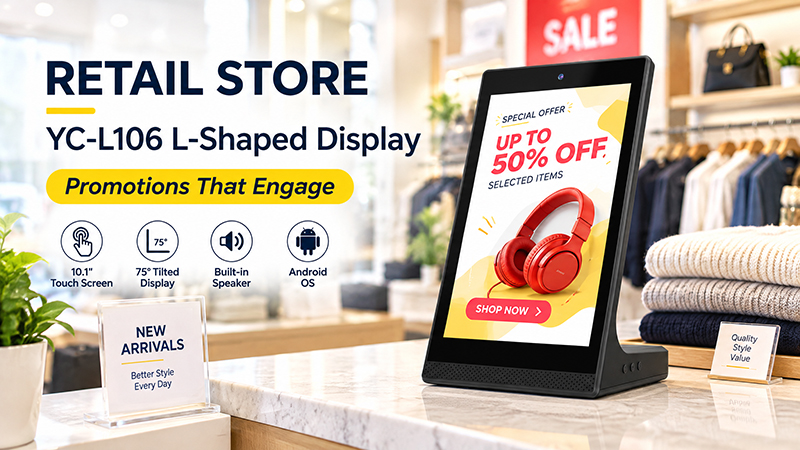
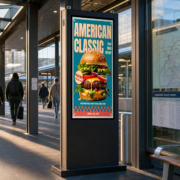
YC-L106 Retail Store Banner
How Portworld Assists OEM and ODM Digital Signage Initiatives
Portworld offers digital signage displays and embedded hardware solutions tailored for commercial use. Businesses seeking standard display hardware, customized configurations, or a comprehensive product development process can leverage its product and engineering expertise.
Depending on the specific project, Portworld’s OEM/ODM services may encompass various aspects.
Digital signage hardware: Companies can assess commercial display products suitable for advertising, information dissemination, and interactive applications. It is essential to align screen size, installation method, brightness, and touch capabilities with the intended environment.
Embedded motherboard integration: Portworld provides embedded computing platforms and motherboard solutions, including those based on Rockchip technology. The evaluation of the processor platform, memory, storage, and interfaces should be conducted based on the application and software demands.
Android system customization: For compatible hardware, customization options may involve system configuration, application preinstallation, startup behavior, and branding specifications.
Hardware and interface customization: Certain projects may necessitate specific connectivity options, peripheral interfaces, enclosure dimensions, or mounting configurations. These requirements can be assessed during the technical evaluation phase.
Prototype and production planning: For tailored products, the development process may involve reviewing specifications, evaluating samples, conducting tests, and preparing for mass production, contingent upon the agreed-upon scope.
Portworld’s involvement extends beyond merely selecting a screen. For projects that integrate a display, embedded motherboard, operating system, and customized hardware, a collective evaluation of these components can mitigate integration challenges.
The precise services, development responsibilities, and production arrangements should be verified for each individual project.
Example Scenarios: Which Model Suits Your Project?
Examine three prevalent digital signage projects.
Scenario 1: A distributor aims to market branded advertising displays.
The distributor has chosen a pre-existing display model and requires only the addition of its logo, packaging, and a designated software configuration. An OEM approach may be the simplest solution, assuming the current hardware fulfills the necessary criteria.
Scenario 2: A restaurant equipment manufacturer requires a tailored menu board.
The company has established the installation dimensions and necessary functionalities but needs assistance in selecting the embedded hardware and modifying the enclosure. An ODM or hybrid development model might be more suitable, as engineering expertise is needed prior to production.
Scenario 3: A digital signage brand is creating a new interactive kiosk.
This project entails touchscreen hardware, a customized enclosure, specific interfaces, and integration of Android software. ODM development could be a more advantageous starting point if the product design remains unfinalized. Once the design receives approval, subsequent manufacturing can proceed according to an agreed-upon production arrangement.
These scenarios exemplify general selection guidelines. The most appropriate model is contingent upon the manufacturer’s capabilities and the specific responsibilities established between the involved parties.
What Should You Prepare Prior to Contacting a Manufacturer?
- A well-defined project brief enables the manufacturer to assess feasibility and deliver a more accurate quotation.
- Before seeking an OEM or ODM digital signage solution, gather the following information:
- Application: Specify whether it is for retail advertising, restaurant menu boards, hotel information displays, interactive kiosks, or another purpose.
- Display requirements: Include details such as screen size, resolution, brightness, orientation, and touch functionality.
- Hardware configuration: Outline your preferred processor platform, RAM, storage, and any required interfaces, if already determined.
- Software requirements: Indicate the Android version, CMS compatibility, application installation needs, and system customization preferences.
- Mechanical requirements: Provide dimensions, mounting methods, enclosure designs, and connector positions.
- Environmental requirements: State whether the product is for indoor or outdoor use, the operating temperature range, IP rating, and any necessary impact protection.
- Customization scope: Detail branding, packaging, hardware modifications, software adaptations, and any other project-specific requirements.
- Production plan: Specify the quantity of prototypes, estimated order volume, target schedule, and long-term supply expectations.
It is not necessary to have every detail finalized prior to reaching out to a manufacturer. If your project remains in the conceptual phase, articulate the objectives of the display and pinpoint the decisions that necessitate engineering assistance.
This enables the manufacturer to assess whether an existing product, an OEM customization initiative, or a more comprehensive ODM development process is the most appropriate starting point.
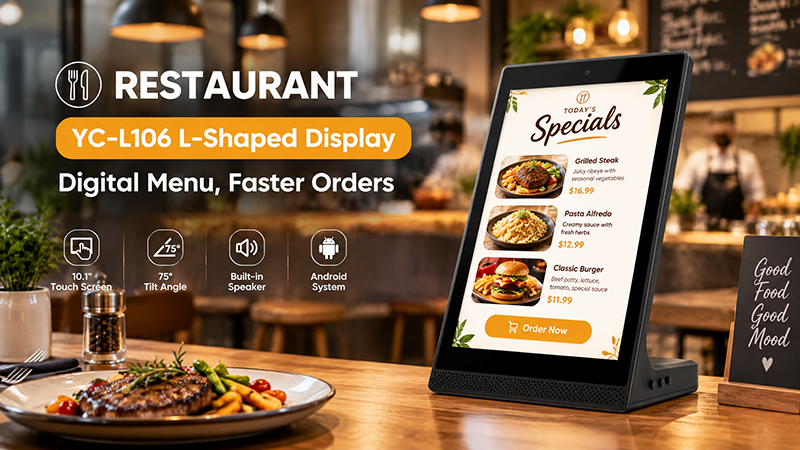
YC-L106 Restaurant Banner
Should You Choose OEM or ODM for Your Digital Signage Project?
Both OEM and ODM provide avenues for developing digital signage products without the need to establish a complete manufacturing operation internally. The primary distinction lies in the initial phase and the manufacturer’s involvement in shaping the product.
OEM is typically appropriate when the design and specifications are already defined, with a focus on manufacturing according to agreed-upon customizations. Conversely, ODM is often more suitable when the product concept requires translation into a functional hardware and software design.
In numerous commercial display projects, the decision is not strictly binary. A business may utilize ODM to create and validate a product, subsequently establishing a repeat production agreement once the specifications are confirmed.
Portworld offers digital signage products, embedded motherboard solutions, Android customization, and OEM/ODM services for commercial hardware initiatives. By clearly defining your application, technical specifications, and production objectives at the outset, you can collaborate with the manufacturer to determine a development strategy that aligns with your project.