CE vs FCC vs RoHS: What Do They Mean for Digital Signage Displays?
When procuring digital signage displays, interactive touch panels, or industrial monitors for international commercial initiatives, evaluating hardware specifications represents merely one component of the procurement process. Equally significant—and frequently essential to project viability and operational compliance—are regulatory certification marks: CE, FCC, and RoHS.
For system integrators, solution providers, and B2B purchasers, these certifications transcend simple markings affixed to product housings or circuit boards. They constitute essential indicators of safety, electromagnetic compatibility, and environmental stewardship that establish whether your hardware can lawfully navigate customs procedures and function across prominent international markets.
The following analysis examines the substantive meaning of CE, FCC, and RoHS certifications, their distinguishing characteristics, and their fundamental importance when selecting commercial digital signage hardware specifications.
1. CE Marking: The Entrance to European Market Access
What Does CE Represent?
The CE mark (Conformité Européenne) constitutes a compulsory conformity designation for products distributed throughout the European Economic Area (EEA). It demonstrates that a manufacturer has conducted a comprehensive assessment of the product and confirmed its compliance with European Union safety, health, and environmental safeguarding standards.
Implications for Digital Signage Displays
For electronic hardware devices such as Android wall-mounted signage displays or interactive kiosks, CE compliance necessitates adherence to multiple foundational European Directives, including:
Electromagnetic Compatibility Directive (2014/30/EU): Establishes requirements that the display unit does not generate excessive electromagnetic disturbance and maintains resilience against external radio frequency and power supply interference.
Low Voltage Directive (LVD) (2014/35/EU): Provides assurance of electrical safety for devices functioning within voltage ranges of 50 to 1,000 VAC or 75 to 1,500 VDC, safeguarding end-users from electrical hazards, thermal risks, and fire hazards during continuous 24/7 commercial operations.
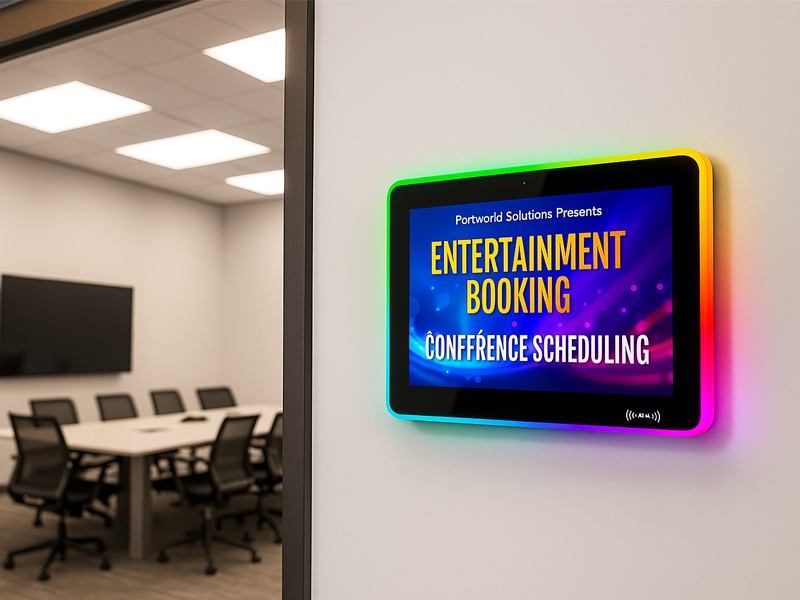
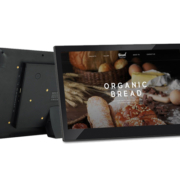
YC-LE156
15.6″ Meeting Room Display Panels
2. FCC Certification: Electromagnetic Compatibility Standards in North America
Understanding the FCC Mark
The FCC mark is granted by the Federal Communications Commission within the United States. It validates that electromagnetic interference (EMI) produced by an electronic device remains within federally established acceptable thresholds.
Implications for Digital Signage Displays
Commercial digital signage screens incorporate high-frequency processing units (including Rockchip SoCs), high-resolution LCD technology, Wi-Fi connectivity, Bluetooth functionality, and Ethernet interfaces—each contributing to unintentional radio frequency (RF) emissions.
Pursuant to FCC Part 15 regulations, commercial signage displays are typically categorized as Class A (designated for commercial, industrial, or business settings) or Class B (designated for residential environments or public access areas):
Interference Mitigation: FCC certification guarantees that your display will not interfere with adjacent commercial wireless infrastructure, mobile communication networks, broadcast transmission systems, or essential services infrastructure (such as facilities in aviation or healthcare sectors).
Wireless Module Compliance: When the digital signage player incorporates embedded Wi-Fi or Bluetooth transmitters, these active transmission components must satisfy intentional radiator requirements to guarantee dependable and compliant wireless operations.
3. RoHS Compliance: Eliminating Hazardous Substances
What Is RoHS?
RoHS is an acronym for Restriction of Hazardous Substances. Established as a European Union directive (Directive 2002/95/EC, subsequently amended to RoHS 3 / Directive 2015/863), it establishes limitations on the incorporation of particular hazardous materials within electrical and electronic equipment (EEE).
What It Means for Digital Signage Displays
In contrast to CE and FCC certifications, which emphasize operational safety and electromagnetic compatibility, RoHS prioritizes material composition and environmental stewardship across the entire product lifecycle, including end-of-life disposal.
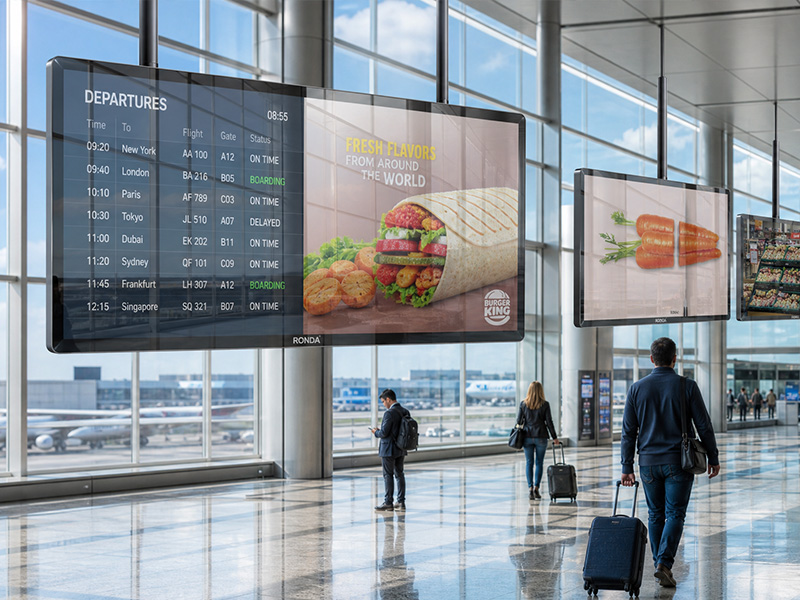
Advertising Digital Signage
A RoHS-compliant display rigorously manages or removes critical toxic substances, encompassing:
Lead (Pb) (conventionally employed in printed circuit board soldering)
Mercury (Hg) (present in conventional backlighting systems)
Cadmium (Cd)
Hexavalent Chromium (Cr VI)
PBBs & PBDEs (flame-retardant compounds incorporated in polymeric materials)
For system integrators, the selection of RoHS-compliant digital signage solutions guarantees that interior air quality remains unaffected by volatile organic compound emissions and that equipment can be responsibly recycled upon completion of its operational lifespan in compliance with international WEEE (Waste Electrical and Electronic Equipment) directives.
Quick Comparison Guide: CE vs FCC vs RoHS
| Feature | CE | FCC | RoHS |
| Primary Region | European Economic Area (EEA) | United States / North America | Worldwide (Originated in EU) |
| Core Focus | Health, Safety, Electrical & EMC | Electromagnetic Interference (EMI/RF) | Hazardous Material Restriction |
| Mandatory? | Yes (for EU sales) | Yes (for US sales) | Yes (for EU & major global markets) |
| Key Concern | Consumer safety & signal stability | Preventing radio/wireless disruption | Environmental safety & eco-recycling |
Why Certification Compliance Matters for Your Projects
Deploying uncertified or non-compliant digital signage hardware presents substantial risks for system integrators, distributors, and facility managers:
Customs Seizures and Logistics Delays: Uncertified commercial hardware is routinely detained or rejected at customs checkpoints throughout North America and Europe, resulting in expensive project postponements.
Legal Liability and Fines: Utilizing non-FCC or non-CE compliant electronics in public or government facilities may lead to regulatory penalties, mandatory product recalls, or invalidated commercial insurance coverage.
Hardware Instability: Products lacking EMC testing are susceptible to display flickering, wireless connectivity interruptions, or sudden system restarts caused by electromagnetic interference in industrial settings.
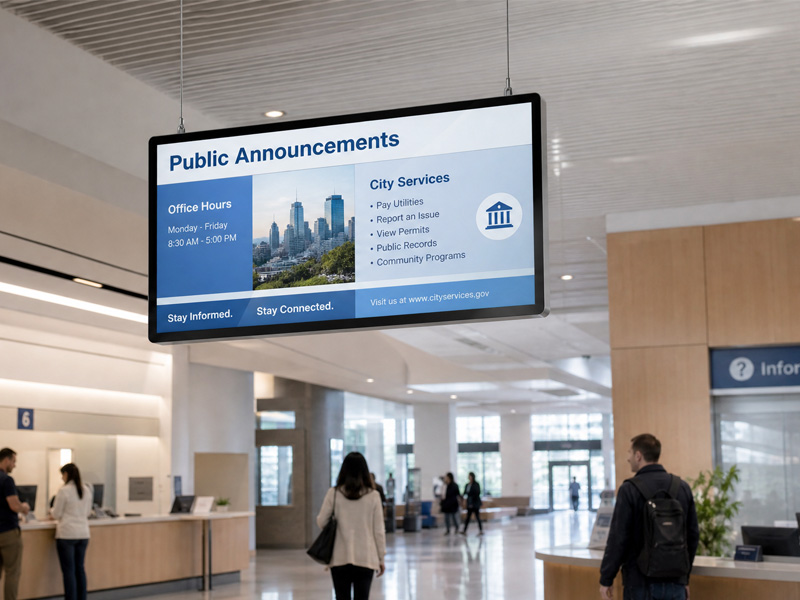
Stretch Bar Monitor
Manufacturing Hardware Built to Global Standards
At Portworld (Sunworld) Technology Limited, we recognize that international deployment demands rigorous compliance adherence and hardware dependability. Drawing upon nearly two decades of specialized research, development, and manufacturing expertise in commercial touch displays, industrial motherboards (utilizing Rockchip ARM processors), and digital signage solutions, our comprehensive product range—encompassing stretched display panels through robust wall-mount systems—is constructed to rigorously conform to international CE, FCC, and RoHS compliance requirements.
Whether you are implementing interactive kiosks in North American retail establishments or distributed signage systems across European transportation facilities, Portworld delivers comprehensive OEM/ODM hardware customization accompanied by full certification documentation.
Preparing a worldwide digital signage implementation? Reach out to the Portworld engineering team today to examine our technical compliance documentation and explore customized hardware solutions for your upcoming project.