How Yocto Linux Supports Custom Digital Signage Displays
As digital signage deployment expands across retail, transportation, healthcare, hospitality, and industrial sectors, organizations are seeking display solutions that extend beyond conventional media playback capabilities. Commercial implementations frequently demand tailored user interfaces, specialized hardware connectivity, centralized device administration, and sustained dependable performance. Under these circumstances, a multipurpose operating system may incorporate superfluous functionality or lack the adaptability necessary for purpose-built applications.
Yocto Linux presents an alternative methodology. Rather than deploying a comprehensive, multipurpose Linux distribution, developers can construct a purpose-built Linux environment aligned with the precise hardware and software specifications of a digital signage initiative. This positions Yocto as a compelling selection for manufacturers, system integrators, and enterprises constructing specialized signage infrastructure.
Why Yocto Linux Demonstrates Suitability for Specialized Digital Signage Solutions
The Yocto Project constitutes an open-source framework enabling developers to engineer customized Linux-based operating systems for embedded applications. It furnishes utilities, component libraries, and compilation infrastructure for determining software components, establishing system parameters, and producing deployable Linux configurations.
For digital signage manufacturers, this adaptability proves exceptionally advantageous. A display serving restaurant menu applications may necessitate solely a content delivery system, network communication, and remote provisioning. An industrial monitoring display, conversely, may demand serial interfacing, GPIO manipulation, measurement device incorporation, or integration with peripheral systems.
Utilizing Yocto Linux, developers can incorporate components essential to the designated function while eliminating extraneous software. The consequent outcome comprises a streamlined system configuration featuring enhanced software governance and diminished operational oversight requirements.
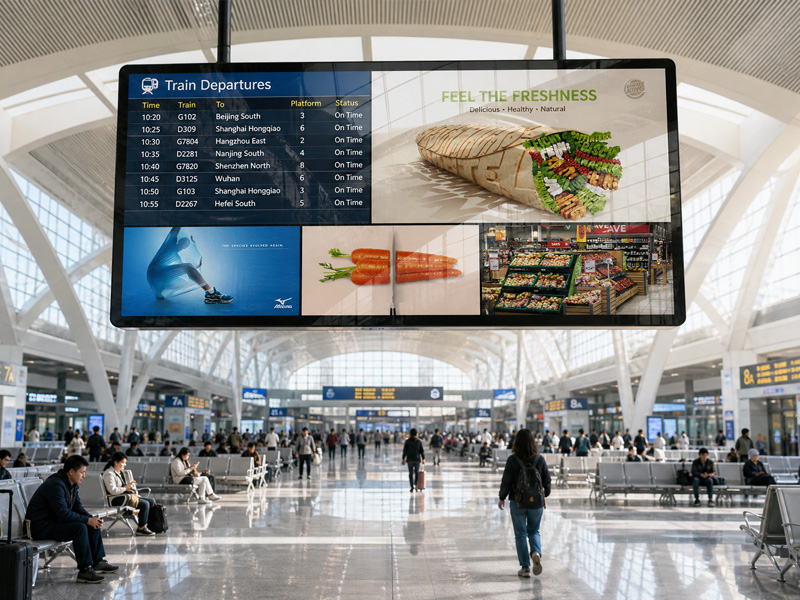
Advertising Digital Signage
Constructing a Linux Operating System Tailored to Hardware Specifications
Customized digital signage displays may incorporate varying screen dimensions, processing units, RAM allocations, touch input mechanisms, and connectivity options. The operating system must function dependably with the designated hardware components.
Yocto facilitates this capability through adaptable build parameters and hardware-specific component libraries. Developers are able to incorporate the Linux kernel, hardware drivers, system-level libraries, applications, and auxiliary services required for a specific hardware platform.
As an illustration, a digital signage solution developed for a Rockchip processor may require compatibility with LCD displays, HDMI connectivity, touch-sensitive input devices, network connections, wireless networking, USB devices, and sound reproduction. The precise setup is contingent upon the processor specifications, hardware layout, kernel compatibility, and accessible manufacturer resources.
When hardware and software development occur concurrently, manufacturers achieve enhanced oversight regarding startup procedures, hardware initialization, program launch sequences, and system performance management. This capability proves advantageous for specialized signage systems designed to proceed directly to their designated function rather than display a multipurpose computing interface.
Developing a Specialized Digital Signage Solution
A primary benefit of Yocto Linux involves the capacity to construct an operating system engineered exclusively for signage purposes.
A purpose-built system image can automatically initiate a media player or custom interface upon system startup. Developers have the ability to eliminate superfluous graphical components, regulate access to configuration options, and deactivate peripheral processes unnecessary for standard functionality.
This methodology proves beneficial for installations positioned in accessible or unmonitored environments, encompassing retail centers, transportation hubs, medical facilities, lodging establishments, and manufacturing environments. System administrators can maintain uniform presentation standards throughout multiple devices while minimizing possibilities for end users to unintentionally terminate the signage application or modify system parameters.
The software application layer may additionally be adapted to facilitate various content-management
Enhancing Dependability for Continuous Operation
Digital signage displays are routinely required to function continuously throughout extended periods, frequently without immediate access to technical personnel. Operational continuity, reliable initialization processes, and system restoration capabilities represent critical architectural considerations.
Yocto enables developers to determine which services initialize upon startup, establish system logging configurations, handle software component relationships, and incorporate application surveillance or restoration protocols. Based on specific hardware specifications and organizational objectives, a tailored system image may incorporate watchdog functionality, read-only root filesystem configurations, and systematic update management.
These functionalities can contribute to minimizing unplanned system modifications and streamlining maintenance procedures. Nevertheless, dependable continuous operation extends beyond the operating system itself. It encompasses thermal management, electrical stability, data storage durability, component quality, software validation, and the organization’s quality assurance protocols.
For extensive signage infrastructures, these considerations prove particularly valuable because marginal enhancements in device performance can substantially decrease maintenance expenditures across numerous displays.
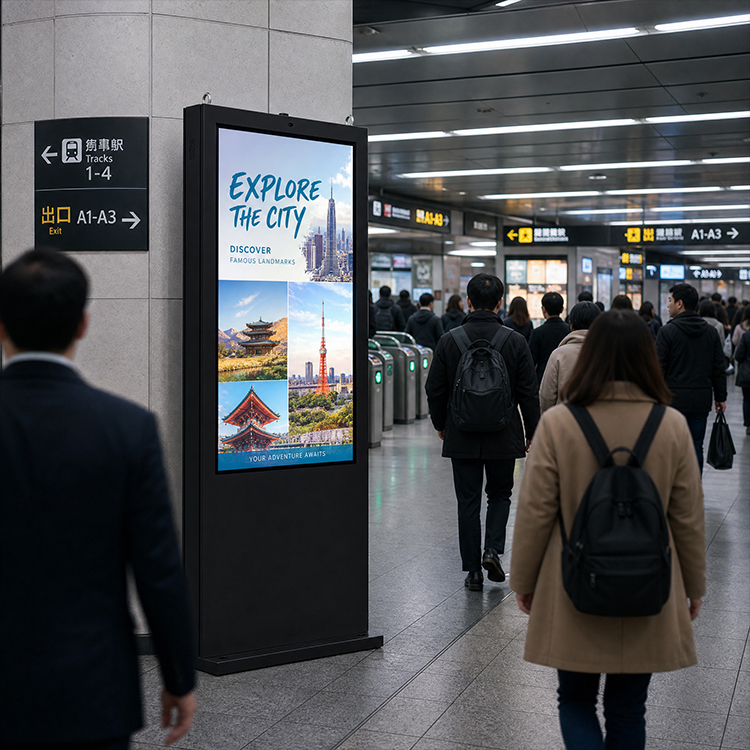
YC-5520FL-IP Floor Standing Digital Signage
Facilitating Distributed Administration and Software Deployment
Administering digital signage equipment dispersed across various facilities presents operational difficulties when each modification necessitates physical site visits. A Yocto-based infrastructure can be engineered to facilitate distributed management, application distribution, parameter modifications, and system-level updates.
Developers can incorporate the transmission standards and administrative utilities mandated by their designated content distribution framework or infrastructure management solution. Contingent upon the architectural approach, the infrastructure may facilitate remote system assessment, information retrieval, network parameter configuration, and programmed update deployment.
In operational environments, update integrity warrants significant consideration. Authenticated software distributions, validated update packages, encrypted data transmission, restoration alternatives, and system recovery protocols can strengthen device protection against update complications.
Incorporating Touchscreens, Sensors, and Industrial Interfaces
Contemporary digital signage systems frequently engage with audiences through multiple interactive channels beyond passive viewing. Touchscreens, proximity sensors, cameras, NFC readers, barcode scanners, and comparable peripherals can convert a display into an interactive terminal or data collection mechanism.
Yocto can be configured with the necessary Linux drivers, libraries, and application components to facilitate communication with compatible peripherals. Depending on the specific board architecture, a custom display may additionally incorporate UART, RS232, RS485, GPIO, USB, or Ethernet interfaces to enable connections with external controllers and industrial equipment.
Consider a touchscreen information terminal deployed in a hospital setting. The display may deliver navigation information, process user input, interface with a backend service, and obtain remote software updates. In a manufacturing environment, an equivalent device may exhibit production data while facilitating information exchange with external controllers.
The critical factor is to confirm driver availability and hardware compatibility at the initial stages of development. Certain peripherals necessitate proprietary vendor components, specialized kernel modifications, or substantial integration work.
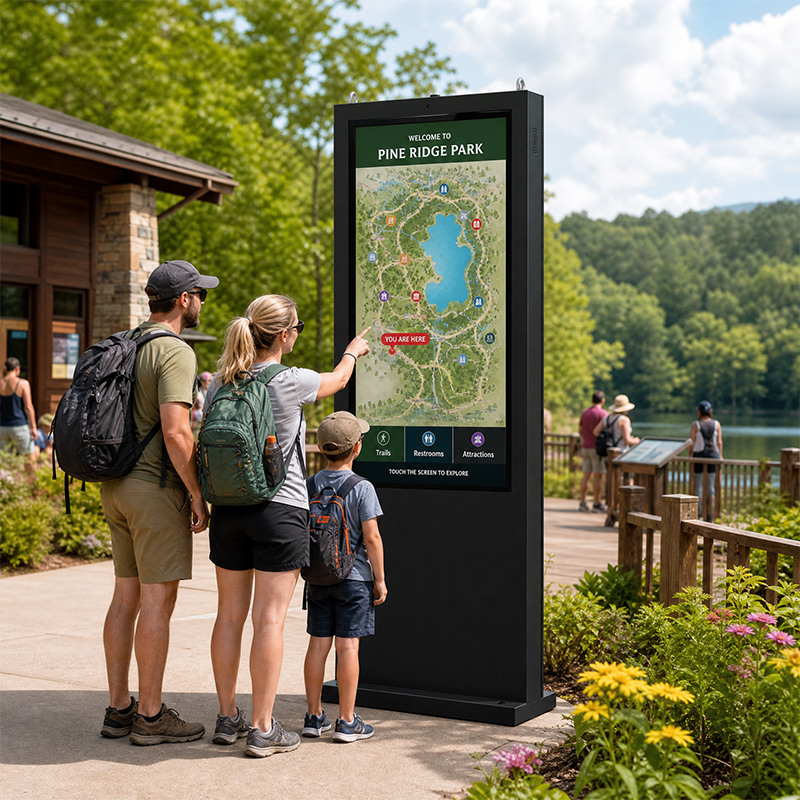
yc-5520 outdoor floor stand digital kiosk
Yocto Linux and Android: Determining the Appropriate Platform
Yocto Linux and Android represent viable options for embedded digital signage applications, yet they address distinct development requirements.
Android presents a viable alternative when a project requires Android applications, established kiosk solutions, or an existing Android-based content management infrastructure. It may reduce development timelines when the necessary applications and hardware support are already accessible.
Yocto Linux demonstrates particular value when developers require comprehensive control over the operating system image, initialization process, package configuration, system services, and extended software management. It represents an optimal solution for specialized products featuring particular hardware interfaces or distinctive application requirements.
The determination depends on considerations beyond the operating system designation. Graphics acceleration, video decoding, touchscreen support, and security
Portworld facilitates the development of customized digital signage solutions by offering digital signage hardware and comprehensive OEM/ODM customization services for enterprises creating commercial display products. Depending on project specifications, hardware platforms can be assessed utilizing Rockchip processors including RK3566, RK3568, RK3576, and RK3588, with the ultimate selection determined by computational requirements, multimedia capabilities, interface options, and software interoperability.
For a Yocto-based signage initiative, the development methodology should commence with comprehensive hardware and software specifications. This encompasses display resolution, requisite video formats, touchscreen controller specifications, networking configurations, external interface requirements, application framework selection, remote management capabilities, and anticipated operational conditions.
The subsequent phase involves verifying that the designated hardware platform possesses adequate Linux kernel support, appropriate device drivers, graphics and multimedia infrastructure, and a sustainable Yocto build framework. Following successful system initialization, developers can incorporate the signage application, establish automated startup procedures, deploy device management systems, and conduct extended operational validation.
Portworld’s OEM/ODM methodology enables clients to harmonize display hardware and embedded software specifications for applications including retail advertising, industrial information systems, transportation hub displays, and interactive kiosks. The accessibility of Yocto support and specialized drivers must be validated for the selected processor and board configuration during the project assessment phase.
Yocto Linux enables digital signage developers to construct a specialized operating system customized to specific requirements rather than depending on standardized software distributions. Through management of system architecture, incorporation of hardware-specific drivers, development of a customized user interface, and establishment of secure remote update mechanisms, manufacturers can engineer signage platforms precisely aligned with their application objectives.