How Can Hospitals Use Digital Signage Displays for Patient Information?
How Can Hospitals Leverage Digital Signage Displays for Patient Communication?
Healthcare institutions require dependable mechanisms to communicate with patients, visitors, and medical personnel. Conventional posters and printed materials present significant challenges in terms of timely updates and cannot facilitate real-time information dissemination.
Digital signage display systems designed for hospital patient communication represent an advanced communication approach by enabling instantaneous updates, enhancing the patient experience, and facilitating the establishment of a more streamlined healthcare operational environment.
Across multiple locations including reception areas, waiting rooms, patient rooms, and corridors, digital signage infrastructure assists hospitals in delivering precise, user-friendly, and current information.
The Necessity for Digital Signage Displays in Healthcare Facilities
Medical environments demand precise and expedited communication.
Conventional information dissemination approaches present the following constraints:
- Information modifications necessitate physical replacement
- Critical announcements may go unnoticed
- Restricted patient engagement capabilities
- Challenging coordination of information across various hospital departments
Digital signage facilitates hospitals to:
- Modify information in real-time
- Communicate urgent announcements instantaneously
- Enhance patient navigation and guidance
- Minimize administrative personnel responsibilities
Primary Uses of Digital Signage Systems in Healthcare Settings
1. Patient Communication and Queue Administration
Digital signage systems can substantially enhance the patient waiting experience.
Key implementations encompass:
- Queue identification numbers
- Physician availability status
- Scheduled appointment information
- Departmental details
- Current waiting duration notifications
Patients can readily ascertain their current position without necessitating repeated inquiries to hospital personnel.
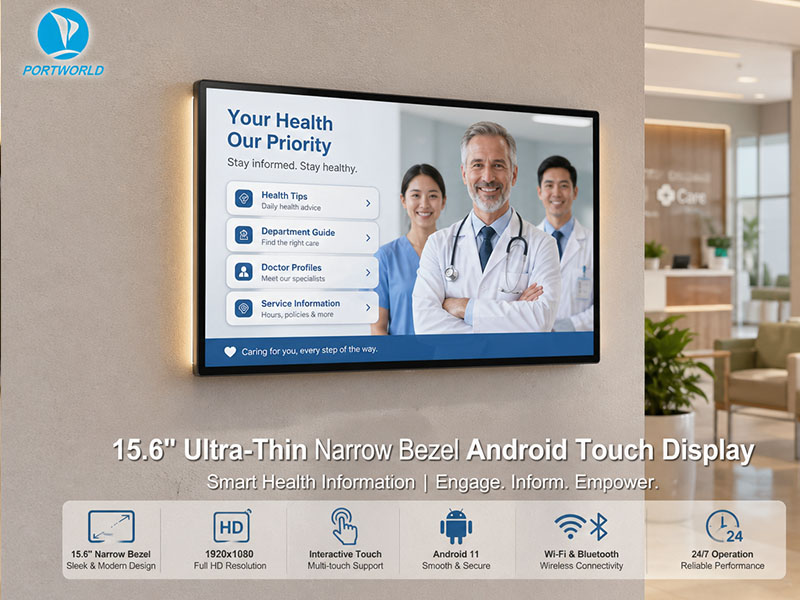
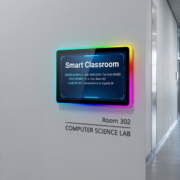
Wall-Mounted Digital Signage
2. Hospital Navigation and Directional Assistance
Comprehensive medical facilities present navigation difficulties for patients and guests.
Interactive digital display terminals can furnish:
- Departmental location information
- Facility floor schematics
- Directions to medical offices
- Pharmaceutical department locations
- Parking facility information
This functionality enables patients and visitors to efficiently locate their intended destinations.
3. Health Education and Medical Information
Hospitals can leverage digital signage to disseminate valuable healthcare content.
Examples:
- Health recommendations
- Illness prevention guidance
- Therapeutic procedure explanation
- Patient instructional videos
- Visual media facilitates improved patient comprehension of medical subject matter.
4. Emergency Announcements and Safety Communication
Digital signage serves as an efficient communication mechanism during crisis situations.
Hospitals can present:
- Emergency protocols
- Safety alerts
- Evacuation procedures
- Temporary service modifications
- Immediate information updates enhance hospital safety protocols and operational response effectiveness.
5. Digital Signage in Patient Rooms
Advanced hospital rooms can incorporate digital display systems to enhance patient care delivery.
Capabilities include:
- Nursing assistance notifications
- Hospital amenity options
- Dietary selection systems
- Recreational programming
- Clinical education materials
Interactive bedside display terminals can elevate patient satisfaction and operational convenience.
Essential Capabilities for Hospital Digital Signage Displays
Robust Reliability for Continuous 24/7 Functionality
Hospitals maintain uninterrupted operations, necessitating displays equipped with:
- Enterprise-level components
- Dependable hardware infrastructure
- Extended operational lifespan
- Consistent power supply management
Interactive Touchscreen Functionality
Interactive display systems enable patients and visitors to retrieve information conveniently.
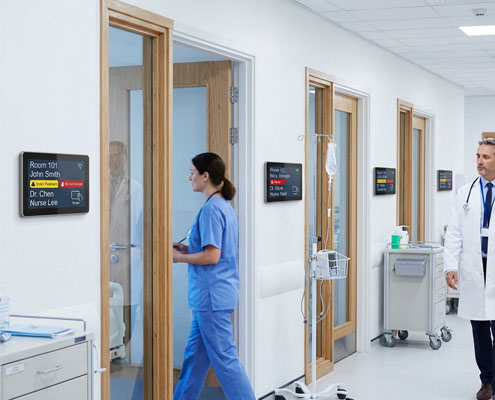
Primary touch interface technologies:
- Capacitive touch sensing
- Infrared touch detection
Key use cases:
- Automated patient check-in processes
- Wayfinding and navigation assistance
- Patient information access points
Centralized Remote Content Administration
Hospital management personnel can oversee displays via a unified content management system.
Core administrative capabilities include:
- Centralized content distribution and updates
- Departmental notification broadcasting
- Automated information scheduling and playback
- Real-time system performance monitoring
Display deployment across multiple facility zones:
- Emergency treatment departments
- Patient waiting areas
- Clinical treatment facilities
- Main hospital access points
Networking and Healthcare System Integration
Contemporary hospital display systems facilitate connectivity with healthcare infrastructure via:
- Wired Ethernet connections
- Wireless WiFi networks
- Mobile 4G/5G connectivity
Available integration capabilities:
- Hospital information system (HIS) connectivity
- Patient queue and flow management systems
- Internet of Things (IoT) platform integration
- Security and access control system integration
Embedded Computing Solutions for Healthcare Display Systems
Medical facilities necessitate robust and dependable embedded computing architectures.
Prevalent processor options encompass:
- Rockchip RK3566
- RK3568
- RK3576
- RK3588
These platforms facilitate:
- Android-based applications
- Linux-based operating systems
- Ultra-high-definition multimedia capabilities
- Artificial intelligence-driven applications
Available Operating System Platforms
Android Operating System
Optimal applications include:
- Interactive patient engagement terminals
- Informational display kiosks
- Touch-enabled interfaces
Key benefits:
- Streamlined application development processes
- Comprehensive software development ecosystem
Linux Distributions (Debian/Ubuntu)
Optimal applications include:
- Specialized healthcare system configurations
- Extended-duration industrial-grade implementations
Yocto Linux Framework
- Optimal applications include:
- Specialized medical device terminals
- Fortified proprietary computing environments
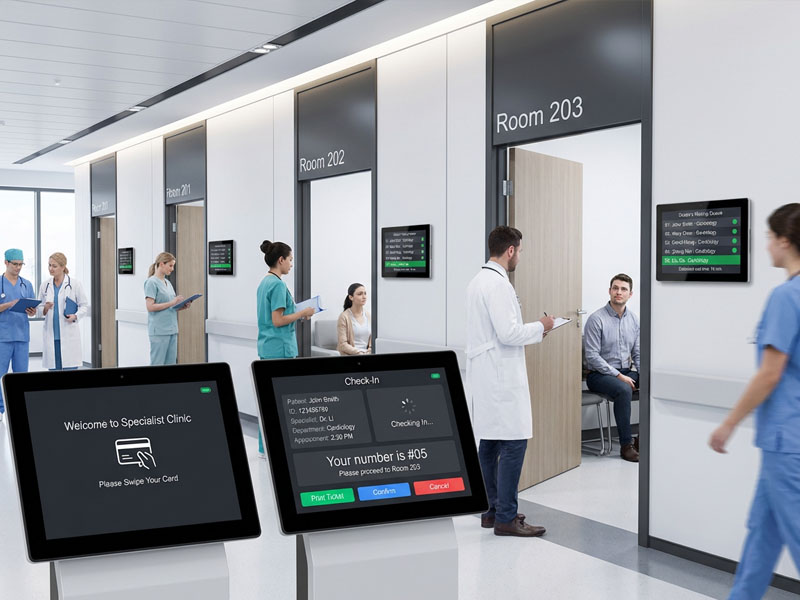
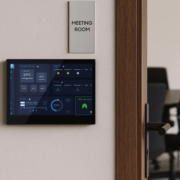
poe smart control panel
Portworld Hospital Digital Signage Solutions
Portworld delivers tailored digital signage solutions engineered specifically for healthcare facility environments.
Key Capabilities:
- Support for Android, Linux, and Debian operating systems
- Compatibility with RK3566, RK3568, RK3576, and RK3588 processor platforms
- Adaptable touchscreen display configurations
- Ethernet and WiFi network connectivity options
- Centralized remote content management system
- Integrated camera, NFC, and RFID functionality
- Proprietary motherboard engineering and design
- Comprehensive OEM and ODM manufacturing services
Primary Use Cases:
- Patient information presentation systems
- Hospital navigation and wayfinding kiosks
- Queue and patient flow management solutions
- Intelligent bedside patient terminals
- Medical service and information terminals
Original Equipment Manufacturer and Original Design Manufacturer Customization Solutions for Healthcare Initiatives
Portworld delivers comprehensive customization capabilities:
Hardware Customization
- Bespoke display dimensions
- Integrated touch panel solutions
- Specialized enclosure engineering
- Integrated camera and sensor modules
- Proprietary PCBA design and development
Software Customization
- Android and Linux firmware solutions
- User interface personalization
- Healthcare facility system integration
- Custom application development
Manufacturing Support
- Prototype engineering and fabrication
- Large-scale production capabilities
- Completely Knocked Down and Semi-Knocked Down assembly options
- Worldwide logistics and distribution
Digital signage display systems enable healthcare facilities to enhance patient communication effectiveness, minimize patient confusion regarding wait times, and establish a more streamlined healthcare operational environment.
Through the integration of touchscreen functionality, instantaneous data dissemination, and enterprise system connectivity, hospital-grade digital signage systems offer an advanced solution for communicating patient information and elevating comprehensive service delivery standards.