Android vs Linux Industrial Touch Screen Monitors: Which Is Better?
As industrial automation, smart factories, and IoT applications progress, industrial touch screen monitors are increasingly serving as a vital interface among operators, machines, and intelligent systems. When choosing an embedded touch display solution, one of the most prevalent decisions involves selecting between Android and Linux operating systems.
Both Android and Linux industrial touch screen monitors offer distinct advantages. The optimal choice is contingent upon the specific application requirements, development needs, security expectations, and long-term system strategy.
Android Industrial Touch Screen Monitors: Versatile and Simple to Develop
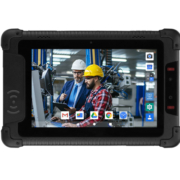
Android has gained significant traction in industrial applications due to its user-friendly interface, robust ecosystem, and rapid application development capabilities.
An Android industrial touch screen monitor is particularly well-suited for applications that necessitate an interactive user experience.
Advantages of Android Industrial Displays
1. Rapid Application Development
Android boasts a well-established software ecosystem replete with numerous tools and development resources. Developers can swiftly create applications for:
- Smart kiosks
- Digital signage
- Self-service terminals
- Touch control panels
2. Intuitive User Interface
Given that Android is extensively utilized in smartphones and tablets, operators can easily acclimate to Android-based industrial systems.
This makes it particularly advantageous for:
- Customer-facing terminals
- Commercial displays
- Interactive information systems
3. Extensive Hardware Compatibility
Numerous Android industrial touch screen devices are compatible with:
WiFi
Bluetooth
USB
Ethernet
RS232/RS485
GPIO
This compatibility facilitates the integration of various industrial peripherals and IoT devices.
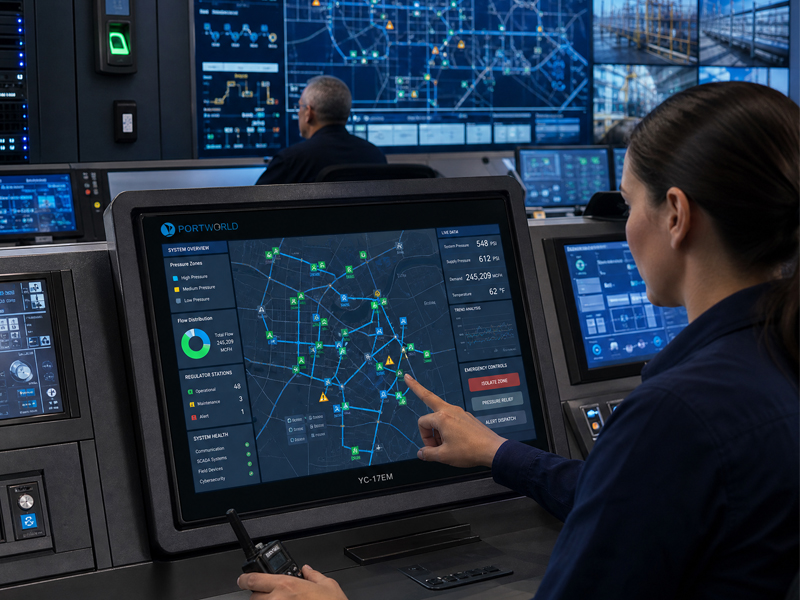
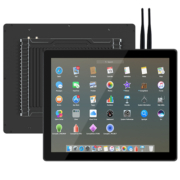
YC-17EM 17″ Industrial Embedded Touch Monitor
Linux Industrial Touch Screen Monitors: Reliability and Customization
Linux is extensively utilized in industrial control systems where reliability, security, and extensive customization are essential.
A Linux industrial touch screen monitor is frequently employed in professional embedded applications that necessitate long-term operation.
Benefits of Linux Industrial Displays
1. Exceptional System Stability
Linux is recognized for its dependability and capacity to operate continuously for prolonged durations, making it ideal for:
- Factory automation
- Industrial control systems
- Embedded devices
2. Robust Customization Potential
Linux enables developers to tailor the operating system to meet specific project needs, including:
- Kernel modification
- Driver development
- System optimization
- Security configuration
This flexibility is advantageous for companies creating specialized industrial equipment.
3. Enhanced Resource Management
Linux systems can be fine-tuned for particular hardware platforms, ensuring efficient performance for embedded applications with constrained resources.
Android vs Linux Industrial Touch Screen Monitors Comparison
| Feature | Android Industrial Touch Screen | Linux Industrial Touch Screen |
|---|---|---|
| User Experience | ⭐⭐⭐⭐⭐ Easy and familiar | ⭐⭐⭐⭐ Requires customization |
| Application Development | Faster | More flexible for professional development |
| Customization | Medium to high | Very high |
| Industrial Stability | Excellent | Excellent |
| Security Control | Good | Strong |
| IoT Integration | Excellent | Excellent |
| Best For | Kiosks, displays, HMI | Automation, embedded systems |
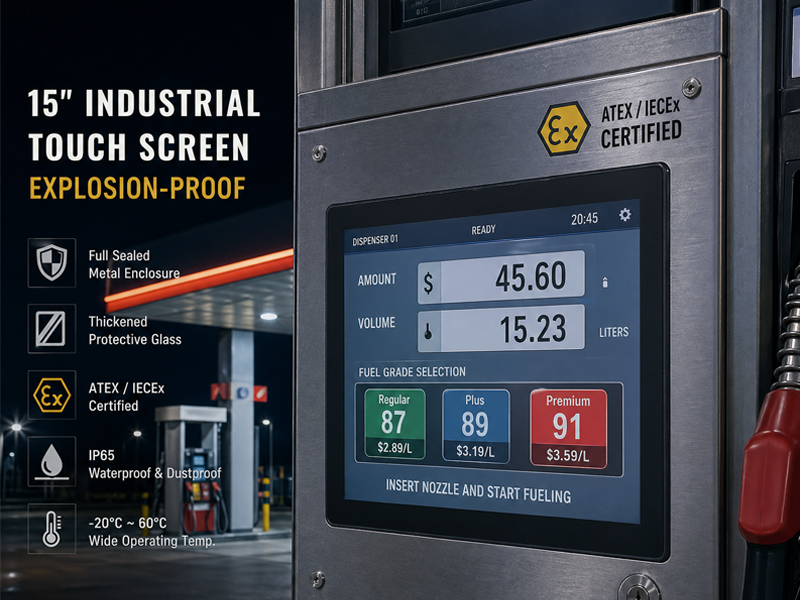
15em-Embedded Touch Screen Monitor
Which Operating System Is Superior for Industrial Applications?
There is no definitive answer. The optimal selection is contingent upon your project objectives.
Select Android If You Require:
- Rapid product development
- User-friendly applications
- Multimedia capabilities
- Digital signage functionality
- Commercial interactive terminals
Illustrations:
- Smart retail kiosks
- Hotel information displays
- Meeting room control panels
- Public service terminals
Select Linux If You Require:
- Maximum customization
- Stringent security standards
- Long-term industrial deployment
- Comprehensive hardware integration
Illustrations:
- Factory automation
- Industrial controllers
- Edge computing devices
- Machine control systems
Can Industrial Touch Screen Monitors Accommodate Both?
Numerous contemporary industrial touch screen solutions are compatible with multiple operating systems, enabling clients to choose between Android or Linux according to their project specifications.
For OEM/ODM projects, manufacturers can offer:
- Android/Linux customization
- Hardware optimization
- Driver development
- Interface expansion
- Application integration
This adaptability assists businesses in developing industrial systems that align with their unique workflows.
10.4″ Embedded Touch Screen Panel
Portworld Industrial Touch Screen Solutions
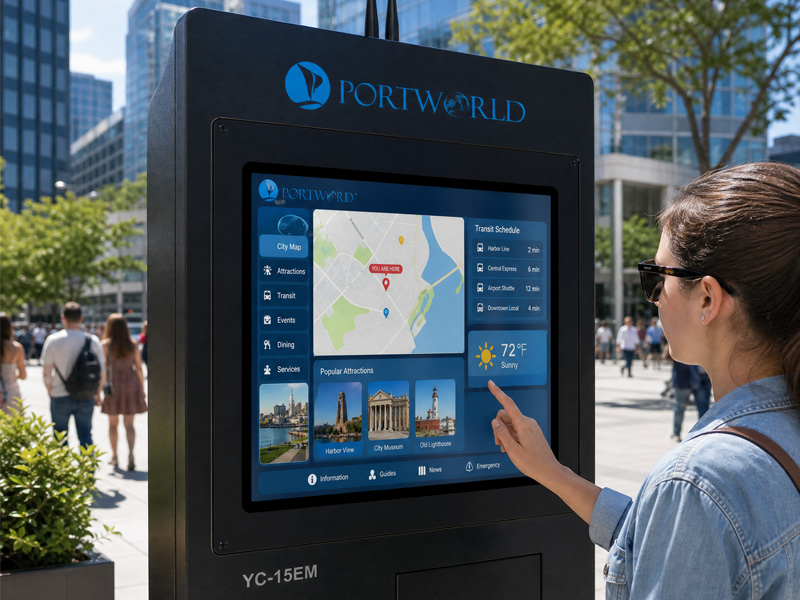
Portworld delivers tailored Android and Linux industrial touch screen monitors, embedded panel PCs, and industrial computing solutions for applications such as smart factories, automation systems, IoT devices, digital signage, and intelligent terminals.
With support for various processors, screen dimensions, interfaces, and operating systems, Portworld aids clients in constructing dependable embedded touch solutions for diverse industrial settings.
Both Android and Linux industrial touch screen monitors possess significant advantages.
Android is preferable for applications emphasizing user interaction, rapid development, and multimedia capabilities. Conversely, Linux is more appropriate for industrial systems that necessitate extensive customization, security, and long-term reliability.