Wall-Mounted Smart Control Panel: A Complete Guide
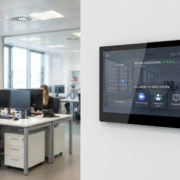
As smart homes and intelligent buildings continue to evolve rapidly, traditional wall switches are increasingly being supplanted by more sophisticated control interfaces. A wall-mounted smart control panel integrates touchscreen functionality, embedded computing, and various communication technologies to offer centralized management for lighting, HVAC, curtains, security systems, and other smart devices.
In comparison to mobile applications or conventional switches, wall-mounted smart panels serve as a more convenient and permanent control solution, leading to their widespread adoption in residences, hotels, offices, and commercial establishments.
What Is a Wall-Mounted Smart Control Panel?
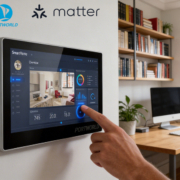
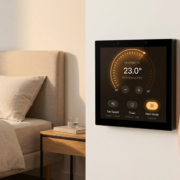
A wall-mounted smart control panel is a touchscreen device that is embedded and installed directly onto the wall. It functions as a local control interface that connects users with automation systems.
Unlike standard switches, smart panels are capable of displaying real-time data and managing multiple systems through a single interface.
Common functionalities include:
- Lighting control
- Temperature adjustment
- Curtain and blind management
- Smart lock administration
- Security surveillance
- Energy management
- Scene automation
Typically, the panel comprises:
- Touchscreen display
- Embedded processor
- Operating system
- Communication modules
- Control software
- Wall installation framework
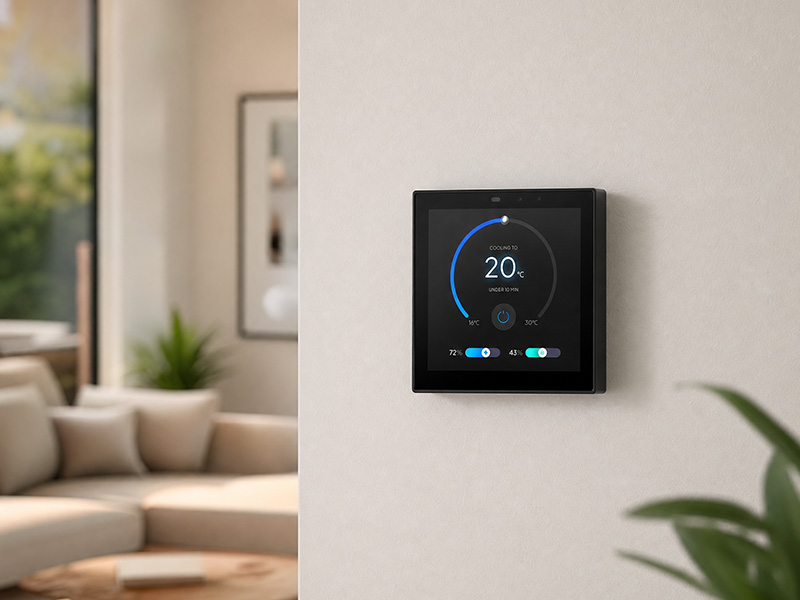
smart home control panel
How Does a Wall-Mounted Smart Panel Function?
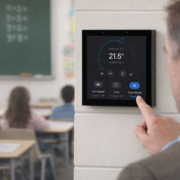
A smart control panel interprets user commands via the touchscreen and interacts with connected devices using various communication protocols.
The fundamental process is as follows:
Touch Input → Embedded Processor → Communication Protocol → Smart Device Response
For instance, when a user activates the “Meeting Mode”:
- The touchscreen recognizes the command.
- The processor executes the automation application.
- The panel transmits commands through WiFi, Ethernet, RS485, Zigbee, or KNX.
- Connected devices respond accordingly.
This integration enables multiple systems to operate cohesively as a unified intelligent environment.
Key Features to Evaluate When Selecting a Smart Wall Panel
1. Touchscreen Size and Display Quality
The display serves as the primary interface for interaction.
Common sizes are as follows:
Ideal for:
- Replacing wall switches
- Controlling bedrooms
- Automating hotel rooms
- Performing basic smart home functions
8-inch to 10.1-inch Smart Panels
Ideal for:
- Centralized home control
- Meeting rooms
- Hotels
- Commercial buildings
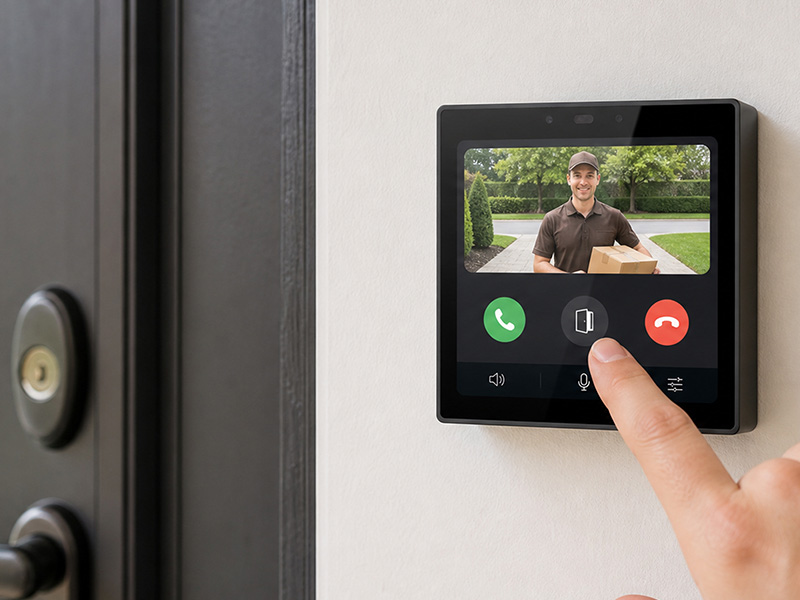
4″ Smart Control Panel
Crucial display specifications to consider include:
- IPS panel technology
- Capacitive touch
- Multi-touch capability
- Brightness level
- Resolution
2. Processor Performance
The processor plays a crucial role in the smooth operation of the panel.
Various applications necessitate different levels of computing power:
IoT HMI Applications
- ESP32-S3
- Low-power embedded processors
Smart Home and Commercial Control
- Rockchip RK3566
- RK3568
- Advanced Smart Terminals
- RK3588
A robust processor enables:
- Quicker UI response
- More sophisticated applications
- Enhanced graphics
- Local data processing
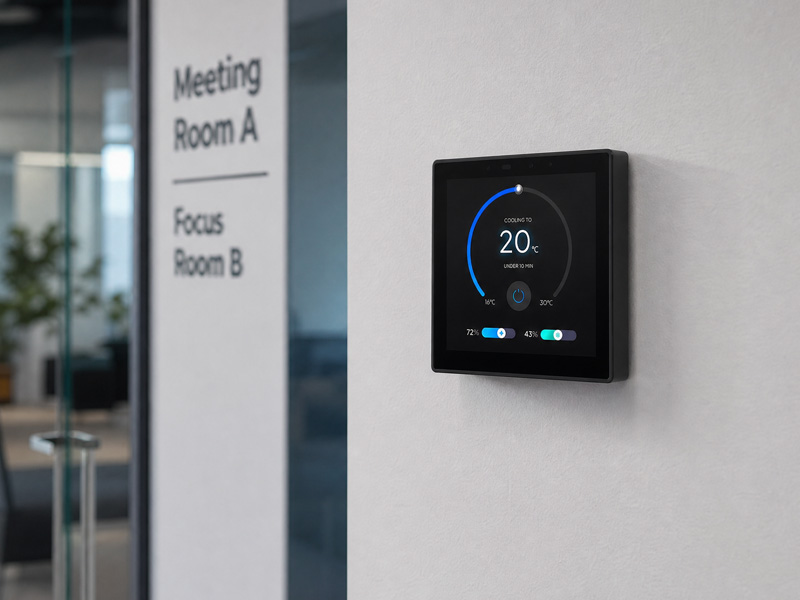
smart home control panel
3. Operating System Selection
The choice of operating system influences customization and application development.
Android Smart Control Panels
Android is ideal for:
- Feature-rich applications
- Mobile-style interfaces
- Cloud platforms
- Multimedia capabilities
It is widely utilized in:
- Smart home tablets
- Hotel room panels
- Interactive terminals
Linux Smart Control Panels
Linux is favored for:
- Industrial applications
- Building automation
- Long-term commercial projects
Benefits include:
- Extensive hardware customization
- Reliable operation
- Reduced system overhead
- Compatibility with Qt/QML and embedded frameworks
4. Communication Options
A professional smart wall panel should incorporate appropriate communication methods.
Common options consist of:
WiFi
Utilized for:
- Cloud connectivity
- Remote management
- Smart home platforms
Bluetooth
Utilized for:
- Device pairing
- Local configuration
Zigbee / Thread
Ideal for:
- Smart lighting
- Sensors
- IoT ecosystems
Ethernet and PoE
Employed in professional projects as a single cable can provide:
- Network communication
- Power supply
- RS485 / KNX
Frequently found in:
- Hotels
- Luxury villas
- Commercial buildings
5. Wall Installation Compatibility
The compatibility of installation is crucial for global projects.
A well-engineered smart panel should accommodate various mounting standards, including:
- UK 86-type wall boxes
- EU wall boxes
- US wall boxes
Multi-standard compatibility aids in minimizing installation modifications and reduces labor expenses for contractors.
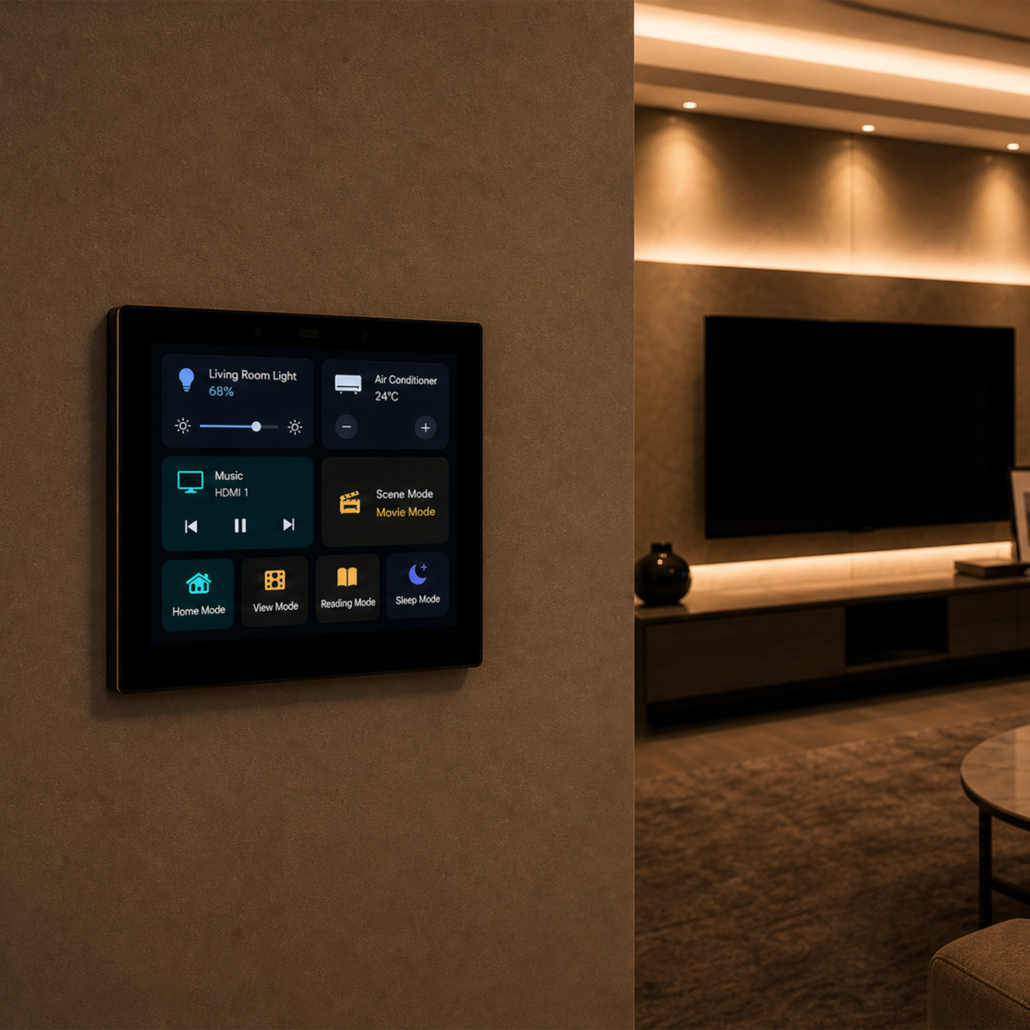
YC-SM43P ESP32 4″ Smart Touch Panel
Applications of Wall-Mounted Smart Control Panels
Smart Homes
Smart panels are capable of controlling:
- Lighting scenes
- Air conditioning
- Curtains
- Security systems
- Energy monitoring
A single touchscreen can effectively replace numerous traditional switches.
Hotels
Hotels utilize wall-mounted smart panels for:
- Guest room automation
- Lighting control
- Temperature regulation
- Service requests
- Customized welcome interfaces
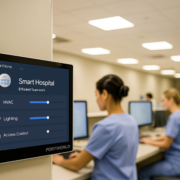
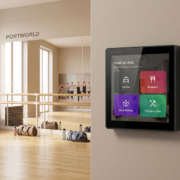
- Offices and Commercial Buildings
Smart panels facilitate the management of:
- Meeting rooms
- HVAC systems
- Lighting automation
- Building energy systems
They offer a straightforward interface for employees while enhancing the efficiency of facility management.
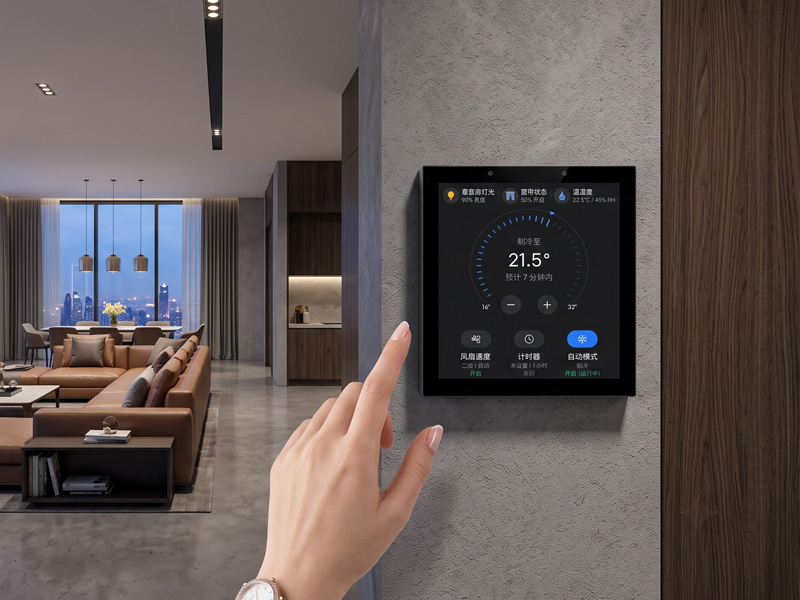
Smart Home Touch Control Panel
Portworld Wall-Mounted Smart Control Panel Solutions
Portworld offers smart touch control panel solutions tailored for smart homes, hotels, offices, and commercial automation projects.
Products include:
YC-SM41P 4-Inch Smart Touch Panel
Engineered for compact wall installation:
- 4-inch capacitive touchscreen
- Android/Linux support
- WiFi and Bluetooth
- Ethernet connectivity
- RS485 communication
- PoE options
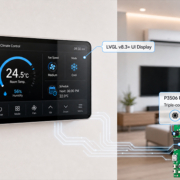
YC-SM43P ESP32-S3 Smart HMI Panel
Designed for IoT and embedded control:
- ESP32-S3 processor
- LVGL graphical interface
- WiFi + Bluetooth 5.0
- Ethernet and RS485
- 86×86mm wall-mounted structure
YC-SM08P 8-Inch Smart Control Panel
Tailored for smart home and commercial automation:
- RK3566 Quad-Core processor
- Android 11
- 8-inch IPS touchscreen
- PoE Ethernet support
- Smart device integration
YC-1011 10.1-Inch Smart Touch Control Panel
- For advanced automation applications:
- RK3568 processor
- Android 11 / Debian support
- 10-point capacitive touch
- Ethernet with PoE
- Smart building control
OEM/ODM Customization Services
For smart home brands and automation companies, Portworld offers comprehensive customization services.