Why Is EMC Testing Important for Digital Signage Displays?
In the commercial hardware and digital signage industry, performance is often measured by resolution, screen brightness, and processor speed. However, one critical factor determines whether a commercial display can survive in real-world environments without crashing, flickering, or interfering with surrounding systems: Electromagnetic Compatibility (EMC) testing.
Whether deploying interactive kiosks in busy shopping malls, overhead departure boards in airports, or smart displays in medical facilities, EMC compliance is both a legal mandate and an operational necessity.
What Is EMC Testing?
Electromagnetic Compatibility (EMC) measures a device’s ability to operate as intended in its shared electromagnetic environment without emitting excessive electromagnetic interference (EMI) that disrupts nearby devices, while remaining immune to external noise.
1. Maintaining Continuous Operational Reliability and Mitigating System Failures
Commercial digital signage systems function without interruption, frequently incorporating densely integrated high-performance processors (including ARM-based Rockchip System-on-Chip solutions), high-definition LCD timing management controllers, regulated power conversion modules, wireless connectivity technologies (Wi-Fi, Bluetooth), and cellular communication systems (4G/5G).
In the absence of comprehensive electromagnetic susceptibility engineering protocols, these integrated components may exhibit erratic behavior when exposed to environmental electromagnetic interference:
Electrostatic Discharge (ESD): Accumulated static electrical potential on personnel in low-humidity indoor settings can be released upon contact with an interactive display interface, resulting in touch sensor malfunction, display system restart, or component failure.
Electrical Grid Disturbances and Transient Events: Voltage fluctuations or switching transients originating from adjacent industrial equipment or climate control systems can produce display image instability, communication interruption, or data corruption when power conditioning infrastructure proves inadequate.

Stretch Bar Monitor
2. Safeguarding Essential Public Infrastructure Systems
Commercial display installations are commonly deployed in high-traffic or regulated environments, encompassing transportation hubs, mass transit facilities, financial centers, and medical institutions.
Should a signage display emit uncontrolled electromagnetic radiation (EMI), substantial operational consequences may result:
Aviation and Transportation Systems: Potential interference with aeronautical communications infrastructure, designated radio frequencies, or detection systems.
Medical Facility Operations: Potential disruption of patient monitoring systems, clinical diagnostic instruments, or wireless asset management solutions.
Commercial and Financial Operations: Potential signal degradation affecting wireless network infrastructure, proximity-based communication systems, or wireless transaction processing equipment.
Successful completion of rigorous electromagnetic emissions compliance testing confirms that the display operates with minimal electromagnetic signature, preserving the integrity of adjacent wireless communication networks.
3. Legal Passport for Global Market Deployment
Regulatory compliance constitutes a mandatory legal requirement for the global distribution of hardware. Uncertified or non-compliant digital signage systems are subject to immediate customs detention, substantial regulatory penalties, or compulsory product recalls.

YC-LE156
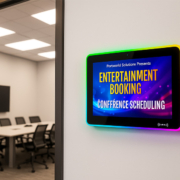
15.6″ Meeting Room Display Panels
Key Global EMC Standards:
European Union (CE Marking): Administered pursuant to the EMC Directive (2014/30/EU) and corresponding standards including EN 55032 (electromagnetic emissions) and EN 55035 (electromagnetic immunity).
United States (FCC Certification): Administered under FCC Part 15 regulations, whereby commercial display systems must comply with Class A limits for commercial and industrial applications or Class B limits for residential and public environments.
International Standards: Standardized through CISPR 32 and CISPR 35 testing methodologies on a global basis.
Key Takeaway for Integrators and Hardware Manufacturers
For commercial system integrators and solution providers, the specification of EMC-tested displays, such as Portworld’s commercial Digital signage display, ensures that the hardware incorporates appropriate printed circuit board shielding, power line filtration, and electrostatic discharge protection.
The procurement of certified EMC-compliant hardware substantially diminishes warranty-related field service calls, mitigates legal liability exposure, and guarantees dependable, continuous operation across any commercial deployment scenario.