What Brightness Is Best for a Digital Signage Display?
Brightness is a crucial factor to consider when selecting a digital signage display. A display with inadequate brightness may become challenging to read, particularly in environments with intense lighting or direct sunlight. Conversely, opting for an excessively bright display in an indoor setting can lead to increased power consumption and higher project costs.
The optimal brightness level is contingent upon the installation location, surrounding lighting conditions, viewing distance, and the nature of the content being presented.
The Importance of Brightness in Digital Signage Displays
Unlike residential televisions, commercial digital signage displays are frequently utilized in diverse environments, such as shopping malls, transportation hubs, retail outlets, outdoor areas, and public spaces.
The role of brightness extends beyond merely enhancing the screen’s appearance. It guarantees that the content displayed remains:
- Clear and legible
- Visually appealing
- Easily recognizable from afar
- Visible under varying lighting conditions
In the context of advertising, navigation, and informational displays, inadequate brightness can significantly hinder communication effectiveness.
Understanding Nits in Digital Signage Displays
The brightness of a display is typically quantified in nits (cd/m²).
A higher nit value indicates that the display can emit greater light output.
Typical brightness levels are as follows:
- 250–500 nits: Standard indoor displays
- 500–1000 nits: Bright indoor or window-facing displays
- 1000–1500 nits: High-brightness semi-outdoor applications
- 1500–3000+ nits: Outdoor digital signage subjected to sunlight
Selecting the appropriate brightness level is essential for achieving a balance between visibility, energy efficiency, and operational costs.
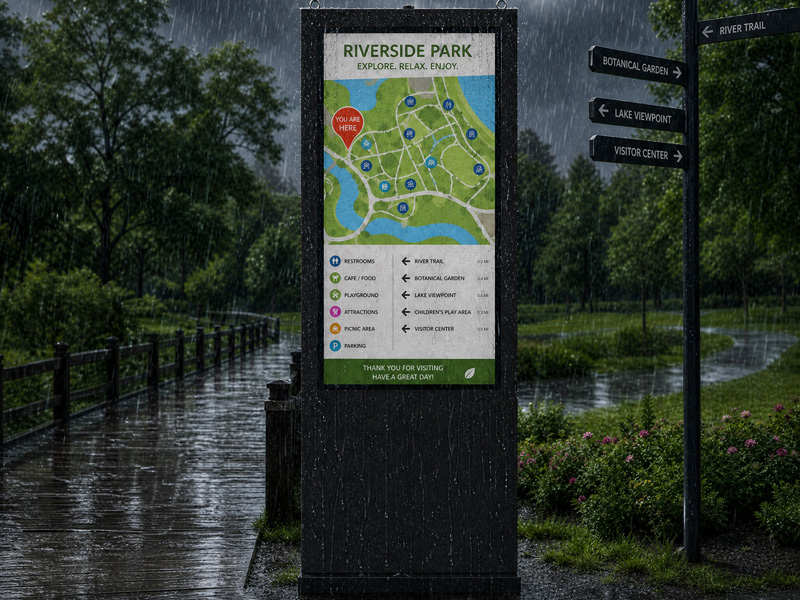
digital signage display
Recommended Brightness Levels by Application
Indoor Digital Signage: 300–700 Nits
In typical indoor settings like offices, hotels, conference rooms, and retail establishments, a brightness range of approximately 300–700 nits is generally adequate.
Common applications encompass:
- Meeting room booking displays
- Hospital information screens
- Restaurant menu boards
- Indoor advertising displays
For instance, Portworld offers commercial Android touch displays with standard brightness options that are appropriate for indoor digital signage, smart office panels, and interactive kiosks.
Retail Window Displays: 700–1500 Nits
Displays positioned near storefront windows encounter greater ambient light and reflections.
A conventional indoor display may seem washed out due to sunlight filtering through glass, which diminishes contrast.
For these scenarios, businesses frequently opt for:
- Displays with 700–1000 nits brightness
- Anti-glare glass
- High-contrast LCD panels
Typical uses include:
- Storefront advertising
- Shopping mall promotions
- Product showcase displays
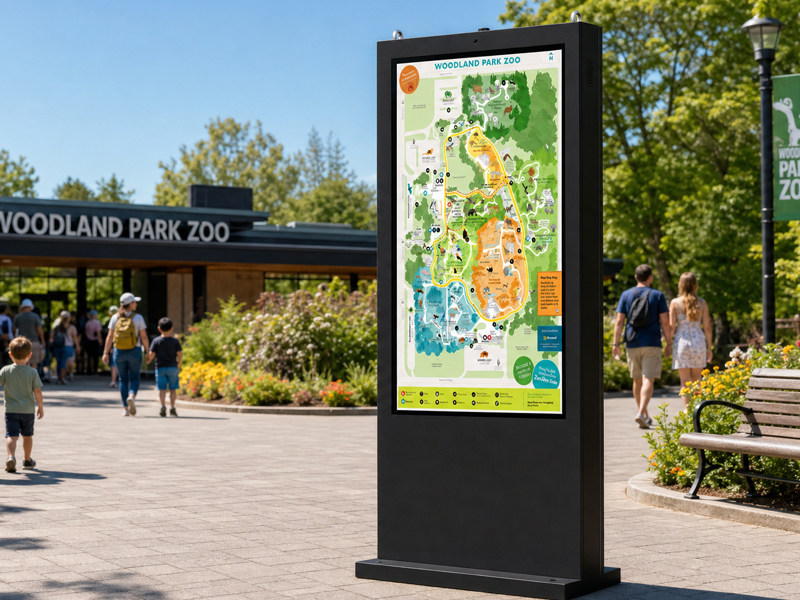
Floor Standing Digital Signage
Outdoor Digital Signage: 1500–3000+ Nits
Outdoor settings present the most significant challenges, as direct sunlight can be thousands of times brighter than indoor illumination.
Outdoor digital signage generally necessitates:
- Brightness of 1500+ nits
- Automatic brightness adjustment
- Weather-resistant enclosures
- Wide temperature operation
Applications include:
- Bus stop information displays
- Outdoor advertising kiosks
- Smart city information terminals
- Transportation displays
Portworld’s outdoor digital signage solutions accommodate high-brightness configurations of up to 2500 nits, along with features such as IP65 waterproof protection and IK10 anti-vandal glass to ensure dependable outdoor performance.
Automatic Brightness Control for Enhanced Performance
Merely having high brightness is not always the optimal approach.
A professional digital signage display must be capable of adjusting its brightness based on environmental conditions.
Equipped with an ambient light sensor, the display can:
- Increase brightness during daylight hours
- Diminish brightness at night
- Enhance viewing comfort
- Minimize unnecessary power consumption
This feature is particularly beneficial for outdoor advertising displays that operate continuously.
Brightness and Screen Size Considerations
Larger displays typically necessitate higher brightness levels due to being viewed from greater distances.
For instance:
- Small touchscreen panels: 300–500 nits
- Commercial displays ranging from 32 to 55 inches: 500–1000 nits
- Large outdoor displays: 1500–3000 nits
Nevertheless, brightness should always be aligned with the surrounding environment rather than simply opting for the highest specification.
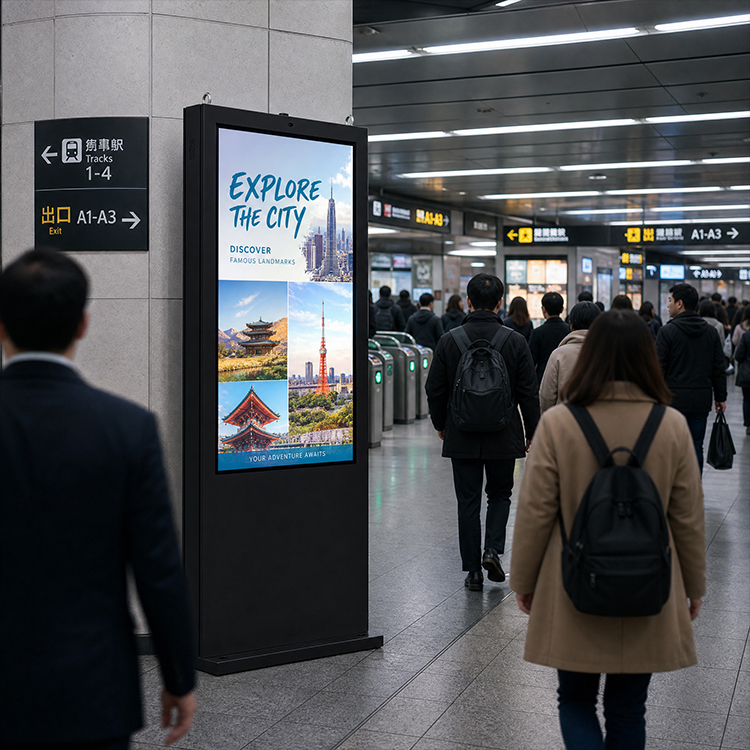
YC-5520FL-IP Floor Standing Digital Signage
Other Factors That Influence Visibility
While brightness is crucial, it is not the sole factor impacting image quality.
An effective digital signage display should also take into account:
Contrast Ratio
A higher contrast ratio enhances the distinction between bright and dark areas, facilitating easier content readability.
Viewing Angle
Wide viewing angles guarantee that content remains visible from various positions.
Anti-Glare Protection
In bright settings, anti-reflective glass aids in minimizing unwanted reflections.
Display Resolution
A higher resolution enhances image clarity, particularly for advertisements and intricate information.
Portworld Digital Signage Display Solutions
Portworld offers tailored digital signage solutions suitable for various settings, which include:
- Indoor commercial displays
- Outdoor high-brightness signage
- Interactive touchscreen kiosks
- Stretched bar displays
- Meeting room panels
Supporting Android, Linux, and Debian platforms, Portworld’s solutions can be personalized with:
- Various brightness levels
- Touch functionality
- Camera and NFC/RFID modules
- Custom housing designs
- OEM branding
- Software and CMS integration
Whether for retail advertising, smart buildings, transportation, or public information systems, Portworld assists clients in selecting and developing the appropriate display solution.
The optimal brightness for a digital signage display is contingent upon the installation environment.
For the majority of indoor applications, a brightness range of 300–700 nits is typically sufficient. Storefront and semi-outdoor applications may necessitate 700–1500 nits, whereas outdoor digital signage frequently requires 1500–3000+ nits to ensure visibility in direct sunlight.