How Does a Smart Control Panel Work in Industrial Automation?
In contemporary factories and industrial settings, automation systems necessitate effective methods for operators to oversee equipment, modify parameters, and control production processes. A smart control panel for industrial automation serves as a human-machine interface (HMI), linking operators with machines, sensors, PLCs, and industrial networks.
In contrast to conventional control buttons and displays, smart control panels integrate touchscreen functionality, robust processors, and various communication interfaces to deliver a more adaptable and intelligent control experience.
1. Facilitating Operator Interaction with Industrial Equipment
A smart control panel functions as the communication link between humans and machines.
The fundamental workflow is as follows:
Operator → Smart Touch Panel → Industrial Controller → Machine Equipment
The panel gathers data from industrial systems, presents real-time information, and transmits control commands back to the connected devices.
For instance:
- An operator monitors machine temperature on the touchscreen.
- The panel acquires data from sensors via a PLC.
- The operator modifies production parameters.
- The control system implements the command.
This enhances the speed and ease of managing industrial operations.
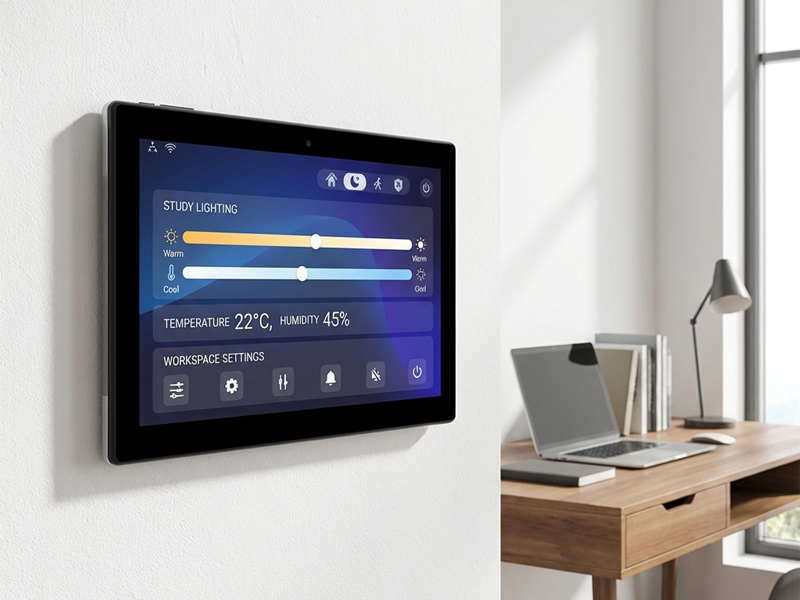
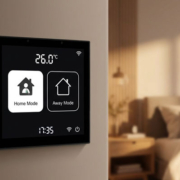
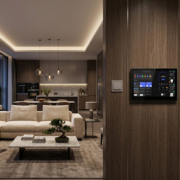
sm55p-smart home control panel
2. Communication with PLCs and Industrial Devices
Industrial smart control panels require dependable communication with various types of equipment.
Common interfaces include:
RS485 / Modbus
This interface is extensively utilized for connecting:
- PLC controllers
- Temperature controllers
- Energy meters
- Industrial sensors
RS485 ensures stable communication over extended distances, making it ideal for factories and automation systems.
Ethernet
Industrial Ethernet enables smart panels to connect with:
- Industrial networks
- Cloud platforms
- Remote monitoring systems
- Manufacturing execution systems (MES)
CAN Bus
This interface is employed in applications that necessitate rapid communication between embedded devices and controllers.
3. Real-Time Monitoring and Data Visualization
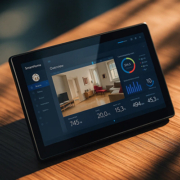
A primary function of an industrial smart control panel is to present real-time information about machinery.
Operators are able to monitor:
- Machine status
- Production data
- Temperature
- Pressure
- Speed
- Energy consumption
- Alarm notifications
The use of a graphical touchscreen interface simplifies the comprehension of complex industrial data.
For instance, a factory operator can assess the status of the production line via dashboards rather than having to check multiple instruments.
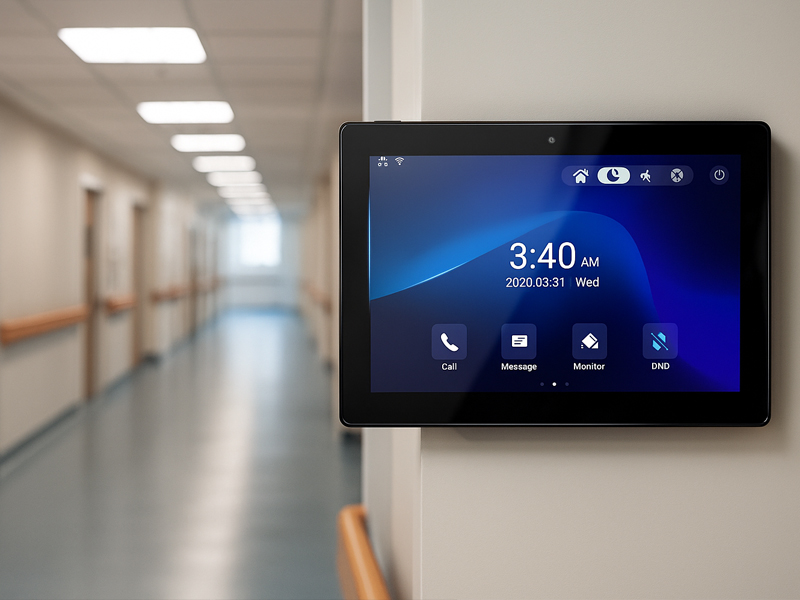
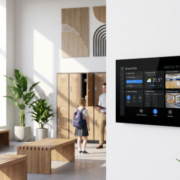
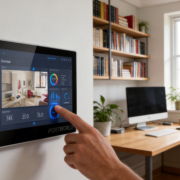
smart home control panel2
4. Equipment Control Through Touchscreen Interface
Smart industrial panels empower operators to manage machines directly.
Common functions include:
- Starting and stopping equipment
- Adjusting operating parameters
- Modifying production settings
- Switching operation modes
- Managing alarms
Interfaces can be customized to suit various machines and workflows.
5. Supporting Industrial HMI Software
Industrial smart control panels frequently utilize specialized HMI software frameworks.
Common development platforms encompass:
Qt/QML
This is employed for sophisticated industrial interfaces featuring:
- Seamless animations
- Tailored dashboards
- Support for multiple languages
- Intricate visualizations
LVGL
This is appropriate for embedded industrial panels that necessitate:
- A lightweight GUI
- Rapid response times
- Minimal power consumption
Custom Linux Applications
Panels based on Linux can operate tailored industrial software to meet specific automation needs.
6. Why Opt for Linux Smart Control Panels in Industrial Automation?
Linux is extensively adopted in industrial automation due to its adaptability and dependability.
Benefits include:
System Customization
Developers have the ability to customize:
- The kernel
- Drivers
- Communication protocols
- Applications
Long-Term Stability
This is ideal for:
- Continuous 24/7 factory operations
- Industrial machinery
- Embedded automation systems
Robust Hardware Integration
Linux accommodates a variety of industrial interfaces:
- RS485
- RS232
- Ethernet
- GPIO
- CAN
This versatility renders Linux an excellent choice for bespoke industrial HMI solutions.
7. Industrial IoT and Remote Management
Contemporary smart factories necessitate interconnected machinery.
Industrial smart control panels can seamlessly integrate with IoT platforms to facilitate:
- Remote monitoring of equipment
- Cloud-based data collection
- Predictive maintenance strategies
- Production analysis
For instance, a factory manager is able to remotely assess the status of equipment and production metrics via an industrial IoT system.
Applications of Industrial Smart Control Panels
Manufacturing Equipment
Utilized for:
- Machine operation
- Monitoring production
- Adjusting parameters
- Smart Factory Systems
Utilized for:
- Industrial IoT gateways
- Visualizing data
- Managing processes
- Energy Management
Utilized for:
- Monitoring power
- Optimizing energy usage
- Analyzing equipment efficiency
- Medical and Laboratory Equipment
Utilized for:
- Controlling devices
- Displaying data
- Facilitating user interaction
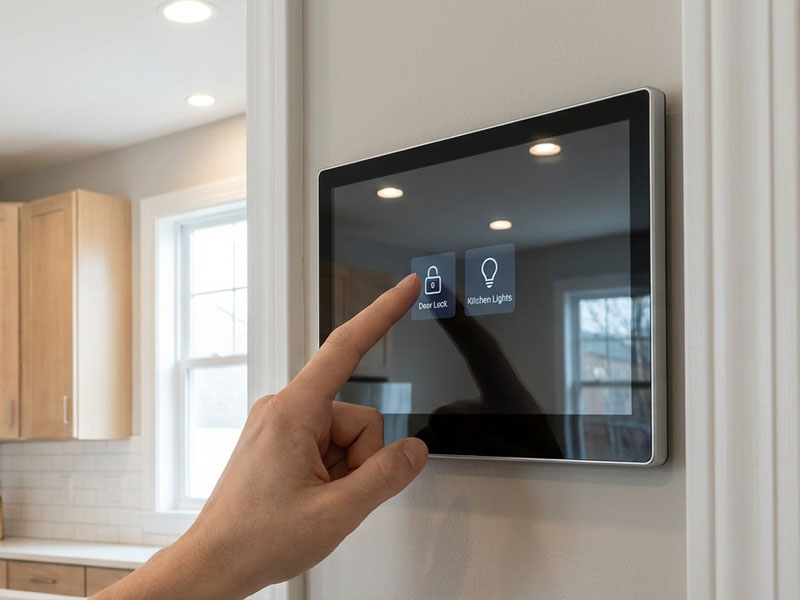
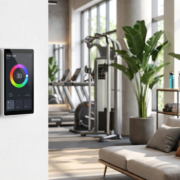
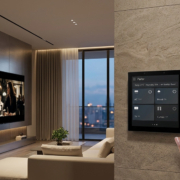
smart home control panel
Portworld Industrial Smart Control Panel Solutions
Portworld offers embedded smart touch panels tailored for industrial automation and HMI applications.
The YC-SM41P 4-inch smart touch panel serves as a compact embedded HMI solution, featuring Ethernet, RS485, WiFi, Bluetooth, and PoE support, making it suitable for IoT control and industrial interfaces.
The YC-SM43P ESP32-S3 smart HMI panel is designed to support LVGL development with RS485 and Ethernet communication, rendering it ideal for bespoke industrial control applications.
For projects requiring higher performance in industrial HMI, Portworld provides RK3566/RK3568-based smart touch panels, such as the YC-SM08P, YC-SM10P, and YC-SM14P, which are compatible with Android, Linux, Debian, Ubuntu, and Buildroot systems.
OEM/ODM Industrial HMI Customization
Industrial projects frequently necessitate tailored solutions. Portworld offers:
- Linux/Yocto BSP customization
- Qt/QML HMI development
- Custom firmware
- Driver development
- Industrial protocol integration
- PCBA customization
- Enclosure design
- Branding customization
These services enable automation companies to create specialized industrial smart control panels for particular equipment and production settings.
In the realm of industrial automation, a smart control panel functions as an intelligent HMI interface, linking operators, machines, and industrial systems.
By integrating touchscreen interaction, industrial communication interfaces, robust processors, and customizable software, smart control panels enhance machine monitoring, operational efficiency, and production management.