Can Rockchip RK3566 Be Used in a Smart Control Panel?
Intelligent home automation control panels are increasingly becoming a fundamental component of contemporary residential and commercial building management systems. Spanning from the regulation of illumination and window coverings to the modulation of climate control systems, environmental monitoring, and the administration of interconnected devices, stakeholders increasingly anticipate a unified touchscreen interface to execute numerous functions with seamless performance.
Selecting an appropriate processor constitutes a critical consideration during the development of an intelligent control panel. The computational infrastructure must deliver sufficient processing capability to ensure a responsive touchscreen experience while simultaneously facilitating the connectivity requirements, operating system compatibility, and integration capabilities mandated by the specific application.
The Rockchip RK3566 represents a pragmatic solution for numerous intelligent control panel implementations, particularly those demanding dependable multimedia capabilities, adaptable connectivity infrastructure, and compatibility with Android or Linux environments.
What Makes the RK3566 Appropriate for Intelligent Control Panels?
The RK3566 constitutes a 64-bit quad-core processing unit constructed upon the ARM Cortex-A55 microarchitecture, incorporating a maximum CPU operational frequency of 1.8 GHz and an integrated Mali-G52 graphics processing unit. Furthermore, it incorporates a specialized neural processing unit with a computational capacity reaching 1 TOPS for applicable artificial intelligence applications.
These technical specifications establish an adequate foundation for touchscreen interfaces executing intelligent home automation applications, operational dashboards, and facility management control systems. The architecture further facilitates multiple display connectivity alternatives, though the specific interfaces accessible in a commercial implementation depend upon the underlying circuit board configuration.
As an illustration, a wall-integrated intelligent control panel may present ambient temperature readings, illumination operational status, motorized covering management, and access control information through a consolidated display interface. The RK3566 demonstrates sufficient processing capability to manage these conventional automation functions without necessarily necessitating a more advanced processor architecture.
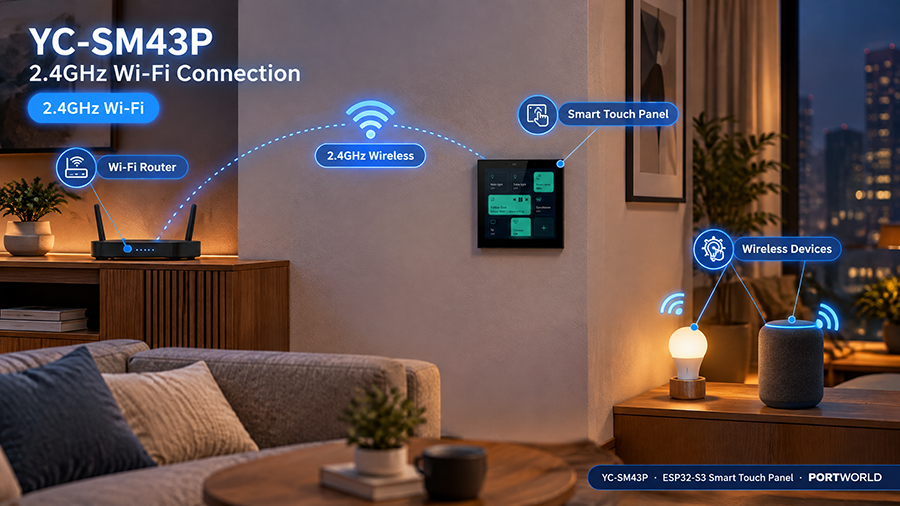
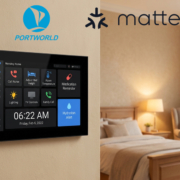
YC-SM43P smart home control panel
What Capabilities Does an RK3566 Smart Control Panel Offer?
Smart Home Automation
An RK3566-based panel can function as a unified control center for managing lighting, HVAC systems, window treatments, and other networked devices. Developers have the capability to design bespoke touch interfaces that streamline routine tasks for residents and occupants.
The panel’s communication capabilities depend on the overall system design and may include connections to automation gateways, local control units, or cloud-based services via compatible protocols and network connectivity options.
Building Management and Room Control
Within office environments, hospitality settings, residential complexes, and industrial facilities, touchscreen panels function as room management systems for regulating illumination, climate control, and supplementary building operations.
The hardware architecture may incorporate Ethernet, Wi-Fi, Bluetooth, and serial communication ports as dictated by application requirements. Integration of protocols including KNX, Modbus, and MQTT can be accomplished through appropriate communication infrastructure, interface devices, and application software.
It is essential to recognize the distinction between processor performance and comprehensive system-level capabilities: implementation of a specific automation protocol necessitates corresponding hardware components, software solutions, and thorough integration procedures.
Custom Touchscreen Interfaces
A sophisticated control panel requires more than computational capability. The display dimensions, pixel density, touch sensing technology, luminosity levels, and interface design collectively determine the overall user experience.
RK3566-based systems can be engineered to accommodate various touchscreen dimensions and display connectivity options. Developers have the flexibility to select the optimal configuration suited for a compact wall-mounted panel, a room-level automation terminal, or an expansive building management interface.
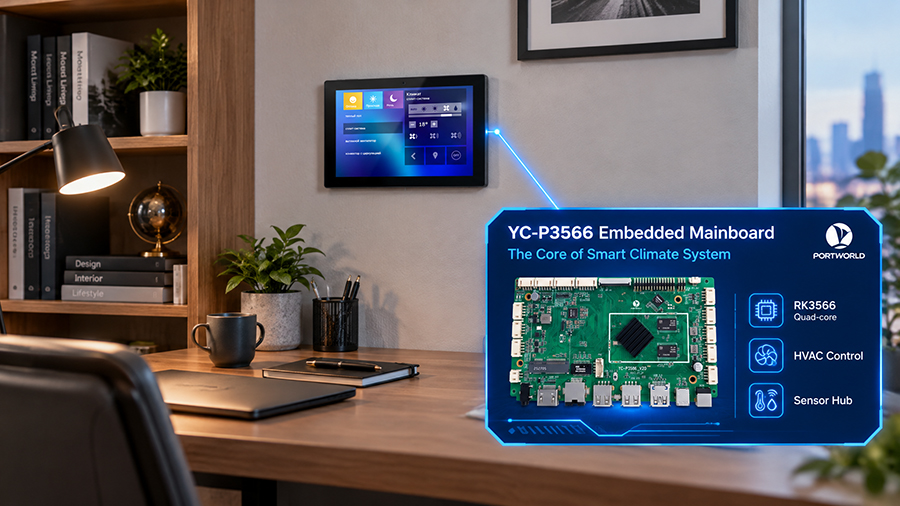
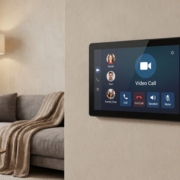
YC-P3566 smart home control panel
Android or Linux: Which Operating System Should You Choose?
The RK3566 platform facilitates development across both Android and Linux-based environments, with specific operating system iterations and technical support contingent upon the chosen board model and Board Support Package.
Android represents a practical selection for applications demanding an intuitive touchscreen interaction model, component-oriented software development, and visual user interface capabilities.
Linux, encompassing distributions including Debian or Ubuntu where applicable, may prove advantageous for applications requiring enhanced command over the software architecture, system-level operations, hardware interfacing, or compatibility with pre-existing embedded solutions.
The determination should be guided by the intended application, the development team’s technical proficiency, software update protocols, and the comprehensive maintenance strategy.
What Additional Hardware Components Warrant Consideration Beyond the Central Processing Unit?
Choosing the RK3566 represents merely the initial phase. A fully functional intelligent control interface demands a motherboard engineered to align with the system’s operational specifications.
For instance, an implementation may require:
- A capacitive touchscreen interface paired with an appropriate display connectivity standard.
- Ethernet, Wi-Fi, or Bluetooth communication capabilities.
- Power over Ethernet functionality for streamlined network infrastructure and power delivery, when applicable.
- RS485, UART, GPIO, or comparable communication protocols for peripheral device integration.
- Sufficient RAM and storage capacity tailored to the designated application software.
- An appropriately rated power supply unit, thermal management architecture, and protective housing.
- A dependable operating system image incorporating requisite drivers and hardware integration modules.
Not all RK3566-based circuit boards incorporate every aforementioned capability. Connectivity options, PoE deployment methodology, communication modules, and display specifications require verification against the particular motherboard architecture.
How Portworld Can Facilitate the Development of an RK3566 Smart Control Panel
For manufacturers creating smart home controllers, room control terminals, or building automation interfaces, a standard development board may not deliver the precise dimensions, connectors, or software configuration necessary for the final product.
Portworld delivers embedded hardware and touchscreen customization solutions for smart control panel initiatives. Depending on project specifications, customization may encompass motherboard and interface engineering, display and touchscreen incorporation, Android or Linux optimization, enclosure design, and facilitation of device communication protocols.
For projects leveraging an RK3566 platform, the objective is to align the computing hardware with the specific application rather than incorporating superfluous processing capacity or interfaces.
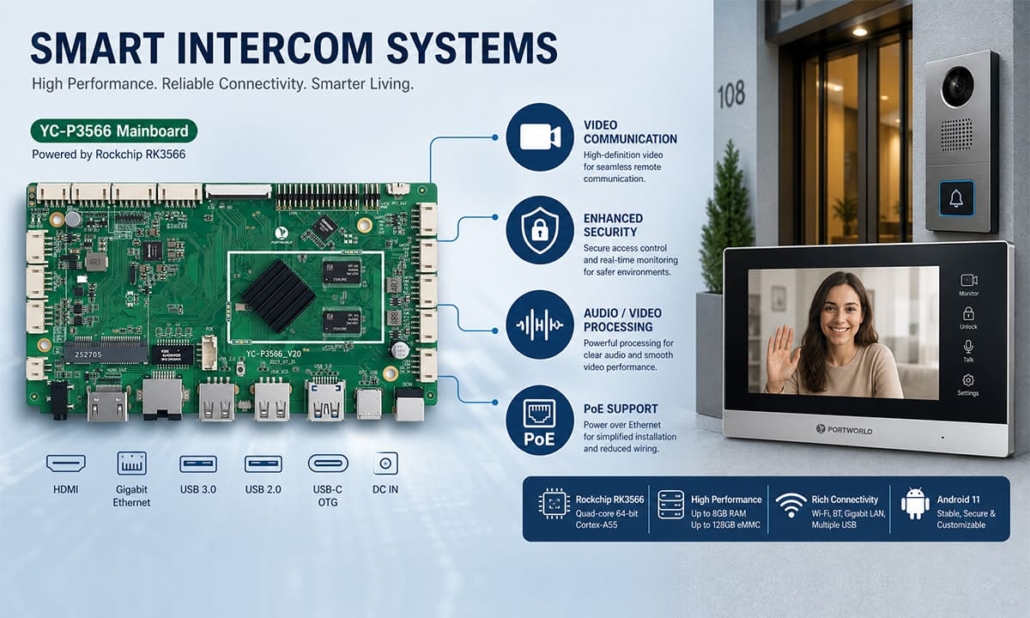
YC-P3566 Smart Mainboard
Is RK3566 an Appropriate Selection for Your Project?
RK3566 merits consideration when a smart control panel requires responsive touchscreen functionality, multimedia capabilities, adaptable system integration, and an optimal equilibrium between performance and cost-effectiveness.
For standard smart home control, room automation, and building management interfaces, it can establish a robust hardware infrastructure. Projects demanding advanced AI processing, sophisticated graphics rendering, or intensive multitasking operations may benefit from assessing a higher-capacity platform.
The optimal selection ultimately hinges upon the required display specifications, connected device ecosystem, software requirements, operational environment, and manufacturing constraints.
If you are engineering a specialized smart control panel, establishing these parameters at an early stage will facilitate the selection of the appropriate processor, motherboard, and operating system for sustained deployment.