Can a Smart Control Panel Support Zigbee, Matter, WiFi, and Bluetooth?
As intelligent home automation systems achieve greater interconnectivity, consumers increasingly demand a unified control interface capable of managing illumination, window coverings, climate control systems, sensor networks, access control mechanisms, and additional networked devices. Nevertheless, these devices do not uniformly employ identical wireless communication protocols. Certain devices operate via Zigbee, while others utilize Wi-Fi or Bluetooth connectivity, and emerging products may incorporate Matter technology to facilitate cross-platform compatibility.
This presents a critical consideration for smart home manufacturers, system integrators, and original equipment manufacturer purchasers: Is it feasible for a single smart control panel to simultaneously support Zigbee, Matter, Wi-Fi, and Bluetooth protocols?
The response is affirmative, contingent upon the hardware infrastructure, wireless communication modules, firmware architecture, and smart home application software being engineered to facilitate the requisite capabilities. Nevertheless, these technologies fulfill distinct operational functions, and the mere inclusion of four protocol names within a technical specification does not necessarily guarantee that a panel possesses the capacity to regulate every compatible device.
Comprehending their functional distinctions represents the foundational step in engineering a dependable multi-protocol smart control panel.
What Functions Do Zigbee, Matter, Wi-Fi, and Bluetooth Serve?
While these technologies are frequently mentioned in conjunction, they function at distinct levels within a smart home infrastructure.
Wi-Fi delivers network connectivity for devices requiring communication through a local IP network or requiring access to cloud-based services. It is predominantly utilized by smart displays, cameras, appliances, and connected controllers.
Bluetooth serves a primary role in device identification, preliminary configuration, system setup, and limited-distance data exchange. Bluetooth Low Energy (BLE) is also extensively employed during Matter device commissioning, enabling a compatible device to be integrated into a smart home ecosystem.
Zigbee represents a low-power wireless communication protocol extensively deployed for illumination systems, sensors, switches, and additional home automation equipment. It facilitates mesh networking capabilities, permitting compatible devices to forward communications throughout a Zigbee network infrastructure.
Matter distinguishes itself from the other three technologies. It constitutes an application-layer smart home interoperability framework that functions across supported IP networking infrastructures, encompassing Wi-Fi, Ethernet, and Thread. Bluetooth Low Energy serves primarily for commissioning purposes rather than functioning as Matter’s standard operational communication network.
Matter and Zigbee represent distinct communication protocols. A device equipped with Matter capability cannot inherently establish direct communication with a Zigbee device merely because both are designed for smart home environments. To integrate Zigbee devices into a Matter ecosystem, a compatible bridge or gateway is typically required to facilitate interoperability.
For developers of control panels, this differentiation is significant because each protocol necessitates distinct hardware, software, and integration specifications.
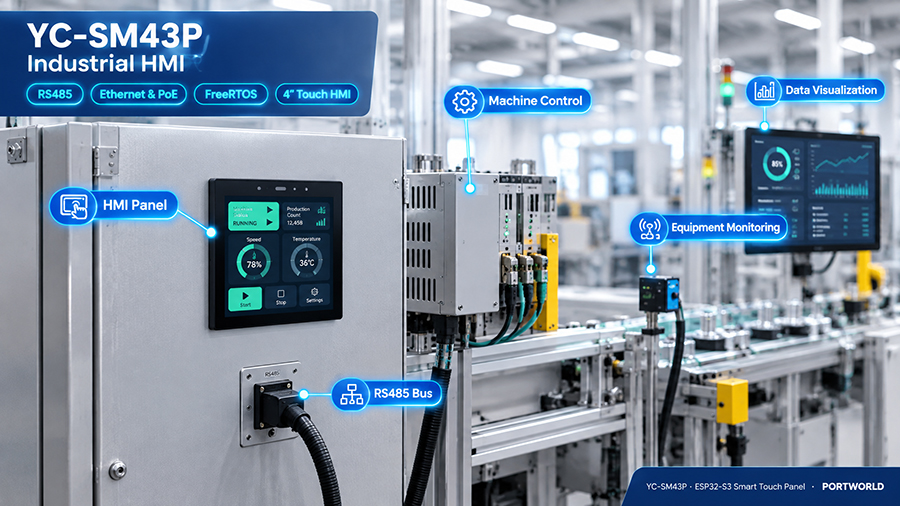
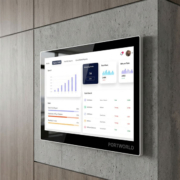
YC-SM43P ESP32 4″ Smart Touch Panel
How Can a Single Smart Control Panel Accommodate All Four Technologies?
A multi-protocol control panel can leverage a combination of integrated wireless components, supplementary modules, network connectivity via Ethernet, and coordinated software solutions.
A standard configuration might incorporate a display interface, a central processing unit, a Wi-Fi and Bluetooth transceiver, a dedicated Zigbee radio module, and a software framework that orchestrates device identification and management. Matter functionality can subsequently be deployed across a compatible network medium, with Thread radio hardware incorporated if the panel is required to communicate directly with Matter-over-Thread devices or assume a corresponding Thread networking function.
The specific implementation depends on the intended operational scope of the product.
For instance, a panel designed solely to monitor device status managed by an independent smart home hub may not require an integrated Zigbee radio. Conversely, a panel that directly enrolls Zigbee lighting and sensing devices will typically require compatible Zigbee radio hardware and a corresponding software framework for device administration.
Likewise, a panel managing Matter-over-Wi-Fi devices may not necessitate a Thread radio for this application. Should it be required to provision and manage Matter-over-Thread devices, supplementary Thread networking capabilities and the requisite controller or border-router configuration may be necessary, contingent upon the designated operational role.
The primary processor manages the application layer and user interface functionality, whereas the communication infrastructure—encompassing both hardware and software components—delivers the underlying protocol operations. These functional distinctions must be established prior to the completion of printed circuit board design, antenna configuration, and housing specifications.
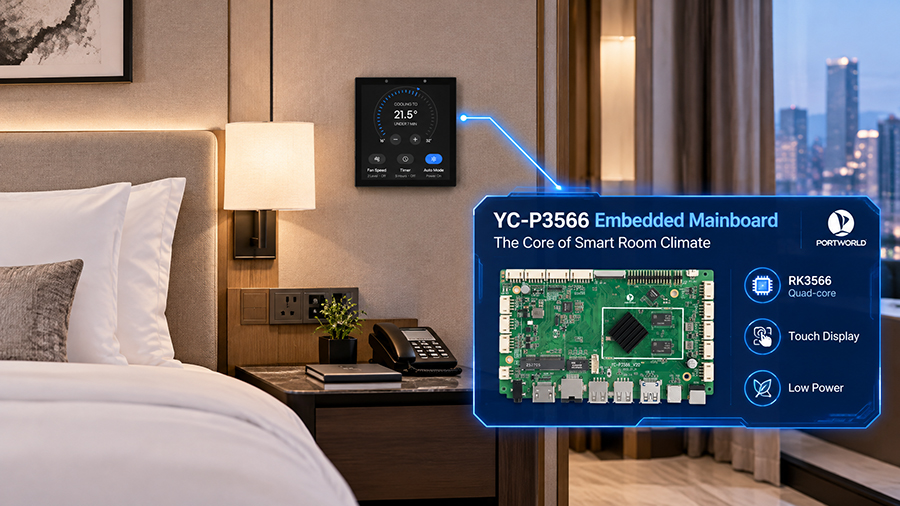
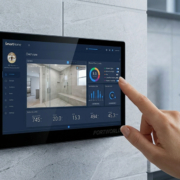
YC-P3566-smart home control panel
Does Matter Replace Zigbee?
No. Matter has been engineered to enhance interoperability throughout diverse smart home environments; however, it neither renders Zigbee obsolete nor automatically transforms existing Zigbee devices into Matter-compatible devices.
Numerous deployed smart home installations currently incorporate Zigbee-based lighting systems, switching mechanisms, occupancy detection sensors, and supplementary components. Complete device replacement may prove economically prohibitive or logistically unfeasible; consequently, a gateway or bridge mechanism can facilitate the integration of compatible Zigbee devices into a Matter-based ecosystem.
Within this configuration, the Zigbee network maintains communication through the Zigbee protocol, while the bridge mechanism exposes supported devices and associated functions via the Matter interface.
A smart control panel can participate in this framework through multiple approaches. It may directly oversee a Zigbee network, interface with an independent gateway system, function as a Matter controller, or deliver the user interface component for a comprehensive smart home infrastructure.
These roles cannot be used interchangeably. A touchscreen capable of presenting a Matter device via an application does not automatically qualify as a Matter controller, nor does a panel equipped with Zigbee hardware inherently function as a Matter bridge.
OEM purchasers should consequently request that manufacturers specify the precise supported role, device types, and interoperability specifications rather than depending on general assertions regarding multi-protocol compatibility.
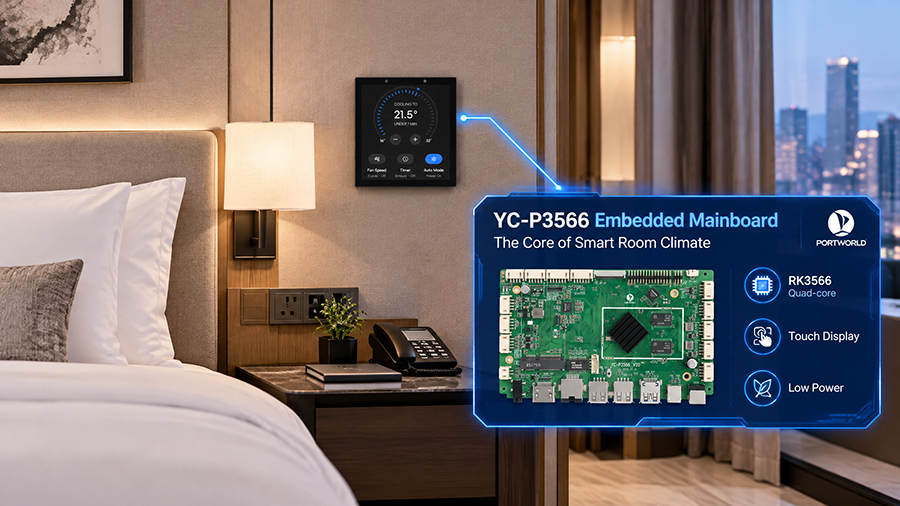
YC-P3566 Smart Mainboard
What Hardware Components Are Necessary for a Multi-Protocol Smart Control Panel?
The necessary hardware is determined by the processor, supported wireless protocols, intended device roles, and accessible software.
An Android- or Linux-based smart control panel may employ an embedded processor such as Rockchip RK3566 or RK3568 to execute the user interface and smart home application. Wi-Fi and Bluetooth may be incorporated into the platform or delivered through a wireless module. Zigbee and Thread may necessitate an additional compatible radio, contingent upon the chosen hardware.
For OEM initiatives, the following considerations warrant evaluation.
Processor and operating system: The mainboard must possess adequate capacity for the user interface, device management, network connectivity, and application functionality. Android and Linux can facilitate distinct integration methodologies, therefore the intended software platform should be determined at an early stage.
Wireless modules and antennas: Verify the supported frequency bands, radio standards, antenna configuration, and concurrent operating capabilities. Wi-Fi, Bluetooth, Zigbee, and Thread may all operate within the 2.4 GHz spectrum, making radio interference mitigation and antenna engineering critical considerations.
Memory and storage: Specifications are contingent upon the intended application, quantity of connected devices, protocol stack implementations, security mechanisms, and auxiliary processes. More sophisticated system integrations may require expanded memory capacity.
Power and PCB design: Supplementary radio modules, communication interfaces, and supporting circuitry influence the comprehensive hardware architecture. Manufacturers must evaluate power draw, electromagnetic interference compliance, antenna positioning, and housing specifications.
Software and security: Hardware implementation must be complemented by appropriate firmware drivers, protocol stack support, device provisioning workflows, encrypted credential management, and a comprehensive strategy for firmware maintenance and security patching.
Optimal design is not necessarily characterized by the maximum quantity of radio transceivers. Rather, it represents the configuration that reliably facilitates the intended device network while satisfying the product’s budgetary constraints, dimensional limitations, and energy efficiency objectives.
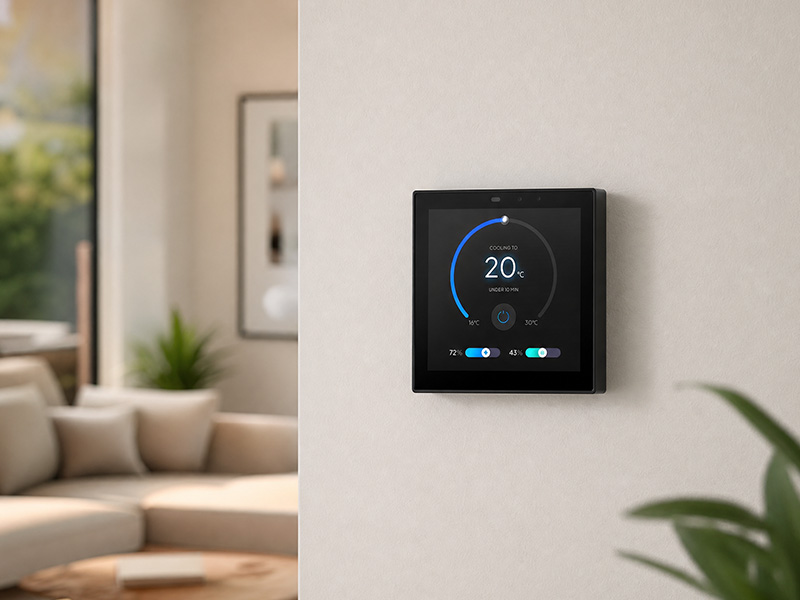
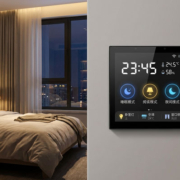
smart home control panel
What Software Components Are Required to Enable Protocol Interoperability?
While hardware facilitates communication, software ultimately governs the capabilities and functionality of a connected control panel when interfacing with various devices.
A comprehensive multi-protocol smart control panel typically requires several essential software components: a device-discovery mechanism, pairing and commissioning procedures, a device registry or database, command processing capabilities, status update synchronization, and a unified application interface that presents devices from disparate networks in a consistent manner.
Zigbee implementation demands that the software accommodate the designated Zigbee stack, device profiles, and necessary clusters or operational functions. Compatibility levels may differ significantly depending on the specific device manufacturer and individual product design.
Matter integration necessitates that the software execute the pertinent Matter specifications and designated ecosystem responsibilities. Commissioning procedures, device authentication credentials, compatible device categories, and conformance validation must all be thoroughly addressed.
Wi-Fi serves as the underlying network infrastructure; however, this alone does not ensure that the panel possesses the capability to manage all Wi-Fi-enabled smart home devices. Supplementary application programming interfaces, cloud-based services, proprietary local protocols, or Matter compatibility may remain essential.
Bluetooth requires a clearly defined operational role. Its application might encompass preliminary configuration, device setup, or alternative supported functions, contingent upon the specific hardware platform and software design.
Consequently, manufacturers must recognize that protocol integration represents a substantive undertaking rather than a superficial compliance requirement. Each necessary function demands comprehensive implementation and rigorous validation throughout the entire hardware and software architecture.
Which Architectural Framework Proves Most Suitable for an Original Equipment Manufacturer Initiative?
Multiple viable methodologies exist for developing a multi-protocol control panel infrastructure.
An application-centric control panel predominantly delivers a touchscreen user interface and integrates with an established smart home ecosystem or intermediary gateway. This methodology may diminish hardware requirements when device communication infrastructure is already provisioned through alternative means.
A multi-protocol management system incorporates the requisite radio components and algorithmic solutions to administer designated Zigbee and Matter devices autonomously. It delivers enhanced operational independence, though it necessitates comprehensive integration and rigorous validation procedures.
A gateway-oriented framework segregates the touchscreen presentation layer from radio frequency and protocol administration capabilities. A specialized gateway manages Zigbee or comparable device ecosystems, whereas the panel exchanges information via Ethernet or Wi-Fi connectivity. This configuration may streamline panel hardware specifications, though it establishes reliance upon gateway functionality.
A composite architectural model merges designated capabilities with third-party system engagement. Illustratively, a panel might administer Zigbee devices concurrently with regulating compatible Matter devices through Wi-Fi infrastructure and facilitating Bluetooth-enabled device provisioning.
The optimal selection hinges upon the application’s intended function, the quantity and classification of connected devices, the mandated platform interoperability requirements, and whether essential automation functionality must persist during internet service interruptions.
Prior to determining an architectural framework, establish whether the panel shall function as a user interface, command authority, gateway, bridge, or amalgamation of these operational capacities.
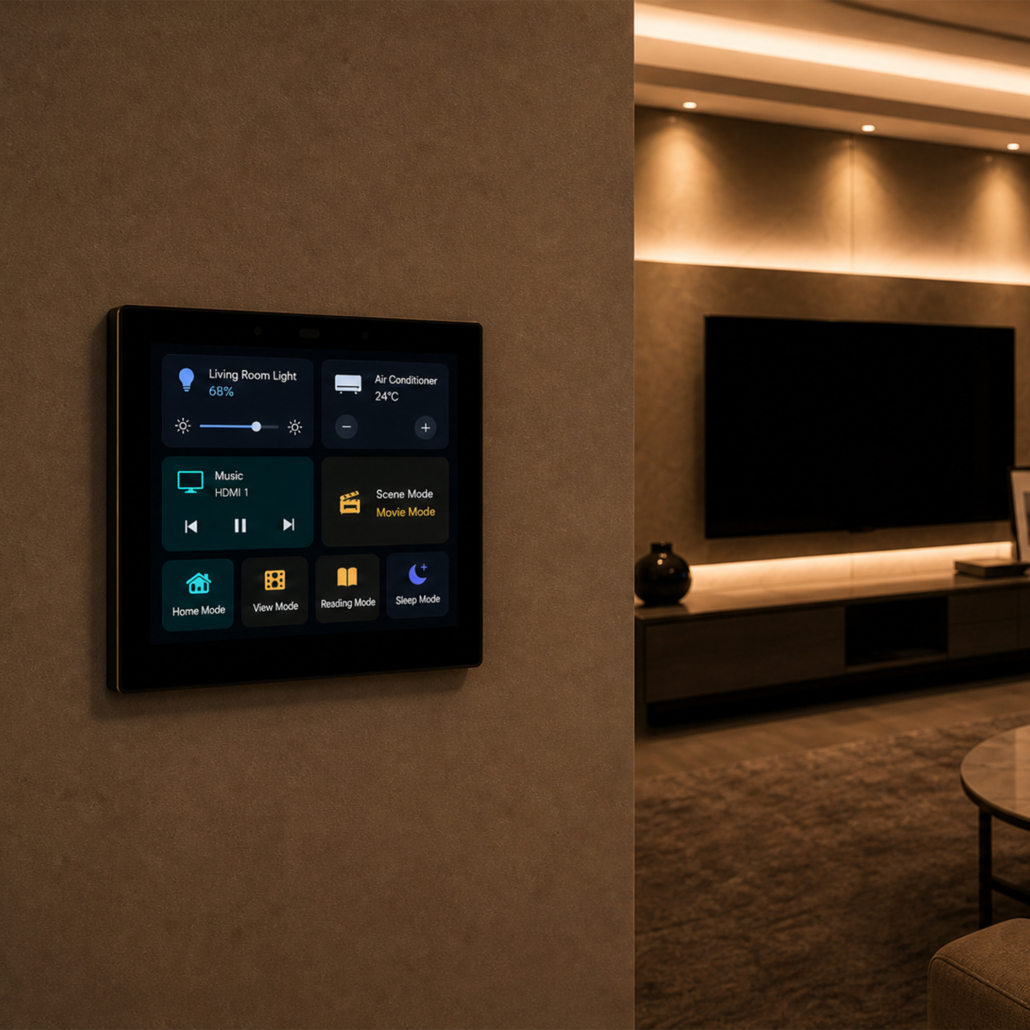
YC-SM43P ESP32 4″ Smart Touch Panel
How Portworld Can Facilitate Multi-Protocol Control Panel Initiatives
For smart home manufacturers and system integrators, implementing multi-protocol functionality typically necessitates a combination of hardware configuration, software development, and product-level customization.
Portworld delivers intelligent control panels and OEM/ODM services for smart home, building automation, and connected-device applications. Its product and embedded hardware platforms can function as foundational solutions for projects requiring diverse screen dimensions, processor specifications, operating system options, wired communication interfaces, and wireless connectivity capabilities.
As an illustration, the YC-SM43P incorporates an ESP32-S3 platform featuring a 4-inch touchscreen, LVGL support, Wi-Fi, Bluetooth, Ethernet, and RS485 connectivity. It can be assessed for compact embedded control applications where these interfaces and a specialized user interface align with project specifications.
For more sophisticated smart home deployments, RK3566- or RK3568-based Android and Linux panels may offer an alternative foundation for application development and integration with external gateways or protocol services.
Nevertheless, these illustrations should not be construed as assurance that all models inherently support Zigbee, Matter, Wi-Fi, and Bluetooth across every configuration. Zigbee and Thread radio hardware, Matter controller or bridge capabilities, software stacks, and ecosystem certification requirements must be validated for the chosen design.
Contingent upon specific project parameters, OEM/ODM consultations may encompass hardware component selection, wireless module incorporation, software customization, user interface adaptation, communication protocol specifications, and corporate identity implementation.
The objective is to develop a technically sound and viable architecture prior to advancing toward prototype fabrication and commercial-scale manufacturing.
What Assessments Should Purchasers Conduct Prior to Mass Production?
A multi-protocol control interface must be thoroughly evaluated using actual devices and the designated software platform.
Validation procedures should encompass device association and initialization, reconnection functionality following power loss events, operational transmission distance, system responsiveness, concurrent radio frequency operation, and system restoration following network disruptions. The development team should additionally verify that the interface accurately reflects device operational states and appropriately processes directives when devices are offline or unresponsive.
Regarding Zigbee-to-Matter interoperability, evaluate the actual bridge solution and confirm which device classifications and capabilities are made accessible. For Matter protocol implementation, validate the supported controller or bridge functionality, commissioning procedures, ecosystem interoperability, and pertinent compliance certifications.
Validation activities should be executed within the production-grade housing configuration, as the enclosure design, antenna placement, circuit board configuration, and adjacent electronic components may substantially influence wireless transmission characteristics.
In commercial implementations, software maintenance represents a critical consideration. Purchasers must comprehend the mechanisms through which firmware updates, security patches, credential management, and forthcoming compatibility modifications will be administered throughout the product’s anticipated operational lifespan.
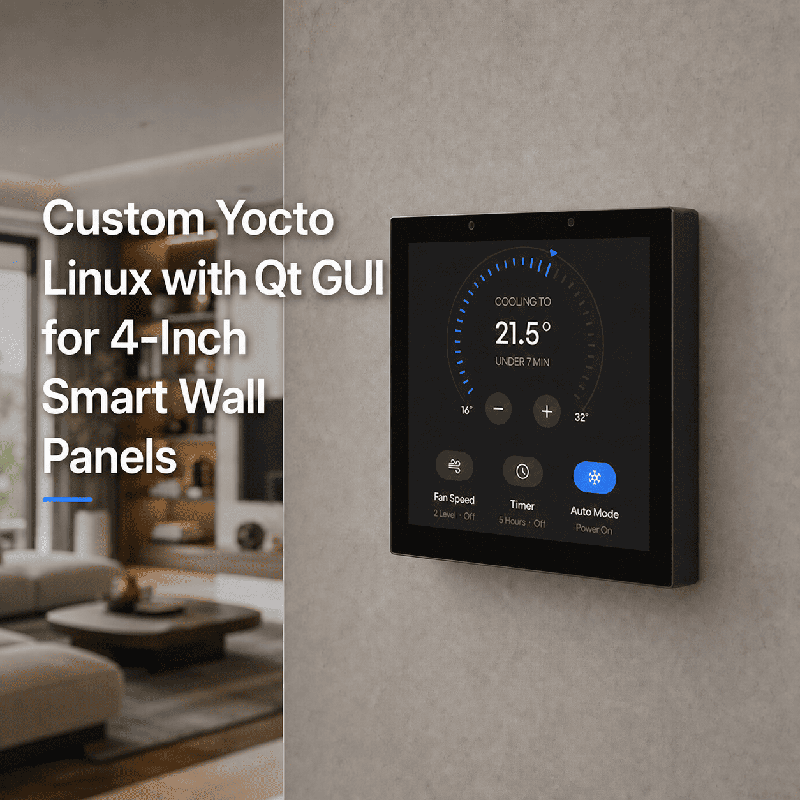
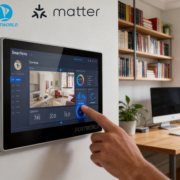
smart home control panel
An intelligent control panel may incorporate Zigbee, Matter, Wi-Fi, and Bluetooth capabilities; however, effective integration transcends merely consolidating these four wireless protocols within a singular device.
Wi-Fi facilitates network access, Bluetooth enables configuration and proximate communication, Zigbee interconnects suitable energy-efficient devices, and Matter establishes an interoperability framework across compatible network infrastructures. A bridge or gateway infrastructure may prove essential when incorporating Zigbee devices into a Matter-based environment.
For original equipment manufacturer initiatives, commence by establishing the panel’s functional purpose, intended device ecosystem, necessary communication standards, system platform, and offline operation specifications. Subsequently, determine the hardware components and software framework capable of fulfilling these requirements.
Through appropriate architectural design and comprehensive testing methodologies, a multi-protocol intelligent control panel can deliver an enhanced consolidated experience for diverse smart home systems while maintaining flexibility for evolving project specifications.