Can ESP32 Control HVAC Through a Smart Control Panel?
Heating, ventilation, and air conditioning (HVAC) control represents a critical component within smart home, hospitality, and building management infrastructure. As Internet of Things (IoT) technology continues to advance, ESP32-based intelligent control panels offer an economical solution for integrating touchscreen functionality and networked capabilities into existing HVAC installations.
An ESP32 microcontroller can effectively manage HVAC systems through an intelligent control panel by leveraging communication protocols including RS485/Modbus, WiFi, MQTT, Bluetooth, and integrated smart gateways. This capability enables occupants to modify temperature settings, alter operational modes, regulate fan velocity, and observe HVAC performance metrics via an interactive touchscreen display.
Operational Mechanism of ESP32 Smart Control Panels in HVAC Management
The fundamental system configuration comprises:
Touchscreen Smart Panel
↓
ESP32 Processor
↓
Communication Protocol
↓
HVAC Controller / Air Conditioning System
Upon user modification of temperature or HVAC mode parameters on the touchscreen interface, the ESP32 executes the command and transmits it to the HVAC system.
Illustrative Scenario:
User configures desired room temperature to 24°C
↓
ESP32 panel transmits control directive
↓
HVAC controller modulates cooling or heating output
↓
Temperature sensor provides status feedback
↓
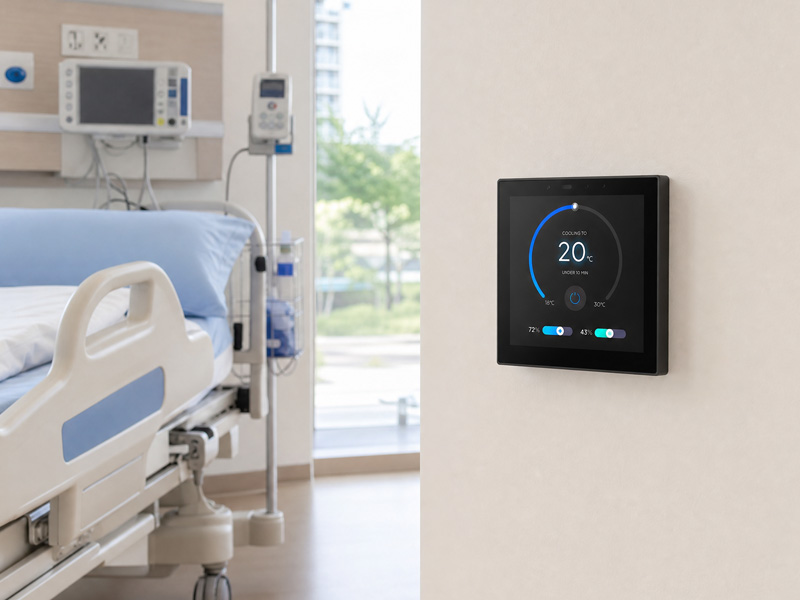
Touchscreen interface presents operational status
smart home control panel-1
1. ESP32 HVAC Control Through RS485 Modbus
RS485 Modbus represents one of the most prevalent communication protocols employed in professional HVAC applications.
Numerous HVAC devices are compatible with Modbus communication, encompassing:
- Fan coil units
- Air conditioning controllers
- Temperature controllers
- Building automation systems
Connection example:
ESP32 Smart Control Panel
↓ RS485 Modbus
HVAC Controller
The ESP32 panel facilitates control over:
- Power ON/OFF
- Temperature settings
- Cooling/heating mode
- Fan speed
- Operating schedules
Advantages:
- Dependable hardwired communication
- Extended-distance signal transmission
- Optimal for hospitality and commercial facilities
2. ESP32 HVAC Control Through WiFi
For intelligent residential environments and Internet of Things implementations, WiFi offers an adaptable wireless communication framework.
System architecture:
ESP32 Panel
↓ WiFi
Smart Home Gateway / Cloud Platform
↓
HVAC System
WiFi facilitates:
- Remote operation via mobile applications
- Cloud-integrated automation capabilities
- Intelligent automation sequences
- Real-time system surveillance
Illustrative scenario:
Upon user arrival at residence:
- Smart lock identifies arrival
- ESP32 panel engages
- HVAC system commences operation automatically
3. MQTT-Based HVAC Communication
MQTT serves as a prevalent communication protocol in Internet of Things-enabled heating, ventilation, and air conditioning systems.
Communication Architecture:
ESP32 Control Panel
↓
MQTT Broker
↓
HVAC System
Illustrative Example:
The touchscreen interface transmits:
Topic:
home/room/hvac/temperature
Message:
24°C
The HVAC controller receives the command and adjusts operation.
The system can also send feedback:
Topic:
home/room/hvac/status
Message:
Cooling ON
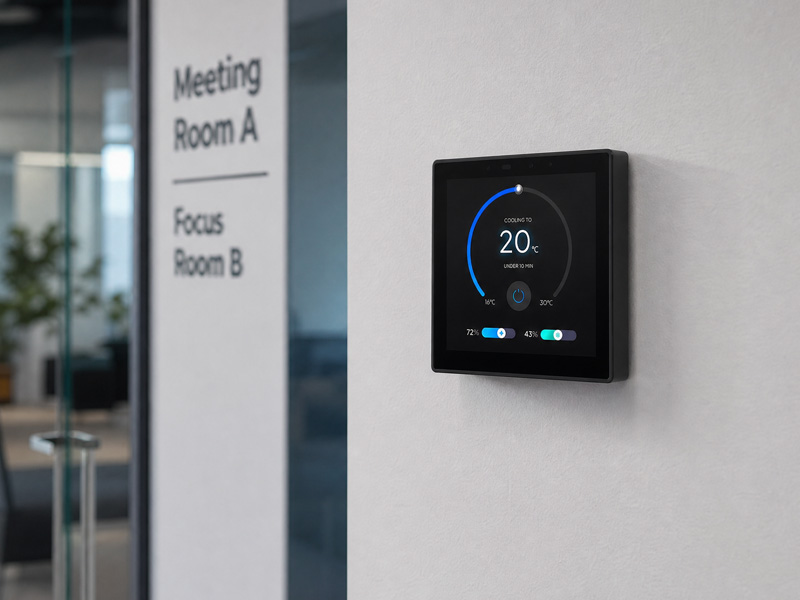
This allows real-time monitoring and automation.
smart home control panel
4. ESP32 Integration Through HVAC Gateways
Numerous commercial HVAC systems employ proprietary communication protocols.
Under such circumstances, an ESP32 panel may establish communication via a gateway device.
Illustrative Example:
ESP32 Smart Panel
↓ WiFi / Ethernet
HVAC Gateway
↓
Air Conditioning System
The gateway performs protocol conversion and facilitates intelligent touchscreen-based system control.
This implementation is prevalent in the following environments:
- Hotels
- Office buildings
- Smart apartments
What HVAC Functions Can ESP32 Smart Panels Control?
Temperature Adjustment
Users are able to:
- Establish desired temperature settings
- Monitor existing temperature readings
- Modify temperature measurement units
Operating Modes
Manage:
- Cooling functionality
- Heating functionality
- Fan operation
- Automatic mode selection
Fan Speed
Modulate:
- Reduced speed settings
- Intermediate speed settings
- Maximum speed settings
- Intelligent fan speed regulation
Smart Scheduling
Develop automated control scenarios:
Sleep Mode
- Modify temperature parameters
- Decrease fan velocity
- Optimize energy consumption
Away Mode
- Minimize HVAC system activity
- Enhance operational efficiency
What Hardware Components Are Necessary for ESP32 HVAC Control Systems?
A standard ESP32 HVAC intelligent control panel comprises:
ESP32-S3 Microprocessor
Delivers:
- Interactive touchscreen management
- Internet of Things connectivity
- Energy-efficient performance
- Touchscreen Interface Display
Presents:
- Temperature readings and metrics
- HVAC system status and diagnostics
- Operational control interfaces
- Data Communication Protocols
Based on specific implementation requirements:
- Wireless networking (WiFi)
- Wireless personal area network technology (Bluetooth/BLE)
- Industrial serial communication (RS485)
- Wired network connectivity (Ethernet)
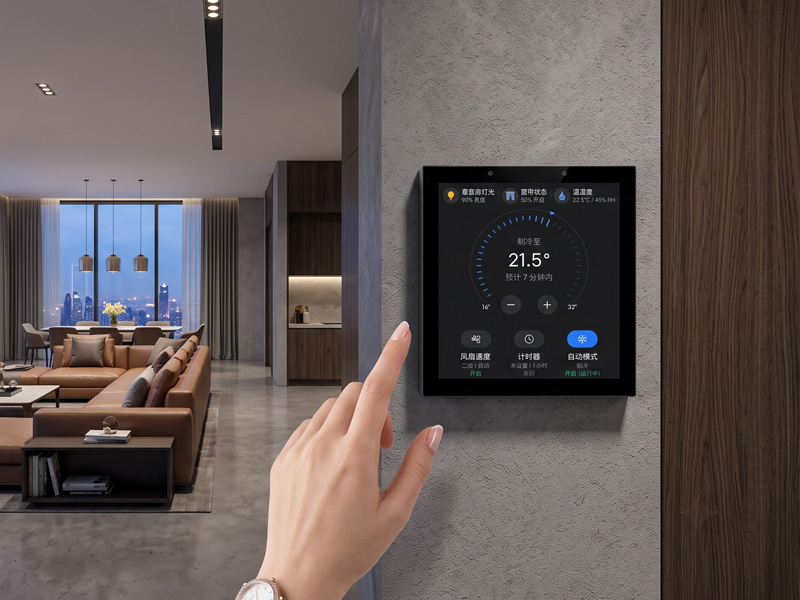
Smart Home Touch Control Panel
The Portworld YC-SM43P represents an advanced ESP32-S3-powered smart touch panel engineered for Internet of Things and automation implementations.
This device incorporates the following capabilities:
- ESP32-S3 microprocessor
- Capacitive touch display interface
- WiFi communication protocol
- Bluetooth 5.0 technology
- Ethernet connectivity
- RS485 serial communication
- LVGL-based graphical user interface framework
Offering comprehensive communication flexibility, the panel can be adapted for heating, ventilation, and air conditioning control systems across diverse environments including:
- Intelligent residential dwellings
- Automated hospitality room management
- Centralized commercial building systems
- Modern residential complex automation
ESP32 Smart Panel vs Traditional HVAC Controller
| Feature | ESP32 Smart Control Panel | Traditional HVAC Controller |
|---|---|---|
| Touchscreen Interface | ✅ | Limited |
| WiFi Connectivity | ✅ | Usually unavailable |
| IoT Integration | ✅ | Limited |
| Custom UI | ✅ | Limited |
| Smart Automation | ✅ | Basic |
An ESP32 smart panel adds intelligent control, connectivity, and a modern user experience to HVAC systems.
- Applications
- Smart Homes
Control:
Air conditioning units
Heating apparatus
Ventilation systems
Hotels
Deliver to guests:
- Individualized room temperature adjustment
- Automated energy conservation features
- Intelligent room environment presets
Offices and Buildings
Connect with:
- Heating, ventilation, and air conditioning infrastructure
- Facility management software platforms
- Power consumption tracking systems
The ESP32 microcontroller is capable of managing HVAC systems through an intelligent control panel by leveraging communication protocols including RS485 Modbus, WiFi, MQTT, and smart gateway technologies.
An ESP32-based touchscreen interface delivers a cost-effective and versatile approach for implementing intelligent HVAC control capabilities in both residential and commercial settings.
Utilizing customizable platforms such as the Portworld YC-SM43P ESP32-S3 intelligent touch panel, engineers and system integrators are able to develop sophisticated HVAC control systems tailored for smart residences, hospitality facilities, corporate offices, and comprehensive building automation applications.