Can a Digital Signage Display Work With Matter Smart Home Devices?
The expansion of intelligent residential systems is fundamentally transforming the manner in which occupants engage with their domestic environments. Conventional mechanical switches and handheld remote devices are progressively being supplanted by sophisticated control panels, interactive visual interfaces, and integrated home connectivity solutions.
Following the introduction of Matter, an industry-standardized smart home communication protocol, digital signage displays can transcend their conventional function as mere information presentation devices—they can simultaneously serve as primary command centers for managing interconnected residential devices.
What Constitutes Matter Within Intelligent Residential Systems?
Matter represents an industry-endorsed smart home communication standard engineered to enhance interoperability among diverse intelligent devices.
It facilitates seamless communication between products originating from disparate technological ecosystems, encompassing:
- Intelligent illumination systems
- Smart access control mechanisms
- Automated temperature regulation devices
- Environmental monitoring sensors
- Security and surveillance equipment
- Connected household appliances
Rather than necessitating independent applications for individual manufacturers, Matter facilitates the establishment of a more cohesive residential automation experience.
In What Manner Can Digital Signage Displays Interface With Matter-Compatible Devices?
A digital signage display incorporating smart home integration functionality can function as a centralized visual command interface.
Occupants can manipulate connected devices through an interactive touchscreen mechanism.
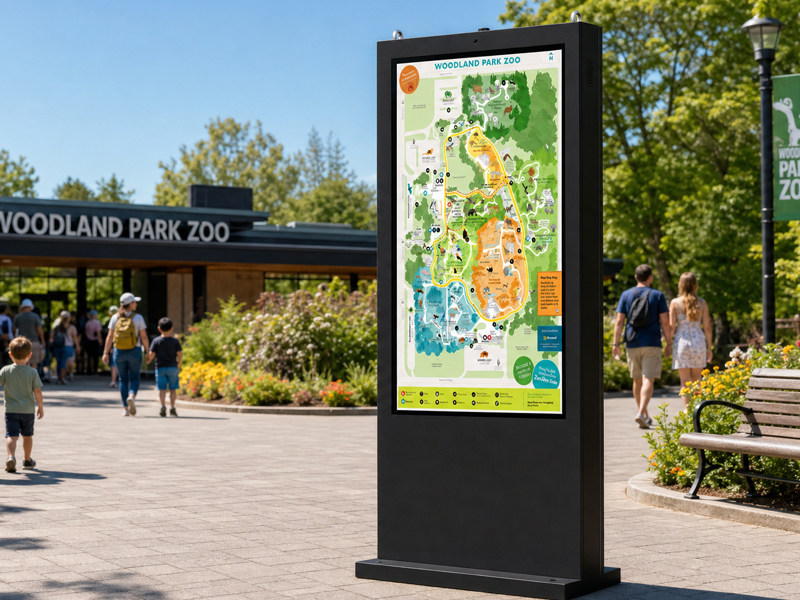
Floor Standing Digital Signage
Representative applications include:
1. Intelligent Residential Control Interface
A touchscreen-enabled digital signage display can deliver consolidated management capabilities for:
- Illumination systems
- Window coverings
- Climate control systems
- Access control devices
- Comprehensive security infrastructure
Occupants can modify operational parameters directly from the wall-affixed display interface.
2. Real-Time Smart Home Information
Digital displays are capable of presenting critical residential data, including:
- Temperature
- Humidity
- Air quality
- Energy consumption
- Security status
This capability elevates the display beyond a conventional screen, transforming it into a sophisticated home management interface.
3. Smart Scenes and Automation
Matter-compatible devices possess the capability to integrate seamlessly and establish automated operational sequences.
For instance:
- Home Mode
- Activate lighting systems
- Modulate temperature settings
- Secure window coverings
Away Mode
- Engage door locking mechanisms
- Deactivate electrical appliances
- Initiate security surveillance protocols
A touchscreen interface offers an intuitive mechanism for executing these automated sequences.
What Does a Digital Signage Display Require for Matter Integration?
1. Compatible Hardware Platform
Smart home displays typically necessitate embedded processors with the capability to execute smart home applications.
Prevalent platforms encompass:
- Rockchip RK3566
- RK3568
- RK3576
- RK3588
These processors deliver adequate performance for:
- Touch interfaces
- Smart home applications
- Multimedia functions
- Edge computing
ultra thin hanging advertising screen
2. Support for Android or Linux Systems
Matter integration frequently demands adaptable software environments.
Digital signage displays may utilize:
- Android
- Linux
- Debian
- Ubuntu
Developers possess the ability to tailor applications and incorporate smart home platforms.
3. Wireless Connectivity
Smart home displays may necessitate:
- WiFi
- Bluetooth
- Thread (for Matter over Thread devices)
- Ethernet
These communication protocols facilitate connection with diverse smart devices.
Utilization of Matter-Integrated Digital Signage Displays
Residential Environments
Implementation as:
- Wall-affixed control interfaces
- Residential information dashboards
- Access management systems
Hospitality Sector and Connected Accommodations
Guests possess the capability to manage:
- Illumination systems
- Climate regulation
- Window coverings
- Multimedia platforms
via an integrated room interface display.
Intelligent Facility Infrastructure
Digital signage displays facilitate integration with:
- Automated facility management systems
- Power consumption optimization platforms
- Atmospheric monitoring instrumentation
Commercial Workspaces and Collaborative Meeting Areas
Functional applications encompass:
- Environmental space management
- Illumination system regulation
- Power consumption tracking
- Meeting space condition optimization
Wall-Mounted Digital Signage display
Portworld Smart Display Solutions for Matter Integration
Portworld delivers adaptable touchscreen display systems engineered for smart home and building environments.
Key Capabilities:
- Android/Linux platform compatibility
- Responsive touchscreen technology
- RK3566/RK3588 processor selections
- WiFi/Bluetooth communication protocols
- Supplementary Zigbee, NFC, RFID integration options
- Comprehensive OEM/ODM software development services
- Interoperability with established smart home protocols
Portworld displays may be configured to function as:
- Intelligent home management interfaces
- Hospitality room control systems
- Facility automation workstations
- Dynamic wall-integrated display panels
Advantages of Matter-Enabled Digital Signage Displays
Enhanced User Experience
A single interface facilitates command and control of numerous connected devices simultaneously.
Increased Integration Flexibility
Matter technology mitigates interoperability challenges across diverse manufacturers and platforms.
Scalable Smart Building Infrastructure
Displays function as integral components within comprehensive IoT network architectures.
Sustainable Technology Investment
Organizations and property owners maintain the capacity to incorporate additional connected devices progressively over extended periods.