Bulk Supply Smart Control Panels for Smart Apartment Buildings
In the majority of smart apartment initiatives, the control panel transcends being merely a device—it serves as the primary human interface for the entire building automation system. When dealing with hundreds or even thousands of units, the manner in which these panels are sourced, configured, and deployed has a direct impact on project costs, installation efficiency, and long-term maintenance.
This is why the bulk supply of smart control panels for smart apartment buildings has emerged as a crucial requirement for real estate developers, system integrators, and smart building contractors.
Smart apartment projects differ significantly from single-home automation.
A single smart home project can accommodate customization and flexibility. However, apartment buildings operate on a vastly different scale.
Every unit must maintain consistency. Each panel must function identically. And every installation must be replicable.
In practical terms, this implies that the smart control panel evolves into a standardized infrastructure product, akin to switches, water meters, or thermostats—albeit significantly more advanced.
Once a building expands beyond a few dozen units, bulk supply transitions from being optional to the only feasible strategy.
The significance of bulk supply surpasses mere features.
In the initial phases of smart home projects, the emphasis is often placed on features such as screen size, operating system, KNX support, MQTT integration, and others.
However, in the context of apartment-scale deployment, the focus shifts.
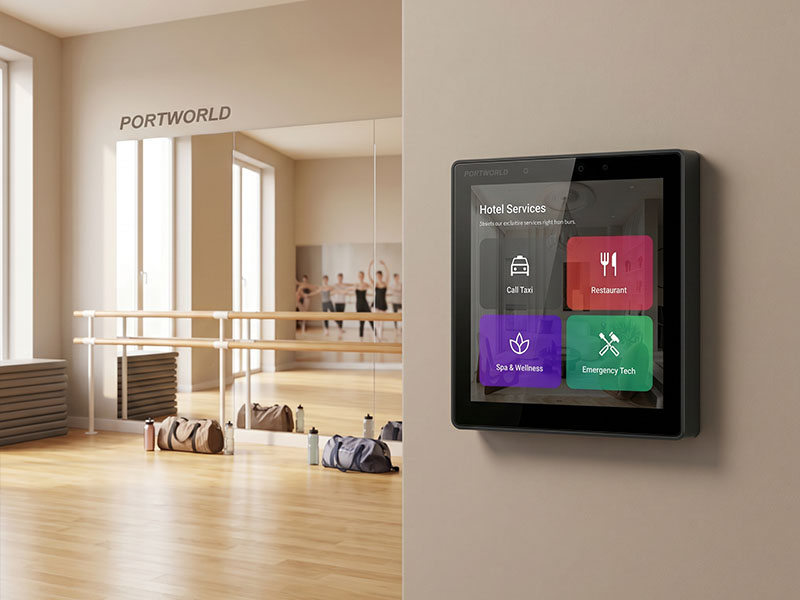
4″ KNX Smart Touch Control Panel
What becomes paramount is:
Uniformity across every room, ensuring tenants experience the same quality. Reliability in long-term operation, as devices must function continuously without the need for maintenance visits. And dependable supply, since delays in hardware can lead to postponed construction timelines.
In essence, the panel transitions from being a “product choice” to a critical factor influencing project execution risk.
In the majority of smart apartment initiatives, the control panel transcends being merely a device—it serves as the primary human interface for the entire building automation system. When dealing with hundreds or even thousands of units, the manner in which these panels are sourced, configured, and deployed has a direct impact on project costs, installation efficiency, and long-term maintenance.
This is why the bulk supply of smart control panels for smart apartment buildings has emerged as a crucial requirement for real estate developers, system integrators, and smart building contractors.
Smart apartment projects differ significantly from single-home automation.
A single smart home project can accommodate customization and flexibility. However, apartment buildings operate on a vastly different scale.
Every unit must maintain consistency. Each panel must function identically. And every installation must be replicable.
In practical terms, this implies that the smart control panel evolves into a standardized infrastructure product, akin to switches, water meters, or thermostats—albeit significantly more advanced.
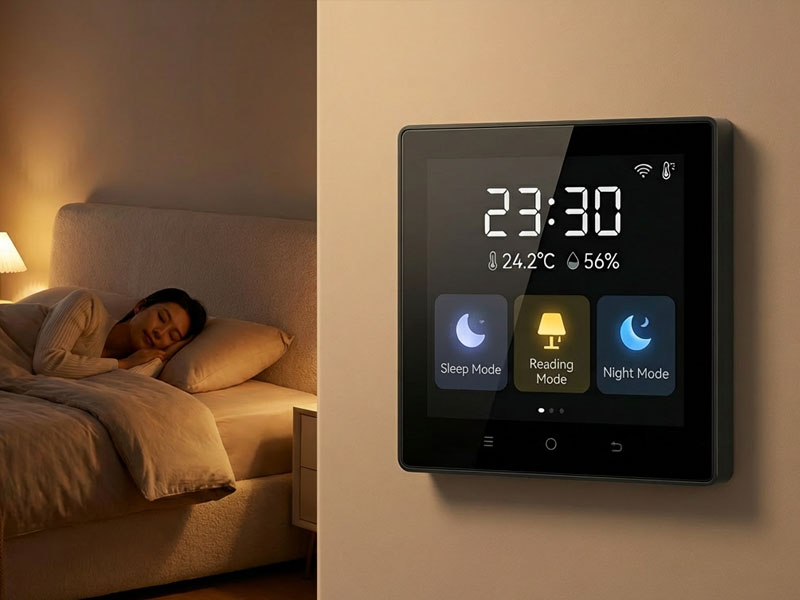
YC-SM41P-KNX
4″ KNX Smart Touch Control Panel
Once a building expands beyond a few dozen units, bulk supply transitions from being optional to the only feasible strategy.
The significance of bulk supply surpasses mere features.
In the initial phases of smart home projects, the emphasis is often placed on features such as screen size, operating system, KNX support, MQTT integration, and others.
However, in the context of apartment-scale deployment, the focus shifts.
What becomes paramount is:
Uniformity across every room, ensuring tenants experience the same quality. Reliability in long-term operation, as devices must function continuously without the need for maintenance visits. And dependable supply, since delays in hardware can lead to postponed construction timelines.
In essence, the panel transitions from being a “product choice” to a critical factor influencing project execution risk.
The actual framework of a smart apartment control system
In a standard smart apartment complex, the control panel does not operate in isolation. It is positioned at the apex of a multi-layered system.
At the foundational level are devices such as lighting modules, HVAC controllers, curtain motors, and door locks. These devices are typically interconnected via protocols like KNX, RS485 Modbus, Zigbee, or similar technologies.
Above this foundational layer is a local gateway or building automation controller that manages the communication logic.
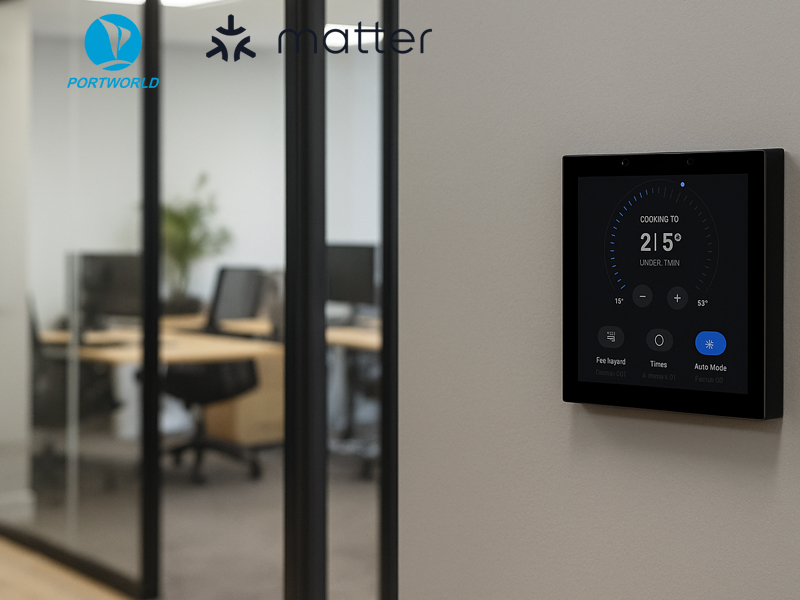
smart home control panel
At the topmost level is the wall-mounted smart control panel, which serves as the visual interface for the residents.
From the perspective of the user, this panel represents the smart home system.
All other components constitute the concealed infrastructure.
The prevalence of Android-based panels in apartments
In extensive residential installations, Android has emerged as the preferred option for smart control panels.
This preference is driven not only by technical factors but also by user experience.
Residents are accustomed to touchscreen interfaces and anticipate a system that mimics the functionality of a smartphone: seamless navigation, intuitive icons, and rapid responsiveness.
Android facilitates this experience without necessitating the development of a system from the ground up.
It also enables integrators to create tailored interfaces for:
- Lighting scenes such as “Home”, “Away”, or “Sleep”
- HVAC temperature settings for individual rooms
- Energy monitoring dashboards and access control
- Camera intercom systems and visitor surveillance
This transforms the wall panel into a frequently used interaction point, rather than merely a concealed controller.
The ongoing significance of Linux
While Android prevails in the user interface domain, Linux continues to play a vital role in apartment automation systems, albeit in a different capacity.
Linux is often selected when reliability and background processing take precedence over user interface considerations.
It operates quietly within systems that oversee communication, data routing, and protocol translation among KNX, Modbus, and IP networks.
In numerous real-world implementations, Linux serves as the control backbone, while Android functions as the user-facing layer.
Understanding what bulk supply entails in actual projects
Standardization of installation is essential.
In multi-family dwellings, the speed of installation is closely linked to the overall project expenses.
Consequently, the majority of large-scale smart panel installations utilize standardized wall box formats, including EU, US, or 86-type frames.
Flush mounting is favored as it provides a uniform architectural appearance throughout all units.
Once the installation process is standardized, electricians can regard the panel as a conventional building element rather than a specialized apparatus.
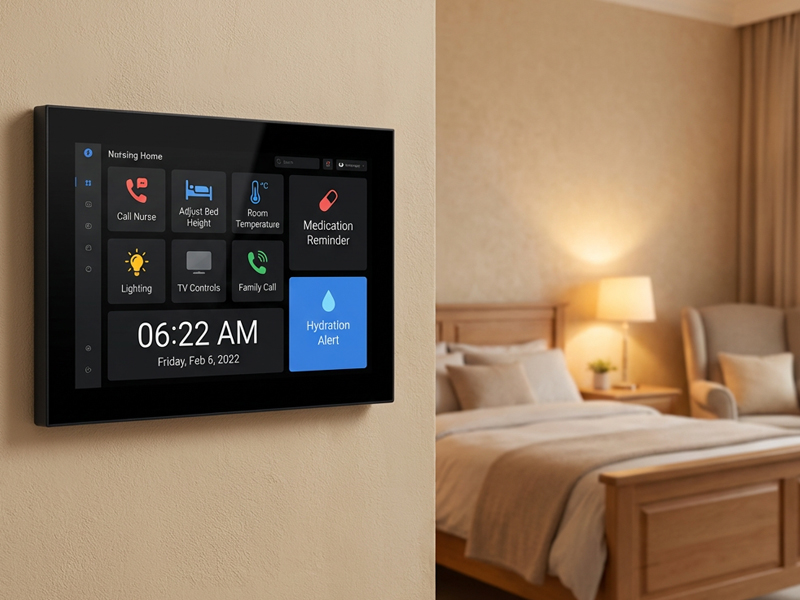
sm55p-smart home control panel
This significantly decreases labor costs and minimizes installation mistakes.
Practical implementation in multi-family dwellings.
In residential buildings, smart control panels are generally placed in living rooms, bedrooms, and occasionally kitchens.
Residents utilize these panels to manage lighting scenes, modify HVAC settings, control curtains, and oversee security systems.
In communal areas of the building, similar panels are employed for lobby lighting, elevator control systems, and fitness room automation.
From the perspective of property management, centralized dashboards facilitate the monitoring of energy consumption, system performance, and the status of building-wide automation.
The outcome is a multi-layered system where each unit is interconnected yet remains independently manageable.
The significance of OEM/ODM manufacturing in large-scale supply.
At a large scale, the majority of smart apartment initiatives depend on OEM or ODM manufacturers instead of standard retail products.
This enables developers to oversee:
Hardware design aspects such as screen dimensions, chipset choices, and communication protocols.
Software personalization including user interface design, system functionality, and automation processes.
Branding components like logos, startup screens, and packaging.
Such a degree of customization guarantees that the control panel transcends being merely a device, becoming an integral part of the building’s identity.
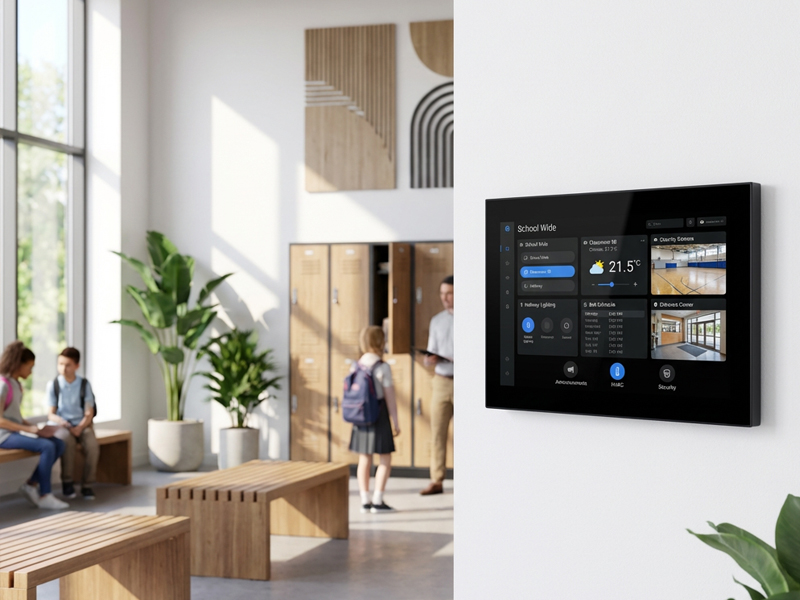
sm10p smart home control panel
Where Portworld-type solutions are integrated into this framework
In practical applications, manufacturers like Portworld offer intelligent control panels specifically tailored for bulk supply and building automation initiatives.
These systems generally operate on Android or Linux platforms, utilize PoE-powered installations for easier wiring, and support multi-protocol integration, including KNX, RS485, and MQTT.
Crucially, they are engineered for repeatable deployment, which is essential for projects at the apartment scale.
Rather than constructing a single smart home, you are implementing hundreds of identical smart nodes—and the hardware must accommodate that logic.
Smart control panels for bulk supply in smart apartment buildings are not solely focused on hardware scalability—they emphasize the importance of consistent performance.
At this scale, success hinges on standardization, integration architecture, and long-term operational reliability rather than the features of individual products.
The most effective systems are those that seamlessly blend into the background for users while efficiently managing lighting, HVAC, security, and energy systems.
In contemporary smart apartment development, the control panel has evolved from being a mere accessory to becoming an integral part of the building’s core infrastructure—and bulk supply is what enables that infrastructure to function effectively at scale.