Open Protocol vs. Proprietary Smart Home Systems: Which Is Better?
Smart home technology is advancing quickly. Homeowners and building developers can choose from thousands of connected products, such as smart switches, lighting controllers, thermostats, sensors, door locks, and touchscreen control panels.
However, smart home devices do not all communicate using the same methods. Some use open standards that support integration across manufacturers, while others depend on proprietary protocols and software ecosystems.
This raises an important question for smart home developers and system integrators:
Should you select an open protocol or a proprietary smart home system?
Each approach offers benefits as well as limitations. The best option depends on your project’s requirements, device compatibility, customization needs, budget, and long-term maintenance plans.
In this article, we compare open and proprietary smart home systems and outline how to select the right architecture for your project.
1. What Is an Open Protocol in Smart Home Automation?
An open protocol is a publicly documented communications standard that enables compatible devices and systems to exchange information according to established rules.
In smart home automation, open protocols allow products from different manufacturers to communicate without requiring every device to use the same brand ecosystem.
Common examples include:
- KNX: An established standard for residential and commercial building automation.
- Zigbee: A low-power wireless networking protocol often used for lighting, sensors, and switches.
- Matter: An application-layer connectivity standard developed to improve interoperability across smart home ecosystems.
- Modbus: An industrial communications protocol also used to monitor buildings and equipment.
- MQTT: A lightweight messaging protocol widely used in Internet of Things (IoT) applications.
These technologies have different roles. Some specify how devices communicate and behave on a network, while others provide standardized application-level functions or messaging.
A key benefit of an open protocol is greater flexibility for developers choosing compatible hardware and software from multiple suppliers.
For instance, a smart building project might combine KNX lighting controllers, Modbus energy meters, and an MQTT-based monitoring platform in a single integrated system.
However, open protocols do not ensure that all devices will automatically work together. Compatibility depends on supported functions, implementation quality, device profiles, software integration, and gateways.
2. What Is a Proprietary Smart Home System?
A proprietary smart home system relies on communication technologies, software interfaces, device configurations, or cloud services managed by a specific manufacturer or ecosystem provider.
In this type of architecture, devices are typically designed to operate mainly within the same product family.
For instance, a manufacturer may provide its own:
- Smart switches
- Lighting controllers
- Sensors
- Home gateways
- Mobile applications
- Cloud management platforms
- Automation rules
These products may communicate using a proprietary wireless protocol, a customized application interface, or a mix of standard networking technologies and manufacturer-specific software.
It is important to note that proprietary systems do not always use proprietary radio technology. A device can use standard Wi-Fi or Bluetooth and still depend on a closed application or cloud ecosystem.
Advantages of Proprietary Systems
Simplified Product Integration
Devices built for the same ecosystem are often designed and tested to work together, which can reduce the effort required during installation.
Centralized Management
Users may be able to manage lighting, security, and other devices through a single application or gateway.
Consistent User Experience
The manufacturer can provide a consistent interface, device setup process, and automation experience.
Dedicated Technical Support
One supplier may offer hardware, software, cloud services, and post-purchase support through a single service channel.
Limitations of Proprietary Systems
Limited Device Compatibility
Devices made by other manufacturers may not be supported unless an official integration or gateway is available.
Vendor Dependency
Users may rely on a single supplier for hardware replacements, software updates, and system expansion.
Customization Restrictions
Some systems offer limited access to APIs, firmware, or device communication interfaces.
Long-Term Maintenance Risks
If a manufacturer changes its product strategy, discontinues a platform, or ends support for a service, customers may have to replace or redesign part of their system.
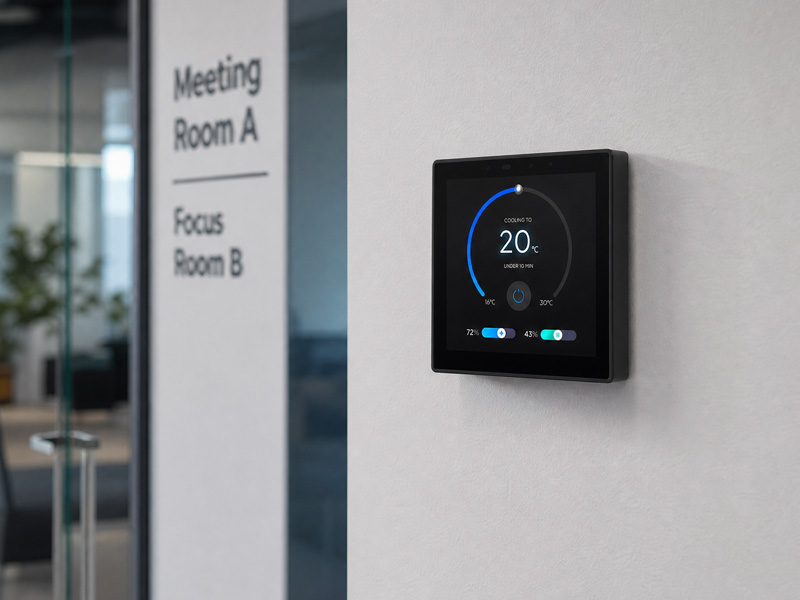
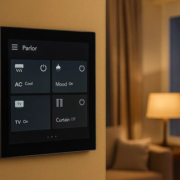
smart home control panel
3. Open Protocols vs. Proprietary Smart Home Systems: Key Differences
These two approaches differ in several important ways.
| Comparison | Open Protocol Systems | Proprietary Systems |
|---|---|---|
| Compatibility | Supports integration across compatible implementations | Usually prioritizes products within one ecosystem |
| Hardware selection | More flexible | Often limited to approved products |
| Customization | Depends on protocol and implementation access | Depends on manufacturer permissions |
| Integration | May require configuration and gateways | Often simpler within the same ecosystem |
| Vendor dependency | Can be reduced | Usually higher |
| Development effort | May require more integration work | Often lower for standard use cases |
| Software access | Varies by protocol and product | May be restricted |
| Long-term expansion | Flexible with compatible products | Depends on manufacturer support |
Zigbee: Low-Power Wireless Device Networking
Zigbee is widely used for smart home lighting, sensors, switches, and other devices that require little power.
Its mesh network design enables compatible devices to communicate through routers within the Zigbee network.
Zigbee is well suited to projects that need:
- Low-power wireless communication
- Battery-powered sensors
- Smart lighting control
- Wireless switches
- Expandable mesh networking
Zigbee devices typically need a compatible coordinator or gateway to manage the network and connect it with other IP-based systems.
Although Zigbee is an open standard, device compatibility still depends on supported profiles, clusters, and manufacturers’ implementations.
KNX: Interoperability in Building Automation
KNX is a well-established open standard for automating residential and commercial buildings.
It is commonly used for:
- Lighting control
- HVAC management
- Curtain and blind operation
- Smart hotel automation
- Building management systems
KNX works across several communication media, including twisted-pair bus, radio frequency (RF), and IP networks.
Standardized device functions and engineering tools make KNX a strong choice for larger projects that need organized configuration and lasting system integration.
MQTT: Adaptable Messaging for IoT
MQTT is a lightweight publish/subscribe protocol developed for communication among IoT devices and applications.
Devices and applications exchange information through an MQTT broker.
For instance, temperature sensors can publish their readings to a broker, and a smart home dashboard can subscribe to the relevant topics to display that data.
MQTT is especially useful for:
- IoT monitoring
- Remote equipment management
- Smart home dashboards
- Sensor data collection
- Cloud-connected applications
Unlike KNX or Matter, MQTT does not provide a standardized model for controlling smart home devices. Developers must define their own topics, message formats, and application logic.
5. Which System Is Best for Different Smart Home Projects?
The right architecture depends on the project’s scale and the devices it needs to connect.
Residential Smart Home Automation
For residential projects that include lighting, curtains, temperature control, and sensors, open protocols can offer greater flexibility.
For instance, a system could combine Zigbee sensors, Matter-compatible lighting products, and a wired control network based on KNX.
A smart home control panel can bring these separate subsystems together through a single interface.
A proprietary system may also be appropriate for smaller projects when users want a straightforward installation and prefer to source all devices from one supplier.
Hotels typically require centralized management of lighting, HVAC, curtains, room status, and energy use.
Open standards such as KNX can provide a structured basis for integrating devices from multiple manufacturers.
Proprietary systems may be suitable when a hotel developer prefers standardized equipment and centralized management through a single supplier.
The choice should take into account plans for expanding the number of rooms, maintenance needs, integration with hotel management software, and the long-term availability of products.
Smart Building Management
Large commercial buildings may contain lighting systems, HVAC equipment, energy meters, access control, and environmental monitoring systems.
An open, multi-protocol architecture can simplify integration across these diverse subsystems.
For example:
- KNX handles lighting and room automation.
- Modbus gathers data from energy meters and HVAC equipment.
- MQTT delivers monitoring data to management applications.
A proprietary solution can simplify a particular subsystem, but integrating different building systems often depends on standardized interfaces or gateways.
Industrial IoT Applications
Industrial projects commonly include equipment from multiple manufacturers.
Open protocols such as Modbus and MQTT can offer flexibility when connecting PLCs, meters, sensors, and monitoring platforms.
However, proprietary protocols may still be required to integrate specialized industrial equipment or manufacturer-specific functions.
6. Open Protocols Do Not Always Guarantee Better Compatibility
A common misconception is that any device using an open protocol will automatically work with every other compatible device.
In practice, protocol compatibility differs from application compatibility.
For example, two Zigbee devices may use the same underlying wireless technology while supporting different device functions or clusters.
Likewise, two MQTT devices may connect to the same broker but use entirely different topic structures and message formats.
Matter improves interoperability by standardizing device types and application functions. However, compatibility still depends on the Matter features each device supports and how the product is implemented.
Before choosing devices, developers should verify:
- Supported protocol versions
- Device types and functional capabilities
- Communication interfaces
- Required gateways or controllers
- Available APIs and SDKs
- Firmware update support
- Security and authentication mechanisms
- Integration with the target smart home platform
This is particularly important in commercial projects, where multiple device categories must work together reliably.
7. Can Open and Proprietary Smart Home Systems Work Together?
Yes. A hybrid architecture is often a practical approach.
Rather than replacing every proprietary device with one that uses an open protocol, developers can connect different systems through gateways, APIs, and software integrations.
For example, a smart building might use the following architecture:
KNX Building Control
KNX devices manage lighting, curtains, switches, and HVAC systems.
Zigbee Wireless Devices
Zigbee sensors and switches add wireless functionality.
Proprietary Security System
A manufacturer-specific security system manages selected alarms and monitoring devices.
Matter Integration
A compatible Matter bridge can make supported devices from other networks available to Matter ecosystems.
Centralized Management Platform
An embedded gateway or industrial computer gathers data and coordinates communication among the different subsystems.
This approach keeps existing equipment in service while allowing new products to be introduced gradually.
However, integration depends on compatible gateways, software interfaces, data mapping, and suitable security controls. Some proprietary features may not be transferable to other systems.
8. Choosing Hardware for Open and Proprietary Smart Home Systems
Communication protocols are only one element of a product’s architecture. Hardware must also meet requirements for interfaces, processing capacity, operating systems, and the software development environment.
Processor and Operating System
ARM-based platforms can offer adequate processing power for touchscreen control panels and smart home gateways, supporting graphical interfaces, device management, and communication services.
Android may be appropriate for application-driven control interfaces, whereas Linux provides flexibility for customized embedded services and protocol integration.
Communication Interfaces
Hardware interface requirements vary from project to project.
Common examples include:
- Ethernet
- Wi-Fi
- RS485
- RS232
- UART
- I2C
- GPIO
- KNX interfaces
- Zigbee or Thread radio modules
Having a standard Ethernet or RS485 port does not, by itself, ensure support for every protocol. The necessary hardware, firmware, and software stack must also be implemented.
Memory and Storage
A system that runs several communication services, local applications, and graphical interfaces may need more memory and storage than a basic sensor device.
Developers should assess:
- RAM capacity
- eMMC or flash storage
- Operating system requirements
- Application size
- Data logging
- Space for firmware updates
- Software Customization
Open systems typically offer greater flexibility for development.
Useful capabilities include:
- SDK access
- Source code availability
- API integration
- Firmware customization
- Support for communication protocols
- Remote software updates
For proprietary systems, developers should also verify that the manufacturer provides adequate documentation and integration interfaces.
9. How Portworld Enables Flexible Smart Home Hardware Development
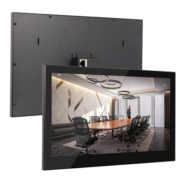
Portworld supplies smart home control panels, embedded motherboards, and customized hardware solutions for residential automation, smart buildings, and industrial IoT applications.
Manufacturers and system integrators can select from different hardware architectures to meet their project requirements.
Smart Home Control Panels
Portworld offers smart home control panels built on Rockchip and ESP32 platforms.
For instance, the YC-SM41P-KNX is designed for smart home control, with options for KNX and Zigbee gateway integration.
It can function as a touchscreen interface for lighting, room automation, and smart building management.
ESP32-Based Embedded Panels
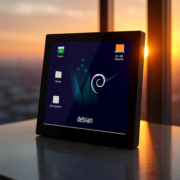
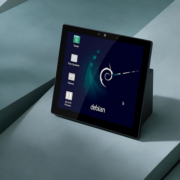
The YC-SM43P is a 4-inch ESP32-S3 touchscreen panel that supports LVGL, Wi-Fi, Bluetooth, and optional Ethernet and RS485.
It may be suitable for customized embedded control interfaces and communication applications.
Its hardware connectivity does not indicate that Matter, Zigbee, Thread, or MQTT functionality is preinstalled. These capabilities require the appropriate radio hardware and software implementation.
Custom Motherboards and PCBA Solutions
For projects that require particular communication interfaces or tailored hardware configurations, Portworld offers motherboard and PCBA development services.
Customization options may include:
- Processor and memory selection
- Ethernet and wireless connectivity
- RS485 and RS232 interfaces
- Display and touchscreen connections
- GPIO and peripheral interfaces
- Custom PCB layouts
- OEM/ODM and Software Customization
Portworld also provides:
- Android and Linux customization
- Embedded firmware development
- Communication protocol integration
- SDKs and technical documentation
- Prototype and small-batch development
- CKD/SKD and PCBA supply
- OEM/ODM manufacturing
These capabilities enable customers to create products for both open-protocol and manufacturer-specific smart home systems.
10. Conclusion: Open Protocols or Proprietary Systems?
No single solution is suitable for every smart home project.
Open protocols are typically preferable when flexibility, interoperability, integration across brands, and future expansion are key considerations. Proprietary systems may be more convenient when ease of use, centralized support, and a consistent product ecosystem matter most.
For many commercial projects, a hybrid architecture provides an effective balance. Open protocols can enable communication among diverse devices, while proprietary systems retain specialized functions when needed.
Before selecting an approach, assess communication requirements, hardware availability, software access, integration costs, and the long-term maintenance plan.
Portworld offers smart home control panels, embedded motherboards, PCBA solutions, and OEM/ODM customization services to support manufacturers developing flexible smart home and building automation products.