What Is Zigbee and How Does It Work in Smart Homes?
As smart homes grow more connected, homeowners and system integrators need a dependable way to link lighting, sensors, switches, thermostats, and other devices. Yet connecting dozens of smart products using Wi-Fi alone can lead to issues such as network congestion, increased power use, and more complex device management.
Zigbee offers an alternative.
Zigbee is a low-power wireless communication technology built for connected devices. It enables smart home products from different manufacturers to communicate within a coordinated wireless network, making it well suited to lighting control, environmental monitoring, security systems, and home automation.
But what is Zigbee, exactly, and how does it operate in a smart home system?
1. What Is Zigbee?
Zigbee is a wireless communication protocol based on the IEEE 802.15.4 standard. It is intended for low-power, low-data-rate communication between devices over short distances.
Unlike Wi-Fi, which is commonly used for internet access and high-bandwidth applications, Zigbee is focused on communication among smart devices.
Common Zigbee devices include:
- Smart lights and dimmer switches
- Door and window sensors
- Motion and occupancy detectors
- Temperature and humidity sensors
- Smart plugs and relays
- Curtain and blind controllers
- Smart thermostats
Zigbee typically uses the 2.4 GHz frequency band worldwide, though some implementations also support regional sub-GHz bands.
Its low power consumption makes Zigbee especially suitable for battery-powered sensors designed to run for long periods without frequent battery changes.
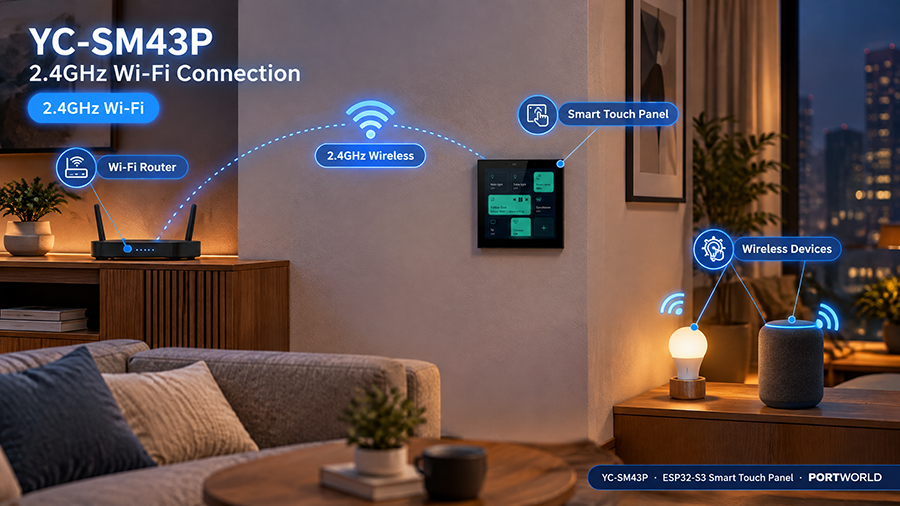
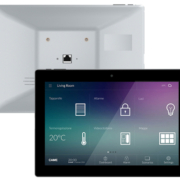
YC-SM43P smart home control panel
2. How Does Zigbee Work in a Smart Home?
Zigbee connects smart home devices through a wireless mesh network. Rather than requiring each device to communicate directly with a central router, some devices relay messages to others across the network.
A typical Zigbee smart home system includes three types of devices:
Zigbee Coordinator
The coordinator establishes and manages the Zigbee network.
In a smart home setup, it is often built into a central gateway or smart home controller. It enables devices to join the network and oversees essential network information.
Zigbee Router
A router relays messages between devices and helps expand the mesh network’s coverage.
Depending on their design, smart plugs, powered switches, and some lighting products can function as Zigbee routers.
Zigbee End Device
End devices are generally sensors or battery-powered products that communicate through a coordinator or router.
For instance, a battery-powered door sensor can report an open or closed event to a Zigbee router, which then forwards the message to the central controller.
Zigbee Smart Home Network
- Coordinator: A smart home gateway or control panel
- Routers: Smart plugs, powered switches, and lighting devices
- End devices: Door, motion, and temperature sensors
When a motion sensor detects movement, it transmits a Zigbee message across the network. The smart home controller receives the event and carries out a configured automation, such as switching on a light or triggering an alarm.
This mesh structure can expand network coverage and improve communication reliability, particularly in homes with many connected devices.
3. Why Is Zigbee Popular in Smart Home Automation?
Zigbee has several benefits that make it well suited to residential and commercial smart-building applications.
Low Power Consumption
Zigbee is designed to communicate using little power. Battery-operated sensors can stay in sleep mode most of the time, waking only when they need to send information.
This makes Zigbee a practical option for door sensors, temperature sensors, and motion detectors.
Mesh Networking
Zigbee supports mesh networking, in which compatible router devices relay messages throughout the network.
Instead of depending entirely on a direct connection to a central gateway, devices can communicate through several network paths.
However, mesh coverage is affected by device placement, router availability, radio interference, and network configuration.
Large Device Networks
Zigbee is built to accommodate networks containing many connected devices. This makes it suitable for smart homes with several rooms, lighting circuits, sensors, and automation features.
The number of devices a network can support in practice depends on its coordinator, firmware, configuration, and device implementations.
Local Communication
Zigbee devices can communicate over a local network, so not every command needs to pass through an external cloud server.
This can allow smart home systems to preserve essential local automation when internet access is unavailable, as long as the controller and automation software support local operation.
Interoperability
Zigbee uses standardized communication methods, but this does not guarantee compatibility among all products.
Device profiles, clusters, application versions, and manufacturer-specific extensions may influence whether devices work together.
System integrators should verify device compatibility before installation.
smart control panel factory-1
4. Zigbee vs. Wi-Fi vs. Bluetooth: What Is the Difference?
Zigbee is not intended to replace every wireless technology in a smart home. Different protocols serve different purposes.
| Feature | Zigbee | Wi-Fi | Bluetooth LE |
|---|---|---|---|
| Main purpose | Smart device networking | Internet and high-data-rate communication | Short-range device communication |
| Power consumption | Low | Generally higher | Low |
| Network structure | Mesh, star, tree | Infrastructure-based | Point-to-point and supported mesh options |
| Data rate | Low | High | Low to moderate |
| Typical applications | Sensors, switches, lighting | Cameras, TVs, gateways | Wearables, accessories, commissioning |
For example:
- Use Zigbee for battery-powered sensors, smart switches, and lighting automation.
- Use Wi-Fi for cameras, smart displays, and devices that need higher data throughput.
- Use Bluetooth LE for nearby device connections, configuration, and selected smart home applications.
A well-designed smart home system may combine all three technologies.
5. How Does a Zigbee Gateway Connect Smart Home Devices?
A Zigbee gateway links Zigbee devices to the broader smart home system.
A typical system architecture is as follows:
- Zigbee Sensors and Switches → Zigbee Gateway → Smart Home Controller → User Interface
- The gateway receives data from Zigbee devices and passes it to the smart home controller.
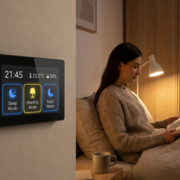
- For example, in an automated bedroom:
- A Zigbee motion sensor detects someone entering the room.
- The sensor sends an event to the Zigbee gateway.
- The smart home controller processes the event.
- The controller triggers the lighting automation.
- A smart light switches on at the configured brightness.
Users can manage these functions through a smart home control panel, mobile app, or another supported interface.
For system integrators, the gateway is a key component of the system architecture, connecting wireless devices to automation logic and user-facing controls.
6. Zigbee in Smart Home Control Panels
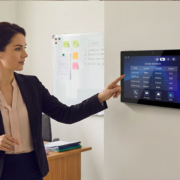
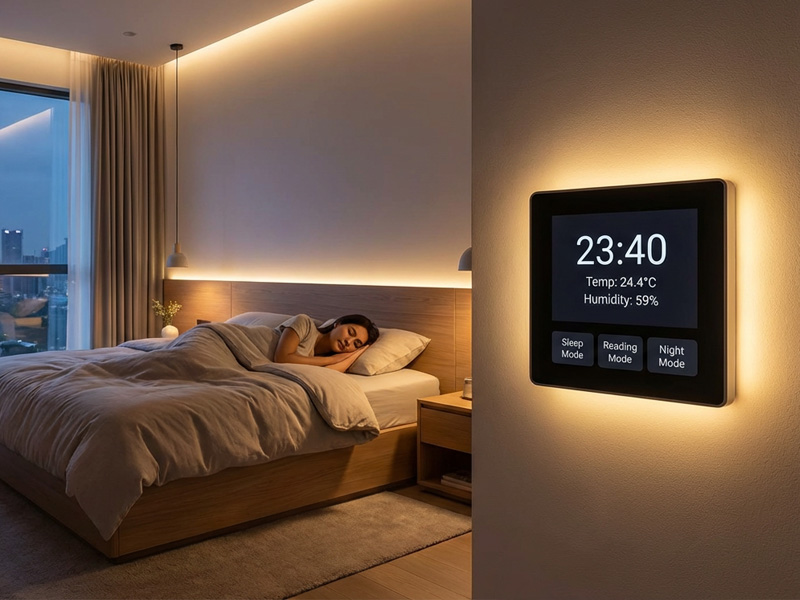
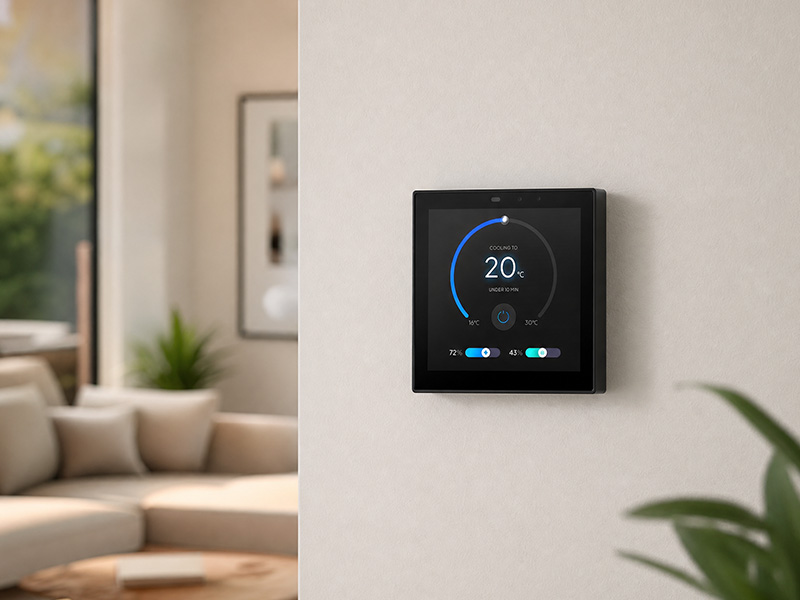
Smart home control panels offer a central interface for managing lighting, climate, curtains, security, and other connected devices.
With Zigbee connectivity, a control panel can also serve as part of a wider smart home automation system.
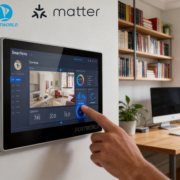
For example, a wall-mounted smart home panel can provide:
- Centralized lighting control
- Temperature and humidity monitoring
- Curtain and blind management
- Scene configuration
- Device status visualization
- Automation control
Portworld develops smart home control panels and embedded hardware solutions for residential and building automation projects.
Its product range includes Android-based control panels and ESP32-S3-based smart panels. Depending on the hardware selected and the system architecture, these devices can integrate with external Zigbee gateways or compatible wireless modules.
For example, the YC-SM41P-KNX supports KNX and Zigbee-related smart home integration. The ESP32-S3-based YC-SM43P supports LVGL, Wi-Fi, Bluetooth, Ethernet, PoE, and RS485 for customized control applications.
The specific Zigbee capabilities depend on the selected gateway, module, firmware, and integration design. A control panel should not be assumed to contain a Zigbee radio solely because it supports smart home automation.
smart home control panel
7. What Factors Should You Consider When Selecting Zigbee Devices?
Before choosing Zigbee products for a smart home project, review several technical considerations.
1. Device Compatibility
Make sure sensors, switches, gateways, and controllers support compatible Zigbee versions, profiles, clusters, and device functions.
2. Network Coverage
Account for the building’s layout, wall materials, device placement, and possible radio interference. Add appropriate powered Zigbee routers where needed.
3. Power Requirements
Battery-powered end devices are suitable for sensors, while powered devices can often function as network routers.
4. Gateway and Controller Support
Verify that the gateway supports the devices you need and can communicate with the automation platform.
5. Local Automation Requirements
If the project must operate without an internet connection, confirm that automation rules and device control run locally.
6. Future Expansion
Determine whether the system can support additional sensors, lighting circuits, and control panels as the project expands.
8. Is Zigbee Still a Suitable Choice for Smart Homes?
Yes. Zigbee remains a practical choice for smart home systems that need low-power wireless communication, mesh networking, and compatibility with a broad range of sensors and control devices.
Meanwhile, newer technologies, including Matter and Thread, are continuing to expand the smart home ecosystem.
Matter focuses on interoperability at the application layer, whereas Thread offers IPv6-based, low-power mesh networking. Because they serve different layers of the communication architecture, they should not be considered direct substitutes for one another in every application.
For developers and system integrators, the right option depends on existing infrastructure, device compatibility, power requirements, and long-term product plans.
Build Your Smart Home Control System with Portworld
Selecting a wireless protocol is just one aspect of smart home development. Hardware compatibility, operating systems, user interfaces, communication interfaces, and system integration also shape the final product.
Portworld offers smart home control panels and embedded hardware customization services for OEM and ODM projects.
Our solutions accommodate varied hardware platforms, display configurations, and integration needs, including KNX, RS485, MQTT, and other smart building communication technologies.
Whether you are developing a wall-mounted smart home controller, a centralized building automation panel, or a customized embedded control terminal, Portworld can assist throughout your project—from hardware design and software customization to production.