How to Choose a System on Module for Your Embedded Project
Selecting the appropriate System on Module (SoM) is a critical aspect of embedded product development. The chosen module significantly influences the system’s computing capabilities, memory size, compatibility with operating systems, peripheral connections, and opportunities for future enhancements. An unsuitable selection may result in excessive hardware expenses, software integration challenges, or costly redesigns as a prototype transitions to mass production.
In scenarios such as industrial automation, smart home technologies, AI edge computing, robotics, and IoT gateways, the optimal SoM is not necessarily the one boasting the highest processor performance. Instead, it is the one that achieves a balance among computing needs, interface options, power efficiency, software support, integration difficulty, and long-term availability.
This guide outlines the process for assessing an SoM and aligning various embedded computing platforms with your project specifications.
1. Begin with Your Application and Computing Needs
Before evaluating processors or module specifications, it is essential to outline the objectives of your embedded device.
For instance, a smart home control panel may primarily necessitate a responsive graphical interface, dependable network connectivity, and minimal power consumption. Conversely, an industrial gateway might require multiple communication interfaces, stable Linux operation, and ongoing data processing. An AI vision device, in contrast, may demand specialized neural processing hardware and adequate memory bandwidth to manage image data.
These distinctions influence the selection of processor, memory, storage, and peripheral interfaces.
For example, a project utilizing a lightweight embedded interface may not require the same computing resources as a machine vision system that processes camera streams. Opting for a more powerful module than necessary can lead to increased costs and thermal design challenges, while an underpowered module may falter as software features evolve.
Commence by documenting the application’s workload, anticipated number of concurrent processes, display requirements, network traffic, and any AI inference tasks. These specifications offer a practical foundation for comparing SoM platforms.
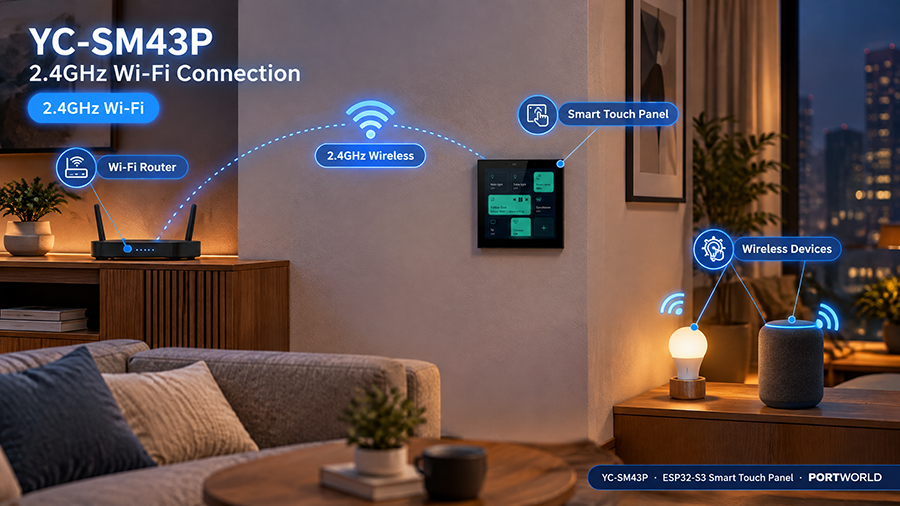
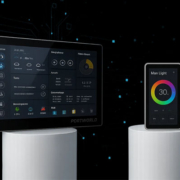
YC-SM43P smart home control panel
2. Choose the Right Processor Architecture
The processor is the foundation of an SoM. It influences performance, power consumption, multimedia capabilities, software compatibility, and the types of applications the module can support.
For many ARM-based embedded products, Rockchip processors provide a range of options for different computing workloads.
RK3566: Efficient Embedded Computing
Ideal for assessing applications such as smart home panels, industrial control terminals, IoT gateways, and embedded Linux devices. It serves as a viable option when the workload necessitates application-level computing without the requirements of a high-end AI platform.
RK3568: Flexible Embedded Applications
This option is worth considering for embedded controllers, smart terminals, networked devices, and projects that require a balance of CPU performance, multimedia capabilities, and peripheral integration.
RK3576: AI and Higher-Performance Computing
Appropriate for evaluating edge AI, computer vision, robotics, and multi-display applications. The RK3576 platform features an integrated NPU rated at up to 6 TOPS, although the actual AI performance is contingent upon model compatibility, precision, memory bandwidth, and software optimization.
RK3588: Advanced Edge AI and Multimedia
This platform is suitable for more demanding applications that involve computer vision, robotics, advanced multimedia processing, and edge AI. Its integrated NPU is rated at up to 6 TOPS, with the choice of platform depending on the overall workload and interface requirements.
Portworld provides embedded computing and motherboard solutions utilizing various processor platforms, such as RK3566, RK3568, RK3576, and RK3588. These processor families serve as diverse starting points for projects that range from embedded control systems to AI-enhanced computing.
The crucial factor is to choose a processor based on the specific application requirements rather than solely on prominent specifications.

P3506 Digital Signage
3. Assess Memory and Storage with Care
Memory and storage play a vital role in determining system responsiveness, application capacity, and software deployment.
RAM dictates the volume of data and the number of processes the system can manage concurrently. A basic embedded Linux application may function adequately with limited memory, whereas an Android device, graphical interface, or AI workload may necessitate considerably more.
eMMC or alternative onboard storage is responsible for housing the operating system, application software, configuration files, and local data. Projects that involve substantial application packages, logs, media files, or AI models may demand additional storage capacity.
When assessing a System on Module, take into account:
- The minimum memory required by the operating system.
- Maximum RAM usage when all applications are operational.
- Storage capacity for software, updates, and local data.
- Memory bandwidth for image processing and AI inference.
The possibility of altering the memory and storage configuration for future product variants.
For commercial products, it is essential to test the memory configuration with the actual software stack. Opting for adequate headroom from the outset can mitigate the risk of costly hardware modifications in the future.
4. Verify Operating System and Software Compatibility
The performance of hardware alone does not ensure the success of an embedded product. The System on Module (SoM) must also be compatible with the operating system, drivers, libraries, and development tools necessary for the application.
Depending on the processor architecture and the available board support package, embedded projects may utilize Android, Debian, Ubuntu, or Linux systems based on Buildroot.
Linux is frequently chosen for industrial gateways, data acquisition devices, network appliances, and embedded controllers. Android may be appropriate for touch-enabled smart terminals and applications reliant on Android software. Buildroot assists developers in creating a streamlined Linux environment customized for a specific device.
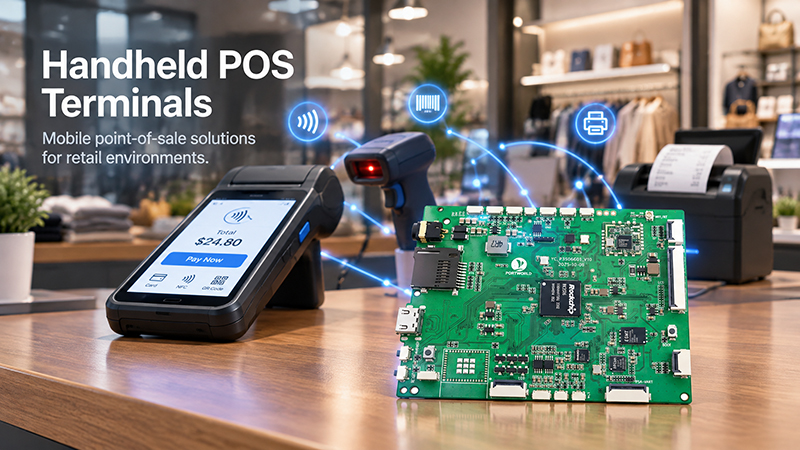
P3506 Handheld POS Terminals
Prior to selecting a module, ensure the availability of:
- Bootloader, kernel, and device-tree support.
- Drivers for essential display, camera, network, and peripheral interfaces.
- SDKs, APIs, sample applications, and development documentation.
- Security updates and a viable maintenance strategy.
- Tools for debugging, testing, and application deployment.
If your product requires a tailored operating system, it is important to clarify the necessary adaptation work at an early stage. Portworld’s OEM/ODM development services may be considered for hardware and software customization projects, with specific deliverables confirmed based on the chosen platform.
5. Verify Interfaces and Carrier Board Specifications
A System on Module typically delivers the essential computing capabilities, while a distinct carrier board facilitates its connection to the necessary peripherals for the final product.
This renders interface compatibility a critical criterion for selection.
An industrial controller might necessitate RS485, RS232, CAN, or isolated digital I/O. Conversely, a smart display could demand MIPI DSI or another suitable display interface, along with touch input, audio, and Ethernet connectivity. An AI vision device may require camera interfaces, high-speed storage solutions, and adequate bandwidth to handle image data.
Develop an interface checklist prior to evaluating modules.
| Requirement | What to verify |
|---|---|
| Display | Supported interface, resolution, timing, and number of displays |
| Camera | Available interface, sensor compatibility, and bandwidth |
| Ethernet | Port count, speed, controller availability, and carrier-board routing |
| Serial communication | UART, RS232, RS485, and any required isolation |
| Industrial I/O | GPIO, CAN, and project-specific interface requirements |
| Wireless | Wi-Fi, Bluetooth, antenna design, and certification needs |
| Expansion | Connector pinout, signal availability, and carrier-board design constraints |
Do not presume that every interface supported by a processor is available on all System on Modules (SoMs). Certain signals may be reserved, multiplexed, or not accessible via the module connector.
Portworld’s core board and motherboard solutions can be assessed for projects that necessitate customized interfaces and carrier-board integration. It is essential to verify the final design against the actual pinout of the module, its electrical specifications, and software support.
6. Take into Account Power Consumption, Thermal Design, and Reliability
A module that demonstrates optimal performance on a development bench may exhibit different behavior within a compact enclosure or industrial cabinet.
Increased workloads on the CPU and NPU can lead to higher power consumption and heat generation. Additionally, factors such as display backlighting, wireless connectivity, peripheral devices, and storage contribute to the overall power budget of the system.
When choosing an SoM, it is important to consider the maximum anticipated workload rather than just the idle power consumption. Ensure that the supported supply conditions, thermal limits, cooling requirements, and operating environment are verified.
For industrial applications, it is also crucial to assess the product’s specified temperature range, exposure to vibrations, electrical noise, power fluctuations, and expected operational hours. These factors may influence the design of the carrier board, enclosure, connectors, protection circuitry, and testing strategy.
Reliability is a result that encompasses the entire system. A suitable processor must be matched with effective PCB design, proper power management, validated software, and stringent manufacturing quality controls.
7. Customization and Mass Production Planning
A System on Module (SoM) is frequently selected due to its ability to decouple the computing platform from the specific electronics of the product. This separation allows manufacturers to utilize a validated computing module across multiple devices while tailoring the carrier board to meet the needs of each application.
For instance, a single computing platform may be incorporated into various product designs that feature different display connections, serial interfaces, enclosure sizes, or power inputs. The feasibility of this integration is contingent upon the signals provided by the module and the specifications required by each carrier board.
Portworld offers OEM/ODM services for embedded hardware initiatives, which encompass motherboard and PCBA customization, carrier-board development, software adaptation, and product integration tailored to project specifications.

RK3588 Drone Application Scene 1
When preparing for production, it is advisable to inquire with potential suppliers regarding:
- The availability of engineering samples and prototypes.
- Hardware documentation and specifications for connectors.
- Access to SDKs, source code, and the extent of software support.
- Availability of components and the product lifecycle.
- Manufacturing testing and quality control procedures.
- Management of engineering changes, revision control, and long-term supply strategies.
The cost of the module represents only a fraction of the overall expenditure. Consideration must also be given to carrier-board engineering, software development, certification, testing, enclosure design, and ongoing maintenance.