Is Linux Better Than Android for a Smart Control Panel?
Selecting an Appropriate Operating System for Intelligent Automation
A smart control panel functions as the primary interface for overseeing various systems, including:
- Smart lighting
- HVAC systems
- Motorized window treatments
- Security infrastructure
- Internet of Things devices
- Building automation systems
The choice of operating system significantly influences the panel’s user experience, degree of customization, system reliability, and capacity for integration.
Two predominant options exist:
- Android-based smart control panels
- Linux-based smart control panels
Does Linux offer superior performance compared to Android for smart control panels?
The optimal selection is contingent upon the specific use case.
Linux demonstrates superior suitability for industrial automation environments and persistent embedded system applications, whereas Android proves more advantageous for residential smart home installations, hospitality settings, and implementations demanding sophisticated graphical interfaces and bespoke software solutions.
Linux Smart Control Panel: Advantages
1. High Stability for 24/7 Operation
Linux is extensively utilized in embedded and industrial systems due to its exceptional reliability.
For applications demanding uninterrupted operation, Linux delivers:
- Extended operational stability
- Minimal system resource consumption
- Reduced background process activity
- Consistent performance delivery
Typical use cases:
- Building management systems
- Industrial HMI
- Energy monitoring
- Automation controllers
2. Better Hardware-Level Control
Linux enables developers to obtain comprehensive access to hardware resources.
Developers have the capability to modify:
- Device drivers
- Communication protocols
- System services
- Boot sequences
This functionality proves advantageous when incorporating:
RS485 devices
Modbus equipment
Sensors
Industrial controllers
Example:
|
RS485 / Modbus
|
HVAC Controller
|
Building System
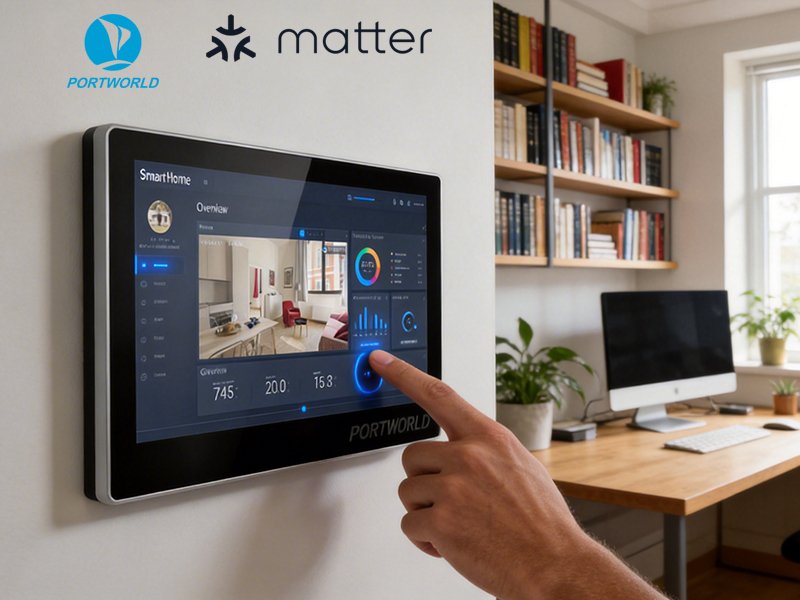
smart home control panel
3. Reduced Computational Demands
Linux operates with minimal resource consumption on embedded systems.
In comparison to Android, Linux typically demands:
- Minimal RAM allocation
- Minimal storage capacity
- Reduced computational resources
Advantages:
- Accelerated system initialization
- Diminished energy utilization
- Economical hardware infrastructure
4. Extensive Customization Flexibility
Linux empowers developers to construct highly tailored operating environments.
Customization capabilities:
- Proprietary user interface frameworks
- Embedded system software
- Application-specific programs
- System optimization for particular use cases
Prevalent user interface frameworks include:
- Qt
- GTK
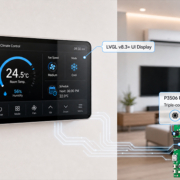
- LVGL
This positions Linux as an optimal selection for specialized industrial automation solutions.
Android Smart Control Panel: Key Advantages
1. Superior Touchscreen Interface Experience
Android delivers an intuitive, smartphone-equivalent user experience.
Users experience:
- Responsive tactile interaction
- Visual transitions and effects
- Application-driven user interfaces
- Advanced multi-point touch capabilities
Optimal applications:
- Residential automation systems
- Hospitality environments
- Corporate facilities
2. Streamlined Application Development Process
Android provides access to an extensive software development ecosystem.
- Developers can construct:
- Residential automation applications
- Hospitality management systems
- Internet of Things monitoring platforms
- Remote communication applications
Illustration:
- Smart Home App
- Living Room
- Lighting
- Bedroom
- Temperature
- Curtains
- Open
Security
✓ Active
3. Enhanced Multimedia Capabilities
Android demonstrates superior performance when a control panel necessitates entertainment functionalities.
Applications:
- Video conferencing
- Digital signage
- Camera preview
- Voice assistant integration
- Media control
4. Streamlined IoT Platform Integration
Android panels facilitate connectivity with:
- Cloud services
- Smart home applications
- IoT platforms
- Mobile apps
Supported connectivity options:
- WiFi
- Bluetooth
- Zigbee gateways
- Matter gateways
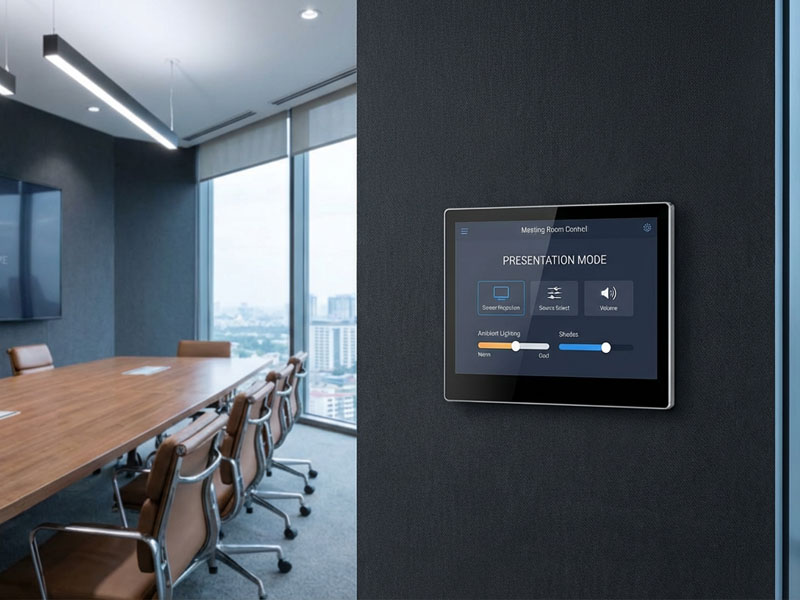
smart home control panel
Linux vs Android Smart Control Panel Comparison
| Feature | Linux | Android |
|---|---|---|
| System Stability | ⭐⭐⭐⭐⭐ | ⭐⭐⭐⭐ |
| Touch Experience | ⭐⭐⭐⭐ | ⭐⭐⭐⭐⭐ |
| App Ecosystem | Limited | Excellent |
| Multimedia | Good | Excellent |
| Hardware Control | Excellent | Good |
| Industrial Automation | Excellent | Good |
| Smart Home Apps | Good | Excellent |
| Custom UI | Excellent | Excellent |
| Development Difficulty | Higher | Easier |
| Power Consumption | Lower | Higher |
Operating System Selection Guide
- Smart Home Applications
- Recommended Platform:
Android
Key Advantages:
- Superior touchscreen functionality
- Extensive application library
- Streamlined smart home application development
Typical Applications:
- Illumination management
- Heating, ventilation, and air conditioning systems
- Window covering automation
- Security systems
Hotel Automation Systems
Recommended Platform:
Android
Justification:
Hotels frequently require:
- Refined guest-facing interfaces
- Tailored software solutions
- Multimedia capabilities
Representative Implementation:
Guest room control interface:
→ Illumination control
→ Climate regulation
→ Window treatment management
→ Hospitality services
For Building Automation Systems
Both platforms are viable options.
Select Android for:
- Interactive user interfaces and visual displays
- Conference room management systems
- Public-facing control stations
Select Linux for:
- Building Management System controllers
- Facility monitoring and oversight
- Extended continuous operation
- For Industrial Applications
Preferred Solution:
Linux
Industrial environments typically demand:
- Robust system dependability
- Flexible hardware adaptation
- Custom protocol compatibility
Typical Use Cases:
- Manufacturing Human-Machine Interface systems
- Machinery performance tracking
- Utility consumption oversight
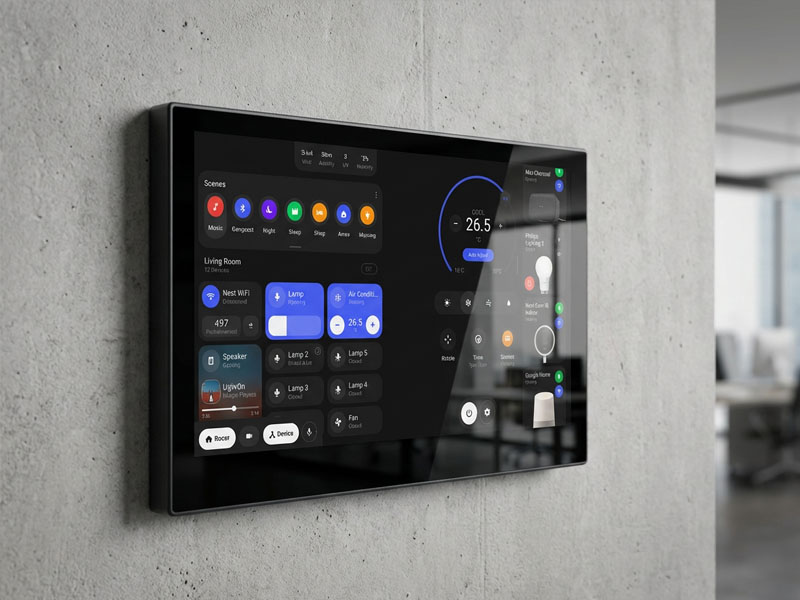
smart home control panel
Portworld Linux and Android Smart Control Panel Solutions
Portworld delivers intelligent control panels with comprehensive support for Android and Linux operating systems, engineered for diverse industrial and commercial applications.
YC-L76 – Android/Linux Smart Control Panel
- An adaptable automation interface featuring:
- Android 11/13 compatibility
- Debian Linux support
- RK3566 processing unit
- 7.6-inch capacitive touchscreen display
- Ethernet connectivity with Power over Ethernet
- RS485 serial communication protocol
- Integrated WiFi and Bluetooth connectivity
Primary Use Cases:
- Residential smart home systems
- Hospitality and hotel environments
- Commercial office spaces
- Integrated building automation systems
YC-SM10P – Android Smart Control Panel
Purpose-built for intuitive automation management and control.
Key Specifications:
- 10-inch IPS display technology
- RK3566 central processor
- Android operating system
- Ethernet with PoE capability
- RS485 communication interface
- WiFi and Bluetooth wireless protocols
Ideal Applications:
- Intelligent home control dashboards
- Automated hotel room management systems
- Conference and meeting room interfaces
YC-SM43P – Linux/Embedded Smart HMI Panel
Purpose-designed for specialized IoT solutions and industrial automation environments.
Core Features:
- ESP32-S3 microprocessor architecture
- LVGL graphical user interface framework
- RS485 communication capability
- Optional Ethernet and PoE integration
- Energy-efficient embedded system design
Primary Applications:
- Internet of Things terminal devices
- Industrial human-machine interfaces
- Intelligent building management systems