How to Use Digital Signage Displays for Hospital Information
Hospitals represent intricate settings where patients, visitors, and healthcare professionals require constant access to precise information. Conventional posters and printed notices often pose challenges for updates and lack the capability for real-time communication.
In contemporary times, digital signage solutions for hospitals are emerging as a vital means to enhance patient experiences, alleviate staff burdens, and foster more intelligent healthcare environments.
By integrating commercial displays, touchscreen interfaces, remote content management, and IoT connectivity, hospitals can effectively disseminate clear and timely information throughout waiting areas, hallways, wards, and reception zones.
What Is Hospital Digital Signage?
Hospital digital signage refers to an electronic display system designed to convey information, guidance, and communication services within healthcare facilities.
In contrast to traditional notice boards, digital signage can showcase:
- Patient information
- Queue numbers
- Doctor schedules
- Hospital announcements
- Wayfinding instructions
- Health education videos
- Emergency notifications
Content can be updated remotely via a centralized management system.
Applications of Digital Signage Displays in Hospitals
1. Patient Queue Management
Extended waiting periods are a frequent occurrence in hospitals. Digital signage displays can enhance patient flow by providing real-time information regarding queues.
Applications include:
- Registration queue numbers
- Department waiting status
- Doctor availability
- Service instructions
For instance, a wall-mounted display positioned outside a consultation room can automatically refresh the current patient number, thereby minimizing confusion and enhancing operational efficiency.
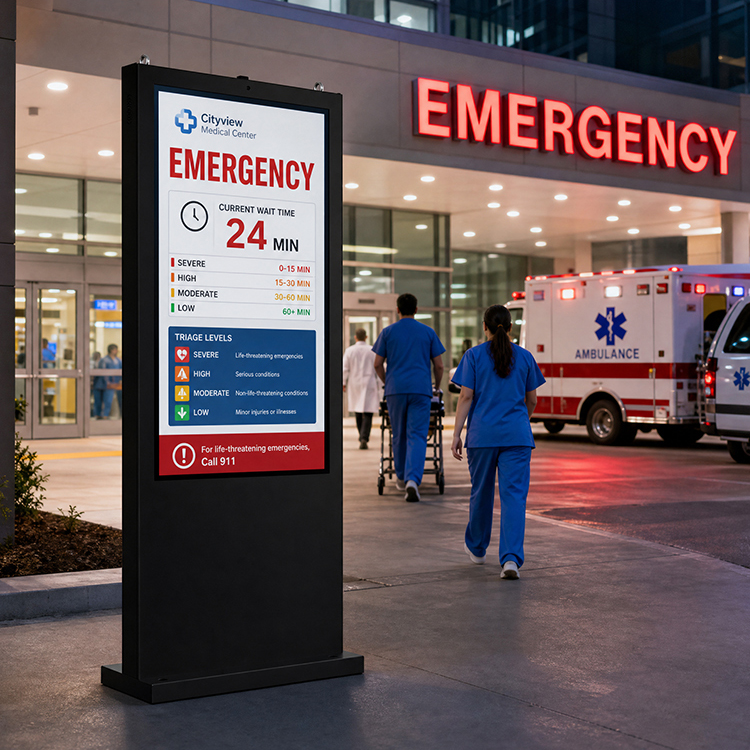
YC-5520FL-IP Floor Standing Digital Signage
2. Hospital Wayfinding and Navigation
Large hospitals typically encompass numerous buildings and departments, which can complicate navigation for visitors.
Interactive touchscreen digital signage can offer:
- Department locations
- Floor maps
- Route guidance
- Elevator information
- Appointment locations
Floor-standing kiosks and touch displays assist patients in swiftly locating their destination without the need for additional staff support.
3. Patient Room and Bedside Information Displays
Touchscreen displays positioned next to hospital beds can offer tailored services.
Potential functions encompass:
- Patient information display
- Nursing instructions
- Meal ordering
- Entertainment services
- Video communication
Devices like Portworld medical touchscreen displays can be tailored with Android/Linux systems for bedside healthcare applications.
4. Hospital Announcements and Public Information
Digital signage enables hospitals to convey crucial information promptly.
Illustrations include:
- Emergency announcements
- Infection prevention guidelines
- Visitor instructions
- Health education content
- Hospital service updates
In comparison to printed posters, digital displays facilitate quicker updates and enhanced visual engagement.
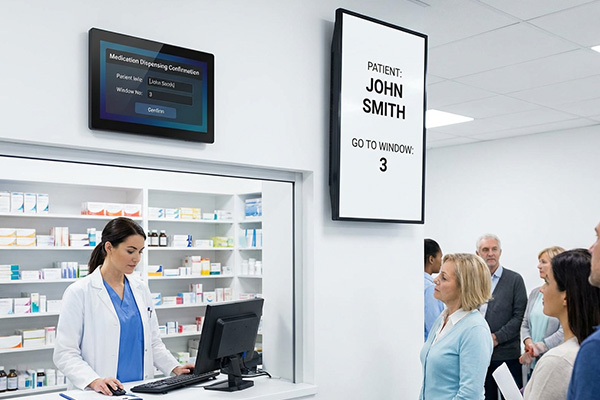
Digital Signage display
5. Intelligent Reception and Self-Service Terminals
Interactive displays enhance the efficiency of front-desk operations.
Applications encompass:
- Self-check-in kiosks
- Appointment confirmations
- Insurance details
- Patient registration
- Payment assistance
Touchscreen terminals contribute to reduced waiting times and facilitate a more seamless patient experience.
Essential Features Needed for Hospital Digital Signage Displays
High Reliability for Continuous Operation
Hospitals necessitate displays capable of functioning around the clock.
Commercial-grade digital signage solutions must accommodate:
- Extended operating hours
- Industrial-grade components
- Consistent thermal performance
- Robust enclosure design
- Touchscreen Interaction
Touch capabilities allow for:
- Self-service functionality
- Interactive navigation
- Patient communication
- Information retrieval
Capacitive touchscreens ensure smooth and user-friendly operation.
Network Connectivity
Contemporary hospital displays demand versatile connectivity options:
- WiFi
- Ethernet
- PoE
- Bluetooth
- 4G/5G
PoE-enabled displays streamline installation by delivering both power and data through a single cable.
Flexible Operating Systems
Healthcare initiatives frequently necessitate the customization of software.
Common platforms encompass:
- Android
- Linux
- Debian
- Ubuntu
- Yocto Linux
These operating systems facilitate the integration of hospital management software alongside tailored applications.
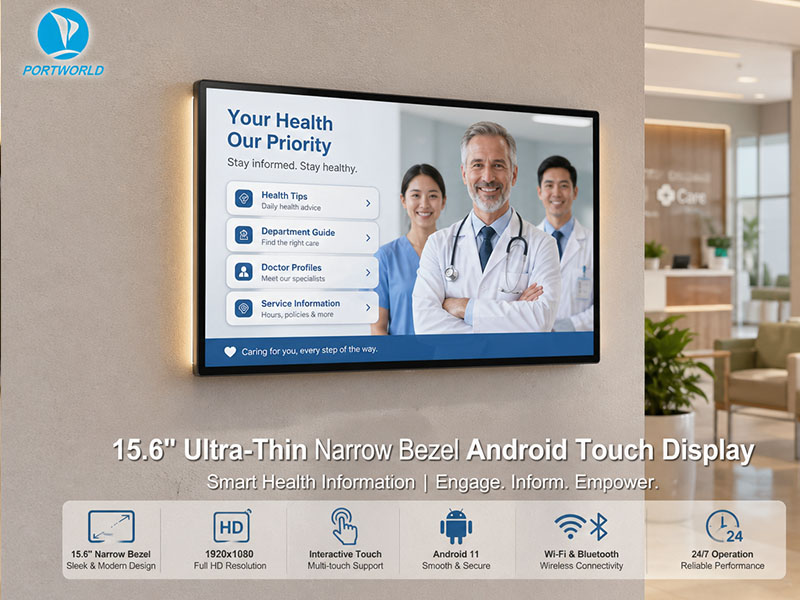
Wall-Mounted Digital Signage
Portworld Hospital Digital Signage Solutions
Portworld offers customizable touchscreen display solutions tailored for healthcare settings.
The solutions comprise:
Wall-Mounted Hospital Information Displays
Appropriate for:
- Queue management
- Department announcements
- Patient information
Features include:
- Various screen sizes
- Support for Android/Linux
- Touchscreen capabilities
- Remote management functionality
- YC-102P Commercial Touch Display
The YC-102P 10.1-inch touch display is ideal for:
- Bedside information terminals
- Nurse communication systems
- Hospital self-service applications
Features consist of:
- RK3566 processor
- Support for Android/Linux
- Power over Ethernet (PoE) option
- 10-point capacitive touch technology
- VESA mounting design
- Custom Medical Display Solutions
Portworld provides support for:
- Hardware customization
- Operating system customization
- Camera integration
- NFC/RFID integration
- OEM/ODM manufacturing
Advantages of Hospital Digital Signage
Enhanced Patient Experience
Patients benefit from clearer information and simplified navigation.
Increased Hospital Efficiency
Automated information systems minimize the need for manual communication tasks.
Quicker Information Updates
Hospitals can promptly disseminate important messages.
More Intelligent Healthcare Environment
Integration with IoT and hospital systems facilitates smarter operations.
Digital signage displays are revolutionizing hospitals by transforming traditional information settings into more advanced healthcare environments. From patient queue management systems and wayfinding kiosks to bedside terminals and self-service stations, digital displays significantly enhance communication efficiency and improve patient experiences.