OEM vs ODM Digital Signage Displays: What Is the Difference?
As digital signage continues to proliferate in sectors such as retail, transportation, healthcare, smart offices, and public spaces, an increasing number of businesses are seeking tailored display solutions rather than standard off-the-shelf options.
For brands, distributors, and system integrators, selecting the appropriate manufacturing model is a crucial decision. Two prevalent approaches are OEM (Original Equipment Manufacturer) and ODM (Original Design Manufacturer).
While both methods involve collaboration with a professional digital signage manufacturer, they provide varying degrees of customization, development assistance, and product ownership.
Grasping the distinction between OEM and ODM digital signage displays can aid businesses in selecting the most suitable solution for their projects.
What Constitutes an OEM Digital Signage Display?
OEM (Original Equipment Manufacturer) refers to a manufacturer that creates digital signage hardware based on the customer’s pre-existing design or specifications.
In an OEM project, the customer typically supplies:
- Product design requirements
- Hardware specifications
- Industrial design concepts
- Software requirements
- Branding information
The manufacturer is tasked with production, assembly, quality control, and delivery.
For instance, a company may already possess its own digital signage product design and require a factory to produce:
- Android advertising displays
- Touchscreen kiosks
- Outdoor digital signage units
- Meeting room booking panels
The manufacturer fabricates the products under the customer’s brand.
55 inch Wall-Mounted Signage Display | YC-55MT Series
What is an ODM Digital Signage Display?
An ODM (Original Design Manufacturer) offers a more holistic solution. Rather than merely producing products, the manufacturer is involved in the design and development of the product itself.
An ODM partner can assist with:
- Hardware architecture design
- PCB/PCBA development
- Mechanical structure design
- Software customization
- Firmware development
- Prototype testing
- Mass production
This method is particularly suitable for companies that possess an application concept but lack sufficient internal engineering resources to create the complete product.
For instance, a client may require a tailored digital signage display for a smart retail initiative but need assistance with:
- Choosing the processor platform
- Designing the enclosure
- Integrating touchscreen technology
- Incorporating NFC/RFID or cameras
- Developing customized Android software
An ODM manufacturer is capable of managing the entire development process, from initial concept to final production.
Key Distinctions Between OEM and ODM Digital Signage Solutions
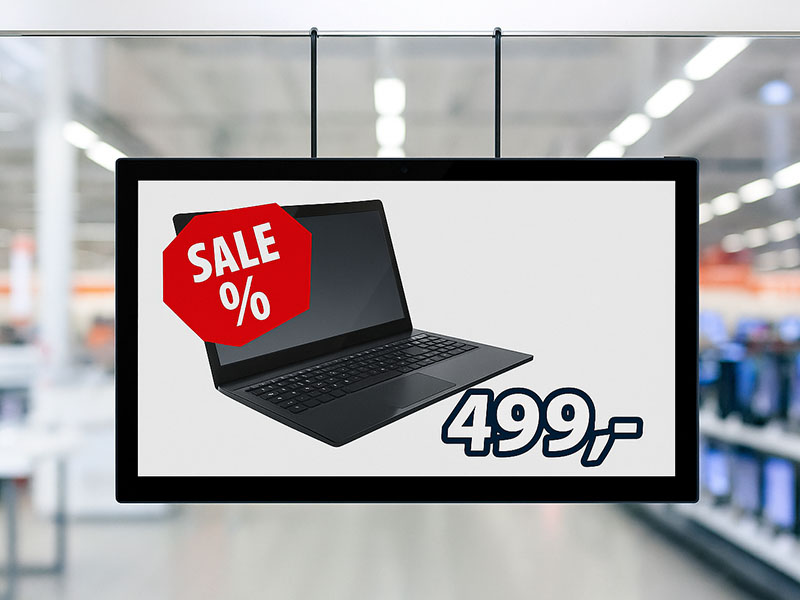
55 inch Wall-Mounted Signage Display | YC-55MT Series
1. Responsibility for Product Development
The primary distinction lies in who oversees the product design.
OEM:
The client supplies the design, while the manufacturer concentrates on production.
ODM:
The manufacturer assists in the creation and development of the product.
For businesses that already have product designs, OEM is typically the more appropriate choice. Conversely, for companies seeking a fully customized solution, ODM offers greater flexibility.
2. Degree of Customization
OEM customization generally emphasizes:
- Logo printing
- Packaging design
- Minor hardware modifications
- Software branding
ODM customization can encompass more extensive alterations:
- Custom display dimensions
- New enclosure designs
- Varied processors
- Custom PCBA
- System-level software development
- Specialized interface integration
In digital signage projects, ODM is frequently favored when products must adhere to specific industry standards.
3. Development Cost and Time
OEM projects typically necessitate a lower investment in development since the product is already available.
Advantages:
- Quicker production
- Reduced initial expenditure
- Simplified deployment
ODM projects, on the other hand, demand more engineering effort, yet they offer enhanced differentiation.
Advantages:
- Distinctive product design
- Improved market positioning
- Tailored user experience
- Sustained product benefits
4. Application Flexibility
Various industries possess unique digital signage needs.
Retail businesses might require:
- Shelf-edge stretched displays
- Interactive product screens
- Advertising kiosks
Hospitals may need:
- Patient queue displays
- Information terminals
- Touchscreen self-service systems
Transportation initiatives might necessitate:
- Outdoor high-brightness displays
- Weather-resistant kiosks
- Remote management systems
ODM solutions enable manufacturers to refine hardware and software according to the specific application context.
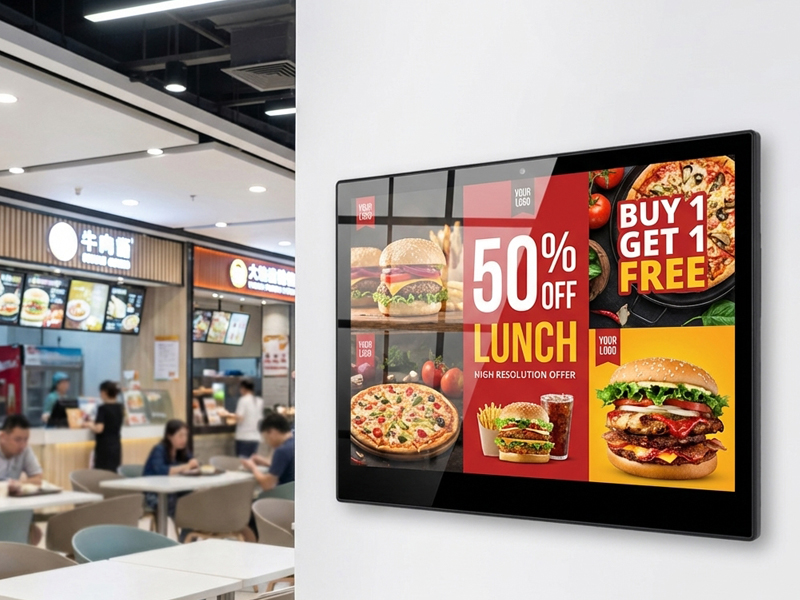
digital signage display
Reasons to Opt for an OEM/ODM Digital Signage Manufacturer
Collaborating directly with an OEM/ODM manufacturer offers numerous benefits:
Enhanced Hardware Customization
Companies have the ability to choose:
- Screen dimensions
- Brightness intensity
- Touch interface technology
- Processor architecture
- Memory setup
- Connectivity features
For instance, Portworld provides digital signage solutions utilizing Rockchip platforms like:
- RK3566
- RK3568
- RK3576
- RK3588
These platforms accommodate a variety of applications, from basic advertising playback to AI-driven interactive displays.
Software Integration Assistance
Contemporary digital signage encompasses more than just the display. The compatibility of software is of equal significance.
OEM/ODM manufacturers are capable of offering:
- Customization for Android
- Support for Linux/Debian
- Development of firmware
- Integration of CMS
- Support for API/SDK
This enables clients to link displays with their current platforms and applications.
Comprehensive Project Assistance
A proficient ODM partner can facilitate the entire lifecycle of a product:
- Planning of the product
- Development of engineering
- Testing of prototypes
- Support for certification
- Production on a large scale
- Shipment on a global scale
This minimizes the complexity of development and aids businesses in expediting product launches.
Portworld OEM/ODM Digital Signage Solutions
As a seasoned manufacturer of touchscreen and embedded systems, Portworld offers both OEM and ODM digital signage services to clients worldwide.
Portworld accommodates customized solutions that include:
- Digital signage displays powered by Android
- Displays for outdoor advertising
- Interactive kiosks with touchscreens
- Stretched bar LCD displays
- Panels for meeting room bookings
- Industrial monitors with touchscreens
The capabilities for customization encompass:
- Design of hardware and development of PCBA
- Customization of Android/Linux firmware
- Integration of touchscreens
- Modules for camera and NFC/RFID
- Design of custom enclosures
- Integration with CMS and IoT platforms
- Solutions for CKD/SKD assembly
Whether clients require a branded variant of an existing display or a completely new digital signage platform, Portworld offers adaptable manufacturing support.
The difference between OEM and ODM digital signage displays mainly comes down to the level of involvement in product development.
OEM is suitable for companies that already have product designs and need reliable manufacturing support.
ODM is ideal for businesses looking for a complete customized solution, from concept development to final production.
As digital signage applications become more specialized, choosing the right OEM/ODM partner can help businesses create more competitive, reliable, and scalable display solutions.